


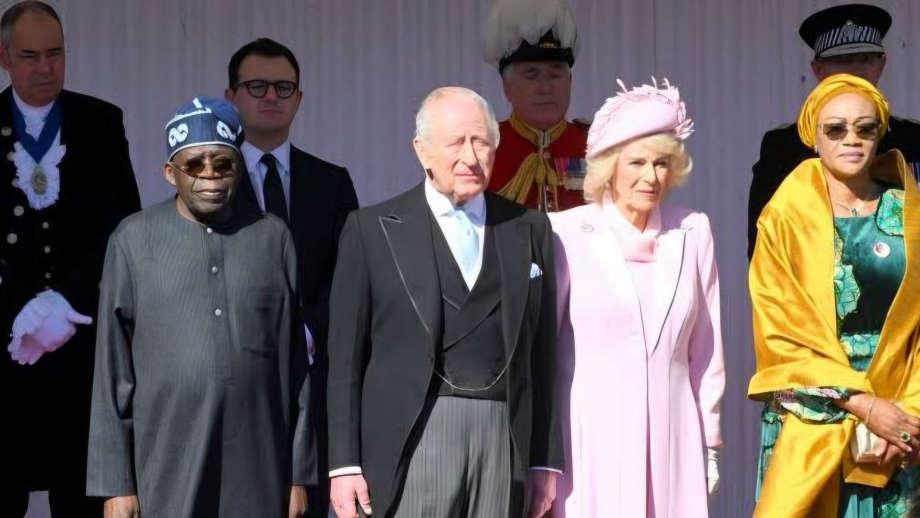
In March 2026, President Bola Ahmed Tinubu embarked on a two-day historic state visit to the United Kingdom at the invitation of King Charles III, marking a major milestone in Nigeria–UK relations.
The visit highlights the gradual transformation of a relationship once defined by historical ties into a forward-looking partnership increasingly shaped by diplomacy, economic cooperation, investment, and shared aspirations.
Since gaining independence in 1960, Nigeria’s relationship with the United Kingdom has grown into a broad and enduring partnership spanning education, defence, trade, culture, technology, and sports, with security collaboration remaining a central pillar of bilateral ties.
This diplomatic relationship traces back to 1965, when Prime Minister Abubakar Tafawa Balewa received a landmark welcome from Queen Elizabeth II, followed by visits from General Yakubu Gowon in 1973, President Shehu Shagari in 1981, and General Ibrahim Babangida in 1989. Each visit, shaped by its respective political era, reflected a nation navigating change while maintaining its position on the global stage.
Thirty-seven years later, President Bola Ahmed Tinubu, accompanied by the First Lady, Senator Oluremi Tinubu, joined this continuum not only as the fifth Nigerian leader to receive such rare diplomatic recognition from the British Crown, but also as the first to be hosted at Windsor Castle.
President Tinubu was accorded full royal honours by King Charles III in a ceremony rich in tradition, symbolism, and diplomatic significance. The ceremonial welcome, marked by a resounding 42-gun salute by the Royal Artillery, underscored Nigeria’s stature as Africa’s most populous nation and a key player in international diplomacy and economic engagement.
Beyond its ceremonial value, Nigeria’s presence at Windsor Castle reinforced diplomatic ties and highlighted the country’s continuing relevance within the Commonwealth and the broader international system.
The visit also translated into concrete engagements across critical sectors, reflecting a deepening of bilateral cooperation focused on security, economic development, migration governance, and human capital advancement.
On security, the United Kingdom continues to support Nigeria through counter-terrorism training, intelligence sharing, and military capacity building aimed at strengthening national security and stabilising regions affected by insurgency and organised crime. This reflects a shared commitment to tackling contemporary security challenges while advancing strategic interests for both nations.
On the economic front, Nigeria and the United Kingdom signed a landmark £746 million ($930 million) Port Infrastructure Financing Agreement to modernise and expand key port facilities in Lagos. The agreement is expected to enhance operational efficiency, reduce congestion, attract new investment, increase revenue generation, and position Nigeria’s maritime sector as a competitive hub for regional and international trade.
In addition, Nigeria signed three key agreements with the United Kingdom focused on migration management, border security, and economic development. These include a Memorandum of Understanding on Migration Partnership, a Statement of Intent on Cooperation on Organised Immigration Crime and Border Security, and a Statement of Intent on Expanding Business Visas for UK companies operating in Nigeria.
The migration MoU does not require Nigeria to accept foreign nationals other than Nigerians. It provides for strict identification and verification procedures, dignified return of nationals, respect for human rights, and guarantees that returnees may depart with their legally acquired personal belongings. It also establishes a framework for safe, orderly, and regulated migration, while strengthening collaboration against irregular migration and related offences.
Beyond migration and security, Nigeria, in collaboration with Coventry University, proposed the establishment of a Nigerian campus of the institution to expand access to internationally recognised degrees and reduce the cost of overseas education. The initiative is expected to provide affordable and globally competitive programmes in STEMM, Business, and Technical and Vocational Education and Training (TVET).
The visit further advanced Nigeria’s women’s entrepreneurship agenda, with UK support secured to strengthen initiatives targeting female entrepreneurs through skills development, access to resources, and expanded business networks.
Undoubtedly, the outcomes of President Bola Ahmed Tinubu’s historic state visit align with the Renewed Hope Agenda, reflecting a clear focus on economic revitalisation, institutional reforms, and inclusive growth. More than ever, Nigeria reaffirms its position as a gateway to Africa and a reforming economy, while consolidating its standing as a credible global partner.