


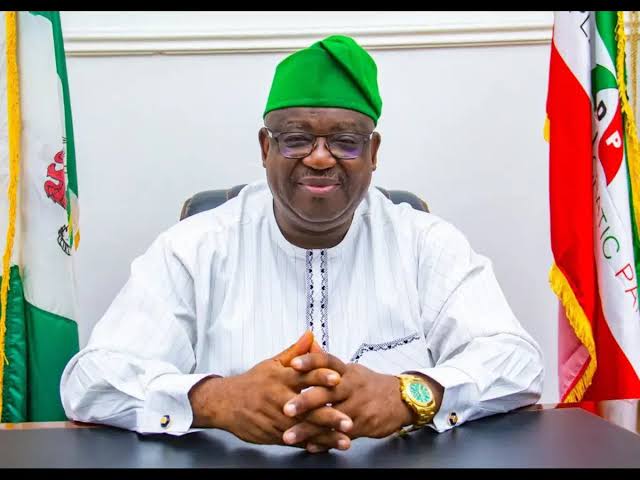
Governor Caleb Mutfwang of Plateau State has urged creative professionals to pursue partnerships and tap into emerging platforms to develop skills across the entire value chain from production to distribution.
READ ALSO: Plateau Governor to Deliver Lecture at 2025 Zuma Film Festival
He made the appeal during the Annual Film Lecture of the Nigerian Film Corporation (NFC), organisers of the Zuma International Film Festival (ZUFF), held on Wednesday in Abuja. The lecture was themed, “From Policy to Power: The Future of Africa’s Cinematic Influence.”
Represented by the Commissioner for Tourism, Culture and Hospitality, Mr. Cornelius Doeyok, the governor stressed that investors and private-sector players must “open their eyes” to the opportunities within the creative economy.
According to him, “Film is no longer a hobby industry; it is a business with global reach, commercial potential, and cultural value.”.
“If you are from academia or training institutions, tailor your programmes to the needs of the film ecosystem, technical ability, storytelling, distribution and business models.”
“If you are from Plateau State or any sub-national region claim your place. Use your unique cultural, environmental and historical assets to become a film-hub collaborate with national players.”
“I urge this audience to see film not just as entertainment, but as industry, infrastructure and national asset.
“Let us hold ourselves accountable and each stakeholder plays a part and the power lies in conjunction,” he stressed.
Mutfwang added that it was time for everyone to coordinate policy with partnership and practice, by going back to studios, institutions, offices, classrooms and asked ‘what to do today to shift from policy to power’. Speaking on the future, the governor urged creatives to envision a Nigeria and Africa where film hubs thrive across states, filmmakers from places like Plateau tell stories that resonate locally and globally, and young Nigerians find opportunities in technical crews, post-production, animation, and sound design. “Imagine where Nigerian films dominate African box offices and hold their own globally; where tax incentives, studios, modern equipment, distribution platforms, streaming services and tourism are all integrated into one vibrant creative ecosystem.”
”Picture Plateau State as a film destination, scenic locations for shooting, a well-equipped studio complex, a training academy supporting local talent, annual film festival attracting national and international attention, niche storytelling drawing from the diverse cultures of the Middle Belt region.”
“Picture a film sector that contributes significantly to the State’s GDP, to job-creation, to community development.”
”That is the vision I present today: a film industry powered by policy, but fuelled by partnerships, anchored on progressive and tangible actions and Pan-African in reach.”
”A film industry that tells our stories, preserves our identities, drives our economy, and projects our brand globally. I invite you to believe in this future and to invest your mind, your time, your resources to realise it, he said. Mutfwang noted that the presence of key stakeholders highlights the importance of storytelling and the influence film holds within the creative economy.” He said they remain committed to turning film activity into a vibrant and impactful socio-economic driver.
Citing industry figures, he explained that Nollywood produced about 2,500 films in 2020 and has continued to grow, contributing roughly US$1.4 billion (₦1.97 trillion) to Nigeria’s GDP in recent years.
He stressed that while policy is essential, it is not enough; what is needed is the power and urgency to drive implementation and turn policy into real transformation.
”We must build structures, partnerships, financing, distribution, capacity so that film is not just talked about, but done, scaled, sustained, promoted and exported as a commodity that creates jobs, increases wealth and reduces poverty.”
”Policy must shift to Power, it is not enough to draft film policies, pass legislations or host film related conversations.”
‘“What matters is converting those policies into operational systems that empower stakeholders, stimulate investment, sustain creative ecosystems and deliver cultural, economic and social value”.
“I wish to express my sincere appreciation to the NFC and her partners for affording me this platform, at a time when Africa’s cultural and creative industries are poised for transformation, the place of Plateau State in that trajectory is worthy of note,” he said.
Dr Ali Nuhu, Managing Director/ Chief Executive of NFC, in his remark, said the ‘Annual Film Lecture’ series aimed at addressing challenges, offer innovative solutions, identify opportunities and ignite possibilities. Nuhu said the lecture aims to secure stakeholder commitment to the sustainable growth of Nigeria’s creative economy. He noted that since its introduction in 2006, the Annual Film Lecture series has focused on addressing industry challenges and offering practical solutions that strengthen the creative and film sectors. He added that this year’s edition provides yet another opportunity to tackle issues affecting the industry’s development.
“The evolvement of national policy frameworks, which have been the hallmark of past editions; with strong buy-ins and domestication, by sub-national governments is again feasible.
“From being privileged to listen to the historical context of film policy and power, including existing and emerging realities that shapes cinematic influence.”
“We will be able to effectively navigate and overcome the challenges of policy-making and implementation in Africa’s most vibrant film sphere, Nigeria.
“With the imperatives of shifting focus from policy to power, ready solutions or strategic directions are inevitable,” he said.
He encouraged them to continue engaging and supporting the export potential and soft power of Nigerian films as a nation.
“Development of creative and film hubs, studios, provision of soft incentives, and introduction of hybrid creative financing models and innovations backed by actionable policy implementation strategies, are strategic for creative growth and development”.
NAN/Oluchi