

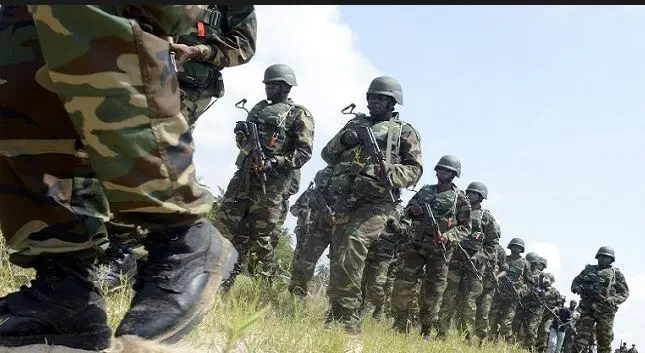
A former Chief of Army Staff (COAS), Lieutenant General Farouk Yahaya, has said that the Nigerian Army’s transformation drive is hinged on putting soldiers first.
Yahaya stated on Saturday in Kaduna while delivering a lecture as part of activities to commemorate the 162 years anniversary of the Nigerian Army.
The title of the lecture was the ‘Soldiers first’ concept in shaping a new culture for transformation in the Nigerian Army.
By putting soldiers first, Yahaya said it entails prioritizing their well-being, training, and combat effectiveness, among others.
According to him, putting the soldiers first is crucial in addressing the country’s multifaceted security challenges.
The former Army Chief emphasized the importance of prioritizing the soldiers’ role in the Nigerian Army’s activities.
“The Soldier First concept recognizes the unique skills, experiences, and challenges of individual soldiers. It entails ensuring that soldiers are well-trained, prepared, and supported to fulfill their current and future responsibilities effectively.
Read Also: Army Holds Sensitisation Lecture for Students in Sokoto
“The Nigerian Army operates in a volatile security environment characterized by terrorism, insurgency, banditry, and economic sabotage. The Army must continuously review its strategies, training, and combat effectiveness to deter or combat threats to national security.”
Speaking further, he noted that putting soldiers first is a good step in the right direction for the Nigerian Army’s transformation drive, which, when fully actualized, would elevate the Army’s skills, competencies, performance, and effectiveness, enhancing operational success in the face of multifaceted security challenges.
“The implementation of the soldier first concept requires serious intervention by the Federal Government, particularly in critical areas of equipping, kitting, and provisioning, accommodation, and healthcare.”
Earlier, the COAS, Lieutenant General Olufemi Oluyede, disclosed that the topic was selected to serve as an avenue for critical reflection of the soldiers’ duties and the dynamics that align operational and tactical requirements.
Oluyede noted that the concept also takes cognisance of the expected reciprocal actions of all soldiers, which could rightly be summed up as adherence to the core values of the Nigerian Army.
“More importantly, it will explore the nexus that connects the evolving battle space, generational warfare, and the role of the individual soldier in our operations,” he said.
The Army Chief further reaffirmed the Nigerian Army’s commitment to ensuring that troops have the tools to perform their duties efficiently.
He said the Nigerian Army must therefore seek transformation, which goes beyond structural changes but would be the product of a rearticulated mindset aimed at fostering selflessness and commitment to duty in serving the nation.
Oluyede noted that the renewed drive towards ensuring soldiers’ first has influenced the Nigerian Army’s policies in some key areas.
This, he said, is seen in his administration’s conscious promotion of the leadership style where commanders prioritize the needs of their subordinates and their mission above personal gain.
“In the area of training, I have directed the Army Headquarters Department of Training to pay close attention to all the training schools while working closely with the tri-service institutions to ensure that all training curricula reflect the requirements of today’s operating environment.”
Oluyede, therefore, restated his leadership commitment in establishing merit-based promotions, commendations, and awards to deserving individuals.
“To this end, continuous effort will be made to ensure that our soldiers have the correct leadership, equipment, and resources to effectively carry out their duties,” he stressed.
Former COAS, Lieutenant General Azubike Ihejirika, was the special guest of honor for the lecture; also, former COAS Lieutenant General Tukur Buratai was present, and senior serving officers and retired officers were also present at the lecture.