

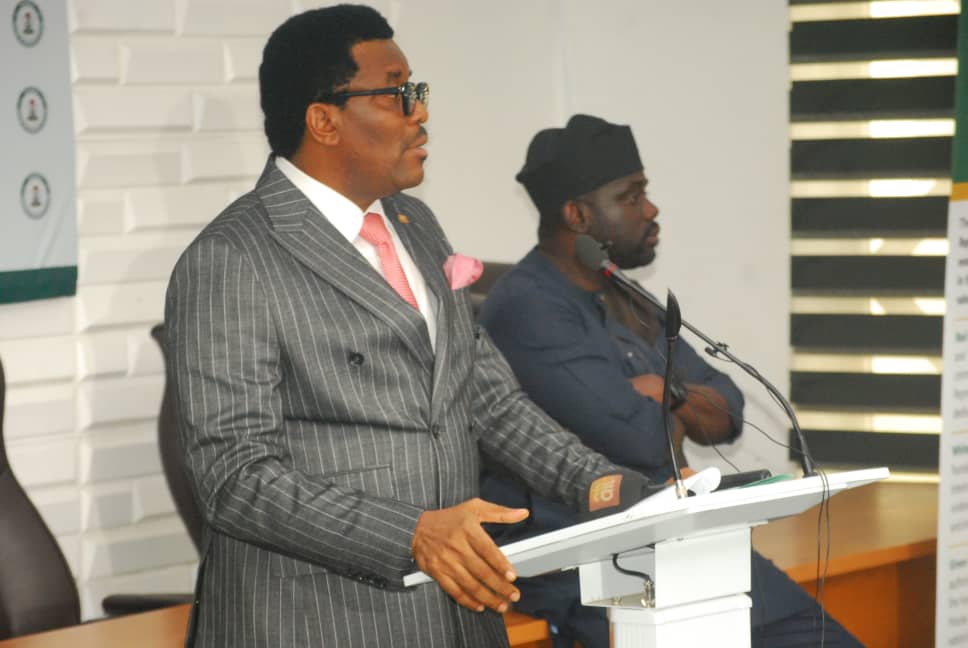
The House of Representatives has resolved to investigate the alleged use of harmful chemicals as preservatives for frozen foods in Nigeria.
The resolution followed the adoption of a motion of urgent public importance moved by Mr Chike Okafor.
Leading the debate on the motion, Mr Okafor said that there has been an outcry by some non-governmental organisations operating in the health sector over the alleged use of dangerous chemicals, including formalin, sodium hydroxide, snipers, kerosene and carbide as preservatives in frozen fish, prawns, shrimp, meat and other food items in Nigerian markets.
“There are reports from regulatory bodies, health experts, and media investigations revealing that some of the chemicals used for embalming corpses, industrial processes, and ripening fruits are now being used to prolong the shelf life of perishable foods.
“These chemicals pose serious health risks to consumers, including the potential for developmental disorders (autism) in children, cancer, organ damage, and other life-threatening health conditions for countless Nigerians, as documented by the Nigerian Medical Association.” Mr Okafor said.
Mr Okafor expressed concern over the alleged reckless use of dangerous chemicals in the preservation of perishable food items in Nigeria.
“The House is concerned that most frozen products imported into Nigeria are preserved using carcinogenic substances. These are substances or radiations that are agents directly involved in causing cancer. Some eateries use certain harmful substances, including Dimethylpolysiloxane (a silicon-based polymer used in various applications like lubricants, conditioning agents and de-foamers) to prepare chicken.
“Some also use Tertiary Butyl Hydroquinone, a chemical preservative so deadly that just five grams can kill a human being,” he said.
He lamented that relevant agencies saddled with the responsibility of regulating foods have been accused of surface complicity and sometimes overlooking the dangerous menace that, despite previous resolutions and warnings, the illegal practice persists due to weak enforcement, corruption, and lack of public awareness.’
Mr Okafor added that with Nigeria’s Food Safety Bill, 2023, and the mandate of agencies like the National Agency for Food and Drug Administration and Control, the Standard Organisation of Nigeria and the Federal Ministry of Health to safeguard public health, the House Committee on Nutrition and Food Security will do everything possible to safeguard the health of Nigerians.
“Mr Speaker, this is not a new alarm. This house is aware of the 2019 alert by NAFDAC on the use of formalin on fish and meat. We recall the 2022 study by the University of Ibadan, which found dangerous levels of pesticide residues in frozen foods.
“Despite these worrisome past reports, the practice persists. We are now facing what can only be described as the systematic poisoning of our populace.
“Mr Speaker, there is a dangerous development today that a huge number of young men and women in Nigeria are suffering from liver damage, kidney failure, and there is a noticeable increase in the number of children suffering from autism, and the cause of these is not far-fetched.
“Mr Speaker, Honourable Colleagues, we cannot ignore these warnings any longer. We must act to protect the Nigerian people from this catastrophe,” the motion said.
In adoption of the motion, the House called on the Federal Ministries of Health, Agriculture and Food Security, NAFDAC, SON and other relevant agencies to appear before the investigative committee to “Provide valued information on their effort to curb the dangerous trend.”
The House also mandated its Committees on Nutrition and Food Security, NAFDAC and Safety Standards to conduct “An investigative hearing on the alleged use of harmful chemicals as preservatives of frozen foods and importation of frozen foods preserved with carcinogenic substances and report back to the House within six legislative weeks.”