

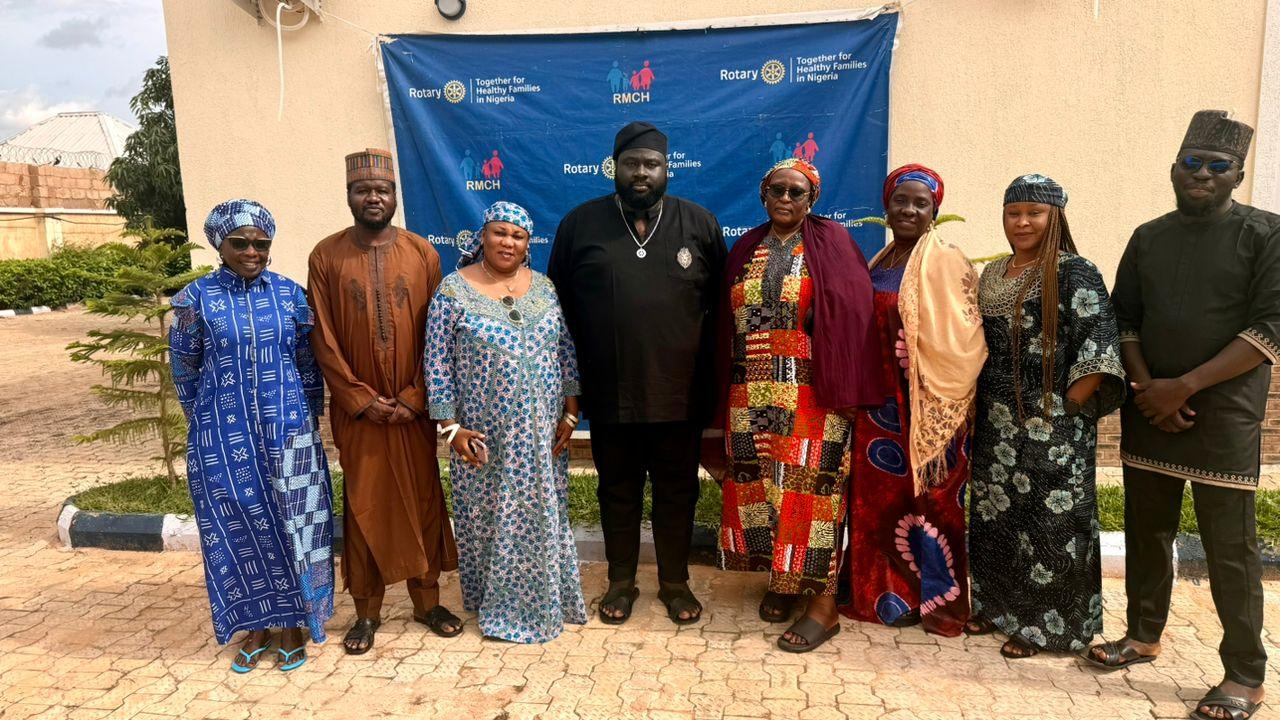
The Rotary International initiative on Reproductive, Maternal, Newborn, and Child Health, RMNCH, has trained journalists in Gombe State on solution-based journalism to help promote the use of healthcare services and reduce maternal and child mortality.
The workshop focused on equipping journalists with the skills to report from a constructive angle, encouraging public awareness and collaboration with government efforts in the healthcare sector.
Participants were trained on data journalism, forecasting, sourcing information beyond official channels, and the use of Mobile Journalism, MOJO tools for effective field reporting.
Speaking during the training, Rotary RMNCH Programme Officer, Mr. Toyosin Adebambo, said the workshop was designed to empower journalists to report in ways that inspire positive change and public engagement, rather than confrontation.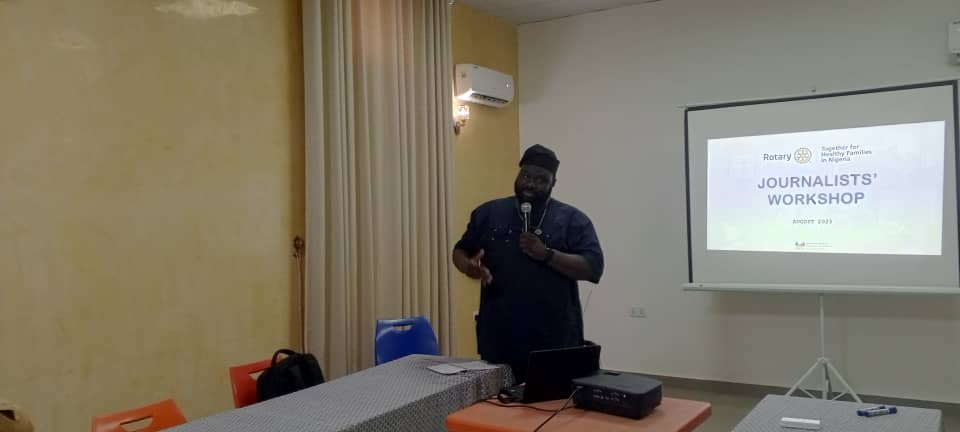
“We are looking at solutions, helping people understand the importance of using healthcare facilities and what the government is doing to support that process,” he said.
Mr. Adebambo emphasised the need for journalists to report the availability of free maternal and child health services provided by the government—services that many in the public are unaware of.
“We are saying that a lot of things are free. How are they free? A lot of commodities are being given out. How are they given out?” he added.
He noted that Rotary is currently supporting 27 health facilities across Gombe State, and that public awareness of this support is vital to increase the use of those services.
“The aim is to ensure mothers deliver safely. My boss, Professor Emmanuel Lufadeju, always says, ‘No woman should die, and no child should die.’ That’s what we want to achieve.”
According to Mr. Adebambo, RMNCH services in Gombe have seen significant improvement since Rotary began its interventions in collaboration with the state government.
He also urged journalists to use actual figures in their reports rather than percentages, as they tend to resonate more with the public.
Mr. Adebambo encouraged a collaborative reporting model, where journalists produce individual and collective stories, including panel discussions featuring government representatives, to foster open dialogue and information sharing.
“Let government officials sit with you and talk freely. From there, you’ll get more insight into what you’re supposed to report on,” he said.
Mr. Adebambo also highlighted the importance of recognising healthcare workers for their efforts, noting that public acknowledgment can boost morale and motivate better service delivery.
Rotary’s RMNCH programme is currently being implemented in three local government areas in Gombe State: Gombe, Kaltungo, and Yamaltu Deba.