

Six Nigerian tertiary institutions are set to host new centres of excellence in robotics, coding, artificial intelligence, and machine learning, as well as cybersecurity centres.
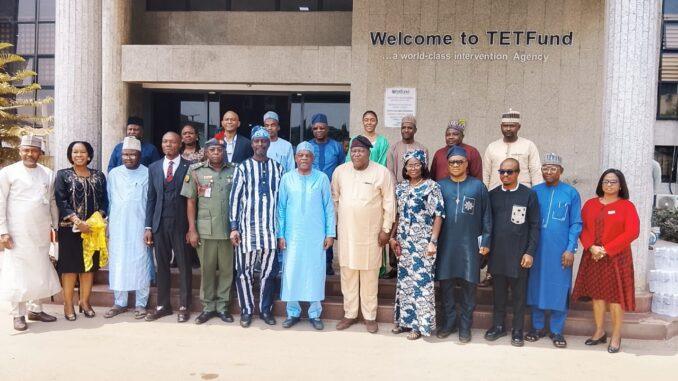
Executive Secretary of the Tertiary Education Trust Fund (TETFund), Mr Sonny Echono disclosed this in Abuja, Nigeria, while inaugurating the TETFund’s Advisory Committee on Robotics, Coding, AI, Machine Learning Centres, and Cyber-security
He said once operational, the additions will raise the total number of TETFund-supported Centres of Excellence from 30 to 36, stressing that the committee’s primary assignment is to guide the selection of institutions to host the new centers.
The committee is chaired by Professor Yakubu Ochefu, the immediate past Secretary General, Committee of Vice Chancellors of Nigerian Universities.
According to the terms of reference, the committee is tasked with identifying institutions that have demonstrable strengths and capacity in Robotics, Coding, Artificial Intelligence, Machine Learning, and Cybersecurity studies.
It will also set criteria and conditions for selecting beneficiary institutions as well as recommend up to six universities to host the proposed centres, ensuring representation across the six geopolitical zones as outlined in the TETFund Act of 2011.
Mr Echono highlighted the broader national importance of the initiative, stating, “We are not only addressing issues around national security, but we are also preparing future generations of our youthful population to contribute meaningfully to national development and to fill knowledge and skills gaps globally.
“We secured Mr. President’s approval to establish at least six additional centres of excellence across the country. This is deliberate, as we aim to reflect all six geopolitical zones, while tapping into the abundant talents that exist in Nigeria.”
He further explained that the centres would be hosted exclusively by public universities, providing students and researchers with state-of-the-art facilities to drive innovation and competitiveness in emerging technological fields.
He directed that the first phase of the committee’s work be completed in 30 days, with the panel retaining its role to guide the selected institutions in establishing and developing the centres. He tasked the committee to deliver high-quality work, reflecting the expertise and professional experience of its members.
Respondingto the committee chairman, Professor Ochefu, pledged that the panel would develop clear, merit-based criteria to identify institutions with proven capacity in Robotics, Coding, Artificial Intelligence, Machine Learning, and Cybersecurity, while ensuring equitable representation across the six geopolitical zones in line with the provisions of the TETFund Act.