

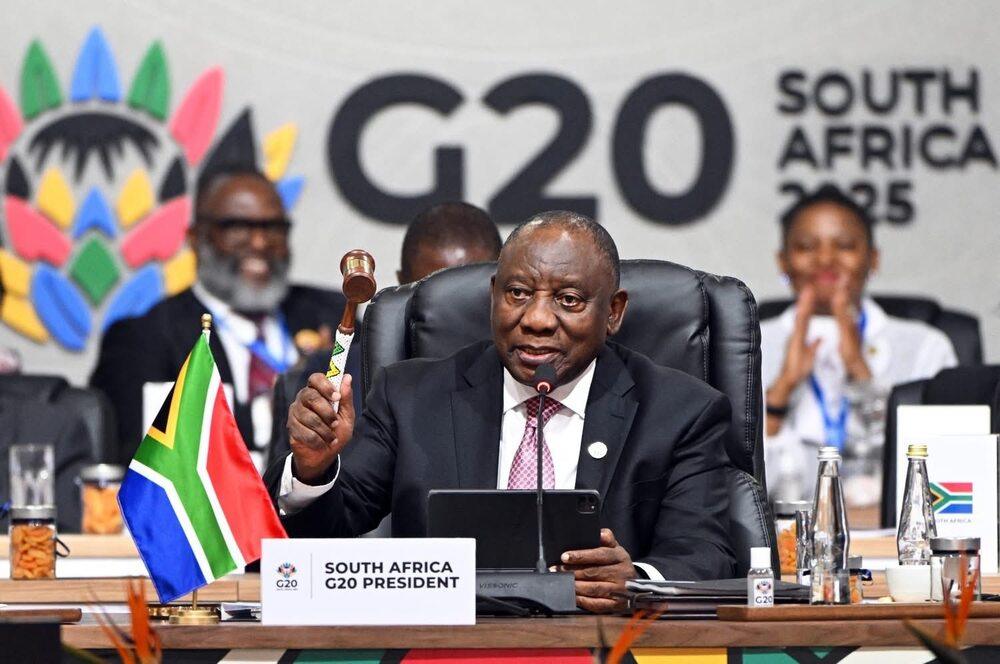
South Africa’s G20 Presidency concluded with the adoption of a leaders’ declaration, reaffirming member countries’ commitment to multilateralism and global cooperation.
US President Donald Trump did not attend the summit, as widely anticipated. While the US administration had expressed reservations about the adoption of a full G20 Leaders’ Declaration, other member states proceeded with consensus-building efforts.
Most member countries and invited leaders engaged fully in discussions, while Argentina’s President Javier Milei partially aligned with the US stance, sending his foreign minister to represent the country.
The Johannesburg summit provided a ‘platform for countries including India, Brazil, Australia, Canada, Singapore, Indonesia, Malaysia, Turkey, and several Gulf states to discuss global priorities, bilateral trade, and multilateral cooperation.’
The consensus declaration highlighted several key areas;
- Inequality: Recommendations from a panel led by Nobel laureate Joseph Stiglitz were incorporated, focusing on strategies to address global disparities.
- Debt Relief: Proposals on debt sustainability and risk management received broad support.
- Progressive Values: Themes of solidarity, equality, and sustainability were included in line with South Africa’s priorities.
- Climate and Energy Transition: Agreements between the EU, South Africa, and other partners reinforced commitments to a just energy transition, with development support pledged by Norway, the UK, and other countries.
The official handover of the G20 presidency will take place in a low-key ceremony at South Africa’s Department of International Relations and Cooperation.
Observers noted that ‘the summit underscored the continued role of middle-power nations in shaping global discussions on economic stability, climate, and development issues.’
APA/Oyenike Oyeniyi