

Yemen’s southern separatists have welcomed a call by Saudi Arabia for dialogue to end a recent military escalation, signalling a possible easing of an unusually public confrontation between the kingdom and the United Arab Emirates.
The fast-moving crisis has opened a major feud between the two Gulf powers and fractured a coalition of forces, led by Yemen’s internationally recognised government, which has been fighting the Iran-backed Houthis.
The UAE-backed Southern Transitional Council (STC) has for years been part of that government, which controls southern and eastern Yemen with backing from Gulf states, but last month STC forces seized swathes of territory in a sudden escalation.
The crisis triggered the biggest split in decades between formerly close allies Saudi Arabia and the UAE, as years of divergence on key regional issues came to a head, threatening to upend the regional order.
In a statement on Saturday, the STC described the Saudi initiative as a “genuine opportunity for serious dialogue” that could safeguard “the aspirations of the southern people.”
The statement came hours after Yemen’s Saudi-backed, internationally recognised government said it had retaken control of Mukalla, the key eastern port and capital of Hadramout province, from southern separatists who seized it last month.
Rapid government gains since Friday reversed many of the STC’s advances and cast doubt on the viability of its stated intention to hold a referendum on independence within two years.
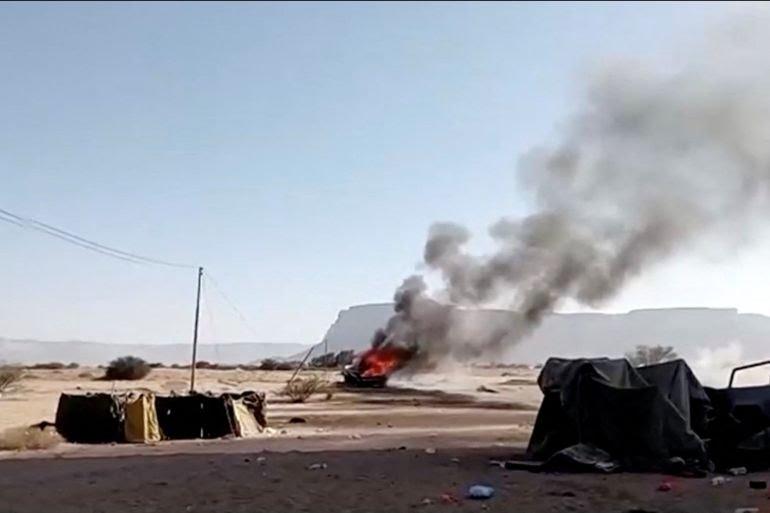
Saudi-backed forces had earlier taken control of key locations across Hadramout, a vast province with stretches of desert along the Saudi border.
Residents said STC forces blocked roads leading to Aden from northern provinces, while the group appealed for regional and international leaders to intervene against what it described as a “Saudi-backed military escalation.”
In another statement, the STC said northern Islamist factions — an apparent reference to the Islah party, which is part of the internationally recognised government — had targeted civilians and vital infrastructure.
The UAE, the main backer of the STC, urged restraint, saying it was “deeply concerned” about the escalation in Yemen.
Yemen, split for a decade between rival regions, sits at a strategic location between Saudi Arabia, the world’s top oil exporter, and the Bab al-Mandeb Strait, which guards a vital sea route linking Europe and Asia.
Overnight, the head of the internationally recognised government, Presidential Council chief Rashad al-Alimi, said he had asked Saudi Arabia to host a forum to resolve the southern issue, expressing hope that it would bring all southern factions together. Saudi Arabia accepted the request and extended invitations to southern groups to meet in Riyadh.
Tarek Saleh, a member of the Saudi-backed Presidential Council, met Saudi Defence Minister Prince Khaled bin Salman, with both sides exchanging views on Yemen.
They discussed ways to strengthen joint efforts to support stability in the country and regional security, according to a post on X by the Yemeni official early Sunday.
Aden airport, the main transport hub for areas of Yemen outside Houthi control, was closed on Thursday following a dispute over new restrictions announced by the internationally recognised government on flights involving the UAE. Officials at Yemen’s national airline said flights were due to resume on Sunday.
The STC and Saudi Arabia accused each other of responsibility for the suspension of air traffic.
The STC said southern Yemen was being subjected to a “land, sea and air blockade.”
The crisis began early last month when the STC seized territory including Hadramout, establishing firm control over the entire area of the former South Yemen state that merged with the north in 1990.
Leaders of the internationally recognised government, which had been based in Aden and included several STC ministers, relocated to Saudi Arabia, which viewed the southern move as a threat to its security.
Qatar, which has long differed with the UAE on regional policy, said it welcomed efforts by Yemen’s internationally recognised government to address the southern issue.
Attention has also focused on whether the Saudi-UAE feud could spill into other areas, as both countries joined a scheduled OPEC meeting to determine oil output policy.
Earlier this week, Saudi Arabia bombed a base in Hadramout and asked remaining UAE forces in Yemen to depart, describing the presence as a red line for its security. The UAE complied.
The STC’s declaration that it wants a two-year transition period leading to a referendum on independence marked its clearest signal yet of an intention to secede.
Reuters/Victoria Ibanga