

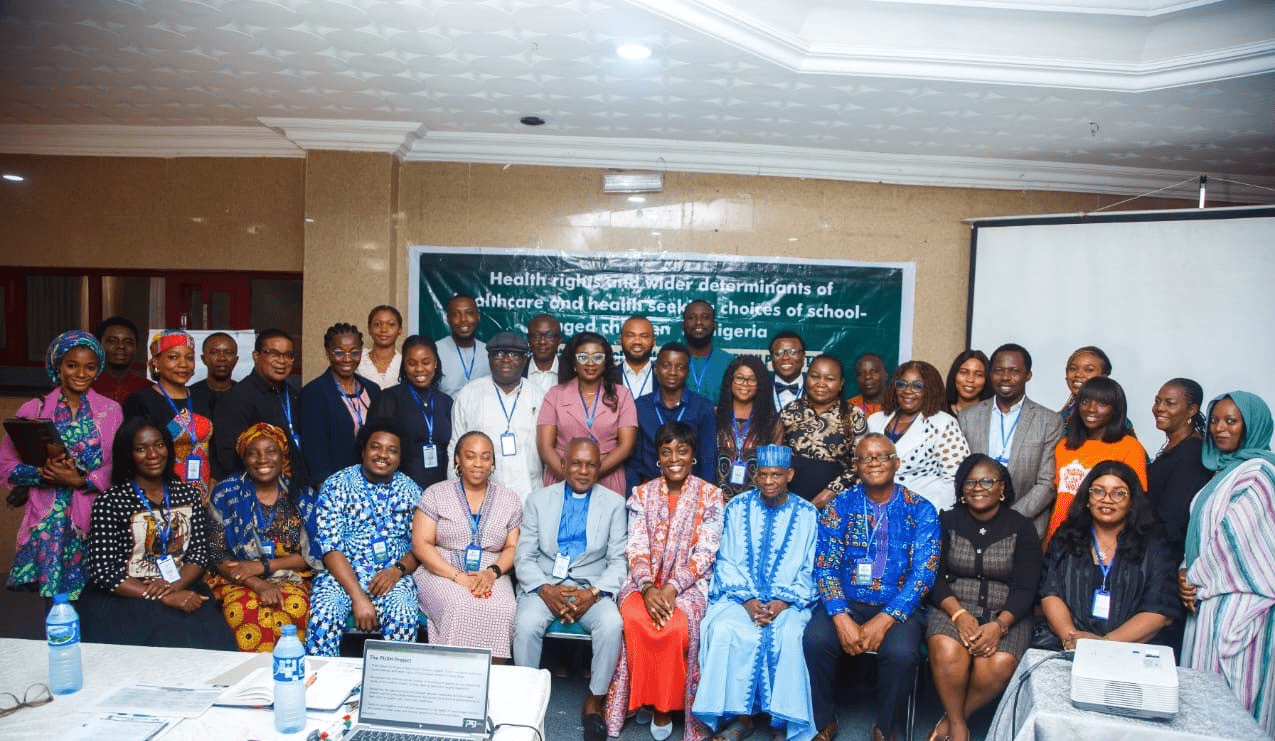
Health experts have called for a complete overhaul of school health services in Nigeria, with stakeholders lamenting the “chronic neglect” of health rights for school-aged children and demanding immediate reform.
These demands were made at the conclusion of a two-day workshop organized by the Health Policy Research Group (HPRG) in collaboration with the Rivers State government, in Abuja.
The event brought together government officials, researchers, development partners, educators, and faith-based organizations to discuss findings from a two-year study on healthcare for schoolchildren aged 5 to 17 in urban areas of the country
The study was conducted by the Health Policy Research Group (HPRG), University of Nigeria, in collaboration with the University of Dundee, the London School of Hygiene and Tropical Medicine, and other partners.
“Our laws and policies are outdated and fail to protect the health rights of over 70% of Nigeria’s child population,” said Dr. Prince Agwu, the study’s Principal Investigator.
“This age group is largely invisible in national health planning, and the consequences are dire.”
According to the study, Nigeria ranks 174th out of 180 countries on the Child Flourishing Index and 182nd out of 194 on the KidsRights Index.
Stakeholders agreed that these statistics reflect the country’s failure to deliver essential in-school health services, which are often nonexistent or handled by untrained personnel.
Prof. Chinyere Mbachu, a leading researcher, added, “Many schools are completely disconnected from nearby primary healthcare centers. Instead, they turn to unlicensed drug vendors—an unacceptable risk to children’s lives.”
Challenges
Participants decried the lack of health infrastructure within schools and the failure of existing policies such as the National School Health Policy (NSHP, 2006) and Child’s Rights Act (CRA, 2003) to be effectively implemented.
“The CRA is clear on child protection responsibilities, but implementation is weak,” noted Dr. Adaeze Oreh, former Commissioner for Health, Rivers State.
Five key strategies were proposed to rejuvenate school health nationwide, namely: Shared Leadership involving the Ministries of Education, Health, and Women Affairs; Frontline Action through the creation of School Health Units (SHUs) in primary health centers; Review and Modernization of the NSHP to reflect global best practices; Dedicated Funding, including integration with the Basic Health Care Provision Fund; and Enforcement of Penalties for violations of children’s health rights.
“There must be consequences for failing our children,” emphasized Prof. Uzoma Okoye.
“The idea of linking school clusters with PHCs and regulating informal health providers through SHUs is a sustainable solution.”
Vulnerability
The dialogue also highlighted the need to declare school-aged children as a vulnerable group eligible for targeted funding.
“If we start with children in public schools or those from low-income backgrounds, we can scale progressively,” said Dr. Tarry Asoka, who worked on the funding strategy.
Civil society and media partners present, including The Guardian, Leadership News, Voice of Nigeria, and ICIR, pledged to amplify the message nationwide.
The final communiqué stressed that “rethinking school health is not optional—it is urgent.”
The stakeholders committed to pushing forward until every Nigerian child enjoys the right to safe, quality healthcare during their school years.