

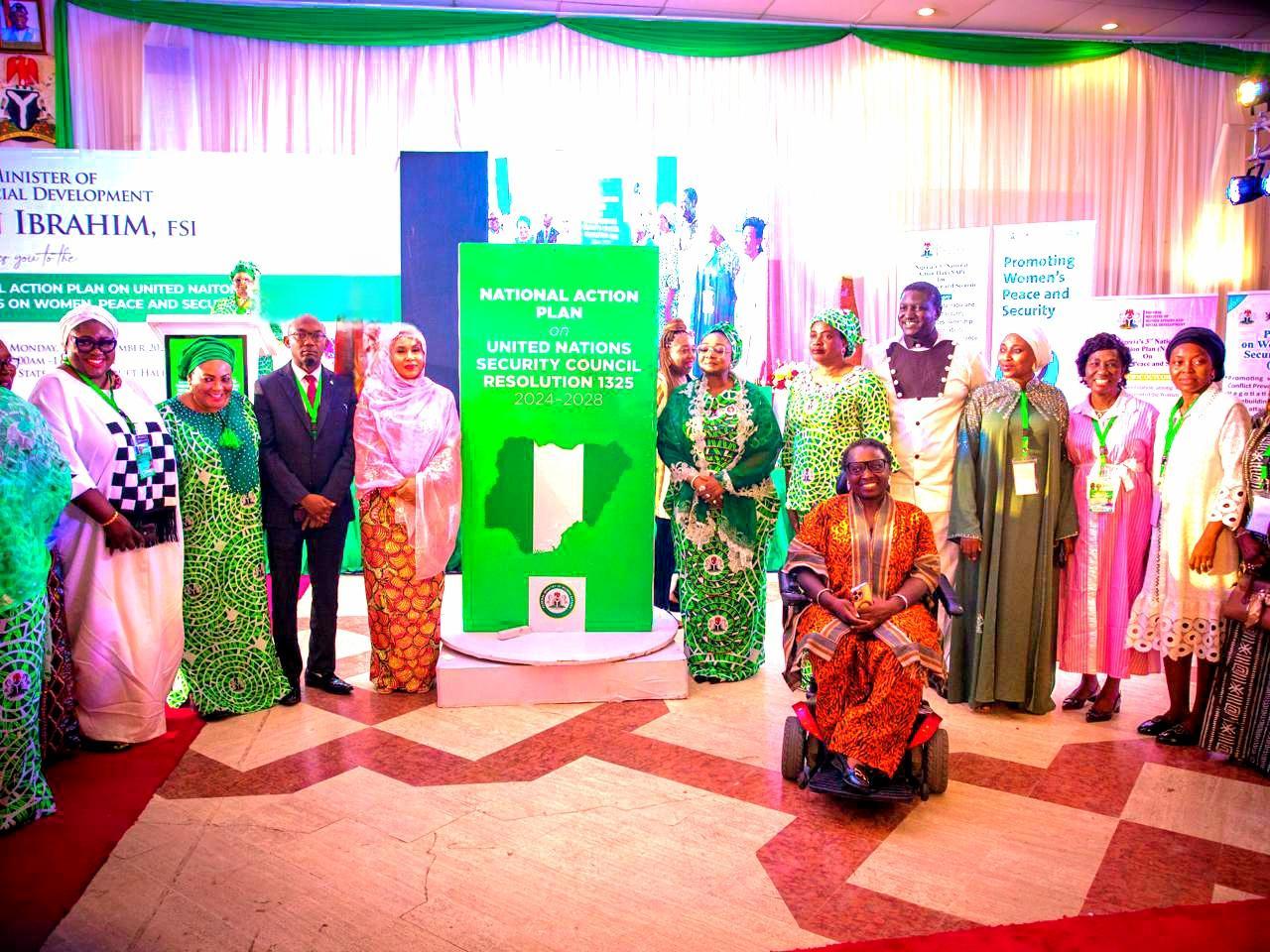
Stakeholders in security agencies, civil society, and peace and conflict resolution have lauded Nigeria’s Third National Action Plan on the implementation of United Nations Security Council Resolution 1325, saying it has reinforced the country’s commitment to women, peace, and security through inclusive governance, gender equality, and conflict prevention.
Speaking on behalf of the Commandant General of the Nigeria Security and Civil Defence Corps (NSCDC), Prof. Ahmed Abubakar Audi, Deputy Commandant General Bridget Taylor commended stakeholders for sustaining momentum on the agenda. She said the plan reinforces the country’s commitment to women, peace, and security through inclusive governance, gender equality, and conflict prevention.
“This milestone reflects a strong commitment to the security agenda, a crucial step towards fostering gender equality, preventing conflict related to violence, and amplifying women’s role in peacebuilding and decision-making processes,” she said.
Taylor noted that the NSCDC had contributed by enhancing women’s participation in security operations and implementing gender-sensitive approaches in community engagements. She added that the Corps remained committed to promoting safety, addressing gender-based violence, and supporting women’s leadership in peace initiatives.
Representing the Inspector General of Police, IGP Kayode Egbetokun, the Force Gender Advisor, AIG Aishatu Abubakar Baju, highlighted reforms within the Nigeria Police Force.
“Very recently, about three months ago, the Inspector General of Police expanded our gender desk, not just to the state level but to the divisional level. Over 3,000 divisions in Nigeria now have gender desks,” she said.
She disclosed that the Police had launched a national mentorship programme for women in policing and adopted new training manuals on gender-based violence and gender sensitivity.
“Anything that is not gender sensitive in our training curriculum has been expunged,” she said, adding that the Nigeria Police Force was committed to becoming “a gender-equal, gender-responsive institution.”
AIG Baju also announced plans for internal reforms aimed at accountability.
“By next year, we are going to launch what we call self-sanitisation of the Nigerian Police, just to show our commitment to ensuring that we flush all officers, whether we have issues or cases of gender-based violence,” she said.
The Director-General of the Institute for Peace and Conflict Resolution (IPCR), Dr Joseph Ochogwu, represented by Mrs Susan Uwakwe, described the Third National Action Plan as a critical policy instrument aligned with national priorities.
Ochogwu said it represents a significant milestone in Nigeria’s collective journey towards inclusive peace, national stability, and sustainable development. He explained that the plan aligned with President Bola Ahmed Tinubu’s Renewed Hope Agenda, noting:
“By placing women at the centre of peacebuilding and conflict resolution, this map reinforces the administration’s commitment to building a safer, more just, and more resilient Nigeria.”
He acknowledged the leadership of the Federal Ministry of Women Affairs and Social Development and praised Nigerian women for their resilience, saying:
“When women participate meaningfully in peace and security processes, communities grow stronger, early warning systems improve, and peace becomes more sustainable.”
Speaking on behalf of civil society organisations in the Women, Peace, and Security space, Dr Eleanor Nwadinobi stressed the urgency of addressing violence against women and ensuring their participation in peace processes.
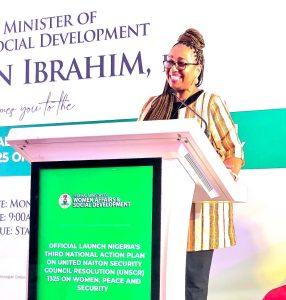
She said the Third National Action Plan on Women, Peace and Security, also known as UN Security Council Resolution 1325, hinges on two crucial elements.
“One is that we must reduce violence against women and girls. Two, we must ensure full and meaningful participation of women and girls in the full spectrum of peacebuilding,” she said.
She added that violence against women is an early warning sign of broader insecurity: “Violence against women and girls is the largest predictor that violence will happen in a community.”
Dr Nwadinobi cited evidence from global peace processes showing that “when women are involved in peace processes, agreements are 35 per cent more likely to last at least 15 years.”
She called for shared responsibility and sustainable financing, stating, “There should be a dedicated, accountable fund for women, peace, and security. Do not leave it to the women’s affairs alone. Every MDA has a role to play.”
They collectively agreed that the launch of the Third National Action Plan marks a renewed national commitment to translating policy into action, strengthening partnerships, and advancing inclusive peace and security across Nigeria.
PIAK