


Stakeholders in Nigeria’s social protection sector have formally launched the Improving Social Protection in Adamawa and Borno States (iSPAB) project.
The project is aimed at strengthening systems that support poor and vulnerable households in Northeast Nigeria.
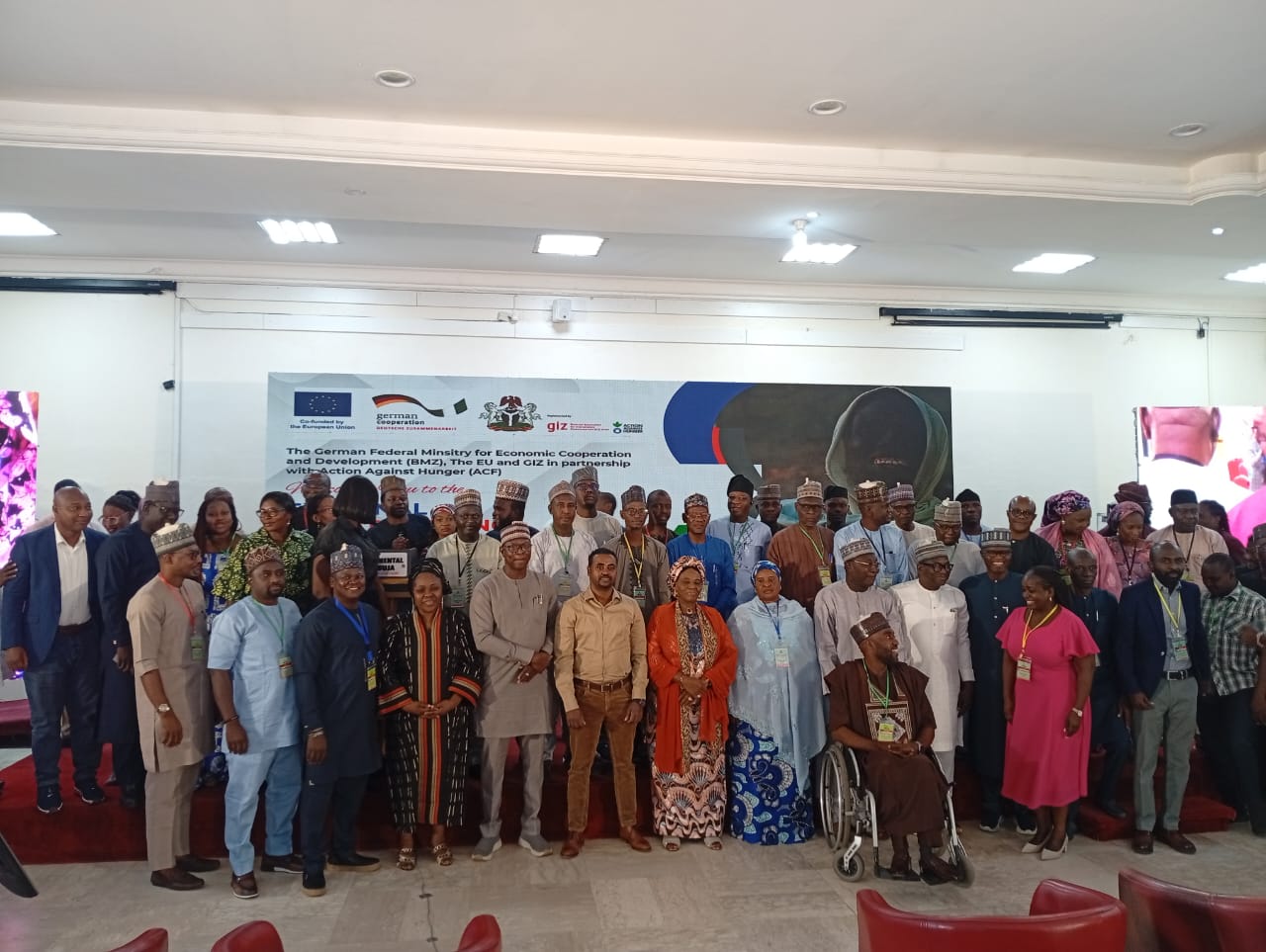
The External Grant Opening Workshop, held in Abuja, was organised by Action Against Hunger Nigeria (ACF Nigeria) and GIZ under the SEPIN–SUSI Programme, with funding from the German Government (BMZ) and the European Union.
Declaring the workshop open, the Deputy Country Director of Action Against Hunger Nigeria, Mr. Andualem Fekadu, said the initiative reflects a collective commitment to safeguarding the dignity, resilience, and well-being of the most vulnerable families in Borno and Adamawa States.
“Social protection is a core priority and well-designed systems that is essential for reducing vulnerability, building resilience, and restoring dignity to households affected by conflict, displacement, and recurrent shocks,” he said.
He explained that the iSPAB project aims to support the identification and enrolment of poor and vulnerable populations into state and national social registers, develop monitoring and evaluation frameworks for the focal states, and strengthen knowledge management and learning.
“This workshop is designed to align roles, responsibilities, reporting expectations, and compliance standards among partners involved in implementation,” he stated.
Speaking on behalf of the National Social Register, Mr. Mohammed Bala said the register is currently being updated and expanded to improve credibility and targeting accuracy.
He disclosed that of the 19 million households captured in earlier exercises, over 10 million have been visited, with about 10 million individuals already verified through the National Identity Management System.
“The household geographic coordinates are being included to enhance transparency and reliability for future social interventions,” he said.
On behalf of GIZ, the Deputy Commission Manager for Supporting Sustainable Social Protection, Participation and Economic Resilience in Northeast Nigeria, Aina Bolaji, said the project would expand and enhance the quality, credibility, and institutional ownership of the social register.
Functional Social Register
She noted that a functional and up-to-date social register is the foundation for shock-responsive social protection, effective targeting, policy coordination, and efficient use of public and donor resources.
“The project would employ community-based targeting, geographical targeting, and proxy means testing, while reinforcing the humanitarian–development–peace nexus by integrating vulnerable populations into state systems rather than parallel humanitarian mechanisms,” she added.
She stressed that success would be measured not only by the number of households registered but also by strengthened state systems, enhanced community trust, and effective use of the register to inform social protection responses and policy decisions.
Also speaking, the Director, Social Welfare, Borno State, Mrs. Aisha Shattima, described the state social register as a vital intervention that must be strengthened to ensure targeted support for vulnerable groups.
“We call for a renewed action against hunger in Borno State, describing it as a persistent public health concern,” she.said.
The Executive Chairman of the Adamawa State Planning Commission, Dr. Mary Paninga, welcomed the programme, describing it as timely and critical for strengthening the state’s social protection delivery system.
She expressed appreciation to partners, including GIZ, for their consistent support and reaffirmed the state’s readiness for full implementation.
The two-day workshop brought together representatives of the Federal Ministry of Humanitarian Affairs and Poverty Reduction, state social protection agencies from Borno and Adamawa, civil society organisations, and technical teams from ACF Nigeria, GIZ, NASSCO, and the State Operations Coordinating Units.
Participants are expected to align on collaborative strategies to improve enrolment into social registers, strengthen delivery systems, and enhance the resilience and dignity of vulnerable households in Northeast Nigeria.