

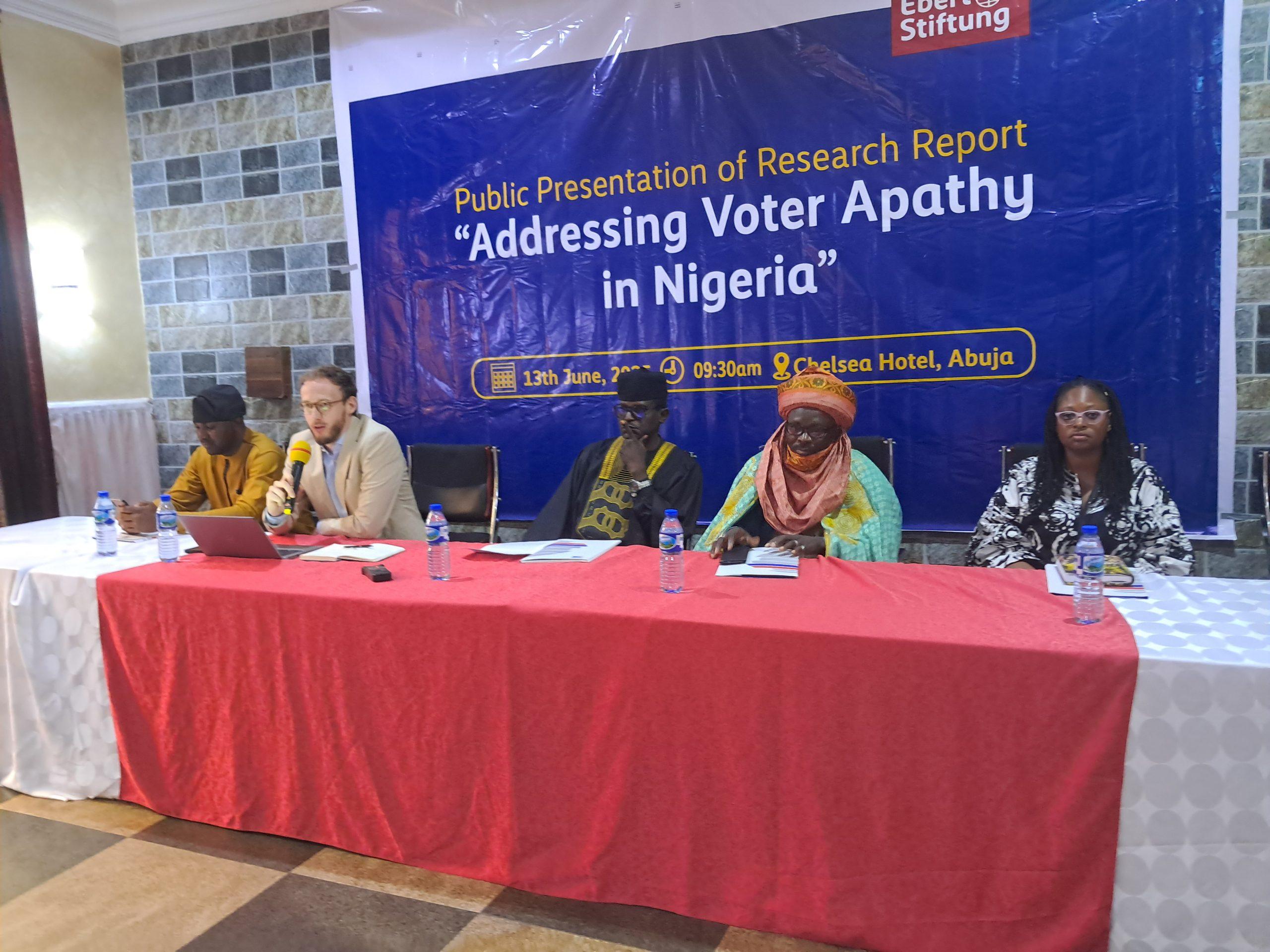
Stakeholders from the public and private sectors have recommended curbing mistrust in the electoral process to boost voter participation in elections in Nigeria.
At the event on Public Presentation of Research Report “Addressing Voter Apathy in Nigeria” organised by Frederick Ebert Stiftung, and the Institute of Peace and Conflict Resolution, IPCR, in Abuja, Nigeria, it was noted that mistrust in the electoral system, insecurity, election violence, distortion of electoral process and voter oppression are the challenges are of voter participation in Nigeria.
Presenting the research findings and recommendations, Professor Freedom Onuoha from the University of Nigeria, Nsukka, Southeast Nigeria, said that strengthening democracy and increasing electoral competitiveness can boost voter interest in elections in Nigeria.
“Addressing the reduction in electoral competitiveness involves creating an environment where diverse candidates can contest elections without fear or undue disadvantage,” he said.
He also recommended that the Nigerian government adopt the recommendations in the summary report.
Also, the Assistant Clerk, House Committee on Women Affairs and Social Development, Mr. Benedict Chukwuma urged Nigerians to engage in meaningful dialogue, educate and encourage active participation within communities.
“We must share information on where to register, how to vote and the importance of each election. By doing so, we will dismantle the barriers that keep us from the polls. But most importantly, there is need for electoral reforms. And this can never be over emphasised,” he said
Mr. Chukwuma encouraged Nigerians to actively participate in electoral processes, noting that “if you refuse to vote, you do not have the right to complain”.
Similarly, the Executive Director of NANA Girls Initiative, a non-governmental organisation, Fatima Adamu said that if the issues causing voter apathy are addressed more women will participate in the electoral process in Nigeria.
“Another issue that the women raised is the issue of voter education and representation of quality leaders. And they feel they are not given quality women leaders and they want the political parties to do so”, she said.
Also speaking on women inclusion in politics, Acting Programme Manager, Gender Justice, Ms. Ifeoluwa Gbolahan said to actively get women participation, social-cultural norms need to be addressed.
“We look at how we can have more women participation. Having more women in political offices, not just appointing women as women leaders but having the fact that there are women that have the capacity to take on these positions.
And looking at it for me, there is going to be a systemic change in Nigeria where people see the need to be part of a process that can move the country forward,” she said.
The representative of the Director General of IPCR, Ayuba Caleb commended the organizers for initiating the dialogue, noting that it was timely and critical to inclusive democratic participation and national stability.
The country representative of the Friedrich-Ebert Stiftung (FES) Nigeria, (organizer of the event), Mr. Lennart Oestergaard said that due to the decline in voter participation in previous elections, it became important to evaluate why and make recommendations to this effect.
He urged the Nigerian government and the entire Nigerian society to make use of the research document to better voter participation in the country.
Inline image