

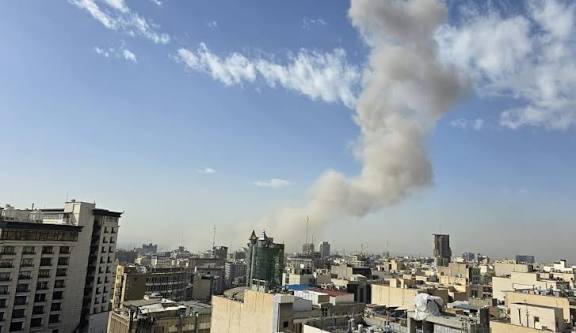
In the early hours of February 28, 2026, the United States and Israel launched a coordinated military offensive against multiple targets inside Iran, marking one of the most significant escalations in the long-running tensions between Tehran and the U.S.–Israel alliance.
The operation, described by U.S. President Donald Trump as “major combat operations,” involved airstrikes and missile launches aimed at Iranian military infrastructure, strategic facilities and what officials said were key regime targets across several Iranian cities, including the capital Tehran and others such as Isfahan, Qom, Karaj, Tabriz and Kermanshah.
The offensive was framed by Washington and Tel Aviv as pre-emptive and necessary to blunt what they described as imminent threats posed by Iran’s nuclear ambitions and ballistic missile programme after months of failed diplomatic negotiations.
The joint strike reportedly targeted a range of military installations and government sites, striking deep into urban centres.
READ ALSO: US, Iran To Hold Second Round Of Nuclear Talks
Iran To Discuss New Deals With US
Iran, US Hold Pivotal Talks in Oman as Confrontation Looms
Explosions and plumes of smoke were widely reported by local media across Iran, and Iranian authorities responded by shutting down their own airspace.
Israeli Prime Minister Benjamin Netanyahu characterised the operation as a defensive move to eliminate an “existential threat” to Israel’s security, while President Trump used the moment in a public statement to encourage internal dissent against Iran’s leadership.
‘Violation of National Sovereignty’
Iran reacted swiftly to the joint offensive, calling it a “violation of national sovereignty” and a breach of international law, with its foreign ministry accusing the United States and Israel of unprovoked aggression.
Within hours, Iranian military forces launched ballistic missiles and drone strikes against Israeli territory and U.S. military facilities across the Middle East.
According to regional reports, Iranian missiles were fired toward northern Israel, prompting air-raid sirens and the activation of air defence systems, and ballistic attacks were launched toward U.S. bases in Bahrain, Qatar and other Gulf states that host American forces.
Some missiles were intercepted or deflected, though at least one civilian death was reported in the United Arab Emirates due to falling debris from intercepted ordnance.
Tehran’s official response was explicit in its intent to retaliate “with all means available,” and Iranian leaders vowed a strong and decisive counter-strike, dismissing diplomatic efforts as exhausted and condemning the joint strike as undermining global security norms.
Iranian officials have also urged the United Nations Security Council to act against what they called a blatant breach of the United Nations Charter, asserting Iran’s right to defend itself.
The sudden escalation has alarmed governments around the world. Some regional states reported engagements with Iranian launches, with the United Arab Emirates and Qatar confirming they engaged hostile missiles in their airspace, and there are concerns that the conflict could draw in other countries or trigger broader economic and security instability, especially around the vital Strait of Hormuz, a critical checkpoint for global oil supplies.
As both sides continue military operations, international responses have ranged from condemnation of the strikes as reckless to calls for urgent de-escalation.
Diplomatic channels, including those mediated by neutral parties such as Oman, remain in contact but the immediate future of any negotiated settlement appears uncertain as the conflict unfolds.