


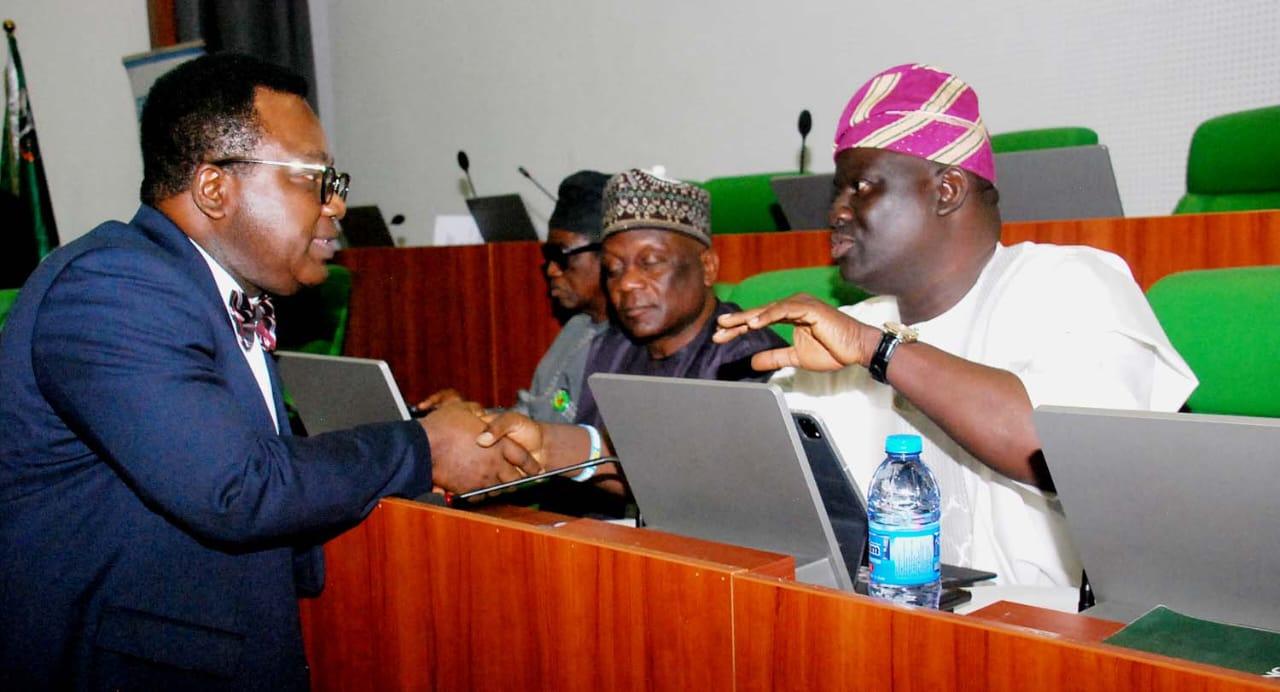
The United Nations High Commission on Human Rights says it will continue to support Nigeria in its move to strengthen human rights in the country.
The United Nations Resident and Humanitarian Coordinator, Assistant Secretary General Mr Mohamed Malick Fall, gave the assurance at a One-day Public Hearing by the House Committee on Human Rights on the Human Rights Defenders Protection Bill, 2024 and the National Human Rights Commission Act ( Repeal and Enactment) Bill, 2025, in Abuja.
He said that the UN strongly supports the introduction and consideration of the Bill to Repeal and Re-Enact the National Human Rights Commission (NHRC) Act (HB. 2376), and the Human Rights Defenders Protection Bill (HB. 1867).
Mr Fall said that the legislative efforts represent critical steps forward in strengthening the institutional framework for human rights protection in Nigeria.
- READ ALSO: Nigeria Reaffirms Commitment to Human Rights
According to him, in its last review in 2023, Nigeria’s NHRC was accredited with ‘A’ status by the Global Alliance of National Human Rights Institutions. Under the stewardship of Chief Tony Ojuku, the Commission has demonstrated commendable progress in upholding the Paris principles.
In its 2023 review, the NHRC received a number of recommendations from the Global Alliance of National Human Rights Institutions Sub-Committee on Accreditation. These included targeted reforms to address emerging gaps and sustain the commission’s compliance.
While noting that the proposed NHRC Bill HB. 2376 directly responds to these recommendations, he expressed optimism that when adopted, the legislation “will reinforce Nigeria’s commitment to its international human rights obligations and bolster the NHRC’s role in addressing many of the challenges that Nigeria faces.
He said, “The NHRC Bill aligns with the Paris Principles and enhances NHRI compliance in several ways. These include, but are not limited to: strengthening the mandate for prevention and monitoring, promoting implementation of national action plans; Ensuring adequate and sustainable funding; enhancing enforcement and follow-up mechanisms; guaranteeing independence, impartiality, and transparent processes; and fostering international engagement.
“OHCHR also welcomes the Human Rights Defenders Protection Bill, which, when adopted, formally recognises human rights defenders (HRDs), affirms their rights to promote and protect human rights without discrimination or reprisal, enables defenders to form associations, access resources, seek and disseminate information, and engage with national and international bodies.
“It further proposes establishing a dedicated Mechanism for the Protection of Human Rights Defenders within the NHRC to monitor risks, develop protective protocols, coordinate responses to threats, and foster a safe and enabling environment.”
Represented by a Senior Human Rights Adviser at the UN High Commission on Human Rights, Adwoa Kufuor, Mr Fall commended Nigeria on efforts to address human rights.
” They will ensure greater alignment with international standards, particularly the Paris Principles on the status and functioning of national human rights institutions, and advance the recognition and safeguards for human rights defenders in line with the UN Declaration on Human Rights Defenders”. Mr Fall said.
He applauded the House committee on Human Rights for the public hearing and promised continuous support.
The House of Representatives has moved to strengthen human rights and the Human Rights Commission.
The Speaker of the House of Representatives, Mr Tajudeen Abbas, who declared the hearing open, said that the two bills are necessary and timely.
He stressed that the purpose of the hearing is consultation and not confrontation.
He noted that the National Human Rights Commission, NHRC, has been a bastion of freedom and accountability over the years, a shield against abuses and discrimination.
” It is fair to note that there are more important issues to consider at a period like this when Nigerians frequently face severe threats to their lives and freedoms from kidnappers and other violent criminal gangs, domestic abuses, massive displacements, and economic hardships, among others. It is even more critical when recent narratives question our collective commitment to Justice, fairness and accountability”. Mr Abbas said.
The Speaker pointed out that ” As legislators, we must respond to these challenges the only way we know how: with deliberateness, transparency and firm legislative action to protect our constituents, revamp the existing machinery for judicial redress, and elevate our country in the eyes of the world.
He said that the two bills are therefore timely and necessary.
” The first strives to formally establish and protect the rights of the people or organisations who are at the forefront of advocating for the rights of Nigerians, supporting victims, documenting abuses and demanding accountability. We must respect the job they do as partners in nation-building rather than as adversaries of the state. As a legislative body, we recognise that when supported and properly guided, these human rights defenders strengthen the institutions of government, deepen democracy and enable citizens to get justice.
” The second bill proposes to repeal and reenact the previous law establishing the National Human Rights Commission to further strengthen its operations, improve its investigative capabilities and ensure its financial integrity in line with the Paris Principles adopted by the United Nations General Assembly.
Represented by Mr Husseini Jalo, the speaker urged the participants to engage constructively for the sake of justice.
The Chairman of the House Committee on Human Rights, Mr Abiola Makinde, made the disclosure at a One-day Public Hearing by the committee in Abuja.
He said that the hearing on the Human Rights Defenders Protection Bill, 2024 and the National Rights Commission Act ( Repeal and Enactment) Bill, 2025, seeks to protect human rights activists in Nigeria.
He said that the Public Hearing reflects the House’s commitment to participatory law-making, transparency, and the strengthening of Nigeria’s human rights framework.
” We are gathered to deliberate on critical legislative proposals aimed at enhancing the protection of human rights and strengthening the institutional capacity of the National Human Rights Commission, as well as providing formal recognition and protection for Human Rights Defenders in Nigeria.
The purpose of this Public Hearing is clear and fundamental. It is to subject these Bills to thorough stakeholder scrutiny and informed public input. We are here to receive expert opinions on their legal, constitutional, financial, and policy implications; to identify gaps or ambiguities that may require amendment; and to ensure that the final legislative outcome reflects national interest, democratic accountability, and international best practices”. Mr Makinde said.
He urged all participants to engage with candour, precision, and a shared commitment to justice and the rule of law.
He added that the bill proposes to further enhance its operations to make the National Human Rights Commission a more credible and effective watchdog.
Mr Makinde also promised that the bill will be passed following puts by stakeholders.
In his goodwill message, the Executive Director Policy Legislative Advocacy Centre, Mr Clement Nwankwo, said that the amendment would further strengthen the National Human Rights Commission.
He said that the bills are very important.
He noted that the role of the Human Rights Commission is so crucial. He said that there is a lot of work for the commission to do, hence the need for amendment.
” We all know the circumstances under which the commission was created in Nigeria in 1995, following the killing of Ken Saro Wiwa. We have seen the National Human Rights Commission come as far as it has come. Able to ascertain the important role that the act or the law that set it up and gave it. And we continue to see the National Human Rights Commission deliver on expectations of human rights organisations and citizens. Its role is so crucial”. Mr Nwankwo said.
The Executive Secretary of the Human Rights Commission, Mr Tony Ojukwu, said that the amendment of the Human Rights Commission will address some lapses in the previous law.
He said that appointments to the commission should be apolitical to avoid partiality.
He also said that there was a need to give the commission the power of investigation into human rights abuses.
He also asked for the establishment of the Human Rights Fund to assist the commission in its operations.
“In essence, the amendment of the law is also very key. So, this present effort by the House is to harmonise the different acts,” Mr Ojukwu said.
The Attorney General of the Federation, who was represented by Mr Tamaha Reuben, expressed strong support for the amendments.