


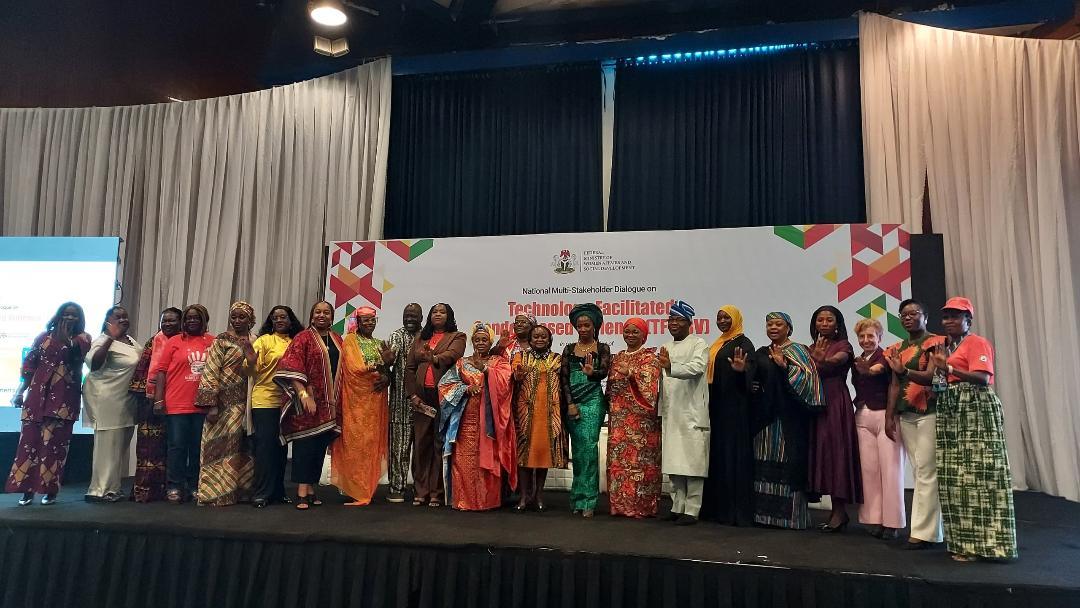
UN Women has stressed that confronting the complex challenges of technology-facilitated gender-based violence requires strong actions and collective partnerships, shared commitment across government, development partners, technology companies, civil society and communities.
The UN Women Representative to Nigeria and ECOWAS, Ms Beatrice Eyong, stated this in Abuja at a National Multi-Stakeholders’ Dialogue on Technology-Facilitated Gender-Based Violence, held as part of activities marking the 2025 Global 16 Days of Activism.
The dialogue focused on the rising cases of digital violence against women and girls, including cyberstalking, online harassment, non-consensual image sharing, and tech-enabled exploitation.

Ms Eyong, represented by the Deputy Country Representative to Nigeria and ECOWAS, Ms Patience Ekeoba, explained that while technology continues to reshape communication, education, economic participation, and social relations, it has also created new pathways for abuse and discrimination.
She noted that Nigeria and many countries are witnessing a sharp rise in cyberstalking, online harassment, non-consensual intimate image sharing, online sexual exploitation, and technology-enabled trafficking.
“Studies indicate that between 16% and 58% of women experience some form of digital violence, while as much as 95% of deepfake content targets women in sexualised ways. These trends make it clear that violence against women is evolving and our response must evolve with equal urgency and innovation. While Nigeria has taken important steps through legislative reforms such as the Violence Against Specimens Prohibition Act and the Cybercrime Act, the national response to technology-enabled GBV remains fragmented. We call for stronger coordination, clearer reporting pathways, cross-sector collaboration, and a national roadmap that ensures safe and inclusive digital spaces for women and girls,” she noted.
Collective Work
While urging participants to work collectively toward a survivor-centred digital environment, she stated that reporting channels remain unclear, institutional mandates sometimes overlap, and coordination between government, law enforcement, technology companies, and civil society has yet to meet the scale of emerging threats.
“Today’s dialogue provides a timely platform to deepen our understanding of technology-enabled violence. We would like to strengthen cross-sector collaboration and create a national roadmap that is practical, survivor-centred, and future-oriented. We would like to identify legal, institutional, and technological gaps, propose coordination mechanisms, and mobilise commitment to ensure safe digital spaces for women and girls nationwide,” she explained.
She commended Nigeria’s Ministry of Women Affairs, development partners, and agencies for their leadership and collaboration in efforts to tackle cyberstalking, online harassment, non-consensual image sharing, and tech-enabled exploitation.
Also speaking, the Minister of Women Affairs, Imaan Suleiman Ibrahim, represented by Dr Adana Steinacker, highlighted Nigeria’s interventions to strengthen the fight against gender-based violence.
She said, “The review of the VAPP Act, Child Rights Act, and renewed calls for nationwide domestication of the National Women’s Economic Empowerment Policy. We have concluded arrangements to relaunch the National Electronic Dashboard on Gender-Based Violence, vital for tracking trends, patterns, and improving case management nationwide. The Ministry is urgently prioritising the establishment of an emergency GBV response fund to bridge funding gaps and guarantee stability for shelters, SARCs, hotlines, emergency response, and services.”
National Roadmap
Recognising the growing threats of technology-facilitated gender-based violence, the minister said the ministry was planning a national coordinated effort with the Ministry of Communication, Innovation and Digital Economy, NITDA, Nigeria Police, the justice sector, UNHCR, UNICEF, UKFCDO and other partners to develop a national roadmap.
“This roadmap will focus on prevention, reporting, accountability, digital evidence handling, and survivor protection, underscoring the urgent need to protect women, girls, men, and boys in a rapidly digitising society,” the Minister said.
She restated Nigeria’s renewed commitments to women’s rights at continental forums, ongoing preparations for CSW-70, and continued advocacy for the Special Seats for Women Bill.
“The fight against violence, physical or digital, cannot be won in isolation. Every act of protection strengthens the foundation of a safer and more just Nigeria. I appeal to development partners to collaborate closely with the ministry as the statutory mechanism advancing women’s rights. Beyond today, we must coordinate joint national campaigns, cyber-safe school initiatives, community digital safety networks, state-led task teams, and rapid response units to protect all Nigerians, especially minors,” she added.
Speaking on behalf of CARE International Nigeria, the Country Director, Dr Hussein Abdo, highlighted how technology intended to empower has increasingly been weaponised through cyberstalking, online harassment, hate speech, digital surveillance, and non-consensual image sharing.
Digital Literacy
He reaffirmed the organisation’s commitment to digital literacy, community engagement, and ensuring that Nigeria’s digital future remains safe and inclusive for women and girls.
“Digital abuse has become an expanding frontier in the struggle to protect women and girls. Freedom from violence, online or offline, is not a privilege. It is a fundamental human right, and we must protect it together,” he stated.
The dialogue, organised by UN Women and the Ministry of Women Affairs in collaboration with the Development Partners Gender Group, brought together government agencies, tech companies, civil society groups, development partners, and digital rights advocates to review gaps and co-create a national roadmap to address technology-facilitated gender-based violence in Nigeria.
PIAK