

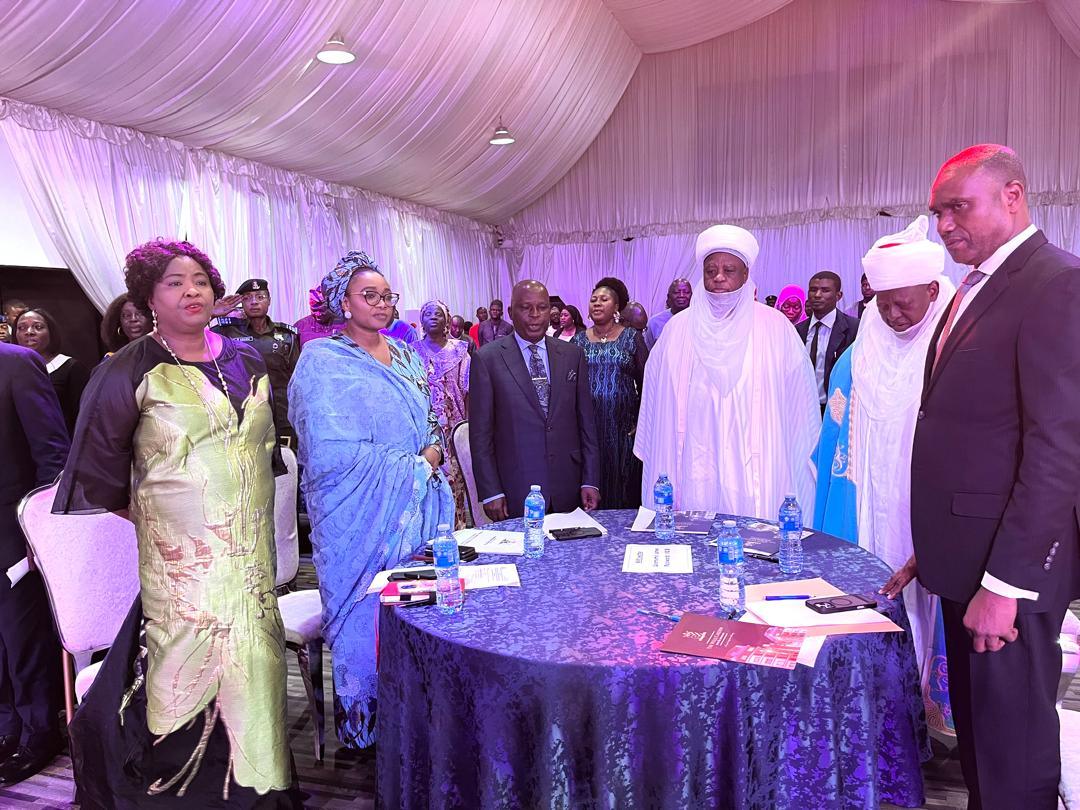
UN Women has called on religious leaders to become frontline advocates for gender justice and serve as early warning systems and safe spaces for survivors of gender-based violence (GBV).
At a high-level session in Abuja organised by UN Women and Nigeria’s Ministry of Justice, the UN Women Country Representative to Nigeria and ECOWAS, Ms. Beatrice Eyong, represented by her deputy, Ms. Patience Ekeoba—highlighted the influential role faith leaders play in shaping social norms and preventing violence.
“Your voices in mosques and churches can either challenge or perpetuate inequality. We must choose the former. At UN WOMEN, we believe that sustainable prevention begins in the community. Through our partnerships, we are investing in your leadership as frontline champions of gender justice. Religious institutions can serve as early warning and prevention systems; and co-create strategies to enhance justice and dignity in communities”, she said.
Nigeria’s Attorney General, Lateef Fagbemi, urged clerics to use their spiritual authority to confront deeply rooted harmful beliefs that fuel abuse.
“The law cannot walk alone, it needs your feet in the community. Create safe spaces in churches and mosques, counsel men and boys, and speak out where silence once ruled. Your calling is sacred, so use it to build peace, defend the vulnerable, and challenge every culture of silence or shame surrounding abuse. In doing so, you fulfil both divine command and moral duty”, he charged.
Similarly, Nigeria’s Minister of Women Affairs, Imaan Sulaiman-Ibrahim, stressed the need for accountability within faith institutions, warning that religious titles must not shield abusers.
“Faith-Based Organisations must rise to the highest standards of accountability, transparency, and protection. You must institute clear codes of conduct, survivor-sensitive redress mechanisms, and a zero-tolerance stance for abuse within your ranks. This is not an attack on faith; it is a defence of its sanctity,” she noted.
The Sultan of Sokoto, Muhammadu Sa’ad Abubakar, emphasised the power of education in empowering girls to resist abuse.
“Education is very important. We must educate our girl child, no matter where we findourselves. Educating them will give them that strength, that knowledge, to see, to know how they can defend themselves if necessary, avoid certain things if necessary, and then take up certain actions against the intruders. Because education is very important, and we’re putting so much in the education of our girl child,” he emphasised.
Representing the Christian community, Rev. Fr. Anselm Ologunwa of CAN Ondo State urged faith leaders to address the root causes of GBV, including harmful traditional practices and economic disempowerment.
“It is imperative that we, as spiritual leaders, take a proactive role in preventing GBV and promoting access to justice for survivors. We must work together to address the root causes of GBV, including harmful traditional practices, gender inequality, and lack of access to education and economic opportunities,” he said.
The gathering ended with a call on Faith Leaders to unite beyond doctrine in the fight against GBV—turning their platforms into instruments of justice, compassion, and change.