


The United Nations Development Programme (UNDP) has cautioned that Nigeria’s continued exclusion of women from political leadership positions is no longer merely a social concern but a growing threat to the nation’s competitiveness in an increasingly dynamic global landscape.
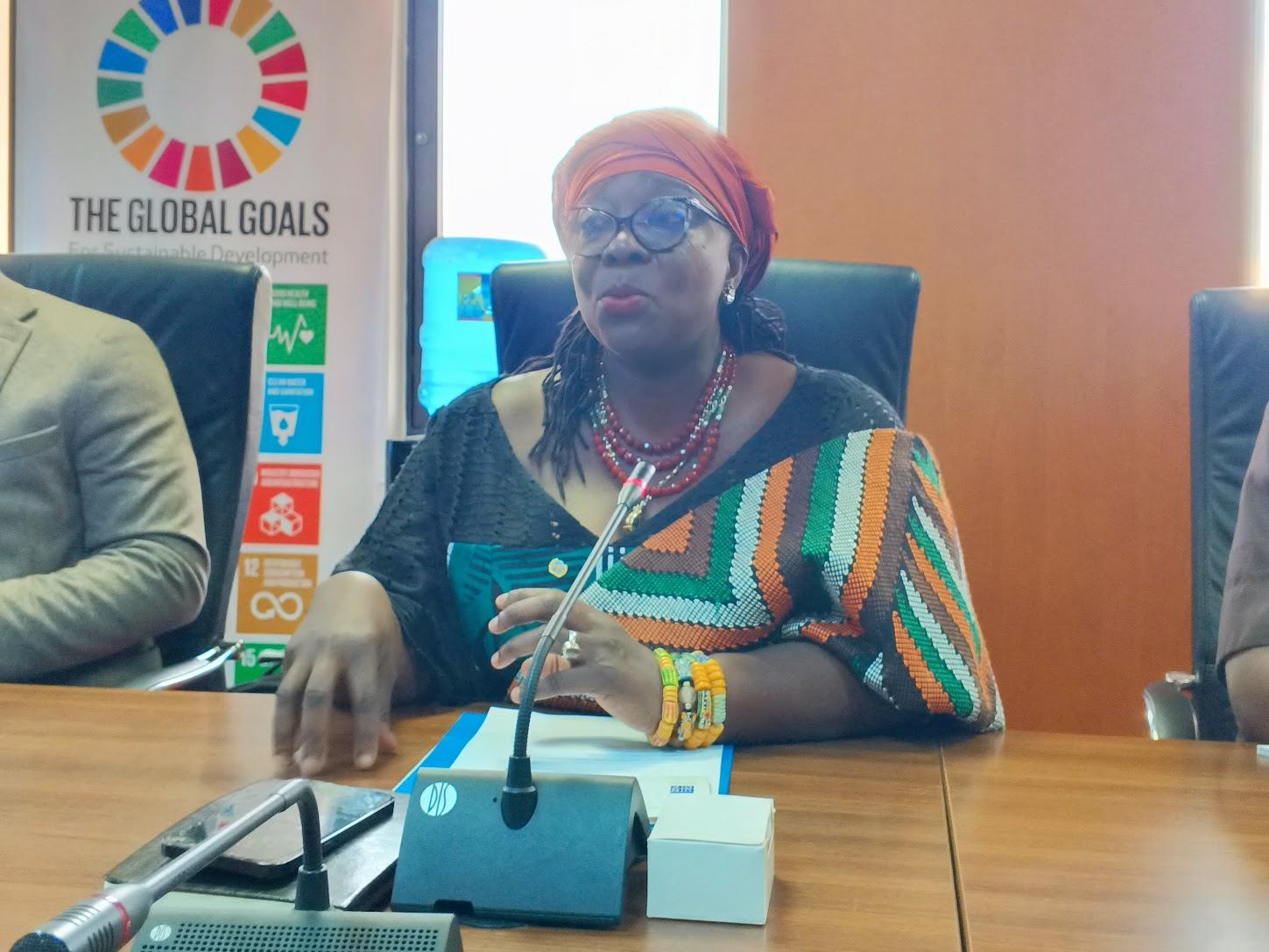
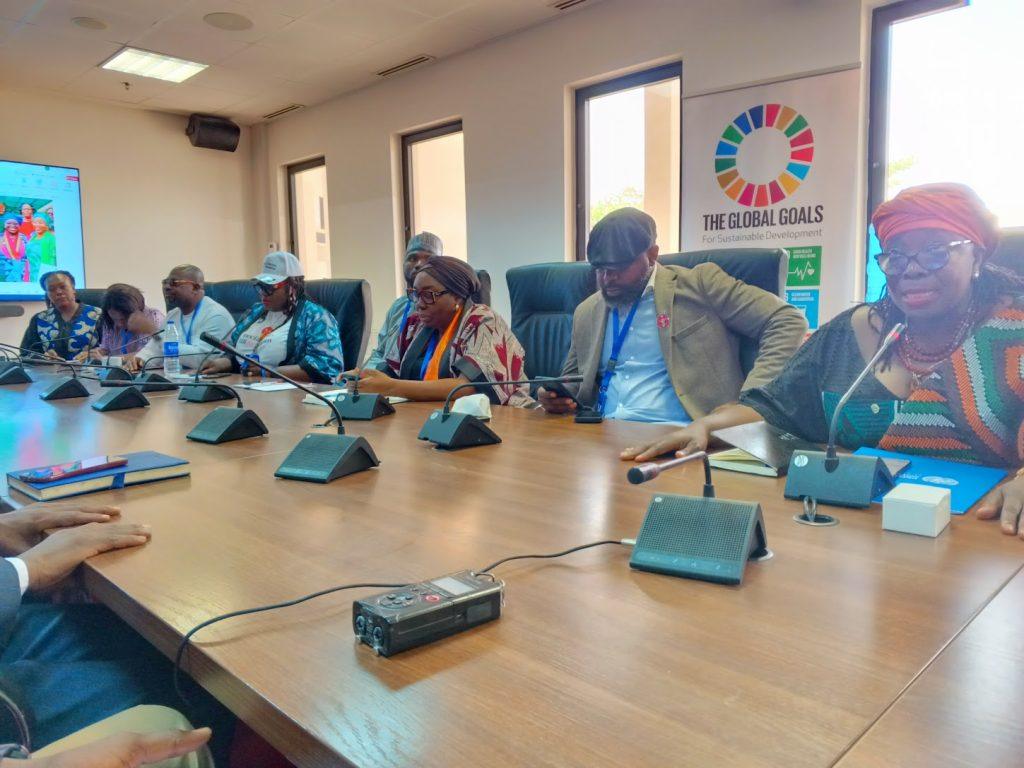
Speaking in Abuja at a high-level roundtable with media practitioners on the Reserved Seats for Women Bill aimed at increasing women’s representation in Parliament, the UNDP Resident Representative for Nigeria, Elsie Attafua, explained that the debate over the proposed Special Seats Bill for Women must move beyond emotion and politics.
Stressing that women’s political participation is now a strategic requirement for Nigeria’s survival and leadership in a world being reshaped by artificial intelligence, demographic disruptions, mineral politics, and geopolitical rivalry.
“Nigeria must navigate a world of shifting geopolitics, rapid technological transformation, artificial intelligence, the internet of things, demographic pressures, and contested influence. Nigeria cannot walk into that future with half its population excluded from shaping decisions. Nigeria cannot compete globally with less than 5% female representation. We need different voices and ideas around the table to position Nigeria as a great leader,” she explained.
In a rare departure from the usual donor-language diplomacy, the UNDP Country Representative described Nigeria’s current representation of women as less than 5%, as incompatible with the country’s ambition to lead Africa.
“Global data consistently shows a direct link between women’s political leadership and national progress in economic growth, health, education, and technological innovation. There is clear evidence. When women sit at the decision-making table, countries do better economically, socially, and technologically,” she emphasised.
She cited countries like Rwanda, Senegal, Mexico and Sierra Leone as examples where gender quotas unlocked political stability, innovation and stronger governance systems, stressing that Nigeria risks missing out on Beijing+30 Gains.
By comparison, she noted that Nigeria still has “less than 5%” female representation in political decision-making, with only four women in the Senate and about 17 in the House of Representatives.
She further commended Nigerian advocates for their effort and energy in pushing gender inclusion.
“A few days ago, I saw men and women engaging legislators, offering creative solutions, and advocating that we make history together,” she said.
Referencing this year’s Beijing Plus 30 anniversary of the Beijing Declaration, she said global progress on gender equality remained uneven, with Nigeria’s progress remaining far off the mark, especially in political participation.
“The gaps are still huge. We are far away from gender equality in political leadership. The 16 Days of Activism remind us that it cannot be just 16 days; it must be 365 days of responsibility. The bill aligns with Nigeria’s international obligations under SDG 5, SDG 16 and CEDAW. We feel it is an opportunity to create momentum for the imperatives under Beijing Plus 30 and under the Sustainable Development Goals,” she said.
According to her, around the world, countries are using special seats or quota systems as temporary tools to correct historical and structural exclusion.
“This is not tokenism. It is a proven mechanism to level the field where history has tilted it.”
While Nigerian political debates often frame women’s representation as charity, fairness or morality, Ms Attafua shifted the frame entirely, calling it an economic, security and development imperative.
“Inclusive governance is now directly linked to a nation’s ability to survive global shocks from digital disruption to mineral tensions and geopolitical competition. In a world driven by AI, demographic explosion and contested global influence, Nigeria needs every voice, every idea, every perspective to compete,” she said.
She reaffirmed that UNDP’s involvement in supporting the process at the invitation of the National Assembly was anchored on evidence that inclusive governance drives national progress.
We have been working with the National Assembly, supporting consensus-building and communication, and leveraging the newly launched African Facility for Women in Political Leadership, led by a Nigerian Regional Director. Nigeria Must Not Sleepwalk Into the Future,” she said.
The UNDP Resident Representative charged Nigerian media professionals to be active in helping to dismantle stereotypes and misinformation about women in politics.
Mrs Ifendu commended all the support from partners such as UNDP, UN Women, the Canadian government, the EU, the British High Commission, and Nigerian men within and outside the parliament, who are making sure the bill is passed.