


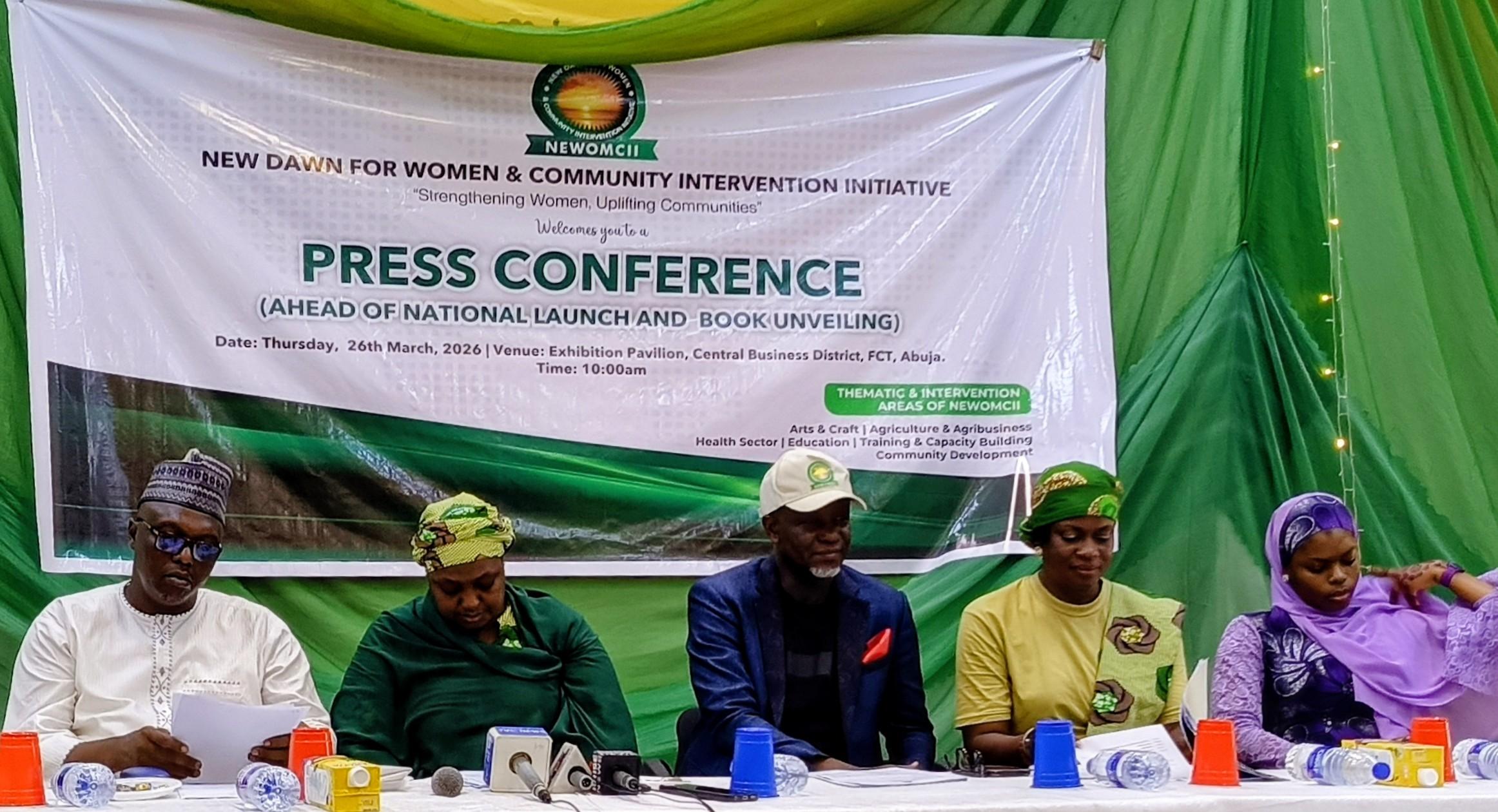
The United Nations Educational, Scientific and Cultural Organisation, UNESCO, is to partner with a Nigerian non-governmental organisation, New Dawn for Women and Community Intervention Initiative, NEWOMCII, to empower women in Nigeria.
UNESCO Creative Safety Focal Point in Nigeria, Mr. Francis Sokumba, indicated at a press conference ahead of the national launch of the New Dawn for Women and Community Intervention Initiative, NEWOMCII, in Abuja, Nigeria’s capital.
He said UNESCO would provide the technical expertise to enhance arts and crafts in Nigeria, while also exposing Nigerian women to global markets through City-to-City diplomacy.
Mr. Sokumba noted that, aside from building the capacity of women, it would also protect women’s rights through preservation and protection laws.
“We are so happy to see an NGO that is focused on the lives of women. Most of the time Nigerians form NGOs because of political affiliations. Education is one of the areas that shapes the minds of people. Once you empower somebody, they make the right decisions,” Mr. Sokumba said.
The Founder and Chairman of the New Dawn for Women and Community Intervention Initiative, NEWOMCII, Mr. Bolaji Raji, says it is dedicated to empowering women, youth, and vulnerable groups in transforming communities through holistic, inclusive, and sustainable interventions in Nigeria.
He said that the birth of NEWOMCII was inspired by simple but powerful realities across Nigerian communities, especially at the grassroots, where many women and young people possess immense potential, yet lack access to the tools, opportunities, and support systems needed to succeed.
“We saw the gap, we saw the need and we made a decision to be part of the solution in complementing our government in its endeavours. NEWOMCII was therefore established as a platform to drive practical empowerment and demand-driven capacity building, not just conversations.
“Our focus is on creating real opportunities through agribusiness, art and creative enterprise, skills development, and community interventions that directly improve livelihoods. And this, we have been doing in the past ten months since NEWOMCII was formalised up to this moment,” Mr. Raji said.
He stressed that at the heart of the initiative’s work is a belief that when women are empowered, families thrive, and communities progress.
“This belief is not just a statement; it is a proven pathway to sustainable development. We are here today not only to introduce NEWOMCII, but to invite collaborations, partnerships, and lasting impact. We recognise that meaningful impact cannot be achieved in isolation.
“It requires partnerships with government, with the private sector, with development organisations, with individuals, and, importantly, with the media, to amplify impact and create lasting change across our structure in the 36 states of the Federation and ahead of the official launching of the organisation next month,” he said.
On her part, the National Coordinator of NEWOMCII, Sa’adatu Bokane Adamu, said that the NGO is committed to strengthening women and uplifting communities through practical, grassroots-driven interventions.
“Our core focus areas include agribusiness, art and craft development, youth empowerment, and community-based support initiatives aimed at improving livelihoods and promoting lasting development,” Mrs. Adamu said.
She added that NEWOMCII expects to build strong partnerships with the media to create awareness and make an impact.
While giving highlights of NEWOMCII, the Deputy National Coordinator, Mrs. Ronke Akanni, said that it has a mandate dedicated to empowering women, youth, and vulnerable groups in transforming communities through holistic, inclusive, and sustainable interventions.
“Its core values centre around innovation, community development, gender-mainstreaming, accountability, and transparency,” Mrs. Akanni said.
She added that the forthcoming national launch of NEWOMCII, coming up in a month, is not just another gathering of individuals, but a platform to showcase the strength of non-governmental organisations in complementing the efforts of the government in all areas of economic development, as the government cannot do it alone.
Mrs. Adamu added that the objectives of the initiative are: “Enhance economic importance and bilateral opportunities in arts & crafts, Foster multi-stakeholder partnerships for food security and agribusiness growth.”
“Empower youth and women as key drivers of economy optimisation, and strengthen grassroots participation and awareness on sustainable practices across the various ecosystems.”