

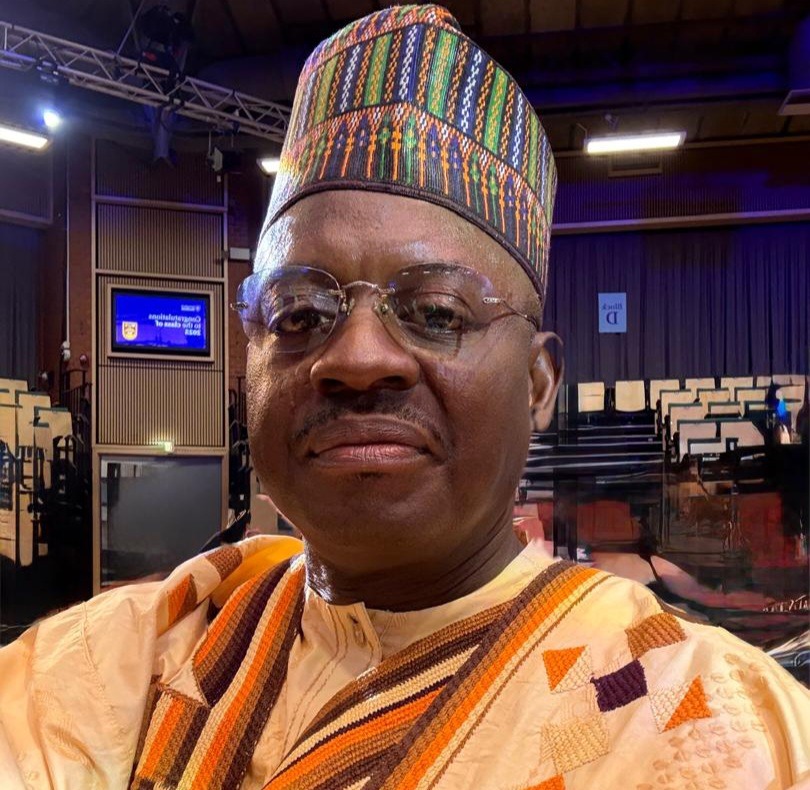
A leading cardiologist from the University of Ilorin, Kwara State North Central Nigeria, Professor Ibraheem Katibi says a locally developed Artificial-Intelligence system capable of interpreting ECG readings for Africans is ready and undergoing final validation.
Speaking during an interview in Ilorin, the former Dean of the Medical School and current Director of the Central Research Laboratories said the innovation is designed to correct long-standing inaccuracies that arise from using diagnostic machines developed for Caucasian populations.
According to him, “several years of research by his team, in comparison with British, Indian and Chinese populations, have shown clear physiological differences in ECG patterns between Africans and Caucasians.”
He warned that relying on imported devices gives the wrong interpretation, which may lead to wrong diagnosis and inappropriate treatment.
Professor Katibi said “his team has now built a digital ECG system and an AI-powered diagnostic algorithm tailored to African populations.”
He explained that, “The tool will allow an individual to record and interpret an ECG using a mobile phone.”
He said the device is functional but not yet in the market.
“We have validated the diagnostic algorithm. What we want now is a larger-scale trial before commercialisation,” he noted.
He added that when completed, the innovation will allow people to check their heart status at home just as they check blood sugar or blood pressure from the comfort of their bedrooms and offices.
The Cardiologist decried the poor funding of research in Nigeria, saying government allocations remain far below global standards when juxtaposed with National Institutes of Health (NIH) of the United States for example.
He said the country cannot continue to rely on solutions developed abroad for problems that require local understanding.
Professor Katibi also highlighted structural gaps in research facilities, noting that many laboratories lack stable electricity, water, and essential equipment.
He said only sustained investment can reposition research centres and enable scientists to produce solutions that meet national needs.
On the challenges facing young Nigerian doctors, he said the problem is not competence but the harsh working environment. He attributed the heavy migration of medical personnel to poor remuneration, insecurity, and the inability of many doctors to afford basic tools, transportation, and accommodation.
He said Nigerian doctors excel abroad because they work in organised systems that reward effort and provide supportive conditions.
“Labor is global,” he said, adding that workers will naturally move to places where their skills are valued.
Professor Katibi urged leaders to prioritise peace, invest in education and health institutions, and fund research adequately. He also called on citizens to support current leadership while making informed decisions during elections.
Speaking on preventive health measures, he advised Nigerians to cut down on salt and food seasoning, exercise regularly, rest, and eat fruits and vegetables.
He said individuals already diagnosed with high blood pressure must keep hospital appointments and follow medical instructions strictly. Use of medications for hypertension and diabetes is usually for life.
On the link between traditional and modern medicine, he noted that countries such as Morocco, India and China have advanced by refining and repackaging their traditional herbs into safe formulations like immunity-boosting and calmness teas.
According to him, Nigeria needs to engage the traditional medical practitioners better for improved collaboration and larger good, including foreign exchange earnings.