

The Ministry of Water Resources and Sanitation has highlighted major national achievements in dams, hydropower, irrigation, water supply, and sanitation, in line with President Bola Ahmed Tinubu’s Renewed Hope Agenda.
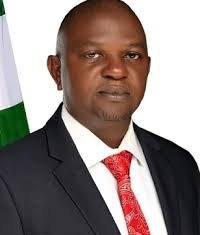
Speaking at the Ministry’s Citizens and Stakeholders’ Engagement in Abuja, the Minister of Water Resources and Sanitation, Professor Joseph Terlumun Utsev, announced that the 40-megawatt Kashimbilla Hydropower Plant is now feeding electricity into the national grid, with substantial progress recorded on the associated water-supply infrastructure.
Professor Utsev further disclosed that “with additional contributions from the Gurara and Dadin Kowa dams, Nigeria is now generating 110 megawatts of clean hydropower.”
He highlighted major progress on ongoing dam projects, noting that Mangu Dam is 90% completed, Adada Dam 78%, and Ogbesse Dam 65%. He said that work is also advancing on Farin Ruwa and Alau dams, as well as on the rehabilitation of the Tiga, Challawa Gorge, and Ruwan Kanya reservoirs.
The Minister further explained that “through Public–Private Partnerships (PPP), the Ministry successfully concessioned the Kashimbilla Hydropower Plant and the Kashimbilla Integrated Agro-Allied Airport, generating over N7 billion in revenue.
Professor Utsev said that “preparations are underway to concession additional facilities, including Farin Ruwa, Katsina-Ala, Dasin Hausa, Manya, Bawaku, and the Azare–Jere Irrigation Scheme.’
On irrigation, the Ministry delivered 2000 hectares to farmers at the Dadin Kowa Irrigation Scheme, progressed works at Middle Rima (Sokoto) and Middle Ogun, and expanded micro-irrigation projects in Gari in Jigawa State, Ipapo in Oyo State, Duku-Lade in Kwara State, Yauri, Shaga, and Ngaski in Kebbi State respectively.
He highlighted that in water supply and sanitation, over 6,700 water schemes have provided safe water to Nigerians, alongside 500 new rural water projects, stressing that the Clean Nigeria Campaign has achieved 162 Open Defeaction Free Local government area’s while the Ministry has also constructed 5,238 sanitation facilities, with new water-quality laboratories completed in Asaba, Delta State and Umuahia, Abia State.
Speaking on Flood management initiatives by the Ministry, Professor Utsev explained that several efforts were made to guide and informed Nigerians on what to do during the peak of rainy season. Such efforts includes; the 2024–2025 Flood Outlooks, which led to the creation of innovative flood management initiatives including the National Flood Insurance Programme, the Niger Flood Project, and the Integrated Climate Resilience Innovation Project.
The Minister clarified that no release has occurred from the Lagdo Dam.
Professor Utsev further revealed that the Sustainable Rural Water Supply Sanitation and Hygien SURWASH and Partnership for Expanded Water Supply PEWASH Programmes are delivering Water Sanitation and Hygiene WASH services across Nigeria.
He said that “the National Water Resources Institute has trained over 1,500 youths, while the Nigeria Integrated Water Resources Management Commission NIWRMC has issued 24 water-use licences.”
Professor Utsev also noted that the River Basin Development Authorities have expanded 154,000 hectares of irrigable land, supporting more than 1.6 million farmers across Nigeria.
Looking ahead, the Minister stated that by 2026 the Ministry will prioritise the completion and commissioning of the Adada, Mangu, and Ogbesse Dams; full operationalisation of the Kashimbilla water-supply network; expansion of micro-irrigation schemes; and the strengthening of citizen feedback and engagement mechanisms.
Professor Utsev reaffirmed the Ministry’s vision to make water a driver of national prosperity through inclusive growth, clean energy, climate resilience, food security, and sustainable development.
In her welcome address, the Permanent Secretary, Dr. Emanso Okop Umobong, emphasized that the engagement is in line with the Nigerian Government’s directive to deepen transparency, accountability, and stakeholder inclusion.
Dr Umobong assured participants that their contributions would be incorporated into ongoing reforms, reinforcing the Ministry’s commitment to evidence-based planning and efficient service delivery.
The event ended with an in-depth interactive session, during which participants offered recommendations that will guide ongoing sector reforms.
The forum brought together major actors across the water and sanitation sector, reinforcing collaboration and strengthening policy implementation nationwide.
PR/TERVER