
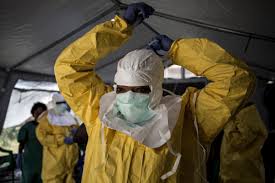
The World Health Organisation (WHO) on Sunday declared the Ebola outbreak in the Democratic Republic of Congo and neighbouring Uganda an international emergency concern. The agency warned that the true number of infections and the extent of the spread remain unclear, though it stopped short of declaring a full pandemic emergency, the highest alert level introduced in 2024.
It said the outbreak, caused by the Bundibugyo virus, puts countries sharing land borders with DRC at high risk for further circulation.
The Africa Centre for Disease Control and Prevention said on Saturday that a total of 88 people have died from the highly contagious haemorrhagic fever, with at least 336 suspected cases.
The strain – which was first identified in 2007 – has also killed a Congolese national in neighbouring Uganda, officials said Saturday.
Medical aid group, Doctors Without Borders (MSF) said it was preparing a “large-scale response”, calling the rapid spread of the outbreak “extremely concerning”.
“The Bundibugyo strain has no vaccine, no specific treatment,” DR Congo’s Health Minister Samuel-Roger Kamba said.
“I would like to remind you that this strain has a very high fatality rate, which can reach as high as 50 percent. So the sooner we can treat you, the sooner we can resolve the issue,” he said.
READ ALSO: DR Congo’s Ituri Province Records 65 Ebola Deaths
Vaccines are only available for the Zaire strain, which was identified in 1976 and has a higher fatality rate of 60-90 per cent.
Health officials on Friday confirmed the latest outbreak in the DRC’s north-eastern Ituri province which borders Uganda and South Sudan.
Symptoms of the disease include fever, haemorrhaging, and vomiting.
“The number of cases and deaths we are seeing in such a short timeframe, combined with the spread across several health zones and now across the border, is extremely concerning,” says Trish Newport, MSF Emergency Programme Manager.
It is the 17th Ebola outbreak to hit the DRC, and officials warned of a big risk of it spreading across the region where there is high mobility due to mining and other commercial activities.
The WHO said the high positivity rate of initial samples together with increasing reports of suspected cases, “all point towards a potentially much larger outbreak than what is currently being detected and reported”.
It advised nations to activate their national disaster and emergency-management mechanisms and undertake screenings at borders and main internal roads.
Ebola, believed to have originated in bats, is a deadly viral disease spread through direct contact with bodily fluids. It can cause severe bleeding and organ failure.
Africanews

