

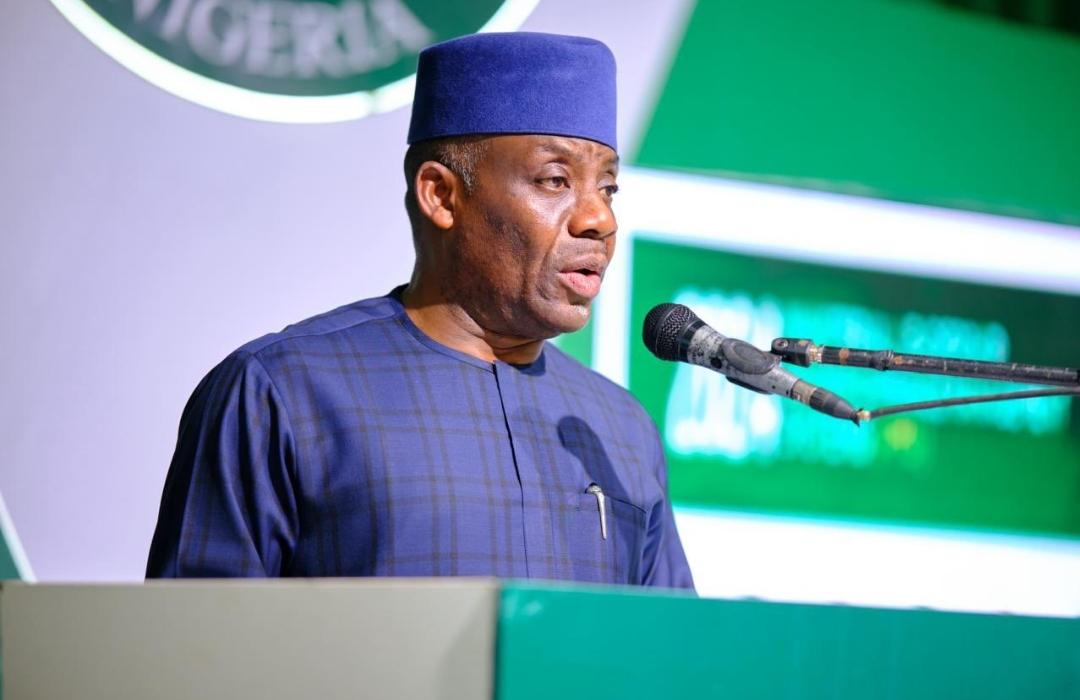
Nigeria’s Minister of Education, Tunji Alausa, has appealed to the National Assembly to support the Federal Ministry of Education’s 2026 budget, stressing the urgent need to tackle the shortage of qualified teachers and address persistent infrastructure deficits across schools in the country.
He made the appeal during his appearance before the Senate and House of Representatives Joint Committee on Education in Abuja, the nation’s capital where he defended the Ministry’s 2026 budget proposal.
The Minister assured the Committees that, once approved, the proposed budget would be implemented, delivering tangible outcomes that demonstrate the transformative impact of sustained investment in education.
“We aim to convince the National Assembly that a minimum of 20 per cent allocation to education, as recommended by UNESCO, should serve as the benchmark for future budgets,” Alausa said.
“Education is the backbone of national development. Without adequate funding, our schools cannot equip students with the knowledge and skills required to compete globally and thrive in the 21st century.”
Highlighting the staffing crisis, Alausa disclosed that Federal Unity Colleges are currently grappling with a deficit of over 3,500 teachers, a shortage severely affecting the teaching of core subjects, particularly science, mathematics, and technical disciplines.
“The shortage of qualified teachers is crippling our efforts to deliver quality education and produce graduates who can compete on the global stage,” Alausa said.
The Minister called for immediate funding to recruit, train, and retain highly skilled teachers, emphasising that addressing this gap is essential to achieving globally competitive learning outcomes.
He also drew attention to security challenges in schools, especially in areas vulnerable to kidnapping, banditry, and armed robbery. Many schools remain unfenced and lack reliable electricity, limiting the operation of modern security systems and leaving students and staff exposed to risks.
“Our children must learn in safe environments. Security is non-negotiable, and adequate funding is essential to install surveillance systems, construct perimeter fencing, and implement other protective measures to safeguard our learners,” he said.
Also Read: Education Minister Seeks Swift Resolution of FCT Teachers Strike
The Minister further highlighted critical shortages in classrooms, hostels, laboratories, and library facilities, warning that overcrowded classrooms, outdated laboratory equipment, and inadequate library collections are hampering students’ practical learning and research capabilities.
He also noted the low penetration of ICT in schools, calling for major investments in computers, internet connectivity, and digital learning tools to modernise teaching, enhance student engagement and prepare learners for the demands of a knowledge-driven global economy.
The Minister proposed the creation of a dedicated, ring-fenced scholarship account to ensure timely and complete disbursement, particularly for international awardees.
He recommended that all foreign payments be made in local currencies or US dollars to protect students from exchange rate volatility.
“Many of our scholarship beneficiaries are indigent yet high-performing students. Inadequate funding exposes them to hardship and limits their potential. Immediate and sustained funding is critical to safeguard their future,” he said.
Mr Alausa explained that the 2026 budget aligns with President Bola Tinubu’s eight priority areas, the Education Sector Roadmap, and the Renewed Hope Agenda. The Ministry’s 2026 budget thrust focuses on:
-
Providing opportunities for out-of-school children to return to school;
-
Ensuring safe and secure learning environments;
-
Enhancing teacher capacity to deliver contemporary and globally competitive curricula;
-
Strengthening tertiary institutions to produce a skilled and relevant workforce for national development.
“The 2026 budget is not merely a financial plan; it is a blueprint for transforming Nigeria’s education system. Every naira invested will yield long-term dividends in the form of skilled citizens, economic growth, and national prosperity,” Alausa emphasised.
He urged the lawmakers to prioritise education as a national imperative and support the budget to ensure the dreams of Nigerian children and the aspirations of the nation are realised.