
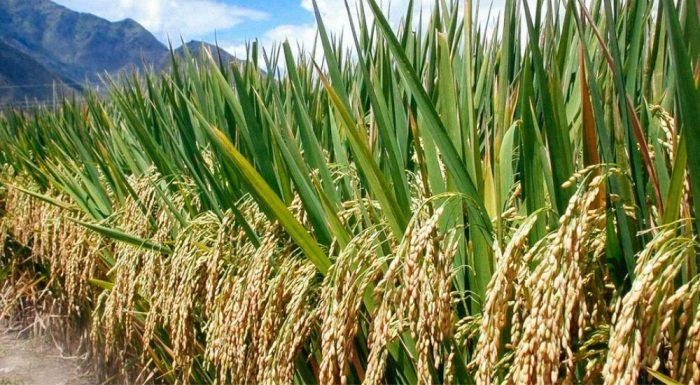
The Anambra State Government has announced a strategic partnership with a Chinese consortium of agricultural firms aimed at significantly increasing rice production and strengthening farmers’ capacity across the state.
The initiative, anchored on a public-private partnership (PPP) model, is expected to improve crop yields through the introduction of modern farming techniques, advanced technologies, and expanded irrigation infrastructure.
The State Commissioner for Agriculture, Dr Forster Ihejiofor, disclosed this during an interview with journalists at the State House of Assembly complex in Awka, shortly after the ministry’s 2026 budget defence.
According to Ihejiofor, “The partnership will initially focus on scaling up rice production in Ayamelum Local Government Area, one of the state’s major rice-producing zones.
“The state government is mainstreaming the public-private partnership model to enhance productivity in rice cultivation, particularly in advantaged communities.
“A partnership deal is being finalised with a Chinese consortium of agricultural firms to upscale rice production in Ayamelum LGA,” he said.
He explained that the consortium would train local farmers on modern agronomic practices to improve yields, noting the wide productivity gap between China and Anambra State.
“In China, rice yields average between nine and 10 tonnes per hectare, whereas in Anambra we currently produce about three to four tonnes per hectare.
“This collaboration will demonstrate how farmers can scale production from four tonnes to as much as 10 tonnes per hectare,” Ihejiofor said.
Beyond capacity building, the commissioner revealed that the state government is investing in irrigation infrastructure to enable year-round farming and mitigate the effects of climate change and erratic rainfall.
“We are working on irrigation facilities in multiple locations across the state to support continuous food production.
“This will help address irregular rainfall caused by the climate crisis, while smart agricultural technologies will also be deployed to improve soil moisture and plant nutrition.”
On tree crop development, Ihejiofor said the state government has so far procured and distributed no fewer than 2.2 million oil palm and coconut seedlings to approximately 180,000 households across Anambra State.
“Each household received about 10 seedlings.
“Within four to seven years, when these trees mature and stabilise, beneficiary families will enjoy sustained income for decades, as these crops can remain productive for 60 years or more.”
He added that the state plans to extend the programme in 2026, with Governor Chukwuma Soludo proposing to empower at least 100,000 additional households with economic tree seedlings.
“The household-based model is deliberate,” Ihejiofor explained.
“Given the fragmented land tenure system, where families often own small plots, it is more effective to distribute 10 to 20 seedlings per household for planting on individual lands.”
The commissioner also disclosed that the governor has approved ₦500 million for irrigation projects in Ifite-Ogwari, a major rice-growing community.
He said the project would enable up to three rice production cycles annually once completed.
He further referenced the state’s “Farm to Feed” initiative, launched in August 2025, which aims to reduce food costs by encouraging grassroots agricultural production.
“Under the ‘Farm to Feed’ programme, local government areas mobilised farmers and strengthened their capacity to boost food production as a response to rising food prices,” Ihejiofor said.

