
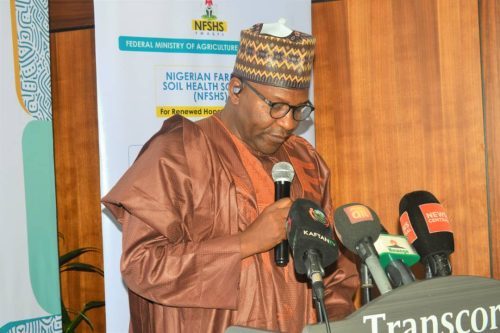
The Nigerian Government in collaboration with Deutsche Gesellschaft für Internationale Zusammenarbeit (GIZ) and other stakeholders has launched the Readiness Assessment for the Nigerian Farmers Soil Health Scheme (NFSHS).
The assessment is a nationwide audit to map soil degradation, align public spending, and anchor Nigeria’s food security as well as climate-smart commitments
Speaking during the launch ceremony held in Abuja, the Minister of State for Agriculture and Food Security, Senator Dr. Aliyu Abdullahi, said that the initiative aims to establish 774 soil testing laboratories (one per LGA), and create the Nigeria Soil Information System (NISIS) to provide personalized Soil Health Cards and crop-specific fertilizer recommendations.
He noted that years of nutrient depletion, erosion, and climate-related stress have left a significant portion of Nigeria’s farmland exhausted.
“If we do not take decisive action, we will be unable to achieve the objectives outlined in the Nationally Determined Contributions (NDC 3.0), the National Agriculture Technology and Innovation Policy (NATIP 2022–2027), or the National Agriculture Resilience Framework,” the Minister warned.
The Minister emphasized that the Readiness Assessment would provide Federal, State, and Local Governments with a unified set of facts to guide expenditure. ‘’As His Excellency, Mr. President Bola Ahmed Tinubu GCFR signed the 2026 budget appropriation, this assessment will indicate where every naira will yield the highest return, the best nutrition, and the greatest resilience,”.
He stated further that the Initiative would address five critical areas: the alignment of fertilizer regulations, extension guidelines, and state budgets with soil health objectives; the adequacy, turnaround time, and precision of operational soil laboratories; the preparedness of Agricultural Development Programmes (ADPs), NISIS, and private labs to test 2 million farms annually; the integration of soil data with financial platforms to unlock loans for farmers; and the barriers of cost, distance, or awareness preventing smallholders from accessing soil testing.
READ ALSO: President Tinubu Launches Nigeria Farmers’ Soil Health Scheme
Sen. Abdullahi explained that the NFSHS is fundamental to Nigeria’s NDC 3.0 targets, which require agriculture to contribute 0.4% of total emission reductions by 2035. Healthy soils sequester carbon, reduce nitrous oxide emissions, and lower dependence on synthetic fertilizer. He added that agroecology and agroforestry alone can achieve cuts of 158–712 million tons CO2e.
The Minister stressed that the scheme also serves as the primary pillar of climate-smart agriculture under NATIP 2022–2027 and directly supports the Renewed Hope Agenda by echoing President Tinubu’s call to shift from subsistence to commercial farming.
Comprehensive Soil Health Scheme
Emphasizing the next phase of full Soil Health Scheme implementation, the Minister said the Assessment is a preliminary step to the comprehensive Soil Health Scheme, which will expand soil testing through mobile laboratories and the Nigeria Soil Information System, scale up organic solutions including biochar, lime, and cover cropping, enhance extension services with digital tools for site-specific recommendations to end generic prescriptions, bundle finance by collaborating with NADF, the Bank of Agriculture, and private partners to link soil inputs with credit and insurance, and connect to watershed restoration and erosion control across 12 river basins as committed in NDC 3.0.
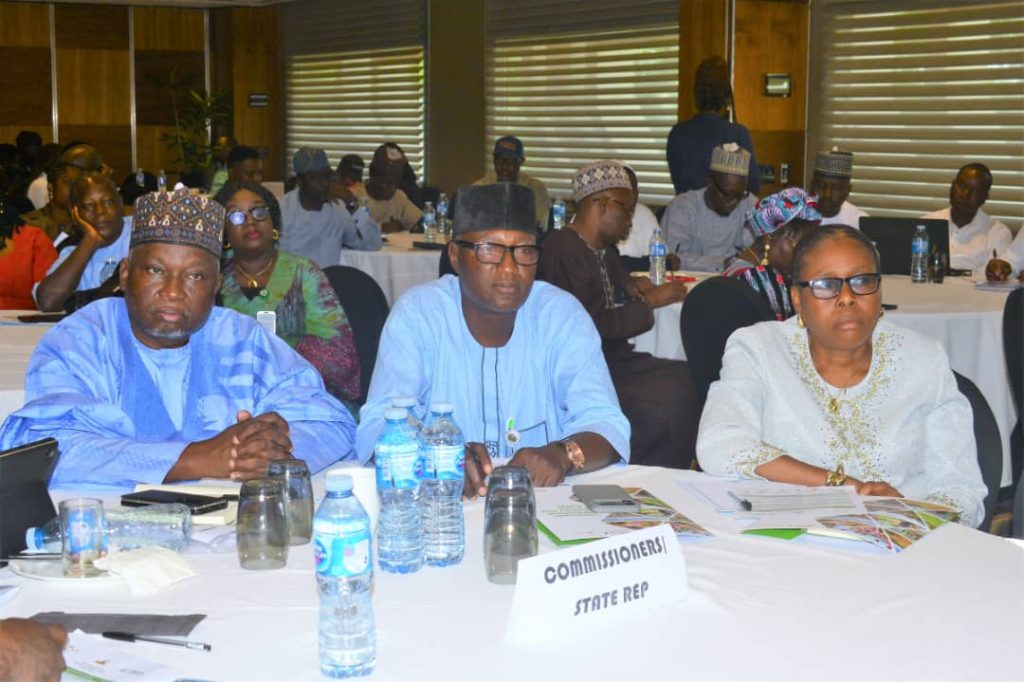
The Minister revealed that State Soil Desks will be established in all 36 states and FCT to co-manage data, with States’ Agricultural Development Programmes (ADPs) and ARMTI-trained agents leading delivery. There will be no more generic fertilizer recommendations.
He stated that the ‘Federal Government will sign Soil Health Compacts with each state to match federal investments with state commitments on funding, land, and staffing.
“The soils of Borno differ from those of Lagos, the approach for the Sahel must vary from that of the humid forest’’ he said.
He called on development partners to align technical support with national systems and invited the private sector to invest in the organic inputs market, testing services, and digital advisory.
Sen. Abdullahi mentioned five targets for 2027; 10 million farmers receiving soil-test-based advisory; 5 million hectares under improved practices including organic fertilizers, lime, cover crops, and agroforestry; Digital Soil Health Cards across all 774 LGAs via mobile; 30% reduction in post harvest losses in targeted value chains; and youth/women-led soil enterprises in testing, composting, and biochar in six geopolitical zones.
Sustainability
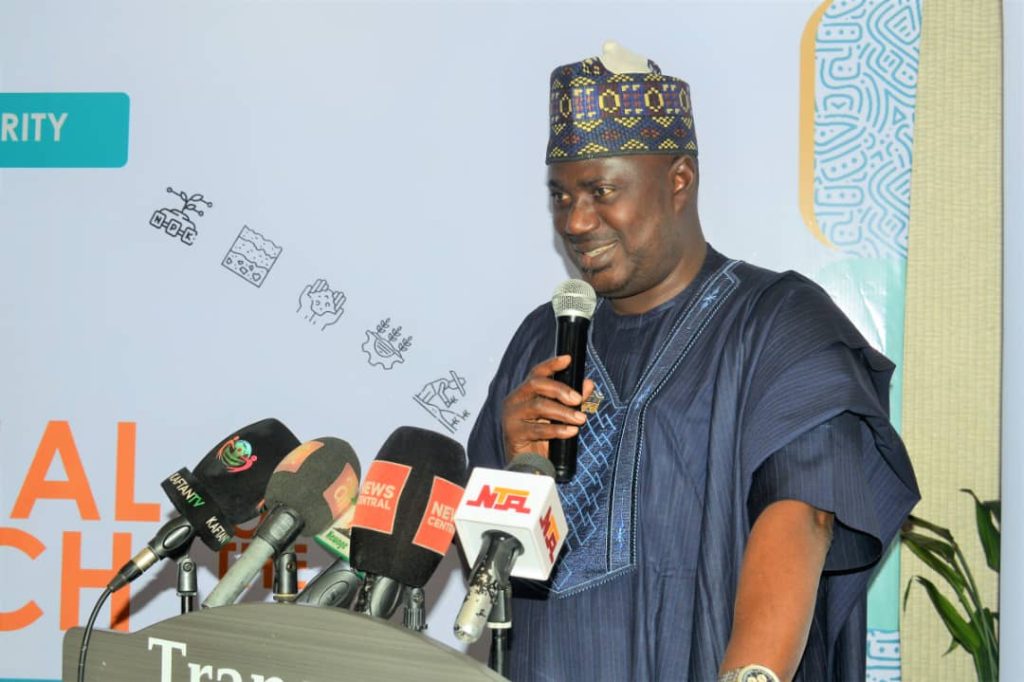
In his welcome address, the Permanent Secretary in the Ministry, Dr. Marcus Ogunbiyi, represented by the Director, Department of Farm Input Support Services, Mr. Abana Waziri Abba stated that Nigeria’s agriculture sustains over 200 million people and employs 70% of the rural population but faces low productivity, rising climate risks, and NDC 3.0 emission reduction obligations.
He said that the Initiative would restore soil health through: one-stop soil labs and mobile kits for 5 million farmers by 2030; site-specific fertilizers replacing generic NPK with data-driven blends; training 36,000 youth and extension agents as certified Soil Doctors; a live public digital soil map linked to NiMet weather data; and carbon payments plus a 5% interest rebate from NADF for farmers who increase organic matter.
“Your soil is akin to your bank account; it is essential to test it before making any investments,” he said.
He advised State Governments to grant assessment teams’ full access to ADPs, laboratories, and farmer groups to appoint a Soil Health Desk Officer.
He urged development partners to adopt the Assessment as the single evidence base for all soil-related projects in Nigeria
According to him, “The time for planning without evidence is over. The time for discussing climate issues without ensuring farmer profitability has ended’’
In his Goodwill Message, the Food and Agriculture Organization (FAO) Representative in Nigeria and the Economic Community of West African States (ECOWAS), Dr. Hussein Gadain, stated that the initiative would enhance the soil health system in Nigeria and boost agricultural production.
He pledged continuous technical support for Nigeria’s agricultural transformation which is geared toward achieving food and nutrition security.
While giving a vote of thanks, the Director, Department of Agricultural Land Climate Change Management Service, Mr. Olanipekun Oshadiya said that ‘’The Launch of Readiness Assessment signifies a pivotal achievement in our pursuit of healthy soil, sustainable agriculture and food security in Nigeria’’.
He appreciated ‘’the Ministers, Senator Abubakar Kyari, and Dr. Aliyu Sabi Abdullahi (CON), for their visionary leadership in propelling this initiative forward, also commend GIZ, OCP, AGRA, Gates Foundation, Sasakawa Africa, and our development partners for their dedication to boost agricultural productivity and build resilience against Climate Change’’.

 and other stakeholders .......)