

The Chairman of the Independent National Electoral Commission (INEC), Professor Joash Amupitan, has pledged to conduct the best election ever in the history of Nigeria.
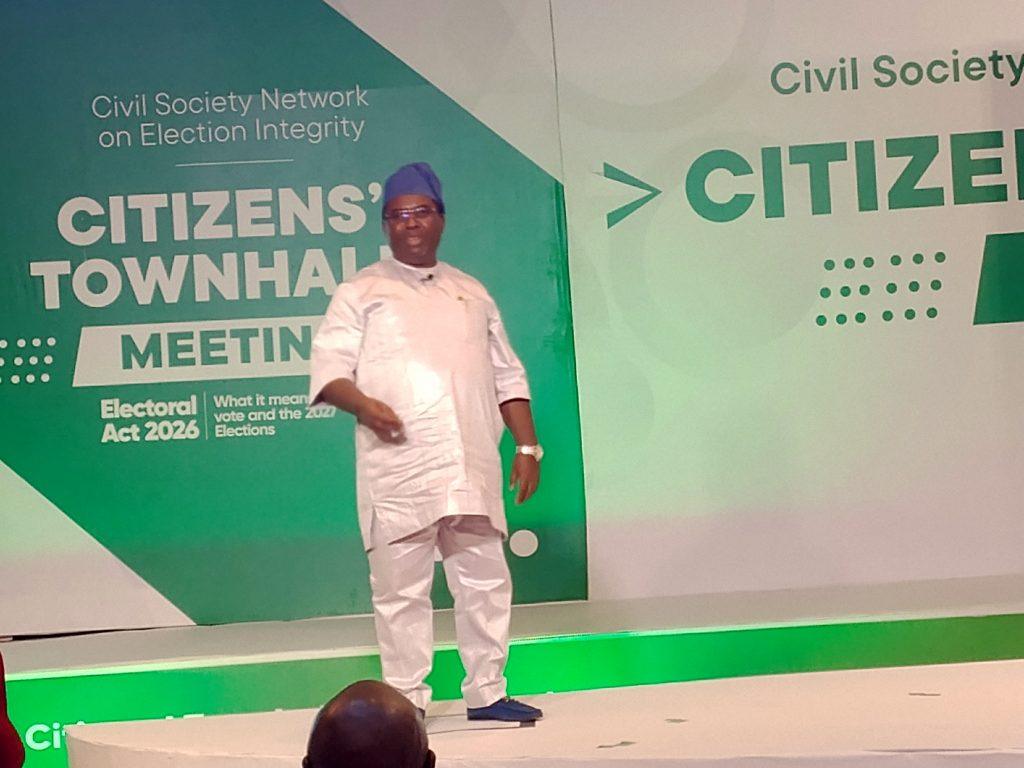
Amupitan stated this during the Citizens’ Townhall Meeting on the Electoral Act 2026 held in Abuja, Nigeria’s capital, and organised by the Civil Society Network on Electoral Integrity.
He said the commission under his leadership would strive to conduct an election that is acceptable to all.
“By the grace of God, the 2027 election will be the best Nigerians will experience. Citizens are now more politically aware, and credible elections are essential for national development and public trust,” he said.
Mock Election
He said as part of its commitment, the commission would organise a mock presidential election to close identified gaps, especially in technology and other logistics that are needed for the 2027 general elections.
“Before deploying any technology, it must be properly tested. We are going to conduct a mock presidential election to ensure interstate transmission works effectively and does not fail.
“For example, during the Osun election, the BVAS was successful because it was within the state. But when it came to interstate during the presidential election, there were challenges. We will test all our facilities before the 2027 elections,” he said.
He said new validation safeguards have been recently introduced in the BVAS to ensure a credible election.
Real-time Transmission
On the issues of real-time electronic transmission of results, the INEC boss said 100 percent may not be achievable in the 2027 general elections because of network limitations in some parts of the country, especially in the remote areas, which is due to inadequacy and unreliability of some available communication infrastructure.
“While electronic transmission of results is achievable, guaranteeing instantaneous or real-time transmission nationwide remains difficult due to infrastructure challenges, especially in remote areas,” he said
He cited the recent Federal Capital Territory (FCT) Area Council elections, where some locations, especially Kabi ward in Kuje Council Area, had no seamless connectivity for election results to be transmitted.
“In some locations, electoral officials deployed to polling units could not be reached for hours because of poor telecommunications access. Movement to certain wards especially Kabi in Kuje area council took several hours due to difficult terrain, making real-time transmission impossible,” he explained.
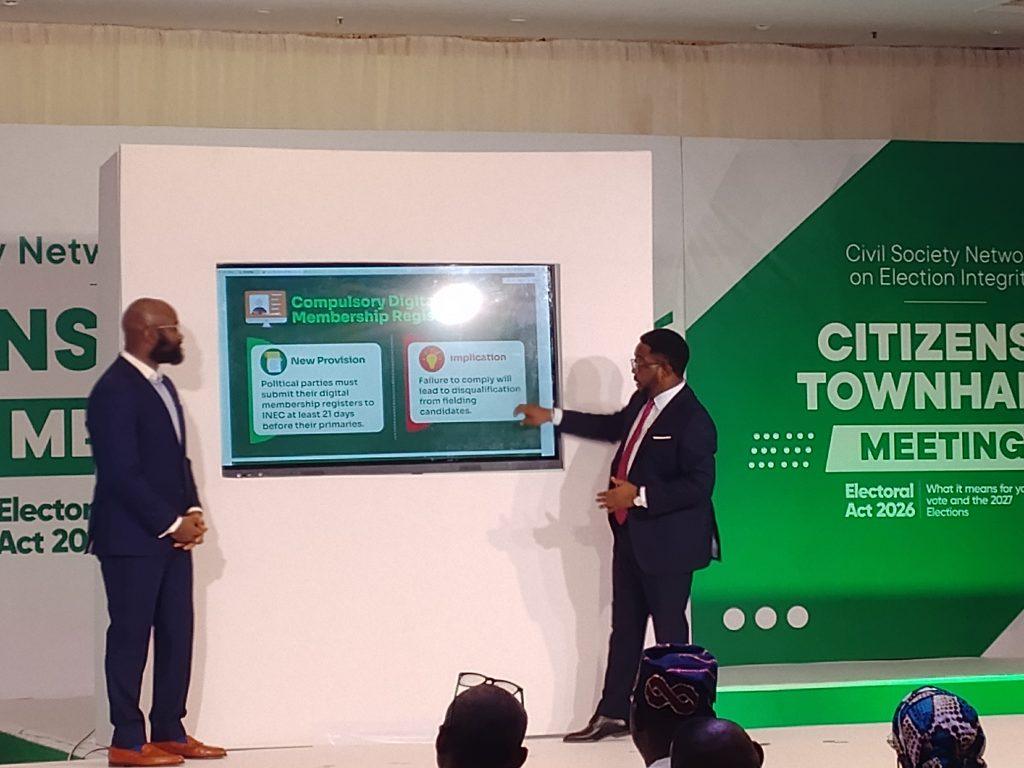
He, however said that the Electoral Act 2026 provides safeguards to ensure results are eventually transmitted from polling units, even where real-time upload fails by using the in-built electronic form EC8A, which can transfer results as soon network becomes available, as results move from polling units to wards.
“The issue is not whether results will be transmitted. The law provides alternatives. Even if real-time transmission encounters delays, results must still be uploaded and collated,” he said.
Corrective Measures
Professor Amupitan admitted some logistical shortcomings in previous elections in Nigeria, promising to take corrective measures in 2027, as logistics remain key to election success.
“Timely deployment of personnel and materials, the peaceful conduct of voting, proper result management and transparent declaration remain key performance indicators. We will do everything possible to achieve all this in the coming election,” he said.
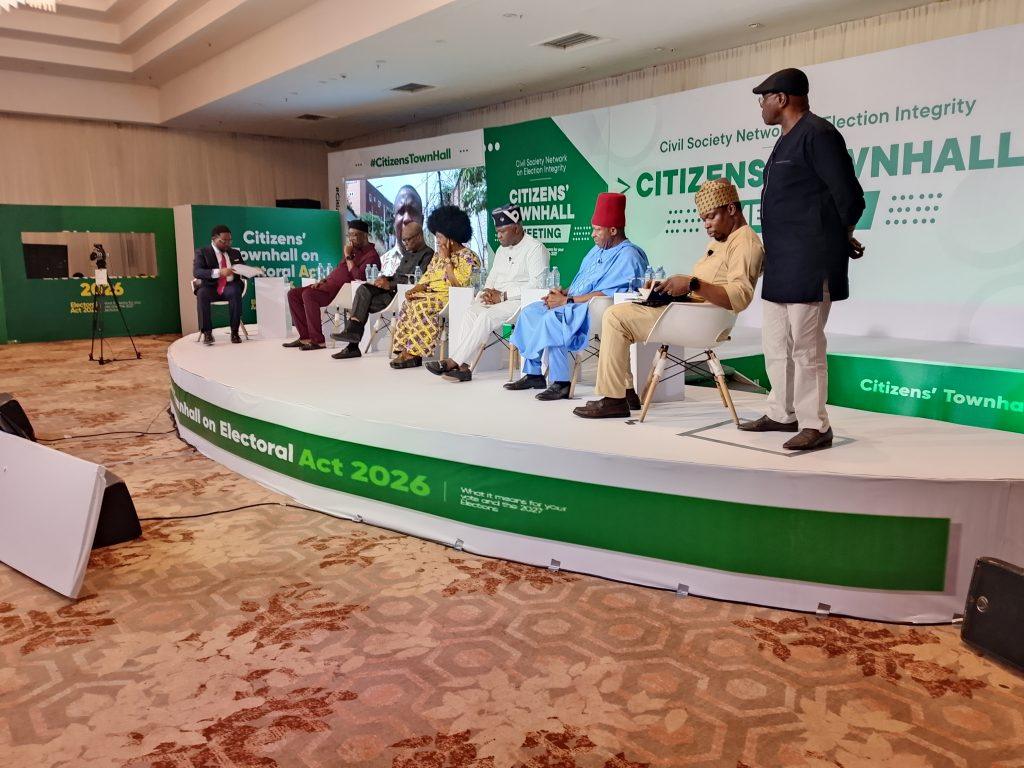
Executive Director of YIAGA Africa, Samson Itodo, while setting the tone for the town hall meeting said it provides opportunities for stakeholders to interrogate provisions of the new electoral law, seek clarity and assess Nigeria’s preparedness for credible elections ahead of 2027.
2026 Electoral Act
He said the engagement becomes imperative as the Electoral Act 2026 would play a decisive role in determining the credibility of the 2027 general elections.
Itodo called on the National Assembly to begin the process of amendment to some of the provisions of the Electoral Act, especially the release of funds to INEC Six (6) months before the election, which he considered to be too short and would create logistics challenges, stressing that the 2022 electoral Act which provided for twelve (12) months before election was better.
He said the compressed times table would put pressure on INEC, while calling for the signed law to be made available to the public enmass accompanied by extensive sensitisation.
He commended the provisions of the 2026 electoral Act, which allows for the download of voters cards and the use of NIN, birth certificate and international passport for registration.
These, according to him, “Will provide security and reduce disenfranchisement of citizens.”
He emphasised that electoral laws only strengthen democracy when implemented with integrity, urging INEC, political parties, civil society groups and security agencies to work collaboratively to guarantee transparency, accountability and public confidence in the electoral process.
During the PANEL session, Former Country Director of ActionAid, Ene Obi, urged stakeholders to ensure that results are transmitted immediately from polling units because “it is mandatory as contained in the new Act.”
She equally questioned the cost of the election as contained in the Act, beginning from the campaign fund to the purchase of forms for elective positions.
She said the “cost is beyond the reach of the ordinary citizens,” while calling for implementation of the punishment stated in the Act to serve as a deterrent.
Senator Victor Ume, on his part, urged party agents and other stakeholders to cross-check what they have with the IREV to guard against manipulation, stressing that the “IREV portal will be a checkmate if properly used.“
Isaac Oluwalana of the Nigerian Society of Engineers said the new Act is exciting as it has made BVAS and IREV part of the law, “unlike before when BVAS could not be tendered in the court.”
He urged telecoms operators to ensure effective services during the elections.
“Telecoms operators should come together to give their best during the elections because they have invested more money in their systems in recent years,” he advised.
A participant equally called for integrity check of personnel who will participate in the conduct of the election, as well as the use of multiple network Sim cards to reduce network limitations.

