Ghana has reaffirmed its commitment to economic renewal, African integration, and stronger bilateral relations with Nigeria as it celebrated its 69th Independence Anniversary.
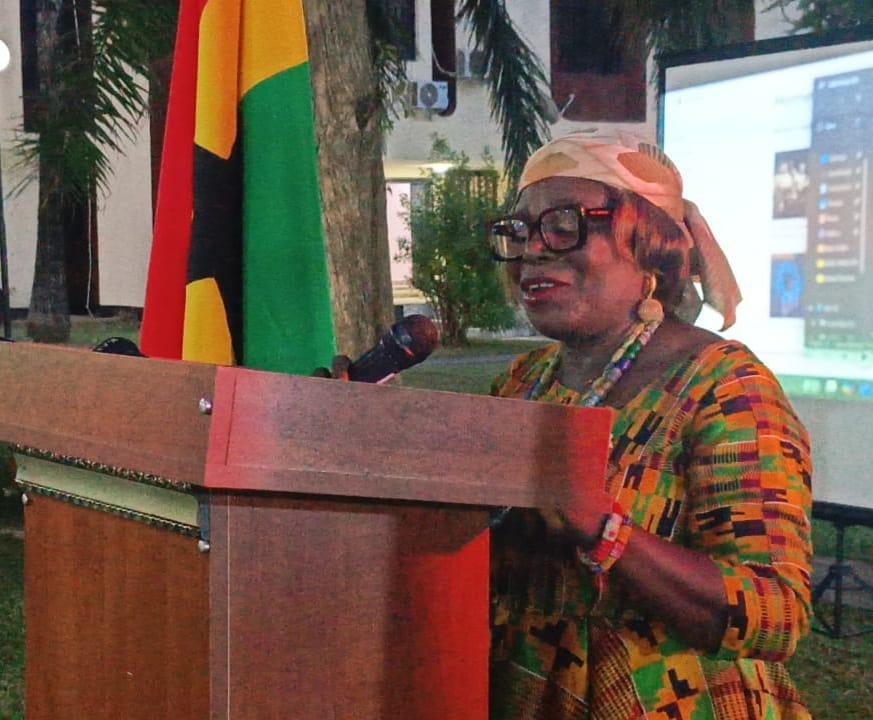
Speaking at a reception to commemorate the occasion, Ghana’s Acting Head of Mission in Nigeria, Dr Mrs. Gladys M. Y. Feddy Akyea, said the country’s independence remains closely tied to the broader vision of African unity articulated by Kwame Nkrumah on March 6, 1957.
Reflecting on the historic declaration of independence, the envoy noted that Nkrumah’s famous statement that “the independence of Ghana is meaningless unless it is linked to the total liberation of the African continent” continues to resonate nearly seven decades later.
“That vision transcended borders and was anchored in African unity, dignity and a shared destiny. the ideals of independence must continue to guide Ghana’s development and its contributions to the continent”, Akyea said
According to the Acting Head of Mission, the theme reflects the policy direction of the administration of President John Dramani Mahama, who emphasised that restoring hope requires discipline in governance, transparency in public life and a renewed commitment to inclusive economic growth.
Akyea explained that “the government’s ‘Reset Agenda’ provides the framework for revitalising Ghana’s economy through accountability, increased productivity and accelerated digital and infrastructure development.
“The reforms are designed to deepen economic stability and improve the well-being of our people, attract sustainable investment and position Ghana competitively within Africa and the global economy.”
Central to the economic vision, she noted Ghana’s commitment to the African Continental Free Trade Area, whose secretariat is hosted in Accra.
Describing the trade pact as a practical realisation of the Pan-African ideal, Akyea said ”Ghana will expand intra-African trade, promote industrialisation and unlock new opportunities for African enterprises across borders.’
She noted that President Mahama currently serves as the African Union Special Envoy on Reparations, a role she said reflects Ghana’s longstanding advocacy for global justice and historical accountability.
“The discourse on reparations is not about division but about restoration — the restoration of historical truth, economic fairness, and moral balance. The conversation also includes issues such as debt justice, equitable access to global finance, restitution of cultural heritage, and fair trade systems,” she said.
Akyea further expressed appreciation to the Economic Community of West African States for endorsing Ghana as the bloc’s sole candidate for the Chairpersonship of the African Union Commission in 2027.
According to her, the endorsement reflects Ghana’s longstanding contributions to regional peace, mediation and institutional leadership.
Highlighting bilateral relations, the envoy described Ghana’s ties with Nigeria as one of the most important pillars of the country’s regional diplomacy.
She stressed that since the establishment of diplomatic relations in 1960, both countries have cultivated a partnership grounded in shared history, economic cooperation and enduring people-to-people ties.
Together, Ghana and Nigeria continue to champion ECOWAS integration, democratic governance and regional stability. The opportunities presented by AfCFTA would further strengthen trade and investment cooperation between the two countries”, she said
Akyea also commended the Ghanaian diaspora for its continued contributions to national development and praised the business communities in both Ghana and Nigeria for strengthening economic ties through investment and entrepreneurship.
Reaffirming Ghana’s commitment to improving the business environment, Akyea said the government remained focused on implementing reforms that promote transparency, regulatory efficiency and investor confidence.
” I wish to assure all stakeholders of the Mission’s continued support and open-door engagement in facilitating trade, investment, and people-to-people cooperation. In line with the Government’s commitment to further enhancing the business environment, Ghana remains steadfast in implementing reforms that promote transparency, regulatory efficiency, and investor confidence. Indeed, Ghana is open for business!” Akyea explained.
As the country celebrates 69 years of independence, she said Ghana remains committed to building a future defined by prosperity, dignity and strong regional cooperation.
” As we celebrate Ghana at 69, we reaffirm our commitment to unity, partnership, and forward-looking progress. While we honour our past, we remain resolute in building a future defined by prosperity, dignity, and shared advancement anchored in strong regional cooperation and constructive global engagement”, she added.
Also speaking at the event, Nigeria’s Minister of Foreign Affairs, Yusuf Tuggar, represented by the Chief of Protocol at the Ministry of Foreign Affairs, Ambassador Wahab Akande, described Ghana as a brotherly nation whose relationship with Nigeria has grown over decades of shared history and cooperation.
Tuggar noted that Nigeria and Ghana share deep historical and cultural connections that extend beyond geography.
“Our histories are entangled, our cultures deeply connected, and our peoples bound by commerce, education, migration and family ties. From Lagos to Accra and from Kano to Kumasi, the relationship between citizens of both countries reflects a long-standing brotherhood”, he said
According to Tuggar, Nigeria and Ghana have maintained strong diplomatic ties since the 1960s and remain founding members of the Economic Community of West African States, where both countries continue to promote regional economic integration.
He explained the two nations have also worked together within the African Union to advance peacekeeping, democratic governance and regional stability.
“The economic relations between the two countries have expanded significantly over the years, with Nigerian businesses, including banks and insurance companies, maintaining a strong presence in Ghana. The bilateral investments span sectors such as aviation, oil and gas, banking and finance, telecommunications and the informal economy”, Tuggar said
Highlighting the strong socio-cultural ties between the two countries, the Minister said Ghanaian teachers played a significant role in Nigeria’s educational development during the 1970s and 1980s, while many Nigerian students currently study in Ghanaian universities.
He also pointed out that millions of Nigerians reside in Ghana, further strengthening people-to-people relations. He noted that both countries have established the Nigeria–Ghana Permanent Joint Commission for Cooperation to deepen bilateral engagement and strengthen collaboration on issues of mutual interest.
According to him, leaders of both countries are working closely in several areas, including economic development, climate change, health, peace, and security.
“As both countries continue to work together bilaterally and multilaterally, West Africa and indeed Africa will achieve greatly and earn its place in the comity of nations,” he added.
The 69th Independence Day celebration, observed under the theme “Building Prosperity, Restoring Hope,” had senior government officials, members of the diplomatic community, and friends and partners of Ghana in attendance.