The Managing Director of the Nigerian Ports Authority (NPA), Dr. Abubakar Dantsoho, has called for urgent and accelerated port modernisation, warning that Nigeria risks losing out on the full benefits of the African Continental Free Trade Area (AfCFTA) without it.
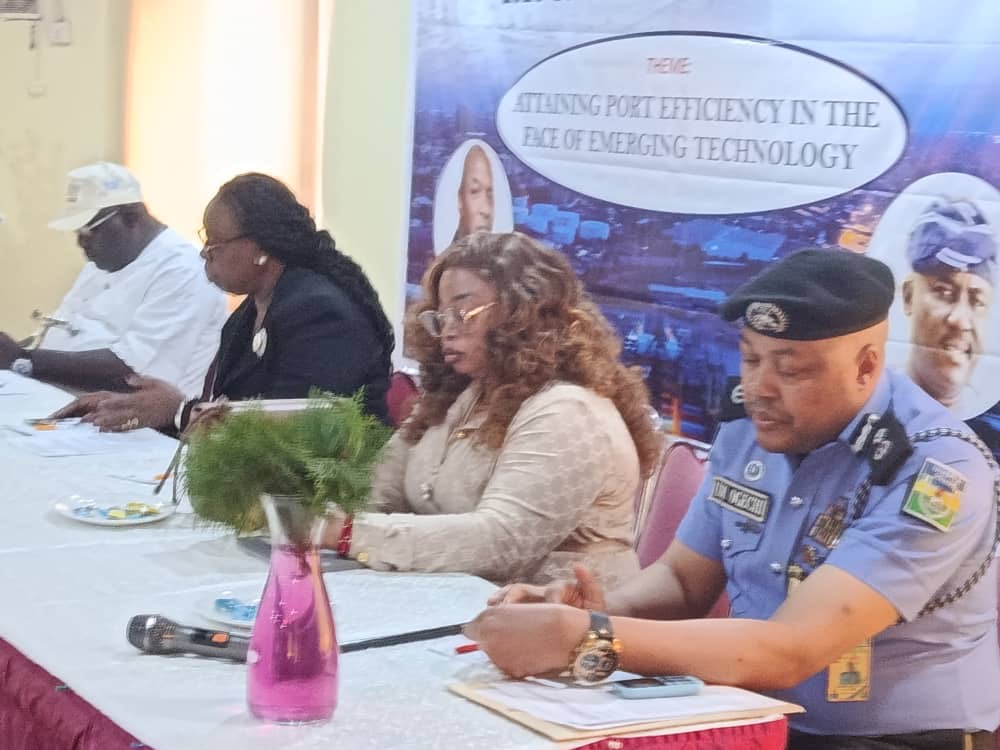
He made this statement at the Association of Maritime Journalists of Nigeria 2026 Annual Conference held in Lagos, themed “Port Efficiency Amid Emerging Technologies.”
Dantsoho stressed that transforming the nation’s ports was no longer optional but a strategic economic necessity.
While Nigeria enjoys a natural geographic advantage as a maritime gateway to West and Central Africa, he noted that global competitiveness under the AfCFTA would depend largely on the efficiency, innovation, and reliability of port operations.
“Port modernisation is not merely an infrastructure project, it is a national economic priority,” he said.
He outlined key reforms being driven by the Authority, including infrastructure upgrades at Apapa and Tin Can Island ports aimed at boosting capacity, improving berth productivity, and reducing vessel turnaround time.
He added that the development of deep seaports, particularly Lekki Port, was expanding Nigeria’s trade capabilities.
Major Challenges
Also speaking, former lawmaker representing Apapa Federal Constituency, Mufutau Egberongbe, identified major challenges affecting port efficiency, including infrastructure gaps, reliance on manual processes, congestion, security risks, labour-related issues, and environmental pressures.
He called for the urgent adoption of emerging technologies to improve efficiency across Nigerian ports, warning that outdated systems are no longer sustainable in modern maritime trade.
“Ports serve as critical gateways for international trade and economic growth, but many continue to struggle with congestion, delays, high operational costs, and infrastructure deficits,” he said.
Egberongbe explained that technologies such as artificial intelligence (AI) can help forecast vessel arrivals and optimise resource allocation, while the Internet of Things (IoT) enables real-time monitoring of port equipment and operations.
Stronger Collaboration
Meanwhile, the Nigeria Police Force emphasised the need for stronger collaboration, technology deployment, and public compliance with safety regulations.
A representative of the Assistant Inspector-General of Police, Maritime Police Command, DCP Udu Moses Ogechi, stated that Nigeria’s waterways remain critical to economic activities but are increasingly challenged by security threats and safety concerns.
He described rivers, creeks, lagoons, and coastal corridors as vital national assets that support commerce, transportation, and livelihoods.
Ogechi noted that their protection was essential for economic stability.
According to him, the Maritime Police Command has intensified collaboration with key agencies, including the Nigerian Navy and the National Inland Waterways Authority, to tackle crimes such as kidnapping, piracy, armed robbery, and illegal trafficking.
He disclosed that the partnership with the Nigerian Navy has strengthened intelligence-driven operations and improved the capacity of Marine Police personnel through specialised training.
The police also highlighted recent Federal Government investments aimed at boosting maritime security, including the deployment of 31 gunboats equipped with modern navigation and communication systems to enhance patrol and rapid response capabilities.
With sustained commitment and collaboration among stakeholders, Nigerian ports are on course to become a preferred gateway for trade in West Africa and a major driver of economic diversification.