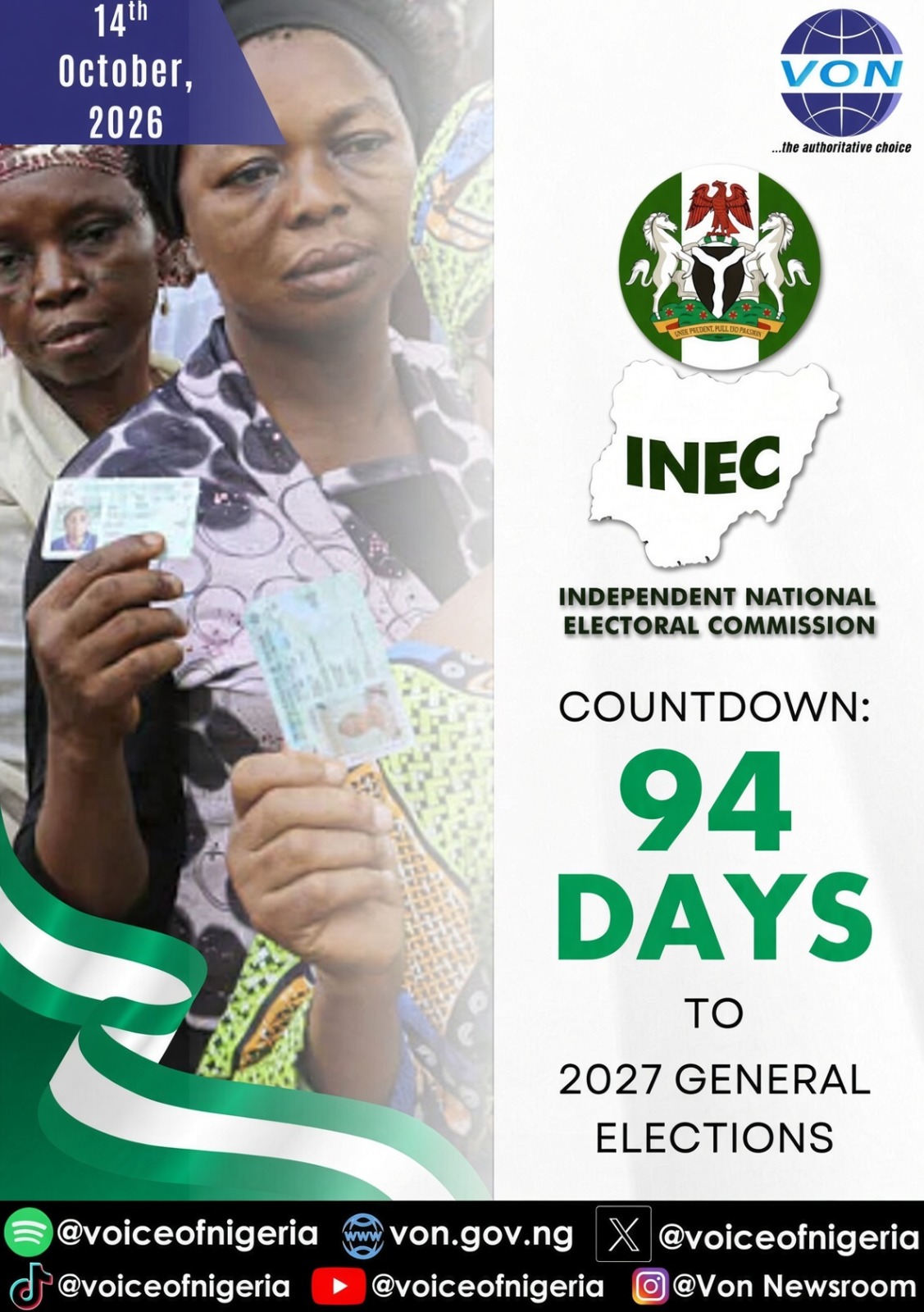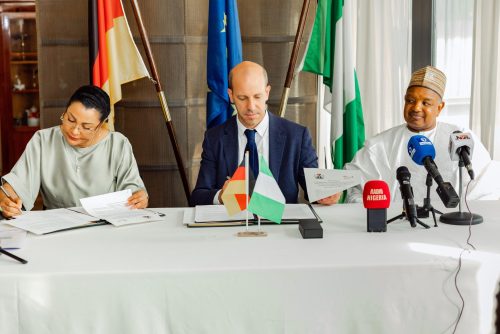
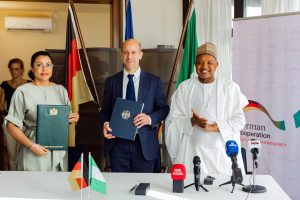
The Minister of Budget and Economic Planning, Senator Abubakar Bagudu, and the Minister of State, Dr Doris Uzoka-Anite, have jointly signed the Summary Record of the Nigeria-German Government Negotiations.
This was done at the German Embassy in Abuja, in the company of senior officials of the German Government, development institutions, and members of the diplomatic corps. This step marks a major milestone in the strengthening of bilateral development cooperation between the two countries.
Speaking on behalf of the Federal Ministry of Budget and Economic Planning, Dr Uzoka-Anite described the agreement as a reaffirmation of the enduring partnership between Nigeria and the Federal Republic of Germany, grounded in mutual trust, shared priorities, and a common commitment to sustainable development and inclusive economic growth.
READ ALSO: Nigeria, Germany Finalise Bilateral Cooperation Framework
She said the negotiations reflected both countries’ determination to deepen collaboration across strategic sectors critical to Nigeria’s development agenda, including agricultural transformation and food systems, climate and energy transition, sustainable economic development, skills acquisition, amongst others
Financial cooperation
Dr Uzoka-Anite expressed appreciation to the German Government for its renewed commitment to financial and technical cooperation of €65 million, as well as for the additional €300 million Export Credit Guarantee financing framework designed to support investment mobilisation and long-term financing for strategic development projects in Nigeria.
She noted that the partnership comes at a critical juncture in Nigeria’s reform journey under President Bola Tinubu, emphasising that ongoing reforms are foundational to unlocking long-term economic growth and prosperity.
“We recognise that development cooperation must increasingly catalyse investment, innovation, and sustainable financing. This partnership is therefore not merely procedural; it is a concrete affirmation of our shared commitment to improving our people’s lives,” she stated.
She reaffirmed Nigeria’s commitment to ensuring that all programmes within the partnership remain nationally owned and aligned with the National Development Plan 2026–2030 and the broader Agenda 2050.
In her opening remarks, the German Ambassador to Nigeria, Annett Günther, described the signing ceremony as the culmination of extensive bilateral engagements to review achievements, refine priorities, and chart a stronger path for future cooperation between Nigeria and Germany.
She highlighted the broad participation of stakeholders from both countries, including representatives from nine Nigerian ministries, German development institutions such as BMZ, GIZ, and KfW; development partners, members of the European Union; and the diplomatic community.
Günther noted that the breadth of participation reflected the depth and strategic importance of Nigeria-Germany relations across multiple sectors and institutions.
She commended all implementing partners and stakeholders for their contributions to the success of joint programmes and reiterated Germany’s commitment to strengthening its long-standing cooperation with Nigeria.
Speaking at the ceremony, Deputy Director General of Germany’s Federal Ministry for Economic Cooperation and Development (BMZ), Mr Philip Knill, reaffirmed Germany’s commitment to a long-term, reliable, and transformative partnership with Nigeria,
He described the country as “a giant in Africa” and a critical partner in regional economic integration, peace, and security.
Extensive engagements
Knill disclosed that the German delegation held extensive engagements during its visit to Nigeria, including high-level government negotiations, meetings with Nigerian and German businesses in Lagos, visits to energy infrastructure sites, and discussions with key stakeholders across the power, agriculture, digital economy, and industrial sectors.
He said that leading German companies, including Siemens, SAP, Bayer, and STIHL, are already exploring opportunities to support Nigeria’s industrialisation, energy expansion, digital transformation, and agricultural mechanisation.
Macroeconomic reforms
He commended Nigeria’s ongoing macroeconomic reforms, particularly efforts to liberalise the exchange rate, reform taxes, and improve food security, noting that Germany views Nigeria’s reform agenda as critical to unlocking greater economic opportunities and attracting long-term investment.
Knill further announced that Germany’s Ministry for Economic Affairs and Energy offered a €300 million export credit line to support bilateral trade and investment.
Highlighting the impact of existing Nigeria-Germany cooperation programmes, he revealed that more than 16,000 small and medium-sized enterprises have increased their incomes through joint initiatives.
“Approximately 600,000 smallholder farming households have benefited from training programmes that boosted productivity and incomes by up to 90 percent.” Knill said
He added that more than 70,000 Nigerians are currently benefiting from mini-grid energy projects under the partnership.
Knill also reaffirmed Germany’s support for Nigeria’s Presidential Power Initiative, particularly the efforts to expand electricity grid capacity to 25 gigawatts through ongoing collaboration with Siemens.
Cleaner energy
He noted that “the initiative would significantly improve access to reliable, cleaner energy for millions of Nigerians”.
The signing ceremony concluded with both governments reaffirming their commitment to translating dialogue into measurable development outcomes.
Also, through stronger institutional collaboration, mobilising the private sector, and strategic investments to accelerate inclusive growth and sustainable development in Nigeria.