By: Is’haq Ahmed, Abuja
The West African Health Organization, through the ECOWAS Regional Centre for Surveillance and Disease Control, has expanded its disease prevention and emergency response measures following a new outbreak of Ebola virus disease in the Democratic Republic of the Congo.
In a statement issued by the Executive Director of the regional centre, Dr Mamadou Diarrassouba, the organisation disclosed that the Congolese Ministry of Health confirmed the country’s 17th Ebola outbreak after laboratory tests on 13 samples showed that eight were positive for the Bundibugyo strain of the virus.
The results were verified by the National Institute for Biomedical Research.
According to the regional health body, Ebola virus disease is a severe and often deadly illness affecting both humans and primates.
The disease is caused by viruses belonging to the Ebolavirus group within the Filoviridae family.
Dr Diarrassouba explained that four Ebola virus species are known to infect humans, including Zaire ebolavirus, Bundibugyo ebolavirus, Sudan ebolavirus, and Taï Forest ebolavirus.
The virus is primarily transmitted from infected wild animals such as fruit bats, primates, and porcupines to humans before spreading through direct contact with infected blood, body fluids, organs, contaminated surfaces, or the remains of deceased victims.
Health experts noted that the incubation period ranges from two to 21 days and that infected individuals only become contagious after symptoms appear.
Early signs commonly resemble flu symptoms, including fever, weakness, headaches, sore throat, muscle pain, vomiting, and diarrhea, while severe cases may progress rapidly and include bleeding complications.
The organisation stated that although vaccines exist for Ebola caused by the Zaire strain, there are currently no approved vaccines for infections linked to other strains, including the Bundibugyo variant.
The regional centre warned that Ebola mortality rates can reach up to 50 per cent, although early medical intervention significantly improves survival chances.
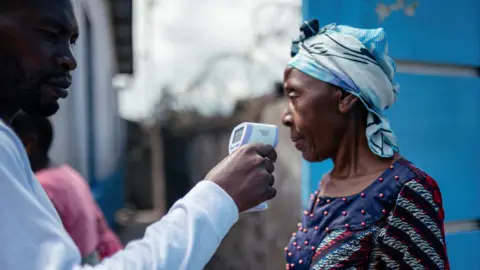
To prevent the spread of the disease, the ECOWAS health agency urged “member states to strengthen surveillance systems at airports and border entry points, particularly for travelers arriving from Central Africa”.
It also advised governments to improve laboratory readiness, strengthen emergency response teams, enhance infection prevention and control measures, and prepare designated treatment centres for possible cases.
The organisation further recommended improved risk communication and public awareness campaigns while discouraging unnecessary travel restrictions or border closures.
Residents across the ECOWAS region were advised to maintain regular hand hygiene, avoid direct contact with infected individuals or bodily fluids, refrain from handling bushmeat or dead animals, and seek immediate medical attention if symptoms associated with Ebola develop.
The regional disease control centre said it would continue monitoring the situation closely and provide updates as necessary.
Hauwa M.