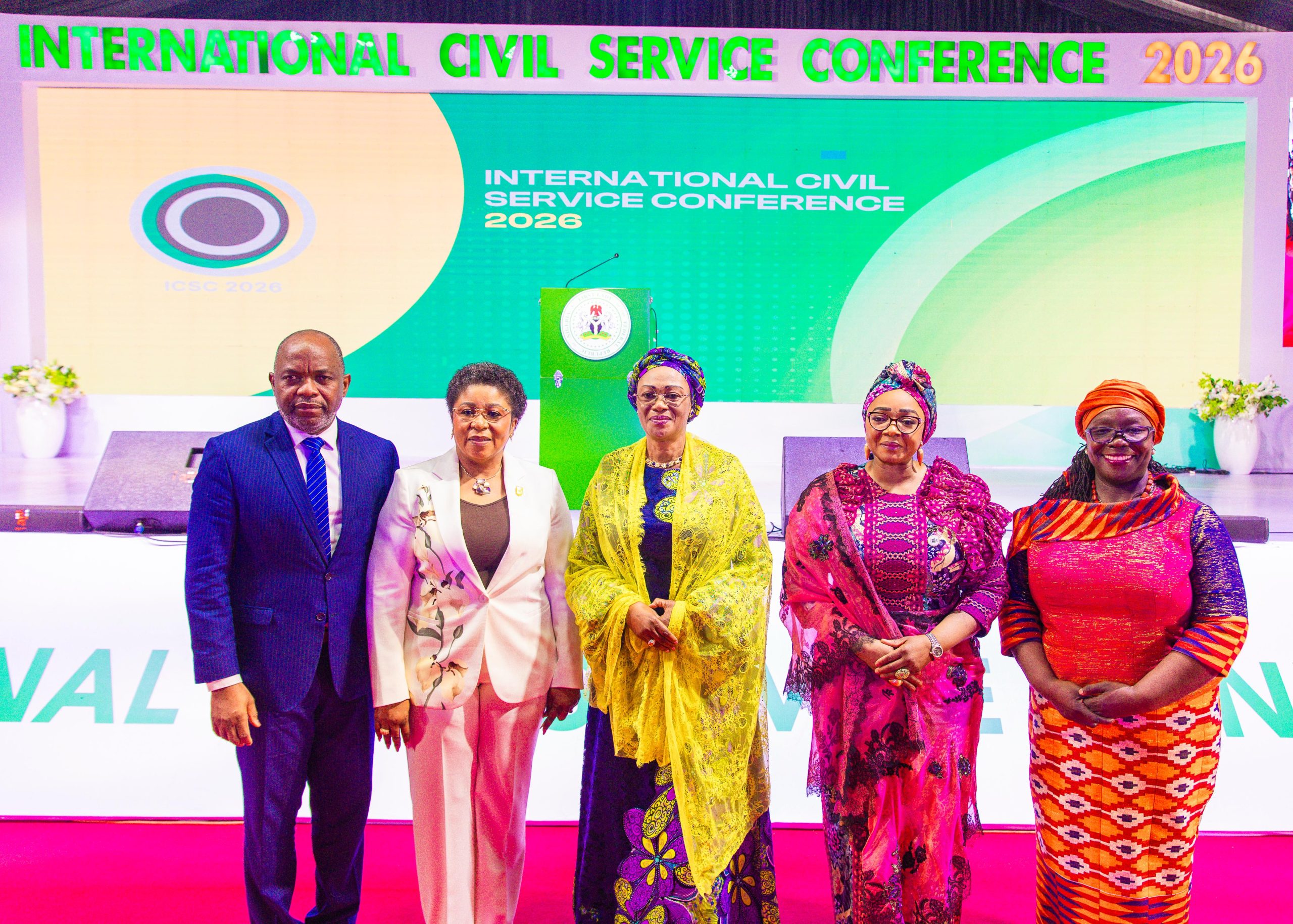
The Minister of Women Affairs and Social Development, Hajiya Imaan Sulaiman-Ibrahim, says Nigeria can no longer afford the persistent under-representation of women at senior leadership levels within the Federal Civil Service.
Speaking at the official launch of the INSPIRE Initiative to advance gender inclusion, institutional reforms and women’s leadership across governance structures by the Office of the Head of Civil Service of the Federation during the International Civil Service Conference in Abuja.
The Minister described the programme as a strategic intervention designed to strengthen institutional accountability, workplace protection and equal access to leadership opportunities for women within the public sector.
“The higher the level of decision-making, the thinner their representation becomes. This is not a coincidence. It is the consequence of a legacy system that has some structural weakness, and it is a gap we can no longer afford,” the Minister stated.

She commended the sustained advocacy and support of the First Lady, Oluremi Tinubu, for women, children, families and vulnerable groups, noting that her commitment continues to inspire national action toward inclusive governance.
According to the Minister, the conference reflected Nigeria’s collective resolve to build institutions that are “more effective, more inclusive, more accountable, and more responsive to the evolving needs of citizens.”
Reaffirming the administration’s policy direction, she recalled President Bola Ahmed Tinubu’s position that “the greatest tool for sustainable and scalable transformational development of our nation is the empowerment of our women”.
The Minister warned that the continued exclusion of women from economic participation and senior leadership positions poses serious consequences for national productivity and development.
“Estimates indicate that women’s economic exclusion costs Nigeria up to 37% loss in productivity. It is therefore clear that Mr President’s vision and our collective ambition of achieving a one trillion dollar economy demand that we act differently,” she said.
She also explained that the INSPIRE Initiative aligns with the implementation of the National Gender Policy (2021–2026) and the Women’s Economic Empowerment Policy (2023–2028), describing the initiative as “a critical vehicle in translating that roadmap into institutional reality”.
Sulaiman-Ibrahim stressed that effective governance institutions must prioritise workplace dignity, safety and employee welfare.
“Provisions for maternity protection, safe workplaces, childcare support, mental health, and zero tolerance for harassment are critical concerns. They are the foundation of a capable, modern civil service,” she emphasised.
Calling for immediate policy implementation across Ministries, Departments and Agencies, as well as the private sector, the Minister urged stakeholders to institutionalise gender-responsive reforms capable of dismantling structural barriers against women.
“We must fully implement the Six-Month Maternity Leave Policy without exception or penalty. Women must never be forced to choose between caring for a child and building a career,” she said.
She also advocated the establishment of workplace crèches, enforcement of zero-tolerance harassment policies, implementation of gender-responsive budgeting frameworks, operationalisation of the 30 per cent affirmative procurement policy and deliberate investment in mentorship, sponsorship and succession planning for women.
The Minister pledged the full commitment of the Federal Ministry of Women Affairs and Social Development toward the successful implementation of the initiative through policy leadership, technical support and institutional collaboration.
She further commended the Head of the Civil Service of the Federation, Didi Esther Walson-Jack; Permanent Secretaries; development partners; and the Nigerian Civil Service for supporting the reform agenda.
Declaring that policy conversations must produce measurable impact, the Minister stated, “Words spoken in conferences like this must become action felt in offices, homes, and communities across Nigeria”, adding that “INSPIRE must become a living initiative.”
The event had in attendance the First Lady of Nigeria, Senator Oluremi Tinubu; stakeholders; development partners; senior public officials; and reform advocates.