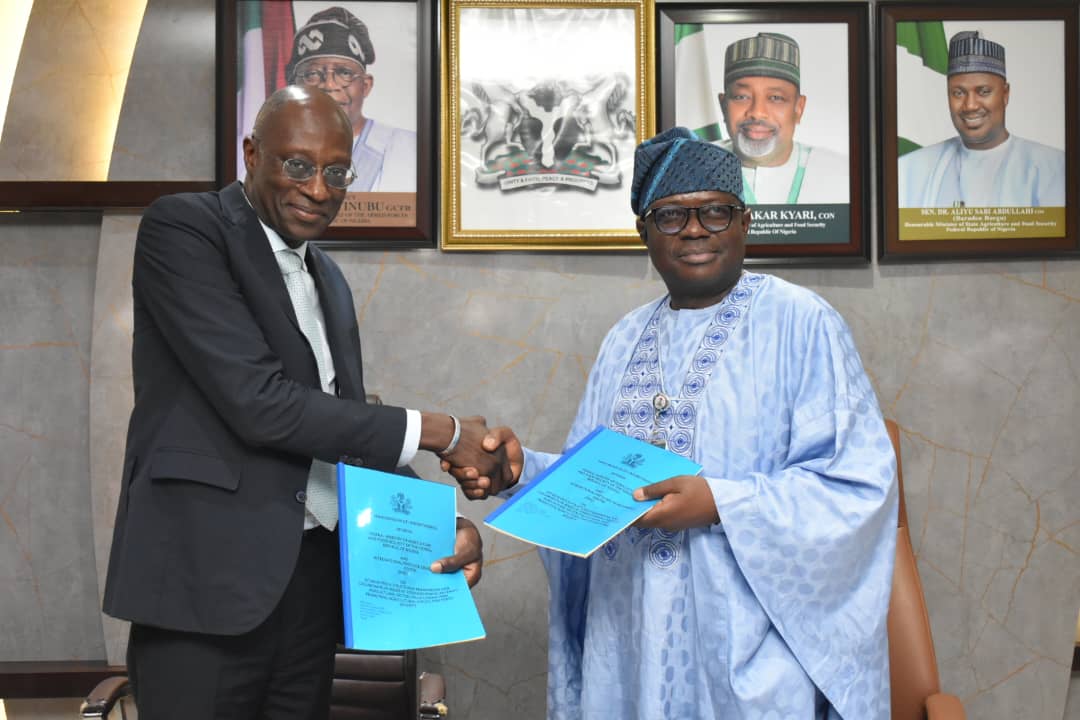
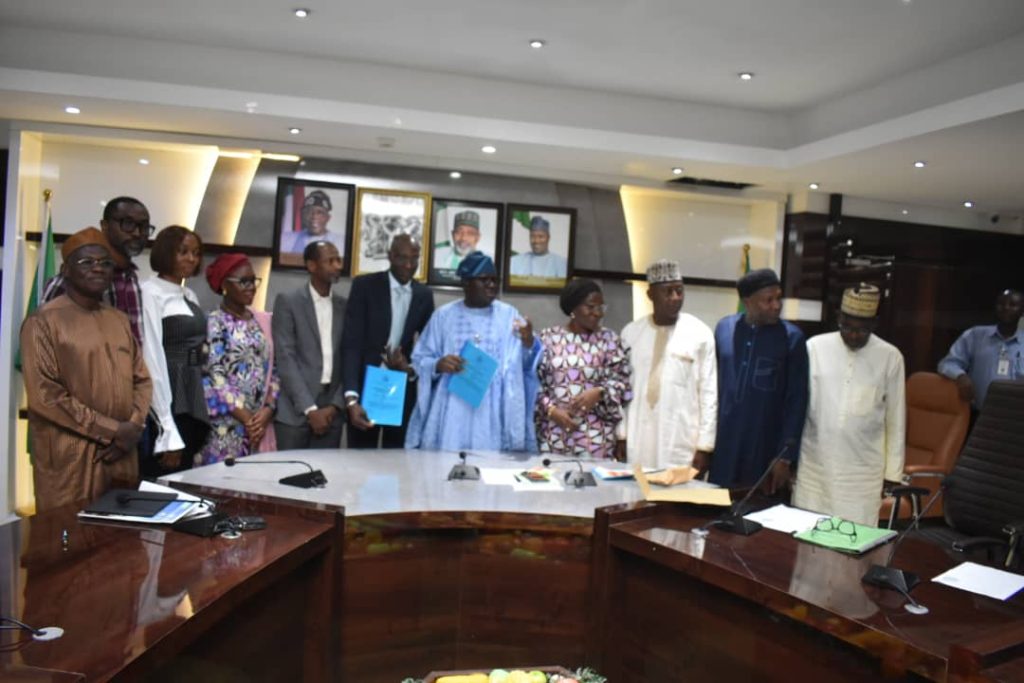
Nigeria’s Ministry of Agriculture and Food Security (FMAFS), has signed a Memorandum of Understanding (MoU) with the International Fertiliser Development Center (IFDC), to improve fertiliser access for farmers and achieve food sovereignty as well as revolutionise the agricultural ecosystem.
The agreement targets the core challenges holding back smallholder productivity which are fertiliser affordability, accessibility, and timely distribution.
Through the partnership, the Ministry and IFDC will work to strengthen fertiliser supply systems, expand soil testing and balanced nutrient management, and support private-sector-led distribution across the country.
READ ALSO: Agriculture Ministry Says Kampala Declaration Will Boost Sector
Speaking during the ceremony held at the Ministry’s Conference Room in Abuja, the Permanent Secretary, Dr. Marcus Olaniyi Ogunbiyi said that “Fertiliser remains indispensable for increasing crop yields and improving farm productivity across the agricultural value chain. A farmer may appreciate access to machinery, tools, or financial services; however, the availability and affordability of fertiliser often determine the success or failure of a farming season.”
He stated that the partnership will support efforts to improve fertiliser accessibility, strengthen soil fertility management, promote sustainable agricultural practices, and enhance food production nationwide.
“We therefore call upon IFDC and all stakeholders to leverage this partnership to develop and implement impactful fertilizer programmes that will boost agricultural productivity, improve livelihoods, create jobs, and contribute to economic growth and rural development,” he said.
The Permanent Secretary revealed that the MoU aims to close the gap between Nigeria’s fertiliser production capacity and actual use on farms.
According to him, “Nigeria’s urea production capacity now exceeds 6.5 million metric tonnes annually through Dangote Fertilizer Limited, Indorama Eleme Fertilizer and Chemicals Limited, and Notore Chemical Industries Plc. Yet national fertilizer consumption remains at approximately 18.6 kilograms per hectare, well below the Abuja Declaration target of 50kg/ha”.
Dr. Ogunbiyi highlighted that many smallholder farmers continue to face challenges related to fertiliser affordability, accessibility, and timely distribution.
Coordinated Efforts
He noted that coordinated efforts among government institutions, development partners, the private sector, and farmer organisations are required to address these bottlenecks
Dr Ogunbiyi said that the agreement builds on Nigeria’s long-standing collaboration with IFDC.
He reaffirmed the Ministry’s commitment to advancing the Renewed Hope Agenda through partnerships that deliver measurable results for Nigerian farmers and the agricultural sector.
Responding on behalf IFDC, the Executive Director, Ben Lenkcher pledged that the organisation would continue to provide technical and logistics support for Nigerian farmers.
Lenkcher emphasised that Nigeria’s population would ensure that IFDC’s objective of making fertiliser accessibility, availability and affordability is achieved.