Governments at all levels, institutions, as well as young Nigerians have been admonished to press toward a more deliberate role in the nation’s capital market growth.
This came as the capital market is said to be held back not by a shortage of opportunity, but by weak fiscal incentives, low investor literacy among the young, and a national culture still wary of long-term savings.
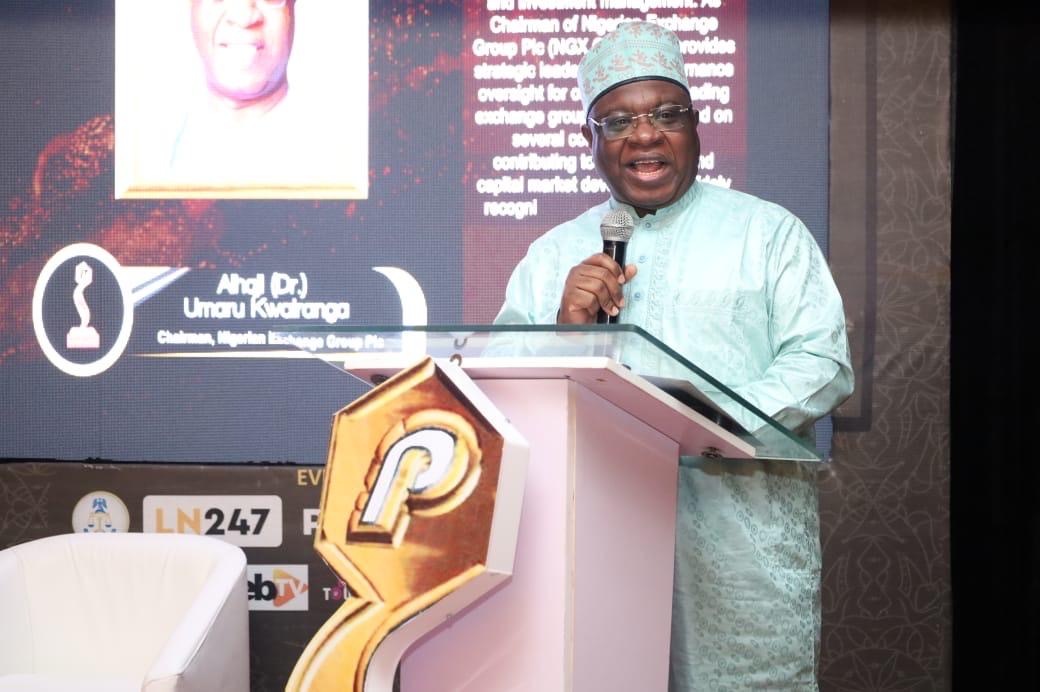
The call by the Chairman of the Nigerian Exchange Group, Dr Umaru Kwairanga, was reiterated across three separate platforms.
READ ALSO: NGX, AbuDhabi Bourse Partner for investments in African Markets
Kwairanga stated that to achieve and sustain the transformational growth, governments at all levels must craft policies that encourage and sustain the competitiveness of the private sector.
Key Policies
He highlighted two key policies and policy reforms that he said the Exchange has been advocating for, which are believed will enhance the attractiveness of the nation’s capital markets and boost the competitiveness of the private sector and the Nigerian economy.
First on his list, is a call for specific fiscal incentives for listing on a recognised exchange, and an example of such an incentive is a reduced corporate tax rate for companies listed on a recognised exchange.
The NGX Chairman noted that, “Annually, our companies collectively pay trillions in taxes to the public coffers and disclose details fully in publicly available annual reports. This makes the work of our tax authorities easier and should be rewarded with incentives such as a lower corporate tax rate for quoted companies.”
Secondly, Kwairanga called for a stricter enforcement of the Nigeria First policy which requires public agencies to prioritise locally produced goods and services, stating that this would also help to sharpen corporate competitiveness.
“There should be no excuse for public agencies going outside to procure goods and services that can be produced in Nigeria. Any flouting of such a policy should be punished if we are to grow our economy sustainably,” he said.
At the Pearl Awards Corporate Summit with the theme; Policy Reforms and Corporate Competitiveness: Navigating Towards a Sustainable Edge, Kwairanga
described the Pearl Awards as an institution that had evolved beyond recognition to become a driver of accountability and governance standards across Nigeria’s corporate landscape.
“The Annual Pearl Award encourages listed companies to strive for excellence in order to be considered for the Awards.Fora such as this interrogate various aspects of policy and practice and proffer practical and workable suggestions to improve our corporations and the Nigerian economy,” he said.
Also, the NGX Boss while receiving the Director-General of the National Youth Service Corps, Brigadier General Olakunle Oluseye Nafiu, for a Closing Gong Ceremony proposed that the NGX deliver investor education to corps members during orientation and at their places of primary assignment as part of efforts to promote deliberate participation in the capital market.

“As we continue to deepen our capital market, it is important that more Nigerians, particularly young people, understand the opportunities available within the financial ecosystem. This is why we see immense opportunity in exploring collaboration with the National Youth Service Corps to advance investor education and financial literacy among corps members across the country. We believe that collaboration with institutions such as the NYSC will further strengthen our collective efforts towards building a financially empowered population and creating pathways for young Nigerians to become active participants in Nigeria’s economic transformation.”
While also addressing students at the Investment Society Colloquium 2026, Kwairanga urged the students to embrace habits that build long-lasting wealth.
He said, “This is because as citizens and as a country, we have too often neglected the very important habits of long-term savings, investment and entrepreneurship. Many of our citizens manage their finances on a day to day basis with little savings to fall back on.
“When they mention investment, they think more of schemes that promise double returns within days or weeks. Our entrepreneurs too often rely more on short term and expensive bank facilities rather than cheaper sources of funds from the longer-term capital market.”

The NGX boss acknowledged that Nigeria is not short of potential, stating that the nation is blessed with a large and youthful population, abundant natural resources, entrepreneurial energy, and a strategic position within Africa.
He however lamented that potential alone does not create prosperity as potential must be translated into productivity, ambition must be converted into investment, ideas must become enterprises and an enterprise must ultimately create jobs, wealth, and national development.
He warned explicitly about Ponzi and pyramid schemes, describing them as traps built on imaginary investments that exploit personal networks of friends and family.

Speaking specifically on energy, Kwairanga told students that recent global conflicts had exposed the dangers of interconnected energy markets and that Nigeria, as a net exporter geographically removed from the world’s most vulnerable supply routes, was uniquely positioned to benefit.
Accordimg to Kwairanga, “Energy remains one of the most important determinants of economic competitiveness. Reliable electricity influences productivity, industrialisation, technological innovation, education, healthcare delivery, and overall quality of life.”
He urged the Students as well as other Nigerians to make decisions and as well acquire knowledge that will shape the economy worth inheriting.