

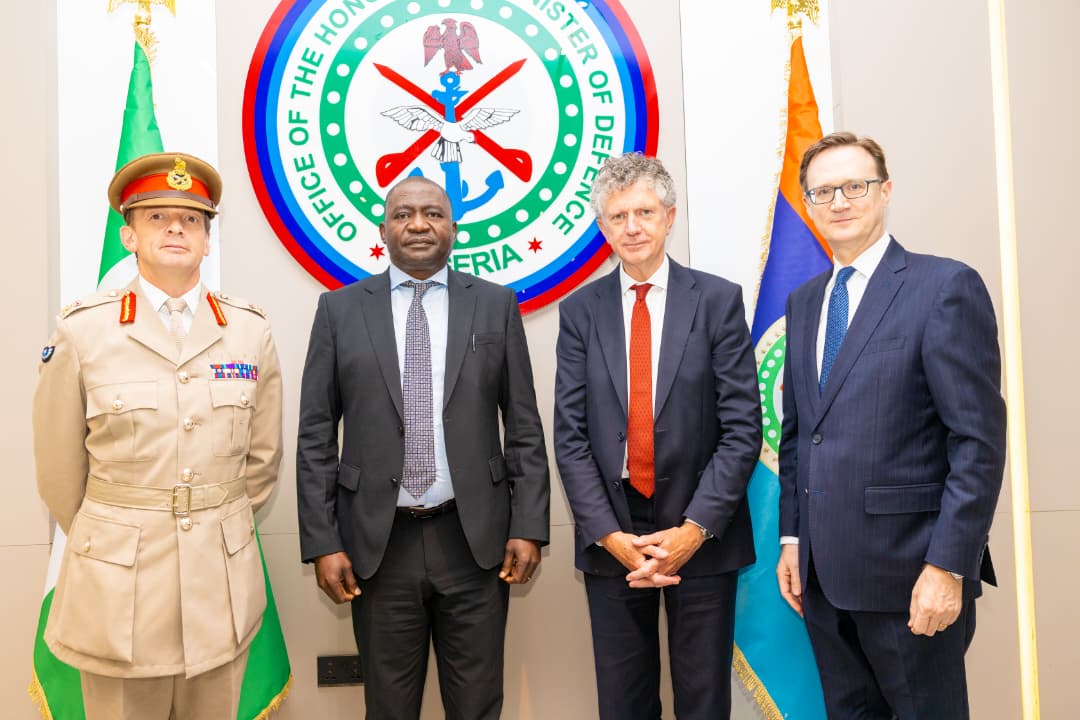
Nigeria and the United Kingdom have agreed to deepen defence and security cooperation through a review of existing bilateral agreements, signalling a shift towards broader collaboration in intelligence sharing, military capacity development, and long-term regional stability.
The development emerged during a meeting between the Minister of Defence, General Christopher Musa (Rtd), and the United Kingdom’s National Security Adviser, Jonathan Powell, who is in Abuja for the Fourth UK-Nigeria Security and Defence Partnership (SDP4) Dialogue.
According to the Ministry of Defence, discussions centred on strengthening strategic cooperation in response to evolving security threats while expanding existing frameworks that underpin defence relations between the two countries.
READ ALSO: Nigeria, United Kingdom Deepen Ties to Combat Terrorism
General Musa reaffirmed Nigeria’s commitment to maintaining and enhancing its strategic partnership with the United Kingdom, describing the relationship as an important pillar in addressing contemporary security challenges.
A major outcome of the engagement was the decision to undertake a comprehensive review of existing Memorandums of Understanding between the two countries.
The planned review will focus on modernising security protocols, expanding technical training opportunities, and strengthening capacity-building initiatives for the Armed Forces of Nigeria.
The Defence Minister also highlighted the importance of deeper collaboration in counterterrorism efforts, intelligence exchange, and initiatives aimed at promoting stability across the wider region.

The bilateral engagement took place on the sidelines of the two-day Security and Defence Partnership Dialogue hosted by the Office of the National Security Adviser in Abuja.
The summit was jointly led by Nigeria’s National Security Adviser, Mallam Nuhu Ribadu, and UK National Security Adviser Jonathan Powell.
According to the Ministry, the dialogue established a framework for future cooperation and outlined priorities intended to guide bilateral security engagement through 2026 and beyond.

