Home Blog Page 1075

JAMB Sets 150 as Cut Off Mark for Universities Admission

The Joint Admissions and Matriculation Board (JAMB), alongside heads of tertiary institutions and other key stakeholders, has fixed the minimum admissible scores for the 2024/2025 academic session into Nigeria Universities at 150.

The board and the stakeholders also declared that polytechnics and colleges of education will admit candidates from a baseline of 100, while colleges of nursing sciences minimum score was set at 140.

The new benchmark represents an increase from last year’s cut-off mark of 140.

The Cut off marks were declared at the 2025 JAMB policy meeting held on Tuesday in Abuja, Nigeria

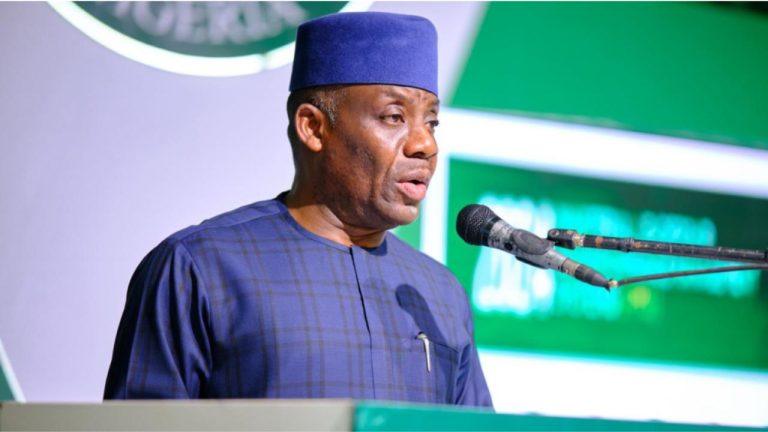
The meeting, chaired by the Minister of Education, Maruf Alausa, was attended by Vice Chancellors, Rectors, Provosts, and heads of regulatory agencies.

The policy marks serve as general benchmarks, although institutions still reserve the right to set higher standards based on their programmes’ competitiveness.

JAMB Registrar, Professor Ishaq Oloyede, emphasised that the approved scores are the minimum thresholds and no institution is allowed to go below them.

The minimum admissible scores for admissions for the next academic session have been fixed at 150 for universities, 100 for polytechnics, 100 for colleges of education and 140 for colleges of nursing sciences by the stakeholders,” he said

He noted that the policy decision was aimed at ensuring fairness, access, and quality across the board.

This policy reflects the reality of our education system and the need to align admission processes with merit, equity, and capacity,” he said.

The policy meeting also reaffirmed the centrality of institutional autonomy in admissions, but within a framework that promotes national standards.

Institutions are expected to conclude their admission processes in line with the approved schedule and report to JAMB for central processing.

Lateefah Ibrahim
Cairo Telecom Fire Injures 14, Disrupts Internet Nationwide

0

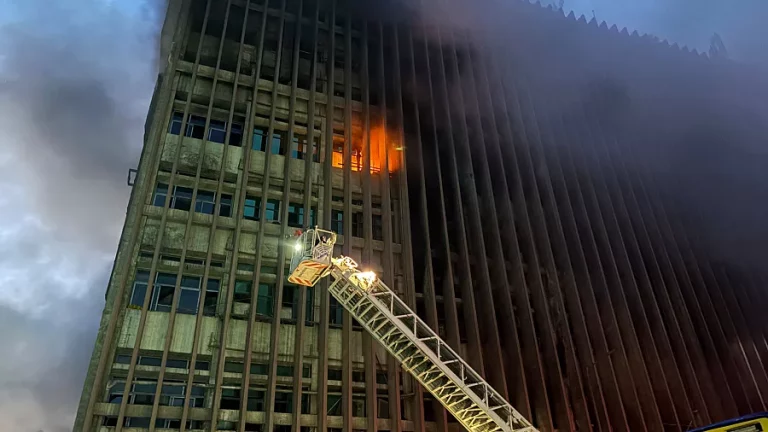
A fire engulfed the main telecom company building in downtown Cairo on Monday, injuring at least 14 people and prompting a temporary outage of internet and mobile phone services, officials said.

The 14 injured were taken to nearby hospitals, the Health Ministry said in a statement.

A witness said Cairo 24 that two emergency responders suffered burns on their hands.

The fire started on the seventh floor of a landmark 10-story Telecom Egypt building in the Ramses area of Cairo, the governor’s office said in a statement.

Ambulances and fire trucks were on site as plumes of dark smoke rose in the downtown.

Firefighters put up ladders as fire trucks spewed water to contain the blaze, while security officials cordoned off the area.

The fire broke in an equipment room of Telecom Egypt and led to a temporary disruption of telecom services, the Telecommunications Regulatory Authority said in a statement.

Telecom services were expected to be restored within hours, the authority said.

Online payment services were also disrupted.

Net Blocks, a global internet monitor said on X that network data show national connectivity was at 62% of ordinary levels amid reports of the fire at the telecoms datacentre in Cairo.

The fire took place a few kilometres (miles) from where a deadly blaze at a train station in 2019 killed at least 25 people and injured at least 45 others after a collision caused a huge explosion.

Africanews/Hauwa M.

Far-Right Lawmakers to Lead EU Negotiations on New Climate Target

0

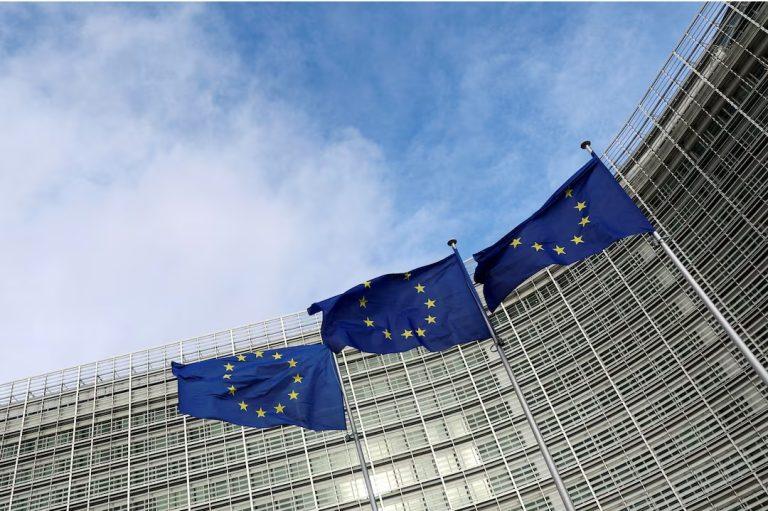
The far-right Patriots for Europe group will lead the European Parliament’s work on the bloc’s new climate target, European Union lawmakers said on Tuesday, a role that could complicate a deal on the goal to cut greenhouse gas emissions by 90% by 2040.

The Patriots group, which has rejected EU policies to curb climate change, is the third-biggest in the parliament, and includes the political parties of France’s far-right leader Marine Le Pen and Hungarian Prime Minister Viktor Orban.

Its appointment was confirmed by EU lawmakers including co-chair of the Green EU lawmaker group, Bas Eickhout, and Socialists and Democrats group chair Iratxe García Perez, during separate press conferences. A spokesperson for the Patriots did not immediately respond to requests for comment.

Climate change has made Europe the world’s fastest-warming continent, and a severe heatwave last week caused disruption across the continent. But governments from Italy to Poland have pushed back this year on ambitious emissions-cutting goals, citing concerns over the costs for industries.

The new role puts the Patriots in an influential position for when EU countries and the European Parliament negotiate the EU’s 2040 climate target in the coming months – talks in which the Patriots will represent the European legislature.

The Patriots will be tasked with drafting an initial proposal for the parliament’s position in these negotiations – although lawmakers from some other groups noted they can still reject the Patriots’ draft and produce their own instead.

“It will force the pro-European groups to work together to carry this key proposal to an agreement before the COP30 in Belem,” said French liberal EU lawmaker Pascal Canfin, referring to this year’s U.N. climate summit in November.

The Patriots group holds eurosceptic positions including the accusation that the EU is seeking to replace national governments with a European “superstate”.

The Patriots secured the negotiating role in a closed-door meeting on Tuesday morning, by outbidding the parliament’s biggest group, the centre-right European People’s Party, EU officials told Reuters.

The 27-country EU and other major economies including China are due to submit new climate targets to the United Nations by September, ahead of the COP30 summit.

Brussels has struggled to generate political support for the 2040 climate target, which the European Commission last week proposed after months of delay.


Source: Reuters/Ejiofor Ezeifeoma

South African Minister Colludes with Crime Syndicates- Security Official

0

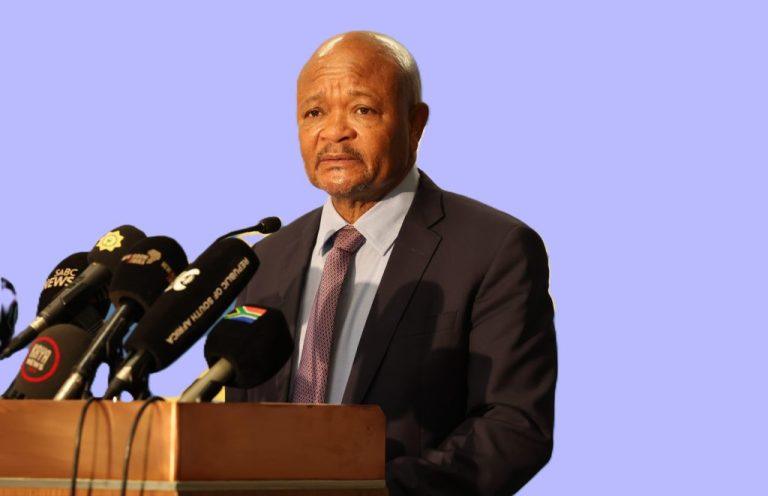
A South African top security official accused the police minister and a deputy national commissioner of colluding with crime syndicates, sparking public uproar.

In an unprecedented move, General Nhlanhla Mkhwanazi, head of the police in the province of KwaZulu-Natal, called for a press conference and claimed that Senzo Mchunu and Shadrack Sibiya had interfered with sensitive police investigations.

He also alleged both men disbanded a crucial crime unit tasked with investigating repeated politically motivated killings in the province after it was revealed that crime syndicates were behind the killings.

Mkhwanazi claimed his investigation showed that some “politicians, law enforcement, SAPS (South African Police Service), metro police and correctional services, prosecutors, judiciary” were being “controlled by drug cartels and as well as business people.”

He said he had evidence supporting his claims, yet to be made public.

South Africa has one of the highest crime rates in the world and allegations of corruption within the police are not new.

However, it is unusual for high-ranking security officials to accuse each other of involvement with criminals.

Mchunu has denied Mkhwanazi’s claims, calling them “baseless.”

“The Minister of Police will never allow his integrity, that of the Ministry or the SAPS at large to be undermined by insinuations made without evidence or due processes, from anyone, including Lieutenant General Mkhwanazi,” Mchunu said in a statement.

President Cyril Ramaphosa, who is currently in Brazil attending a BRICS Leaders’ Summit, said he would see to Mkhwanazi’s allegations on his return home this week.

“This is a matter of grave national security concern that is receiving the highest priority attention,” Ramaphosa’s office said in a statement, adding that the trading of accusations between the country’s top police officials could undermine public confidence.

The African National Congress party, which leads the country’s unity government, said the issues raised by Mkhwanazi were “of grave concern” and it had been assured that Ramaphosa would attend to them.

The Institute for Security Studies, an independent crime watchdog, said these accusations should be thoroughly probed as they could erode public confidence in South Africa’s police.

Africanews/Hauwa M.

Lagos Forum Prepares Youths for Local Government Elections

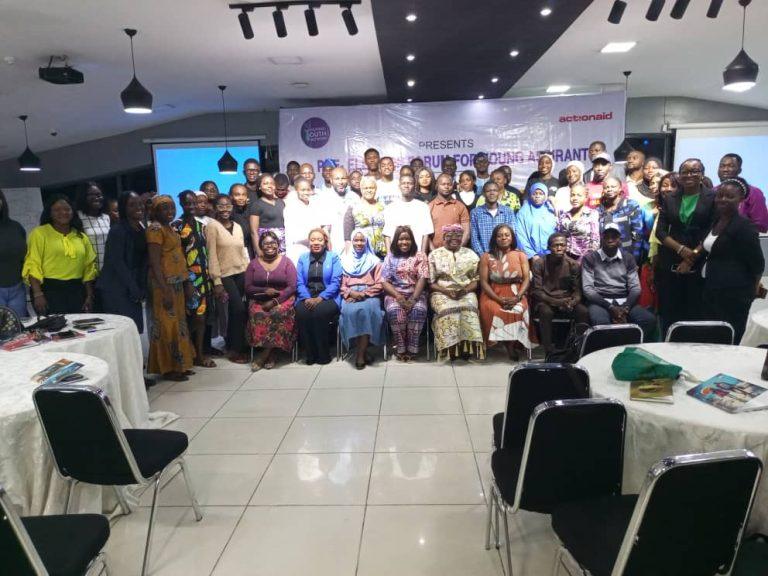
In a bid to address the underrepresentation of youth in Nigerian politics, over 150 young political aspirants, civic leaders, and stakeholders gathered at the ‘Pre-Election Forum for Young Aspirants’ in Lagos.

The event, organised by the Inspired Youth Network in partnership with ActionAid Nigeria, aimed to equip young leaders with practical training, mentorship, and strategic tools necessary for effective political participation.

With Nigeria’s population being predominantly young over 70% under the age of 35 the forum highlighted the urgency of engaging youth in governance, especially at the local level where political decisions have immediate community impact.

The event forms part of the Strategic Partnership Agreement (SPA II), a €190 million multi-country initiative led by ActionAid Denmark to strengthen democratic governance, promote gender justice, and amplify youth voices across 20 countries.

Participants received comprehensive capacity-building sessions focused on electoral laws, campaign strategies, ethical leadership, and community service.

The Governance Specialist at ActionAid Nigeria, Judith Gbagidi emphasised the significance of the event: “This is not just another event on the calendar. It is a declaration that young people are no longer waiting on the sidelines of power they are stepping into it.”

Project Manager at Inspired Youth Network Oluwatosin Adejokun described the forum as a platform for developing not only candidates but community-rooted change-makers.

“We want them to run not just as candidates, but as change-makers rooted in community realities,” she said.

Sessions were led by seasoned professionals, including Chairman of the National Youth Council of Nigeria Comrade Adiku Odikanwho called on aspirants to prioritise integrity and grassroots development.

Business consultant Adeniji Oluwafemi Boboye encouraged youths to become advocates for transparency, while one of the guest speakers, Kawther Salaludeen provided critical insights on election preparedness and campaign messaging.

Gender Adviser at LEAP Africa, Aderinsola Amobi-Daniel, highlighted the need for inclusive leadership, especially for women and marginalized groups.
A key moment was the signing of the Youth Civic Expectations Pledge by councillorship aspirants, committing them to transparency, ethical leadership, and community-centered governance.

This public affirmation underscores a growing movement toward accountability and competence in Nigerian politics. The forum concluded with renewed optimism among participants, many of whom expressed readiness to influence governance positively.

“This is just the beginning,” Adejokun said. “We are not just building candidates; we are nurturing ethical, visionary leaders for the future of Nigeria.”

South Sudan: World Food Programme Warns of Famine

0

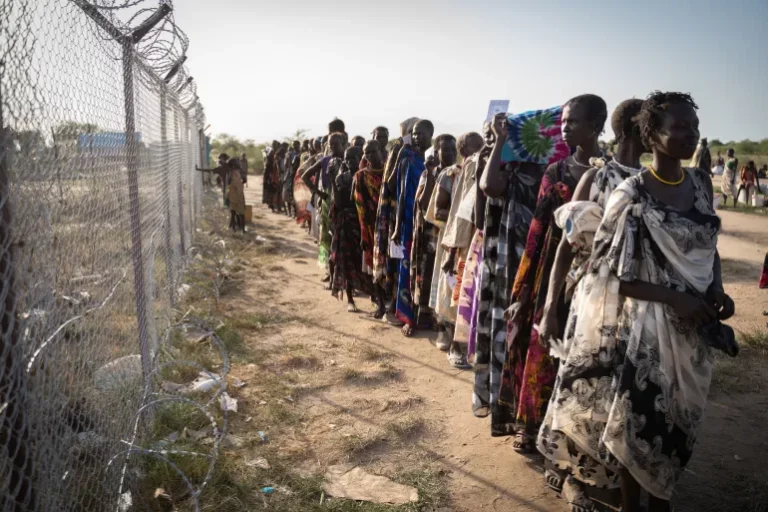
The World Food Program says that over 40,000 people in South Sudan’s conflict-ridden Upper Nile region are “desperately” hungry.

In response, the organisation has begun dropping food by air, its first humanitarian aid delivery to the region in the last four months.

“Livelihoods have been destroyed, people have been displaced, and now people are at a real risk of famine because of the conflict,” said Mary-Ellen McGroarty, WFP’s South Sudan Country Director.

The UN agency said some 32,000 people face “catastrophic levels of hunger” and more than one million people in Upper Nile face “acute hunger.”

McGroarty described the WFP airdrops as “crucial and critical to bring people back from the brink of famine.”

The agency has said the continued fighting in the region is hampering the humanitarian effort, as reaching thousands of displaced people poses additional challenges.

Upper Nile has been the scene of fighting between government troops and armed militias that oppose the government of President Salva Kiir.

The fighting has led to U.N. warnings that South Sudan is again on the brink of civil war.

Africanews/Hauwa M.

Nigeria Declares 16 as Minimum Age for University Admission

The Nigerian Government has officially fixed the minimum entry age into Nigeria’s tertiary institutions at 16.

Education Minister, Dr. Tunji Alausa, made this declaration on Tuesday while speaking at the ongoing Policy Meeting of the Joint Admissions and Matriculation Board (JAMB) in Abuja, Nigeria.

According to him, the policy decision reflects a balance between cognitive maturity and academic preparedness, stressing that 16 years is non-negotiable.

The Minister stated that “the new age requirement is non-negotiable and must be strictly adhered to by all institutions across the country.”

Alausa, however, noted that provisions exist for clearly documented and justified exceptions, such as gifted children with accelerated educational progress.

He also issued a stern warning to universities, polytechnics, and colleges of education against conducting admissions outside the Central Admission Processing System (CAPS), describing such acts as illegal.

According to him, “heads of institutions who bypass CAPS or manipulate the admission process will face prosecution.”

NIPR, Nasarawa Partner to Establish Public Relations and Leadership University

0

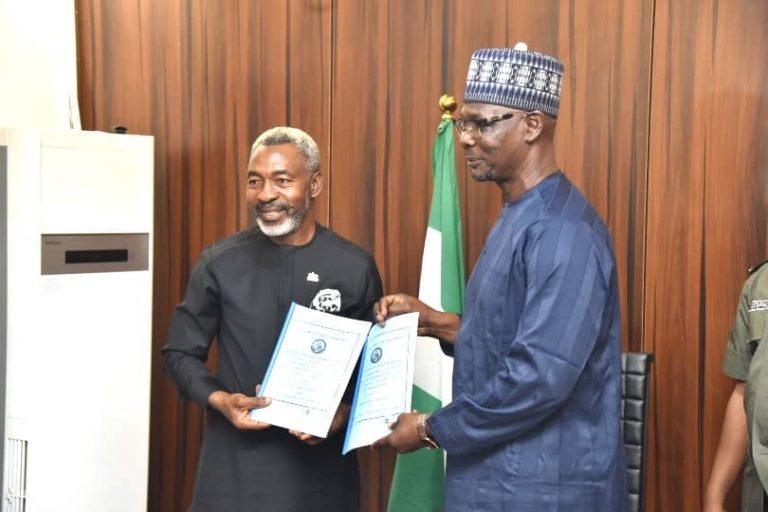
The Nigerian Institute of Public Relations (NIPR) and the Nasarawa state government have signed a Memorandum of Understanding (MoU) to establish the University of Public Relations and Leadership (UPRL) in Gudi, Akwanga Local Government Area of the state.

The agreement provides multiple benefits to the host state, including 20 annual scholarship slots for qualified indigenes—ensuring representation from all 13 local government areas—as well as 50 concessionary admission slots annually for candidates sponsored by the state government.

Speaking at the signing ceremony, NIPR President, Dr Ike Neliaku, described the university as a global initiative aimed at addressing Africa’s leadership deficit.

“It is only recently that we started paying attention to issues of leadership, especially in Nigeria. In the UK and US, they have institutions that train leaders. The leadership component of UPRL will address the under-development created by bad governance. It will ensure we raise a new generation of credible leaders who will eventually become the new Nigerians that will see to the enthronement of a sustainable new nation,” he said.

Dr Neliaku added that the Global Alliance for Public Relations and Communication Management is a strategic partner and will provide international faculty and technical support. He stated that the completed university would attract global recognition and position Nigeria for increased relevance on the world stage.

Governor Abdullahi Sule, who handed over the official Conveyance of Approval for the Grant of Land, reaffirmed his administration’s commitment to the project’s commencement.

“We are delighted that Nasarawa will host a global standard academic institution. Perimeter fencing of the site will begin immediately, followed by the construction of key infrastructure,” he said.

Governor Sule also noted that UPRL would serve as a centre for manpower development and capacity building, not only for Nasarawa indigenes but also for neighbouring states—preparing Nigeria to become a hub for training future leaders for effective service delivery.


PIAK


Kwara Naturally Endowed With Agricultural Growth Potential – Commissioner

The Kwara State Commissioner for Agriculture and Rural Development, Dr. Afees Abolore Alabi, has described Kwara as a naturally endowed state with immense potential for agricultural growth.

According to him,  beyond civil service, agriculture remains the most viable pillar of the State’s economy.

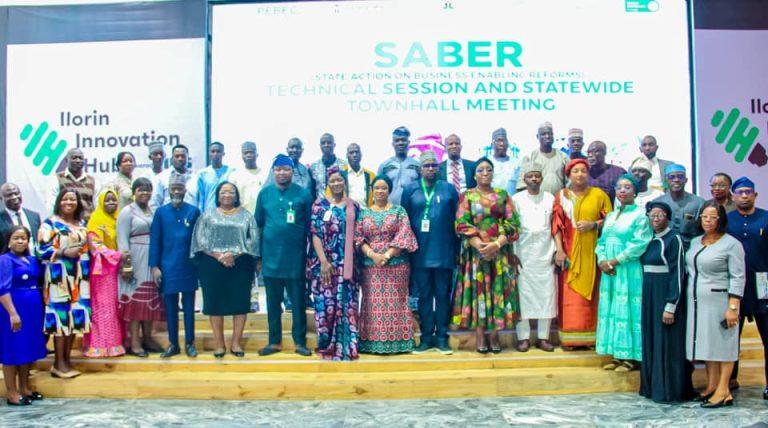
Dr. Abolore made these remarks while addressing participants during a technical session and town hall meeting organized under the State Action on Business Enabling Reforms (SABER) initiative in collaboration with the Presidential Enabling Business Environment Council (PEBEC). 

The engagement focused on strengthening ease of doing business and unlocking sectoral opportunities.

“Kwara is largely blessed in all that concerns agriculture. Our arable land, favorable climate, and strategic location between the North and South give the State a clear competitive edge in agricultural enterprise,” he stated.

Lauds Gov AbdulRazaq for his urban renewal

The Commissioner lauded the Governor of Kwara State, Mallam AbdulRahman AbdulRazaq, for his transformative urban renewal efforts and unwavering backing for agriculture, through empowerment programmes, provision of timely inputs, and sustained investment in rural development.

“We have a Governor who is not just pro-agriculture but also proactive in ensuring our people especially indigenous farmers have what they need to thrive. This consistent commitment is why Kwara continues to gain ground in food production and agribusiness,” he said.

He noted that reforms under SABER will further open up Kwara’s agribusiness space, reduce bottlenecks, and attract investment into rural enterprises.

Dr. Abolore also encouraged members of the public to regularly engage with the Ministry of Agriculture and Rural Development to stay informed and benefit from ongoing initiatives. “We want people to take ownership of the opportunities available, by visiting the Ministry, asking questions, and registering for programmes. We are doing more to ensure every interested resident has a role to play in the sector.”

He assured that the Ministry remains committed to advancing innovation, expanding access to inputs, and facilitating investments across the agricultural value chain to sustain growth and food security in the State.

Food Security: Ebonyi Government Distributes Farm Inputs

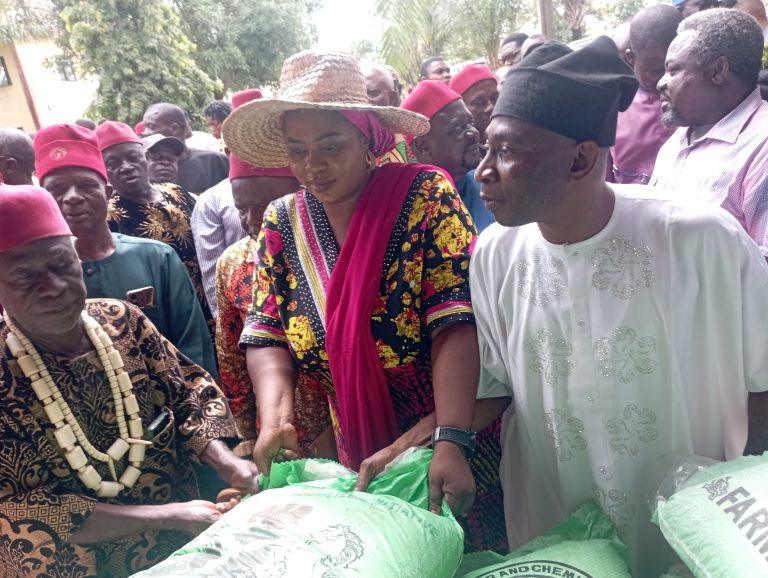
The Ebonyi State Government, under the auspices of the State Ministry of Agriculture and Natural Resources, has distributed farm inputs to farmers in Izzi and Ebonyi Local Government Areas in Southeast Nigeria as part of efforts to address food shortages in the country.

The free distribution of inputs is intended to reach all Local Government Areas in Ebonyi State. It is a measure to ensure the initiative extends to every nook and cranny of the state.

The State Commissioner for Agriculture and Natural Resources, Mrs. Nkechinyere Iyoku, disclosed this during the flag-off held at Iboko in Izzi Local Government Area and at Ugbodo, headquarters of Ebonyi Local Government Area.

The State Commissioner who represented the Governor at the event, praised farmers for their resilience and urged even civil servants to adopt farming as a “second address.”
 
“This is the first time these inputs are given completely free. The Governor wants every local government to have its own farm. We’re building an agricultural economy that doesn’t rely on handouts,” she noted.
 

She also called for the establishment of functional farms in all 13 LGAs and 64 development centres across the state to promote sustainable food security.

The Executive Chairman of Izzi Local Government Area, Barrister Stephen Emenike Nwankpa, issued a stern warning to farmers and stakeholders against the resale or diversion of the agricultural inputs distributed under the Ebonyi State Government’s free farm support programme.

“If I find even one bag sold to traders, I will unlock the store and share everything to the needy,” Nwankpa declared.

The distribution, part of Governor Francis Nwifuru’s agricultural intervention initiative, saw farmers in Izzi LGA receive:

•450 bags of inorganic fertilizer

•60 bags of organic fertilizer

•300 bags of 25kg certified Faro 44 rice seedlings

•200 cartons of herbicides (12 bottles per carton)

Nwankpa emphasized that the inputs were strictly for genuine farmers, not for profiteers or political actors.

“We know the real farmers in our villages. This is not the time to collect and sell. You must plant now. The fertilizers must be used now and not next season,” he said.

He added that local stakeholders had prepared allocation spreadsheets to ensure transparency, and that security personnel had been deployed to prevent diversion and sabotage.

“Even if we receive 30 trucks of fertilizer, our farmers will use them all. There’ll be no hoarding or black-market sales. We are ready and committed to full utilization,” he added.

Meanwhile, during the flag-off at Ugbodo, Prince Chinedu Uburu, Chairman of Ebonyi Local Government Area, hailed the initiative as a turning point in Governor Nwifuru’s strategy to position Ebonyi as a commercial-scale agricultural hub in Nigeria.

Also speaking, Uchenna Igwe, Commissioner for Local Government and Chieftaincy Matters, described Governor Nwifuru as “a true farmer,” and assured citizens of a productive farming season.

The event also featured technical training sessions led by agricultural experts including Patrick Ogbinya, Ikechukwu Nwovu, and Francisca Anya, who educated attendees on cassava cultivation, Faro 44 rice farming, and value-added processing for nutrition.

In a closing address, His Royal Highness Eze John Nwenyi, a respected traditional ruler in Izzi land, commended the initiative and reaffirmed the area’s strong agricultural heritage.

“We don’t sell land in Izzi. We lease it for meaningful farming,” he added.