Home Blog Page 225

Commission Deregisters 400,000 Inactive Firms to Boost Confidence

Nigeria’s Corporate Affairs Commission (CAC) has deregistered more than 400,000 inactive companies in a major move aimed at strengthening investor confidence and sanitising the country’s corporate registry.

Registrar-General of the CAC, Hussaini Magaji, disclosed this during a commemorative road walk marking the Commission’s 35th anniversary. He explained that the exercise targeted dormant entities that undermine economic transparency.

He emphasised that inactive companies could pose economic risks, adding:

“These are shell companies. They are companies that are not filing annual returns, inactive and becoming threats to operations in the economy. We did it to encourage confidence in our investors so that we have a credible register here in the Corporate Affairs Commission.”

Highlighting another transparency initiative, the Registrar-General announced the operationalisation of the Beneficial Ownership Register, designed to reveal the individuals behind corporate entities.

“That Beneficial Ownership Register, we have launched and operationalised it and it becomes a reference point across the globe. We want to know the ultimate people behind any company,” Magaji said.

He further stressed the global significance of the register in promoting corporate accountability, stating:

“You just visit our Beneficial Ownership Register, you will see the people behind any company in Nigeria. Nowhere to hide. For the sake of transparency and accountability.”

Magaji also disclosed that the CAC had supported Micro, Small and Medium Enterprises (MSMEs) through free business registrations to stimulate entrepreneurship.

“In the year 2025, just last year, we gifted 250,000 registrations to MSMEs in Nigeria. And we made it to be accessed through the Small and Medium Enterprises Development Agency of Nigeria, SMEDAN,” he said.

The Registrar-General reaffirmed the Commission’s commitment to staff welfare and institutional development.

“We are determined in 2026 to have a hospital managed by the Corporate Affairs Commission. We have improved their welfare. I just announced car loan support and housing loan support to our staff. We are doing this to build their morale and to ensure full service delivery,” he added.

Nigeria Designates 2026 As Year Of Social Development and Families

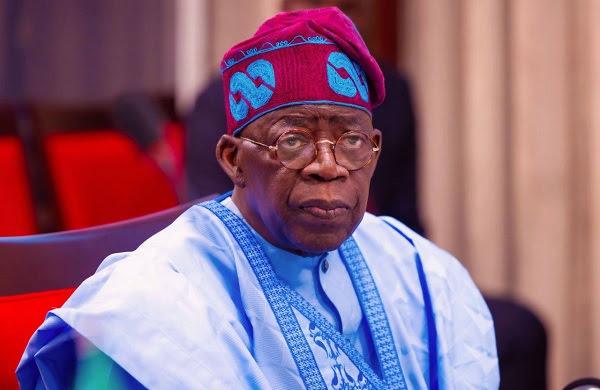
President Bola Ahmed Tinubu has officially designated 2026 as the “Year of Social Development and Families in Nigeria,” reaffirming the Federal Government’s commitment to economic advancement, social cohesion, and the empowerment of women and families as the foundation of national development.

The declaration, made at the State House, Abuja, follows the signing of a strategic Memorandum of Understanding during the President’s visit to Türkiye in January 2026, aimed at strengthening family cohesion and advancing social welfare systems.
According to President Tinubu, the initiative reflects a deliberate shift in governance priorities.
“…reflects our resolve to entrench inclusion as a permanent feature of governance. We are choosing systems over sentiments, institutions over intentions, and impact over rhetoric,” he said.

The President’s priorities for women and children are being implemented through the Renewed Hope Social Impact Interventions, a nine-pillar multisectoral framework aligned with the Beijing Declaration and Platform for Action, designed to deliver targeted social services nationwide.

By this declaration, Nigeria joins a select group of nations, including Türkiye, the United Arab Emirates, and Egypt that have adopted family-centred policies as a foundation for sustainable national development.

President Tinubu described the move as a deliberate response to the root causes of national challenges, including poverty and insecurity.
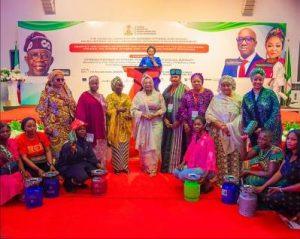
“Strong families are a national security and development asset. Societies that invest in family stability reduce vulnerability, social risk and long-term instability. I hereby direct that the year 2026 be designated as the Year of Social Development and Families in Nigeria, with coordinated action across all arms and levels of government,” he stated.

Also Read: President Tinubu Deepens Nigeria–Türkiye Ties Through Bilateral Talks 

He emphasised that the declaration is more than symbolic, describing it as a strategic decision grounded in the understanding that women and families are indispensable to national progress.

“This administration has been guided by a simple conviction: no nation can rise on the strength of half its population alone. Sustainable growth is impossible where women remain constrained, unseen, or unsupported,” he said.

Highlighting women’s central role in development, the President added:
“Women are not an afterthought in our development story. They are its authors. They are the backbone of family stability, the engine of community resilience, and indispensable partners in our collective ambition to build a competitive and inclusive nation.”

He further noted:“A nation that relegates its women is a nation bound for implosion. We have long understood this truth. That is why this administration has not only placed women at the forefront of decision-making but has also entrusted them with leadership in causes that redeem our national promise.”

At the heart of the 2026 designation is the Federal Ministry of Women Affairs and Social Development, tasked with driving Nigeria’s ambition of a one-trillion-dollar economy through women and family productivity.

Under Minister Hajiya Iman Sulaiman-Ibrahim, the Ministry has introduced innovative programmes, including the Renewed Hope Social Impact Intervention for Women, Children, and Vulnerable Persons, aimed at empowering families and strengthening social cohesion.
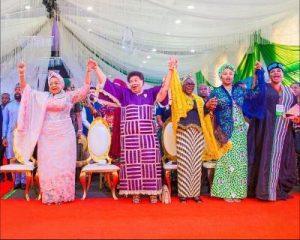
Speaking on the Ministry’s vision, Sulaiman-Ibrahim said: “When we came into office, we took a hard look at the Ministry and made a strategic decision: we would fully activate its mandate not partially, not symbolically, but fully.”

She highlighted the Nigeria Families First Programme as a core pillar of the administration’s social impact strategy, focusing on four transformative areas: economic empowerment of families, parenting skills upskilling, social safety nets through universal child benefits, and expanded access to health, housing, and professionalised care.
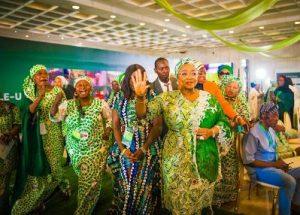
Additionally, the Happy Woman App Platform has been launched to provide a secure, scalable digital interface connecting women to finance, skills, markets, essential services, and government support, promoting digital inclusion and national competitiveness.

“Family cohesion and social welfare reflect a shared understanding that strong families underpin stable societies and economic resilience,” the Minister said, noting that women-led interventions across multiple sectors validate the President’s assertion that:
“Women sustain markets, grow enterprises, feed families, and anchor communities. They are the quiet architects of our non-oil economy. It is therefore our collective responsibility to unlock their full potential.”

Implementation Framework

The declaration’s success depends on effective implementation. Recent surveys, including the National Demographic and Health Survey, show a historic surge in female labour participation, now at 95.6%, though political representation remains limited.

The Federal Government aims to include 25 million women through digital finance initiatives like the Happy Woman App, supported by policy mainstreaming across all Ministries, strengthened social protection, inter-ministerial coordination, localised action plans, partnerships with civil society, faith leaders, the private sector, and improved data systems for monitoring.

Stakeholder Reactions

Critical stakeholders across the country have welcomed the declaration with commendation, anticipation, and expectations.

The Dean of Commissioners of Women Affairs in Nigeria, Edema Iyom, described the President’s decision as timely, praising the Minister as “a true champion of the vulnerable population.”

“Focusing on the family means peaceful coexistence, sustainability of the food value chain and reduction of GBV issues in our communities. When the family is empowered through social interventions, Nigeria grows,” she said.
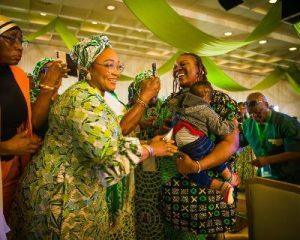
Dr. Jumai Ahmadu, Founder of Helpline Social Support Initiative, said the declaration places families and community wellbeing at the heart of national progress, reinforcing commitments to resilient communities where dignity is restored and opportunities created.

“It is a timely call to deepen our work in empowering widows, women, youth, and vulnerable households through education, economic inclusion, psychosocial support, and values-driven leadership, strengthening the family as the foundation of a stable and prosperous society.”

Hajiya Aisha Ibrahim, President of Nigeria Association of Women Journalists (NAWOJ), applauded it as “timely, visionary, deeply significant, and a clear call to action.”

She pledged NAWOJ’s partnership “with government, civil society, and development partners to ensure the declaration translates into real impact, by using the media to ‘shape the narratives that heal, unite, inspire and help families thrive with dignity and opportunity.’”

Victoria Uko, President of the All Southern Decides Network (ASDN), described it as a strategic mandate addressing grassroots empowerment and regional advocacy.
“This declaration opens significant avenues for institutional growth through federal and international partnerships,” she said.

Dr. Annette Mubarak of the Platform for Women in Economics and Development Foundation (PWEDF) noted that it “reinforces commitment to empowering women as pillars of the family and drivers of social and economic development.”

Dr. Mimidoo Achakpa of the Women’s Right to Education Programme said the declaration affirms that social development is nation-building, not charity.
“It is both encouragement and responsibility to deepen our impact, strengthen partnerships, and hold ourselves and the state accountable to Nigerian families,” she said.

From Rivers State, Mrs. Ugochi Juliana Nwokeoma said the President had outlined a bold plan for economic stability and inclusive growth, noting that “2026 signals a more robust phase of economic growth for Nigeria.”

Rekiyat Ahuoiza Fache of the Association of Women Town Planners in Nigeria underscored the link between sustainable development, strong families, and inclusive communities, highlighting opportunities for advocacy on family-friendly urban design and social infrastructure.

“It presents an opportunity to intensify advocacy for family-friendly urban design, social infrastructure, slum upgrading, climate-resilient communities, and policies that protect vulnerable groups,” Fache said.

Rev. Ayobami Akinadewo, National Chairperson of the Women Wing of the Christian Association of Nigeria (WOWICAN), said the declaration emphasises women’s leadership, family stability, child protection, and community upliftment as core pillars.

“2026 becomes a year to move from policy, advocacy to architecture for faith institutions to design the moral and social scaffolding for healthier families and resilient societies, where belief meets nation-building, not in rhetorics.
It calls for deeper collaboration with communities, clearer measurement of social impact, and programs that translate spiritual convictions into practical outcomes such as family counselling, youth mentorship, values-based education, and support for vulnerable households,”
she advocated.

For Barrister Ujunwa Rita Ezeani, Founder and President of the Rod of Moses Women Foundation, the declaration represents a historic alignment of national interest recognising social development and family as the essential unit for national progress.
“It signifies a shift from viewing social welfare as a burden to seeing it as a strategic investment,” she said.

A Defining Moment

The 2026 national declaration frames the family not as a private sentiment but as public infrastructure, ensuring that interventions from healthcare to economic empowerment begin at the household level and translate into lasting national development.

President Tinubu reaffirmed: “To the women of Nigeria: this government sees you, values your contribution, and is investing in your success not as charity, but as a deliberate national strategy for growth, stability, and prosperity.”

With Minister Hajiya Iman Sulaiman-Ibrahim at the helm, the focus for 2026 is clear: mobilise a coordinated national effort to rebuild social systems, restore family stability, and secure Nigeria’s human development foundation.

The declaration signals a transition from commitment to action; strengthening families today to guarantee Nigeria’s stability and prosperity tomorrow with Hajiya Imaan Sulaiman-Ibrahim galvanising all stakeholders to drive its success at the ministerial level.

Haiti Faces Political Vacuum as Transitional Council’s Mandate Ends

0

Haiti plunged into political uncertainty on Saturday after the country’s transitional governing council, tasked with curbing gang violence and organising long-delayed elections, completed its mandate with no successor in place, leaving the Caribbean nation without a clear governing authority.

The nine-member Transitional Presidential Council (CPT, by its French initials) was installed in April 2024 after Prime Minister Ariel Henry resigned. It has been led by a rotating roster of council presidents.

However, its term has been marked by a deterioration in security, corruption accusations and political infighting.

In late January, several members of the CPT said they were seeking to oust Prime Minister Alix Didier Fils-Aime, even as the U.S. threatened serious consequences should they do so and backed Fils-Aime staying on after February 7.

The U.S. also said the CPT must leave power and has imposed sanctions on five council members.

“As the Transitional Presidential Council’s mandate ends on February 7, we support Prime Minister Fils-Aime’s leadership in building a strong, prosperous and free Haiti,” the U.S. embassy in Haiti said on Wednesday.

A day earlier, three U.S. warships arrived in the Bay of Port-au-Prince. The embassy said their presence “reflects the United States unwavering commitment to Haiti’s security, stability, and brighter future.”

Although there is broad agreement between Haiti’s civil and political leaders that the CPT should step down, a consensus has yet to emerge over what structure should replace it.

Speaking to the Miami Herald on Wednesday, former lawmaker Antoine Rodon Bien-Aime, who has been involved in discussions, said there had been many proposals but an agreed solution has yet to emerge.

The Caribbean’s most populous nation has been without an elected president since the 2021 assassination of Jovenel Moise, and its last senators’ terms expired over three years ago.

It last held elections in 2016. The spread of armed groups over the capital Port-au-Prince, the Artibonite farmlands and central parts of the country have further complicated the logistics of organising a free and fair vote.

Around 1.4 million people were internally displaced across Haiti by October, according to U.N. data, a million more than when the CPT began their mandate.

The U.N. also approved an international security force intended to help police restore security, but more than two years later less than 1,000 troops – mostly Kenyan police – were deployed. The U.N. says it aims to have 5,500 by this summer.

Reuters.

Nigeria, China Reaffirm Commitment to Bilateral Partnership

0

Nigeria and China have reaffirmed their commitment to people-centred development, pledging to prioritise projects that directly improve livelihoods, create jobs and deepen mutual understanding between citizens of both countries as they enter a new phase of their bilateral partnership.

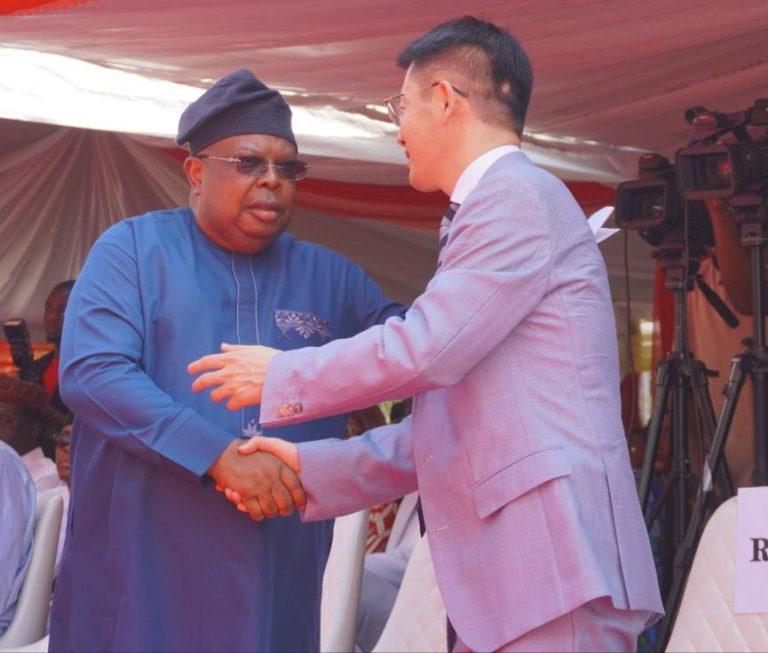
The renewed commitment was announced in Abuja during the 2026 Chinese New Year Temple Fair, which also marked the 55th anniversary of diplomatic relations between the Federal Republic of Nigeria and the People’s Republic of China.

Speaking at the event, the Director-General and Global Liaison of the Nigeria–China Strategic Partnership (NCSP), Mr Joseph Tegbe, said Nigeria’s collaboration with China had evolved beyond diplomacy to tangible development outcomes that impact everyday lives.

He cited investments in rail infrastructure and projects such as the Lekki Deep Sea Port as clear examples of cooperation delivering real benefits to citizens of both countries.

“For partnerships and collaborations to be successful, initiatives must deliver tangible benefits to the people

“We welcome Chinese businesses to Nigeria and encourage partnerships that prioritise capacity building, skills transfer and shared growth. In return, Nigerians will continue to offer a welcoming environment rooted in hospitality, trust and mutual respect.” Tegbe said.

Tegbe described the celebration as a reflection of shared values, noting that both nations place people at the centre of development.

“The horse, in Chinese tradition, symbolises strength, endurance and progress. In Nigeria, it represents dignity, courage and the forward march of our people. Our partnership must continue to deliver real benefits to Nigerians and Chinese alike,” he said.

He also reaffirmed Nigeria’s commitment to the One-China Principle, describing it as the bedrock of the enduring friendship and the foundation of the comprehensive strategic partnership that has evolved over the past 55 years.

Agriculture and Industrial Growth

Highlighting cooperation in agriculture, Tegbe disclosed that Nigeria’s National Integrated Poultry Project modelled after China’s food security achievements would begin with an estimated $1 billion investment in Kaduna, Oyo and Enugu states.

The project is expected to produce six million eggs daily, house over seven million laying birds and two million broilers, and cultivate more than 60,000 hectares of maize and soybeans. He said the initiative would also support local farmers through subsidised feedstock.

“This project is not merely about food security; it is about jobs, dignity and opportunity for Nigerians,” he said.

On industrialisation, Tegbe highlighted ongoing collaboration on steel production, particularly the planned revitalisation of the Ajaokuta Steel Complex, which he described as a long-awaited turning point for Nigeria’s economy.

“With an expected output of 10 million metric tonnes per annum, a revitalised Ajaokuta will power industries, create jobs and position Nigeria as a leading manufacturing and innovation hub in Africa,” he said.

Education and Knowledge Exchange

On education and knowledge exchange, Tegbe called for expanded opportunities for Nigerian students in Chinese institutions and increased collaboration in research and innovation.

“These exchanges are building enduring bridges of knowledge and mutual understanding. In the year ahead, we seek to deepen cooperation through increased scholarships, joint research and shared innovation, culminating in the development of new industrial parks that will serve as hubs for manufacturing, technology and skills transfer,” he said.

China Reaffirms Strong Bilateral Ties

China’s Chargé d’Affaires in Nigeria, Mr Zhou Hongyou, said the anniversary celebration and the Chinese New Year Temple Fair were designed to deepen cultural dialogue and people-to-people engagement.

He described the Spring Festival as a global celebration that promotes peace and harmony, noting that China–Nigeria relations have been strengthened over decades through mutual respect, equality and win-win cooperation.

“We will work together with the Nigerian side to organise a wide range of exchange activities. China–Nigeria relations have become a model of South–South cooperation,” Zhou said.

He noted that 2026, designated as the China–Africa Year of People-to-People Exchanges, offers an opportunity to further expand cultural, educational and technological cooperation.

“The Year of the Horse symbolises hard work, perseverance, unity and innovation. These values reflect the spirit of China–Nigeria relations and our shared commitment to development that benefits ordinary people,” he said.

Zhou also referenced recent milestones, including the elevation of bilateral ties to a Comprehensive Strategic Partnership at the 2024 Forum on China–Africa Cooperation (FOCAC) summit, as well as subsequent high-level visits that have advanced cooperation in trade, infrastructure, culture and education.

Cultural Exchange and Celebration

Also speaking, the Director of the China Cultural Center in Nigeria described the double celebration as a strong signal of friendship and mutual trust between the two nations.

“For 55 years, both countries have stood by each other. This mutually beneficial cooperation has supported development in both nations, especially benefiting the Nigerian people,” he said.

The Deputy Secretary-General of the Chinese Wushu Association, Mr Fu Bo, noted that the celebration aligned with the China–Africa Year of People-to-People Exchanges.

“Through wushu, we celebrate the Chinese New Year and pay tribute to the 55th anniversary of diplomatic relations between China and Nigeria. We hope to connect the hearts of the two peoples through this millennium-old cultural heritage,” he said.

The event featured martial arts displays by the Chinese Wushu Association, as well as music and dance performances by Chinese and Nigerian artists. Guests also experienced authentic Chinese cuisine, tea ceremonies, calligraphy and traditional Chinese medicine.

Both countries expressed optimism that the partnership would continue to translate diplomatic goodwill into inclusive growth and shared prosperity for Nigerian and Chinese citizens alike.


Marine Ministry, Agriculture Council Partner for Aquatic Growth

The Ministry of Marine and Blue Economy has called for strengthened collaboration with the Agricultural Research Council of Nigeria (ARCN) to drive sustainable growth in the nation’s aquatic sector.

The Minister of Marine and Blue Economy, Dr Adegboyega Oyetola, made the call in Abuja, Nigeria’s capital, during a courtesy visit by the Executive Secretary of ARCN, Dr Abubakar Dabban.

During the meeting, Oyetola highlighted a significant structural shift in the sector following a directive from the Office of the Secretary to the Government of the Federation that supervision of all fisheries-related research institutes and colleges be reassigned from ARCN to the Federal Ministry of Marine and Blue Economy.

This realignment follows the earlier transfer of the Department of Fisheries and Aquaculture to the Ministry.

Oyetola noted that while the Ministry now holds the primary supervisory mandate, the transition is designed to ensure seamless sectoral alignment, effective oversight, and knowledge continuity.

However, recognising ARCN’s decades of experience in managing national research systems, the Minister proposed joint initiatives focused on climate resilience, capacity building, and youth and women empowerment.

“ARCN’s expertise remains vital. We seek a seamless link between research, policy, and industry application to ensure food security and sustainable resource management,” he stated.

In response, the Executive Secretary of ARCN, Dr Abubakar Dabban, lauded the creation of the Ministry as a visionary step towards economic diversification.

He emphasised that Nigeria’s marine biotechnology and aquaculture potential require a foundation of rigorous scientific evidence.

While presenting a formal partnership proposal aimed at ensuring the government’s maritime goals are met with science-driven precision, Dabban pledged the Council’s research network to support the Ministry’s framework.

Ooni of Ife, NTDA Signs MoU To Boost Tourism

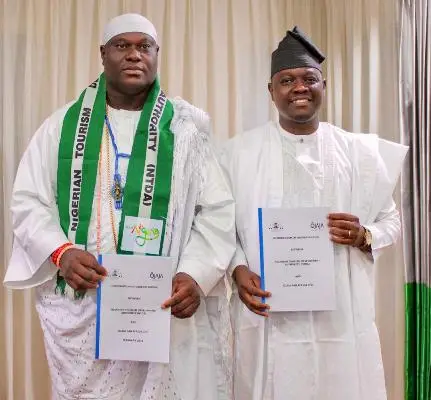
The Ooni of Ife, Oba Adeyeye Ogunwusi, Chairman of OJAJA Pan Africa Ltd, and the Nigerian Tourism Development Authority (NTDA) have signed a Memorandum of Understanding (MoU) for tourism development.

The MoU, which was signed on Friday in Abuja, is aimed at harnessing the NTDA’s mandate alongside the private-sector expertise of OJAJA.

The partnership seeks to leverage Nigeria’s rich cultural heritage, cuisine and hospitality to drive economic growth and position tourism as a cornerstone of national development.

The Director-General of the NTDA, Dr Ola Awakan, who signed on behalf of the agency, said the initiative was part of stakeholders’ engagement, especially with the private sector, to ensure holistic tourism development.

According to Awakan, repositioning Nigeria’s tourism sector aligns with President Bola Tinubu’s Renewed Hope Agenda of economic diversification away from oil.

“This partnership promises transformative benefits for Nigeria’s tourism industry, including economic diversification beyond oil dependency, in line with President Bola Tinubu’s Renewed Hope Agenda.

“By utilising our storytelling capabilities, we can generate sustainable revenue, attract investments, create jobs and boost foreign exchange inflows,” he said.

Oba Ogunwusi eulogised Awakan’s professionalism and dedication, noting his pivotal role in initiatives such as the Royal African Youth Leadership Forum.

The Ooni expressed gratitude to the President for appointing a youth to head the NTDA, while calling for initiatives that would encourage youth interest in tourism.

OJAJA is a Pan-African platform specialising in cultural branding and investment facilitation.

It provides access to private capital and diaspora networks, creating a synergistic public-private framework for sustainable tourism advancement.

The NTDA-OJAJA alliance seeks to set a blueprint for tourism-led prosperity, promising lasting impacts on employment, revenue generation and global visibility.

NAN

Kwara Begins Fertiliser Distribution for Dry Season Farmers

The Kwara State Government in North Central Nigeria has began the distribution of fertilisers to support farmers engaged in dry season cultivation across the state, as part of efforts to strengthen year-round farming.

The State Commissioner for Agriculture and Rural Development, Dr Afees Alabi, who flagged off the distribution in Ilorin, explained that the initiative is designed to ease the burden of rising agricultural input costs.

Dr Alabi said the fertiliser distribution was carefully structured to ensure farmers remain productive despite prevailing market challenges.

He also warned against the sale or diversion of the inputs, vowing that anyone found culpable would face the full wrath of the law.

He noted that sustaining continuous cultivation is essential to stabilising food availability and strengthening farmers’ resilience across the state.

The Commissioner reaffirmed the present administration’s commitment to practical, farmer-centred interventions that promote continuous farming, expand production capacity, and position agriculture as a key pillar of economic recovery and inclusive growth in the state.

He also reiterated the State Government’s resolve to continue implementing sustainable agricultural interventions that promote rural development, economic recovery, and a resilient food system.

The State FADAMA Programme Project Coordinator, Dr Isiaka Busari, represented by the Head of Technical, Abdulmalik Zubairu, commended the State Government for its leadership and effective collaboration, noting that the timely intervention reflects the state’s dedication to impactful programme implementation and service delivery to farmers.

One of the beneficiaries, Soliu Yahaya, expressed appreciation to the state government for its sustained support to the agricultural sector.

He described the intervention as a strong motivation for farmers to intensify off-season farming, noting that improved access to fertilisers would enhance productivity and sustain livelihoods.

Farmers across the 16 Local Government Areas of Kwara State benefited from the fertiliser distribution, which is expected to support the cultivation of key crops and contribute to improved food availability across the state.

VP Shettima Hails Imo State’s Role in National Development

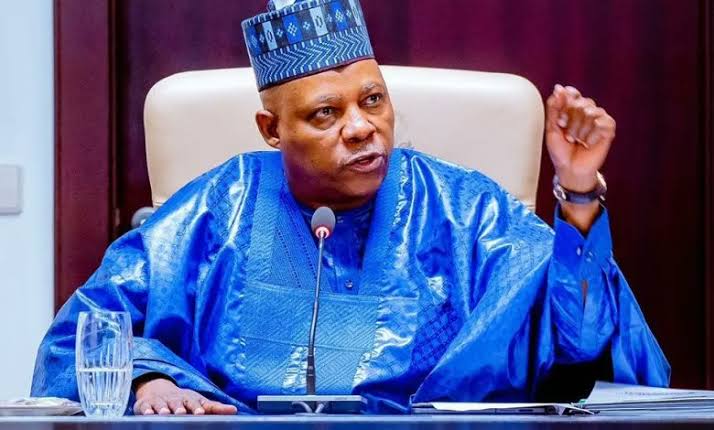
Vice President Kashim Shettima has applauded Imo State’s outstanding contributions to Nigeria’s political, intellectual, and economic development over the past five decades, describing the state as a pivotal partner in national progress.

Speaking on Saturday during the Golden Jubilee celebration of Imo State’s creation, VP Shettima conveyed President Bola Tinubu’s goodwill, assuring the state of its prominent role at the national table.

He commended the state’s political leadership, intellectual achievements, creative talents, and agricultural strengths, particularly in palm oil production, noting that the Southeastern state has consistently enriched Nigeria.

The Vice President singled out Governor Hope Uzodimma, describing him as a transformative figure in Imo’s modern political history, who has restored discipline, planning, and institutional strength to governance.

“Governor Uzodimma has distinguished himself as more than a custodian of the present. He is a leader who understands that governance is not theatre, but duty. Under his watch, Imo has rediscovered the discipline of planning, the courage of reform, and the confidence to re-enter the national conversation as a state prepared for relevance,” he said.

VP Shettima traced Imo’s legacy of leadership from Dr. Kingsley Mbadiwe, whose “flamboyant command of language enriched Nigeria’s political memory,” to Sam Mbakwe, the celebrated Weeping Governor, and Rochas Okorocha, whom he described as a pan-Nigerian archetype for his humanitarian work with orphaned children nationwide.

He also highlighted the state’s intellectual and cultural influence, particularly through Chief Flora Nwapa, “the mother of modern African literature,” who gave African women “a literary voice at a time when silence was expected of them.”

The Vice President celebrated Imo’s contributions to Nollywood through actors such as Genevieve Nnaji, Rita Dominic, and Kanayo O. Kanayo, and music icon Onyeka Onwenu, who “placed Nigerian sound on the world stage with grace and conviction.”

Also Read: VP Shettima Unveils 25-Year Development Plan For Southern Region

On economic development, he acknowledged Imo’s strengths in agriculture, particularly palm oil production at the historic Ada Palm Plantation, and its vibrant commercial centres from Nkwo Orji to Orlu International Market.

He praised the state’s educational infrastructure, including the Federal University of Technology, Owerri, and Imo State University, describing education as Imo’s greatest industry.

“Literacy rates remain among the highest in the nation, and graduates from Imo compete confidently across every field,” VP Shettima stated.

He also highlighted emerging opportunities in Imo’s oil and gas sector in Ohaji-Egbema and Oguta, as well as potential in agro-processing, renewable energy, mineral processing, tourism, and the digital economy.

The Vice President commended Owerri’s emergence as a major hospitality hub, noting that “security has been an economic asset and peace, when nurtured, yields prosperity.”

Urging the state to use its golden jubilee as a springboard for the next 50 years, he said, “Unity must be renewed. Innovation must be encouraged. Governance must remain humane and disciplined. Politics must return to service.”

In his remarks, Governor Uzodimma pledged that Imo State would continue to grow and embrace digital transformation over the next five decades. He reflected on the state’s creation in 1976, noting it symbolised freedom and opportunity.

He thanked God for sustaining the state for 50 years and expressed optimism for its future. “We have made significant progress both as a people and as a state. There is no doubt that we are growing fast in unity, resilience and reliance on God.

We have seen Owerri transform from a town into a hub. What has kept us united is the indomitable spirit of the Imo people,” he said.

Chairman of the occasion and former Commonwealth Secretary-General, Chief Emeka Anyaoku, commended Governor Uzodimma’s achievements across sectors such as transportation, finance, and agriculture, describing his administration as leaving “an admirable legacy in Imo State, making a significant contribution to the wider Nigerian economy.”

Chief Anyaoku prayed for continued progress in Nigeria’s political evolution, emphasising the role of elections as a fundamental democratic process.

In his goodwill message, Ekiti State Governor Biodun Oyebanji said Governor Uzodimma had become a reference point among his peers, noting that other governors were now emulating his successes.

The Obi of Onitsha, Igwe Nnaemeka Achebe, thanked Imo State for shaping his early life and praised Governor Uzodimma “for showcasing Imo State to the world.”

Also, the Ooni of Ife, Adeyeye Enitan Ogunwusi (Oba Ojaja II), prayed for the progress of Imo State and Nigeria, as well as for sustained unity across the country.

Commandant Calls for Traditional, Modern Medicine Integration

0

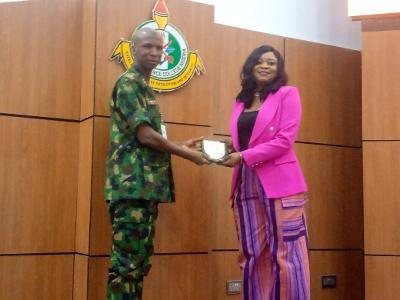
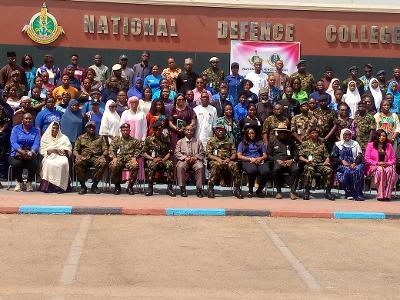
The Commandant of the National Defence College (NDC), Rear Admiral Abdullahi Ahmed has emphasised the need to bridge the gap between traditional and modern medicine in the fight against cancer, noting that both approaches can complement each other in providing hope.

Rear Admiral Ahmed made this known during the 2026 World Cancer Day Sensitisation Lecture and Free Cancer Screening Programme organised by the National Defence College in collaboration with the NDC Officers Wives Association in Abuja, Nigeria’s capital.

He explained that the initiative was aimed at reconciling the two strands of medical practice, scientific and traditional, so that patients can benefit from a holistic approach to treatment.

According to him, the programme has helped participants understand that cancer is not necessarily a death sentence.

“At the end of the programme, people have now realized that there can be remedies, and I feel fulfilled that hope has been restored to many,” he said.

Read Also: Nigerian Govt Unveils Innovative Cancer Medicine Study

The Commandant noted that the event was part of activities marking World Cancer Day, celebrated globally on February 4.

He stressed that the commemoration was designed to increase awareness about cancer, encourage prevention and early detection, support those affected, and advocate for research and improved treatment options.

This year’s lecture, he explained, was unique because it featured two perspectives: the conventional scientific approach and the cultural/traditional perspective, also known as complementary medicine. “From my days as a young officer until now, we only listened to one aspect of the modern medical approach. But we decided to bring in an additional resource person from Maiduguri to share insights from our cultural heritage,” Ahmed stated.

The traditional practitioner, he said, “has been instrumental in helping patients who had lost hope, offering solutions that have proven beneficial”.

Ahmed revealed that several countries, including the United States and China, have attempted to lure the practitioner abroad, but he has remained in Nigeria out of patriotism.

Rear Admiral Ahmed concluded that the collaboration between modern and traditional medicine is a step toward a more inclusive and effective fight against cancer. He urged Nigerians to embrace both perspectives, stressing that unity in medical practice would strengthen the nation’s capacity to combat the disease and provide comfort to those affected

The Coordinator National Defence College Officers Wives Association, Hauwa Ahmad, called on women and others to be checking themselves at least annually as early detection is the best.

“We sincerely appreciate the command of the National Defence College for its unwavering support and encouragement towards this initiative that promotes the health and well-being of our communities,” she said.

Stakeholders Advocate to End Female Genital Mutilation

0

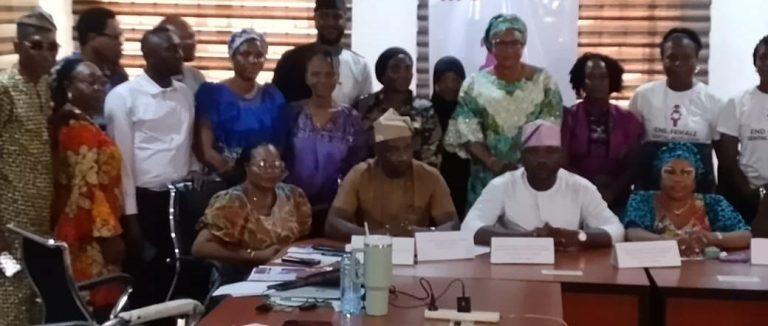
Stakeholders working against Female Genital Mutilation and Cutting (FGM/C) in Oyo State have called for sustained commitment, stronger legislation, and increased investment to eliminate the pracrice, warning that progress recorded over the years could be reversed without deliberate action.

The call was made in Ibadan, during a media briefing to commemorate the 2026 International Day of Zero Tolerance for Female Genital Mutilation, organised by the Centre for Comprehensive Promotion of Reproductive Health (CCPRH) in collaboration with the Correspondents’ Chapel of the Nigeria Union of Journalists, and funding from the United Nations Population Fund (UNFPA).

The event, themed: “Towards 2030: No End to FGM without Sustained Commitment and Investment”, held at the Boardroom, Mediation Centre, Ministry of Justice, Oyo State Government Secretariat, Agodi, Ibadan, brought together government officials, development partners, civil society organisations, and members of the press.

In the keynote address, the Chairman, Oyo State House of Assembly Committee on Women Affairs and Community Development, Dr Olufunke Comforter Olajide, described the protection of the girl child as a collective responsibility, describing FGM as a harmful practice with severe health and psychological consequences.

She said: “The welfare, growth, and development of our society rest heavily on the wellbeing of every girl child. We must nurture, protect, and preserve their future.

“FGM poses immediate and long-term complications that create psychosocial, emotional, and unhealthy imbalances. We must strive for a community where every girl can thrive without fear of being cut.”

Read Also: UNICEF Seeks Collective Action Against Female Genital Mutilation

The lawmaker identified legislative oversight, budgetary commitment, and policy continuity as critical pillars in ending the practice.

Olajide stated: “We must strengthen laws such as the Violence Against Persons Prohibition Law and ensure enforcement. Relevant ministries and agencies must create budget lines for anti-FGM programmes, while policies must be sustained across administrations if we are to meet the 2030 target.”

Also, the Chairman, House Committee on Finance, Appropriation and State Economic Planning, Hon. Olasunkanmi Babalola said the state already has laws but needs effective implementation.

He noted: “The problem is not the absence of laws but their effectiveness. We are introducing post-legislative scrutiny to review how laws perform after execution and make necessary improvements.”

Welcoming the guests, the Executive Director, CCPRH, Emeritus Professor Oladosu Ojengbede, said the global theme for 2026 highlights the need for consistent financing and political will, highlighting the progress made in reducing FGM prevalence in Nigeria, particularly in Oyo State, where it has declined from 65 percent to 18 percent.

Ojengbede emphasised that despite the progress, nearly one in five girls and women in Oyo State still experiences FGM, and many more remain at risk, attributing the decline in prevalence to advocacy, legislation, community engagement, and survivor leadership.

He said: “Sustained investment means: predictable financing for prevention, protection, and response; capacity building for health workers, justice actors, and social service providers; community-led approaches that shift norms over time; strong data systems to track progress and guide decisions; enforcement of laws, alongside survivor-centred support. Crucially, it also means domestic resource mobilisation, not reliance on short-term donor projects.”

Ojengbede commended the Oyo State Government for demonstrating leadership in reducing FGM prevalence, urging it to institutionalise funding for anti-FGM work through dedicated budget lines across relevant ministries and agencies, and for oversight bodies to ensure that policies and laws translate into action at the community level in order to protect the gains and accelerate progress towards zero.