Home Blog Page 378

ECOWAS Pledges Stronger Cooperation With Member States

0

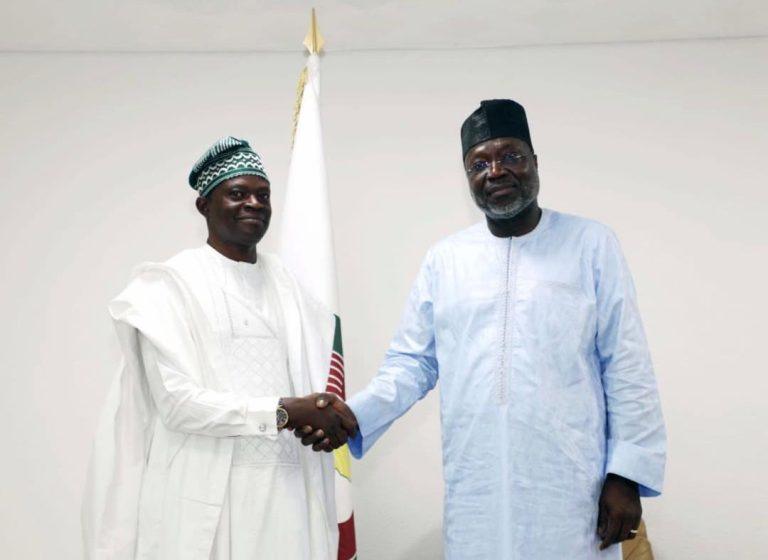
The ECOWAS Commission has reaffirmed its commitment to strengthening diplomatic relations, deepening regional cooperation and enhancing engagement with Member States and international partners, as its President, Dr Omar Touray, received new and outgoing diplomatic representatives at the Commission’s headquarters in Abuja.

The Commission President welcomed the new Permanent Representative of the Federal Republic of Nigeria to ECOWAS, Ambassador Olawale Awe. He expressed confidence in his ability to further reinforce Nigeria’s longstanding leadership role and unwavering commitment to the ECOWAS integration agenda.

President Touray also granted audiences to Chargé d’Affaires interim of the Republic of Sudan, Mohamed Alkhairy Algedail Arbab, as well as the outgoing Permanent Representative of Nigeria to ECOWAS, Ambassador Musa Sani Nuhu, who is concluding his tour of duty with the Community.

In recognition of his outstanding service and significant contributions to the advancement of regional integration and cooperation within the ECOWAS framework, President Touray presented Ambassador Musa Sani Nuhu with an award on behalf of the Community, underscoring ECOWAS’ appreciation for his dedication and exemplary diplomatic service.

President Touray emphasised the importance of collective responsibility in addressing global challenges, stating that “if we prioritise humanity, we can tackle global challenges more effectively.”

The Commission’s President further underscored ECOWAS’ collective commitment to multilateral and constructive dialogue, noting that

we look forward to deepening cooperation with member states inpursuit of our shared goals.

He added that ECOWAS would continue to serve as a vital platform for dialogue, partnership, and collective action, working with its member states and partners to address regional and global challenges through cooperation and shared responsibility.

In their respective remarks, the Ambassadors commended President Touray for his leadership and vision, while reiterating their continued commitment to strengthening bilateral and multilateral cooperation with ECOWAS.

The two Ambassadors reaffirmed their shared resolve to promote sub regional integration and collaboration in the collective interest of the peoples of the ECOWAS Community.


President Tinubu’s Pension Payment Signals Renewed Commitment to Retirees – PenCom

0

The Director-General of the National Pension Commission, Ms Omolola Oloworaran, has hailed President Bola Ahmed Tinubu’s approval of over ₦750b to settle outstanding pension liabilities, describing the move as a major step towards restoring trust, dignity and financial security for Nigerian retirees.

Ms Oloworaran, said this in Abuja at the Pension Revolution Summit: A 365 Days Scorecard and Media Conference.

She said the Pension Revolution Summit marks a turning point for Nigeria’s pension system, driven by accountability, delivery and a clear vision for the future, noting that the launch of Pension Revolution 2.0 is the most far-reaching reform of the sector since 2004, introducing stronger regulation, improved governance and full digital transformation.

According to her, enhanced pension benefits and expanded coverage under the Personal Pension Plan are already restoring dignity and financial security to Nigerians, particularly retirees and informal sector workers.

The DG stressed that compliance, innovation and service excellence are non-negotiable as the commission advances reforms to secure the future of retirement in Nigeria.

She described the intervention, approved by President Bola Ahmed Tinubu, as a historic milestone in the government’s commitment to workers and retirees.

This payment sends a clear signal that pension obligations will be honoured,” Oloworaran said.

Overhaul of the pension

The DG explained that the disbursement was a key outcome of Pension Reform Agenda 2.0, which she described as the most far-reaching overhaul of the pension industry in over a decade.

According to her, the reforms are aimed at expanding coverage, strengthening governance, deepening transparency and repositioning the pension system as a pillar of national stability and economic development.

Oloworaran revealed that PenCom also rolled out Pension Boost 1.0, which has increased monthly pension payments by N2.68bn for retirees under the Contributory Pension Scheme in several states.

These are not just figures. They mean better livelihoods, dignity and peace of mind for retirees,” she said.

She said that the commission had fully automated critical pension processes, including pension certificates, benefits processing and contribution returns, to reduce delays and eliminate human interference.

To address healthcare concerns, Oloworaran said PenCom inaugurated the Board of Trustees of the Pension Healthcare Initiative to provide affordable and accessible healthcare for low-income pensioners.

She also announced the establishment of the Pension Industry Leadership Council to drive innovation, promote accountability and encourage collective responsibility among industry operators.

On coverage expansion, the DG said the Micro Pension Plan had been rebranded as the Personal Pension Plan, with simplified enrolment requirements to attract informal sector workers, artisans and creatives.

Deepen pension

She said the introduction of accredited pension agents would deepen pension penetration while creating employment opportunities for young Nigerians.

On governance reforms, Oloworaran disclosed that PenCom raised capital requirements for pension operators and tightened corporate governance rules to eliminate weak oversight and improve professionalism.

She revealed that a compliance circular issued by the commission led to the recovery of N4.04bn between January and November, representing a 180 per cent increase compared to the total recovery figure for 2024.

Of the amount, she said N2.06bn was recovered in the third quarter alone.

The evidence is clear: when compliance is tied to real consequences, behaviour changes,” she said.

Oloworaran noted that the next phase of reforms would focus on expanding coverage, improving investment outcomes, strengthening supervision and protecting retirees and contributors.

Also speaking, the Commissioner for Inspectorate at PenCom, Mr Samuel Chigozie Uwandu, said the pension system was previously plagued by corruption, weak administration and inadequate funding.

Over the years, we have recorded significant structural improvements,” he said.

Uwandu acknowledged that challenges such as compliance gaps, arrears and economic pressures remained but expressed confidence that the ongoing reforms would address longstanding concerns.

He confirmed that pension benefits would be amended from 2025 and converted to cash, adding that transferred pension balances had already been credited to the appropriate pension funds.

The commissioner commended President Tinubu for approving the N758bn intervention, describing it as a decisive step towards restoring trust in the pension system.

President Tinubu Seeks Extension of 2024/2025 Budgets to March

0

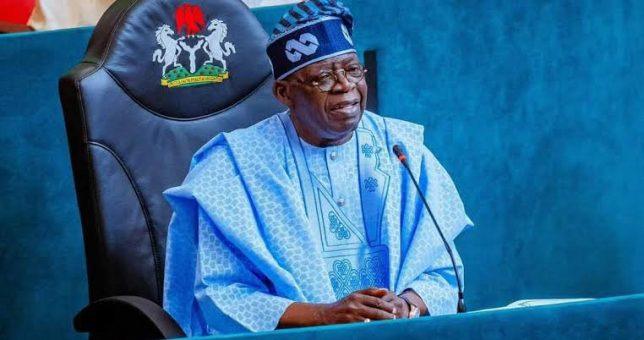
Ahead of the presentation of the 2026 Appropriation Bill, President Bola Tinubu has written the House of Representatives requesting approval to merge the capital components of the 2024 and 2025 Appropriation Acts.

‎The President’s request was contained in two bills to repeal and reenact the 2024 and 2025 budgets and extend their implementation to 31st of March, 2026.

‎The executive bills read on the floor of the House by Speaker Mr. Abbas Tajudeen indicate that the budgetary adjustments align with current fiscal realities to allow for full release of capital implementation target of 30 percent to all Ministries, Departments and Agencies of Government.

The House of Representatives is invited to note that the Bills are submitted to cater for all items not previously recognised while also reflecting a revised capital implementation target of 30%. In addition this, adjustment aligns with current fiscal realities and execution capacities, while ensuring that budget performance remains credible and transparent. It further seeks to extend the 2025 Budget to March 31, 2026 to allow for full release of the target 30% for all MDAs.

“This is part of a broader fiscal reform measure aimed at eliminating the overlap of multiple concurrently running budgets, thereby strengthening planning, execution, and accountability across government expenditure cycles. It further provides a transparent and constitutionally grounded appropriation mechanism, and prudent public financial management framework.

“The Bills also strengthen implementation discipline and accountability by among other provisions: requiring that appropriated funds are released and applied strictly for the purposes specified in the Schedules, providing that virement may only be effected with prior approval of the National Assembly: setting out conditions for corrigenda where genuine errors may hinder implementation, requiring separate recording of excess revenue and limiting its expenditure to an Act or approval of the National Assembly; and mandating due-process compliance and periodic reporting on releases and agency revenues/assistance.

“The House of Representatives is invited to note that, this letter supersedes my earlier submission vide PRES/134/50/S/ARRENB dated 16th December, 2025” the letter read.

The Bills seek to repeal the 2024 Appropriation Act of N35,055,536,770,218 and re-enact by authorising the issuance from the Consolidated Revenue Fund of the Federation of the total sum of N43,561,041,744,507 comprising N1,742,786.788,150 for Statutory Transfers, N8,270,960,606,831 for Debt Service, N11,268,513,380,853 for Recurrent (Non-Debt) Expenditure, and N22.278,780,968.673 for Capital Expenditure/Development Fund contributions for the year ending 31 December 2025 as provided in the Bill and repeal the 2025 Appropriation Act of N54,990,165,355,396 and re-enact by authorising the issuance from the Consolidated Revenue Fund of the Federation of the total sum of N48,316,242,591,785 comprising N3.645.761,358,925 for Statutory Transfers, N14,317,142.689,548 for Debt Service N13,588,009,682,673 for Recurrent (Non-Debt) Expenditure, and N16.705:328,860,640 for Capital Expenditure/Development Fund contribution. for the year ending 31 March, 2026 as provided in the Bill.

The House of Representatives is invited to note that the Bills are submitted to cater for all items not previously recognised while also reflecting a revised capital implementation target of 30%. In addition this, adjustment aligns with current fiscal realities and execution capacities, while ensuring that budget performance remains credible and transparent It further seeks to extend the 2025 budget to March 31, 2026 to allow for full release of the target 30% for all MDAs.

“This is part of a broader fiscal reform measure aimed at eliminating the overlap of multiple concurrently running budgets, thereby strengthening planning, execution, and accountability across government expenditure cycles. It further provides a transparent and constitutionally grounded appropriation mechanism, and prudent public financial management framework.

“The Bills also strengthen implementation discipline and accountability by among other provisions: requiring that appropriated funds are released and applied strictly for the purposes specified in the Schedules, providing that virement may only be effected with prior approval of the National Assembly: setting out conditions for corrigenda where genuine errors may hinder implementation, requiring separate recording of excess revenue and limiting its expenditure to an Act or approval of the National Assembly; and mandating due-process compliance and periodic reporting on releases and agency revenues/assistance.

He added that the House of Representatives is invited to note that the letter supersedes his earlier submission vide PRES/134/50/S/ARRENB dated 16th December, 2025.


Lateefah Ibrahim

Nigeria Reaffirms Commitment to End Micronutrient Deficiencies

0

Nigeria Government has reaffirmed its commitment to tackling micronutrient deficiencies in Nigeria, describing malnutrition as a major threat to human capital development and national growth.

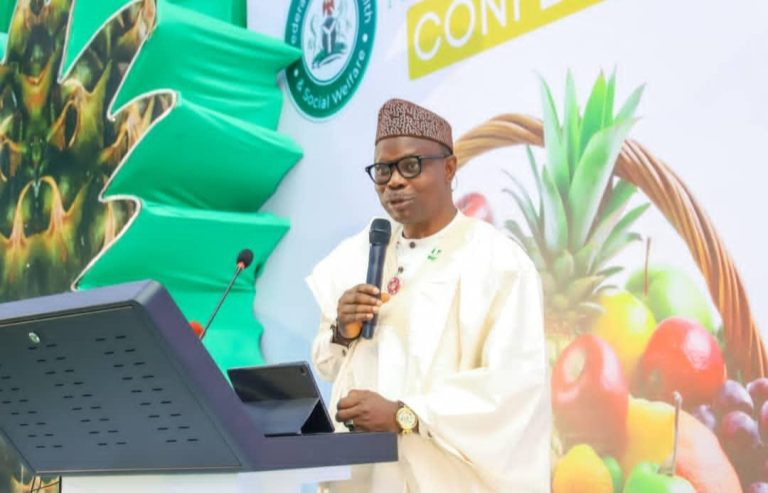
The Minister of State for Health and Social Welfare, Dr. Iziaq Adekunle Salako, stated this at the opening of the 2025 National Micronutrient Conference held in Abuja.

Speaking at the conference themed: Strengthening Resilient Systems for Addressing Micronutrient Deficiencies in Nigeria,” Dr. Salako said the gathering was more than a routine meeting, but a national platform for dialogue, reflection and coordinated action to address what he described as a “hidden hunger” affecting millions of Nigerians.

He noted that children under five, pregnant and lactating women, adolescents and other vulnerable groups remain the most affected.

The Minister expressed concern over findings from the 2024 Nigeria Demographic and Health Survey, which show that stunting stands at 40 percent, wasting at 8 percent, and underweight at 27 percent among children aged 6 to 59 months.

He described the statistics as unacceptable and called for urgent, sustainable and targeted interventions, aligned with the Renewed Hope Agenda of President Bola Tinubu, which prioritises tangible improvements in the lives of Nigerians.

Dr. Salako explained that, “Micronutrient deficiencies undermine immunity, cognitive development, educational outcomes and productivity, thereby perpetuating poverty and underdevelopment.”

He commended the Director of Nutrition and her team for reviving the National Micronutrient Conference, in line with the resolutions of the Multiple Micronutrient Supplement Taskforce, and for re-inaugurating the National Advisory Committee on Micronutrient Deficiency and Control as a sign of renewed national commitment.

Tracing the history of the conference, the Minister recalled that it was established following Nigeria’s commitments to global and regional resolutions on micronutrient deficiencies, beginning with the West Africa Regional Meeting on Iodine Deficiency Disorders hosted in Abuja in 1999.

He noted that the conference had played a key role in shaping policies on universal salt iodisation, vitamin A supplementation and food fortification.

Dr Salako said the 2025 edition of the conference marks a turning point, reinforcing the government’s resolve to tackle malnutrition as a fundamental barrier to human capital development.

“The biennial forum would provide an opportunity to review progress, identify gaps, share innovations and best practices, and strengthen multi-sectoral partnerships in line with the National Multisectoral Plan of Action on Food and Nutrition and the Sustainable Development Goals.”

He highlighted ongoing government interventions, including multiple micronutrient supplementation for pregnant women, vitamin A supplementation for children, food fortification, salt iodisation, maternal and child nutrition programmes, and partnerships to promote locally produced, nutrient-rich foods.

The Minister emphasized that ending malnutrition requires collective action across sectors and all levels of government, noting that no single institution can solve the challenge alone.

He called on stakeholders to use the conference to mobilize resources, strengthen food systems and scale up impactful nutrition actions to ensure that every Nigerian has access to essential micronutrients for optimal health and development.

Nigeria Surpasses WHO Benchmarks in Neglected Tropical Disease Elimination

0

Nigeria has recorded a major public health breakthrough, surpassing key World Health Organization (WHO) benchmarks in the elimination of Neglected Tropical Diseases (NTDs), following the successful close-out of a Gates Foundation–supported intervention targeting Lymphatic Filariasis (LF) and Onchocerciasis.

The Minister of State for Health and Social Welfare, Dr. Iziaq Adekunle Salako, announced this in Abuja at the Gates Foundation Close-Out Ceremony and Virtual Results Presentation Meeting.

Dr. Salako said the Elimination of LF and Onchocerciasis Assessment to Stop Ivermectin Treatment project, which began in 2022 and concluded in September 2025, was initially planned as a 17 month programme but was extended at no additional cost to ensure sustainable and impactful outcomes.

He commended the implementing partners for effectively delivering results despite tight timelines and limited funding.

The Minister explained that the project supported the Federal Ministry of Health and Social Welfare in expanding community-based impact and surveillance surveys across several Local Government Areas.

“These surveys informed evidence-based decisions to stop Mass Administration of Medicines (MAM), significantly reducing both the geographic spread and the number of Nigerians requiring Ivermectin treatment for the two diseases.”

According to him, the Gates Foundation approved about 4.9 million dollars for the project and appointed Sightsavers as grant managers.

“The initiative conducted extensive epidemiological, entomological and transmission assessment surveys across multiple states, while the initial target was to remove 27 million Nigerians from Ivermectin treatment, the outcome exceeded expectations, with 31.1 million people no longer requiring treatment for Lymphatic Filariasis and 16 million no longer needing treatment for Onchocerciasis.”

Dr. Salako noted that Nigeria achieved 148 percent of its targets for LF assessments and 150 percent for Onchocerciasis assessments, positioning the country firmly on track to meet the WHO roadmap for ending NTDs by 2030.

He described the achievement as a critical step towards interrupting disease transmission and eventual eradication.

Beyond disease elimination, the Minister highlighted the project’s contribution to strengthening the health system, including the upgrade and capacity building of four laboratories towards ISO 15189 accreditation, training of laboratory technicians and field personnel, development of sample retention and disposal policies, and improved logistics for sample transportation through certified third-party providers.

He expressed appreciation to the Gates Foundation, implementing non-governmental organizations, Sightsavers, state ministries of health, national technical committees, and development partners for their collective efforts.

Dr. Salako reaffirmed the Federal Government’s commitment to sustaining the gains achieved and advancing Nigeria’s goal of eliminating neglected tropical diseases nationwide.

NIMC Introduces Pre-enrolment Portal to Ease NIN Process

0

The National Identity Management Commission (NIMC) has introduced NIMC Pre-Enrolment Portal, a digital solution to enhance efficiency and user experience in the National Identification Number (NIN) enrolment process.

The Pre-Enrolment Portal allows applicants, local or in the Diaspora, to conveniently capture and submit their biodata online before visiting enrolment centres for biometric capture.

This is part of NIMC’s broader strategy to reduce congestion at enrolment centres.

In a statement issued by the Commission Head of  Corporate Communications, Mr. Kayode Adegoke, the introduction of the portal reflects the unwavering commitment of the Director General and Chief Executive Officer of the Commission,  Dr. Abisoye Coker-Odusote, to strengthen institutional performance through technology-driven solutions,.

It is also in alignment with the Renewed Hope Agenda of President Bola Tinubu which prioritises efficient public service delivery, digital transformation, and inclusive national development.

Mr Adegoke listed some of the key benefits of the NIMC Pre-Enrolment Portal to  include: Simplified enrolment through online capture and management of NIN biodata before biometric enrolment.

Reduced congestion and waiting time at enrolment centres through appointment scheduling.

Improve data accuracy, as applicants directly input their information.

Secure and confidential handling of user data through enhanced security measures. Seamless online upload of required supporting documents.Improved overall user experience and service efficiency. Increased enrolment accuracy and operational effectiveness.

NIMC encourages all prospective NIN applicants to utilise the Pre-Enrolment Portal to enjoy a smoother, faster, and more efficient enrolment process. This initiative further underscores the Commission’s commitment to building and sustaining a reliable digital identity ecosystem in support of national development.” he said.

NIN applicants were told to visit penrol.nimc.gov.ng – for the use of the Pre-Enrolment Portal.

Lateefah Ibrahim

FEC Approves ₦58.47trn 2026 Budget, Amends MTEF

0

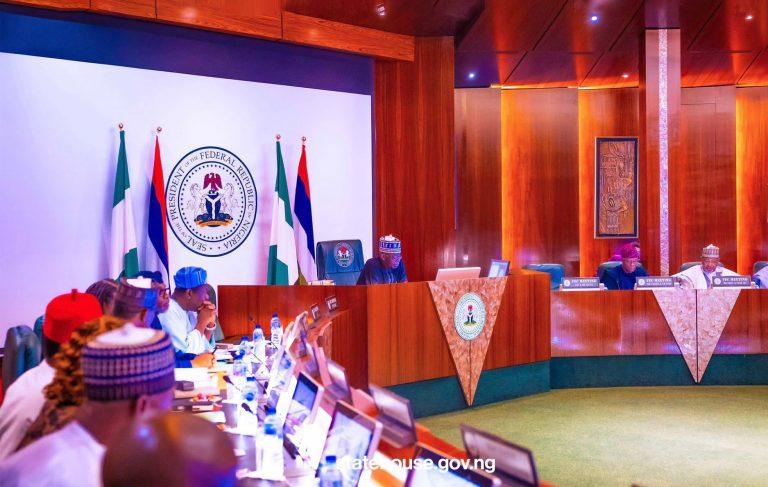
The Federal Executive Council has approved a ₦58.47 trillion 2026 Appropriation Bill and an amendment to the Medium-Term Expenditure Framework (MTEF), paving the way for President Bola Tinubu to transmit the budget to the National Assembly.

Briefing journalists after the council meeting on Friday Chaired by Vice President Kashim Shettima, the Minister of Information and National Orientation, Mohammed Idris, said the sole item on the agenda was the consideration and approval of the 2026 budget proposal for onward transmission to the legislature later.

The Minister of Budget and Economic Planning, Abubakar Bagudu, told State House Correspondents that Council also approved a downward revision of the exchange rate assumption in the MTEF from ₦1,512/$ to ₦1,400/$, with consequential adjustments to the overall budget size.

According to him, the proposals were earlier presented by the Ministry of Budget and the Budget Office and reviewed by members of the Executive Council of the Federation before approval.

This afternoon, the Federal Executive Council considered the 2026 budget proposal that is going to the National Assembly, as well as an amendment to the medium term expenditure framework, which we propose, a revision downwards of the exchange rate from the 1512 to 1400 and the consequential changes in budget size. So the federal executive council approved both the amendment to the MTEF as well as the 2026, budget proposal for presentation to the National Assembly.”

Providing details, the Director-General of the Budget Office, Tanimu Yakubu, said aggregate expenditure for 2026 is projected at ₦58.47 trillion, representing a six per cent increase over the 2025 budget estimate.

He explained that the figure includes ₦4.98 trillion in projected spending by Government-Owned Enterprises (GOEs) and ₦1.37 trillion for grant- and donor-funded projects.

A breakdown of the spending plan shows statutory transfers of ₦4.1 trillion and debt service of ₦15.52 trillion, which includes ₦3.188 trillion for the sinking fund to retire maturing bonds issued to local contractors and creditors. Personnel costs, including pensions, are estimated at ₦10.75 trillion, incorporating ₦1.02 trillion for GOEs and reflecting a seven per cent increase over the 2025 provision.

Overhead costs are projected at ₦2.22 trillion, while capital expenditure stands at ₦25.68 trillion about 1.8 per cent lower than the 2025 capital allocation reflecting what officials described as a more conservative approach focused on completing ongoing projects.

Capital Allocation Priorities 

Capital allocation priorities include ₦11.3 trillion for Ministries, Departments and Agencies (MDAs), ₦2.052 trillion for multilateral and bilateral loans, and ₦1.8 trillion as the capital component of the Development Levy.

The aggregate expenditure for 2026 is projected at ₦58.47 trillion, 6% higher than the 2025 budget estimate.

“This includes projected spending of government owned enterprises amounting to ₦4.98 trillion and ₦1.37 trillion for grant and donor funded projects, the projected aggregate spending includes statutory transfers, ₦4.1 trillion debt service, ₦15.52 trillion including ₦3.188 trillion for the sinking fund to retire maturing bonds issued to local contractors and creditors, personnel cost, including pensions, ₦10.75 trillion, which includes ₦1.02 trillion for government owned enterprises, and 7% higher than the 2025 provision overhead cost, ₦2.22 trillion capital expenditure, ₦25.68 trillion, 1.8% lower than the 2025 capital provision, reflecting a more conservative approach to capital planning and the focus on completing ongoing projects. “

Yakubu said the 2026 budget is designed to balance macroeconomic stabilisation with development objectives under the Renewed Hope Agenda.

He noted that budget assumptions are conservative and realistic, particularly on oil price, exchange rate and GOE dividends.

While revenues are projected to decline year-on-year, he said non-oil revenues now account for about two-thirds of total receipts, underscoring a structural shift away from oil dependence. Corporate income tax, value-added tax, customs duties and independent revenues are expected to remain the main fiscal anchors.

The revenues decline year on year, but non oil revenues now account for roughly two thirds of total receipts, confirming a structural shift away from oil dependence. Corporate tax, VAT customs and independent revenues remain in the main fiscal ankles. Expenditure growth is driven primarily by debt service wages and pensions, rather than discretionary expansion, capital spending is marginally reduced to prioritize completion of ongoing projects and value for money. The larger deficit reflects legacy fiscal rigidities, rather than policy loosening. Financing relies on domestic borrowing complemented by concessional multilateral loans” he stated.

According to the Budget Office, expenditure growth is driven largely by debt service, wages and pensions rather than discretionary expansion, while the larger deficit reflects legacy fiscal rigidities rather than policy loosening.

Financing of the deficit will rely mainly on domestic borrowing, complemented by concessional multilateral loans.

President Tinubu is expected to formally transmit the 2026 Appropriation Bill to the National Assembly for consideration on Friday,19th December.


Lateefah Ibrahim

PDP Crisis: INEC Awaits Court of Appeal Verdict 

The Independent National Electoral Commission (INEC) has reaffirmed that it will be guided by the final judgment of the Court of Appeal in resolving the lingering leadership crisis within the Peoples Democratic Party (PDP).

This position was made known by the INEC Chairman, Professor. Joash Amupitan, SAN, during a meeting convened by the commission, which brought together the Kabiru Turaki-led National Working Committee (NWC) of the PDP and some former party members laying claim to various leadership positions.

The leadership dispute has its roots in disagreements arising from the PDP’s national convention, which produced an NWC headed by Kabiru Turaki, SAN. The outcome of the convention was challenged by aggrieved stakeholders, leading to the emergence of factions and parallel claims to the party’s leadership.

As the crisis deepened, several suits were filed questioning the validity of the convention and the legitimacy of those claiming leadership positions. These cases have since been consolidated and are now before the Court of Appeal.

Addressing the parties at the meeting, Professor Amupitan said INEC invited the contending factions to “find a way to resolve the lingering crisis in the party,” while acknowledging that the commission is fully aware of the pending legal processes.

Both sides presented their positions exhaustively at the meeting and confirmed that the matter is currently before the Court of Appeal. At the end of the deliberations, the INEC Chairman emphasised that the meeting was essentially to hear from all parties involved and reiterated that the commission would await the final judgment of the court before taking any definitive position.

Speaking after the meeting, the PDP National Chairman, Kabiru Turaki, SAN, maintained that his committee remains the authentic leadership of the party, having emerged from what he described as a valid national convention, even though the outcome is being contested in court.

“As the authentic leadership of the party that emerged from a valid convention though contested in court while awaiting the pronouncement of the Court, we will continue to carry out our duties as an opposition party,” Turaki said.

He added that the PDP under his leadership would remain focused on holding the government accountable on critical national issues such as security, infrastructure, education, and healthcare, despite the ongoing internal dispute.

Liverpool Manager Confirms No Salah Friction Ahead of Tottenham

0

Liverpool manager Arne Slot said  he has “moved on” and that there were no lingering issues with Egyptian talisman Mohamed Salah, after the forward’s recent criticism of the club, ahead of Saturday’s Premier League clash at Tottenham Hotspur.

Salah was a key player in the 2-0 win over Brighton & Hove Albion at the weekend, despite the turbulent week ahead of the game following the Egyptian’s scathing criticism of the club.

“I said last week, actions speak louder than words,” Slot told reporters on Friday. “We moved on, he was in the squad and was the first substitution I made.”

“Now he’s got AFCON and will play some big games so it’s only fair that all focus is on them.”

Depending on how far Egypt advance at the CAF Africa Cup of Nations, Salah could miss seven games starting with Saturday’s fixture. Slot’s men are seventh on 26 points, 10 behind leaders Arsenal. Spurs are four points behind Liverpool in 11th.

The Liverpool manager will be missing Cody Gakpo and Joe Gomez again on Saturday, but the versatile Dominik Szoboszlai, who was forced off with an ankle injury in the closing stages of the Brighton game, could feature.

“Dominik trained yesterday for the first time. We’ll see where he’s at today,” Slot said. “(Whether he could start against Spurs) completely depends on how well he does today and then we speak to the player and the medical staff.

“If the player feels comfortable and does all the things he needs to do, then he will start. Dom would be a starter tomorrow if he’s completely fit.”

Forward Gakpo has been sidelined since early December with a muscle injury that Slot initially said would likely keep him out until mid-January.

“He had a scan that looked promising, so we’re not that worried anymore,” Slot said. “He might come back earlier than expected, but definitely not tomorrow.”

Defender Gomez left last weekend’s game early with a hamstring injury, “Joe is not in the squad as well,” Slot added.

The defending champions had a poor start to the season but are unbeaten in their last five games across all competitions and will look to maintain momentum despite missing key players.

“We are getting closer to the team I want us to be,” Slot said. “That has gone with ups and downs. For me, that makes complete sense because of the changes we made in the summer.”

“And we made them on purpose because we thought we needed them. You have to adapt, so it takes time.”

Earthquake Hits Zimbabwe’s Eastern Highlands

0

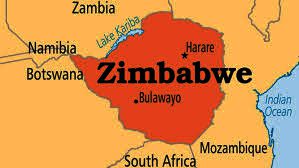
Zimbabwe’s Manicaland province on Wednesday experienced a 4.2‑magnitude earthquake although no damage or injuries have been reported, authorities said on Friday.

The Meteorological Services Department (MSD) confirmed the seismic event, noting its epicentre was in Mozambique.

The quake occurred at 3:31 am local time (0131 GMT) and was linked to tectonic activity along the East African Rift System, which makes Zimbabwe’s eastern border particularly vulnerable.

The MSD said tremors were felt as far as Nyanga, Makoni and Macheke in Zimbabwe’s Manicaland province.

Residents reported brief but noticeable ground shaking but no casualties or property losses were recorded.

MSD officials warned that Manicaland and parts of the Lowveld remain susceptible to earthquakes due to their geography, with additional risks in northern regions around Lake Kariba and in central areas where mining‑induced tremors sometimes occur. Authorities urged vigilance and preparedness as monitoring continues.


APA/Oyenike Oyeniyi