Home Blog Page 379

Deputy Speaker Calls for Unity to Strengthen Agriculture Sector

The Deputy Speaker of the House of Representatives, Mr. Benjamin Okezie Kalu, has called on stakeholders in the agriculture sector to work together to address Nigeria’s food security challenges.

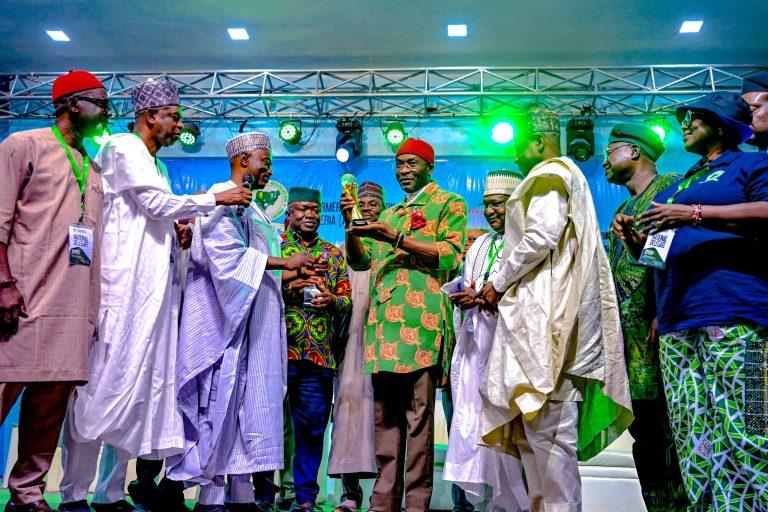
Kalu made the call while speaking at the Annual General Meeting of the All Farmers Association of Nigeria (AFAN) in Abuja, where he stressed the need for unity and collective action to transform the sector.

He described agriculture as central to Nigeria’s future, noting that every job created in the sector feeds a household and keeps young people employed.

The Deputy Speaker urged farmers to organise themselves, embrace technology, and increase productivity. He also called on the government to establish a formal dialogue with agricultural leaders and develop sector-wide roadmaps.

Addressing AFAN leadership, Kalu said, “Establish a formal dialogue with the government on priority constraints. Develop sector-wide roadmaps for major commodities such as maize, rice, poultry and horticulture. Create working groups on infrastructure, finance, technology and markets. Be the architect of Nigeria’s agricultural future, not merely its commentator.”

He challenged state governments to prioritise agriculture in their budgets.

“To state governments: Allocate at least 5 percent of your budget to agricultural infrastructure. Implement the market mapping frameworks we have pioneered. Use data to target investments. Hold yourselves accountable for agricultural output and job creation in your states,” he said.

Kalu also called on the private sector to deepen its involvement in agriculture.

“To the private sector: Take risks. Invest in processing, logistics and market systems. Work with smallholders as partners, not vendors. Build the ecosystems that will make Nigeria a regional agricultural powerhouse,” he stated.

Addressing farmers directly, the Deputy Speaker said, “Organise. Embrace technology. Increase your productivity. You are not asking for charity. You are building wealth and feeding a nation. Demand the infrastructure and services you deserve.”

Kalu further reminded all stakeholders of agriculture’s importance to national stability.

“To all stakeholders: Agriculture is not marginal to Nigeria’s future. It is central. Every job created in agriculture is a household fed and a young person kept in the country rather than pushed toward cities or external migration. Every productivity gain in farming is stability in the polity,” he said.

He lamented the lack of collective resolve, despite Nigeria’s resources and policies.

“We have the resources. We have the policy environment. We have the partnerships. What we lack is unified will. Let us demonstrate that today and carry it back to our constituencies, our businesses, our farms and our communities,” Kalu explained

He concluded that the responsibility for food security goes beyond the government alone.

“The future of food security in Nigeria rests not with government alone, but with the collective action of this association and the millions of Nigerians who till the soil, trade the harvest and feed the nation,” he added.

Economic Reforms Yield Stability – Minister

The Minister of Finance and Coordinating Minister of the Economy, Mr. Wale Edun, says economic reforms have delivered meaningful macroeconomic stabilisation, with Nigeria now entering a consolidation phase.

He stated this at the launch of the Nigerian Economic Summit Group (NESG) 2026 Macroeconomic Outlook Report in Lagos.

According to the Minister, Nigeria has transitioned from a period of stabilisation to the threshold of consolidation.

“Inflation has moderated, foreign exchange volatility has eased, reserves have strengthened, and investor confidence has improved. The emphasis now is on sustaining reforms and converting stability into growth and shared prosperity,” Edun said.

He disclosed that inflation declined from 33.18 percent in 2024 to 14.45 percent by November 2025, while GDP growth averaged 3.78 percent by the third quarter of 2025, with 27 sectors recording expansion. External reserves rose to 45.5 billion dollars, the exchange rate stabilised below ₦1,500 to the dollar, and trade surplus reached ₦19.33 trillion in the first nine months of 2025. He added that market capitalisation on the Nigerian Exchange increased by nearly 60 percent year on year.

Edun stressed that Nigeria must remain committed to reforms, warning against policy reversals.

“Nigeria cannot afford to pause or retreat. Success in consolidation will determine whether stability becomes sustained growth and productive jobs,” he said.

Addressing public concerns over Nigeria’s public debt profile, the Minister explained that the ₦152 trillion debt figure largely reflects improved transparency and exchange rate adjustments rather than excessive new borrowing.

“About ₦30 trillion reflects previously unrecognised Ways and Means advances now formally recorded. Nearly ₦49 trillion resulted from the revaluation of foreign debt following foreign exchange reforms. Nigeria’s debt-to-GDP ratio declined to 36.1 percent, one of the lowest in Africa and well below the global average,” he noted.

Edun said fiscal performance in 2025 demonstrated discipline despite revenue pressures, particularly in the oil and gas sector. He stated that the government maintained a fiscal deficit of about 3.4 percent of GDP, improved non-oil revenue mobilisation, strengthened fiscal federalism by increasing allocations to states, and achieved 84 percent capital budget execution for 2024 projects during the transition period.

Looking ahead, the Minister projected GDP growth of 4.68 percent in 2026, with inflation averaging 16.5 percent and the exchange rate stabilising around ₦1,400 to the dollar.

He also highlighted reforms aimed at improving efficiency and protecting vulnerable Nigerians, including the full digitalisation of government revenue collection, enhanced treasury transparency and central billing reforms, elimination of opaque deductions and leakages, and the implementation of a pro-poor tax law that exempts essential food items and small businesses while broadening the tax base.

Edun reiterated the government’s commitment to translating current economic gains into sustained growth, productive jobs, poverty reduction, and improved living standards for Nigerians.

NRS Dismisses Claims of New VAT on Banking Services

The Nigeria Revenue Service (NRS) has dismissed reports claiming that Value Added Tax (VAT) has been newly introduced on banking services, describing the reports as misleading and inaccurate.

In a statement signed by the Special Adviser on Media to the NRS Chairman, Dare Adekanmbi, on behalf of the Executive Chairman, Zacch Adedeji, the Service clarified that VAT has always applied to fees, commissions and charges on banking services. It stressed that the Nigeria Tax Act did not introduce any new VAT obligation on bank customers.

The statement noted that misinformation circulating in some sections of the media had created unnecessary confusion among Nigerians.

According to the NRS, VAT has long been applicable to banking services such as electronic transfers, USSD charges, card issuance fees, account maintenance fees and other service-related charges where a fee or commission is involved.

“The Nigeria Tax Act did not introduce VAT on banking charges, nor did it impose any new tax obligation on customers in this regard,” the NRS said.

The Service explained that VAT is not charged on the actual amount of money transferred or withdrawn by customers, but only on the service charge imposed by banks.

“VAT is not charged on the amount of money transferred or withdrawn. It applies only to the service charge or commission imposed by the bank. For example, if a bank charges ₦10 for a transfer, VAT of 7.5 percent, amounting to ₦0.75, applies to that ₦10 charge and not to the amount being transferred,” the NRS added.

The NRS further clarified that interest earned on savings accounts, fixed deposits and similar bank deposits is not subject to VAT, as interest income does not qualify as a supply of goods or services under the Nigeria Tax Act, 2025.

It also reaffirmed that basic food items, essential goods, medical and pharmaceutical products, as well as educational services provided by recognised institutions, remain exempt from VAT under the Act.

Addressing public concerns, the Service stated that what has changed is not the law itself but the level of compliance and enforcement, noting that financial institutions are being reminded of their obligation to remit VAT already charged and collected from customers.

The NRS urged Nigerians to disregard false narratives and rely only on official communications for accurate and up-to-date information on tax matters, assuring the public that the Nigeria Tax Act did not introduce any new VAT burden on ordinary citizens.

Kano: Police Foils Explosives, Drug Trafficking Plots

0

Police in Kano state North West Nigeria, has recorded major breakthroughs in crime prevention following intelligence-led operations that foiled attempts to traffic explosive materials and illicit drugs within the state.

The operations, carried out in line with directives of the Inspector-General of Police, Kayode Adeolu Egbetokun, on improved intelligence gathering, were conducted by officers of the Rijiyar Lemo Police Division and the Command’s Anti-Daba Unit.

In a statement issued by the Police Public Relations Officer, CSP Abdullahi Kiyawa, the Command said that in the first operation on January 13, 2026, police officers executed a search warrant at a residence in Tudun Bojuwa Quarters, Fagge Local Government Area.

During the search, two large sacks containing suspected incriminating items were recovered.

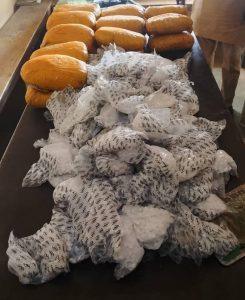
Experts from the Explosive Ordnance Disposal, Chemical, Biological, Radiological and Nuclear (EOD-CBRN) Unit examined the items and confirmed that one sack contained six rolls of detonating cords, while the second sack held 20 parcels of dried leaves suspected to be cannabis sativa and 220 sachets of suspected Exol tablets.

He said Investigations into the discovery are ongoing.

In a separate operation, officers of the Anti-Daba Unit, acting on intelligence during a surveillance patrol, intercepted a commercial tricycle rider at Sani Mainagge Quarters in Gwale Local Government Area.

Kiywa noted that, three bags suspected to contain heavy materials were recovered as further examination by EOD-CBRN experts revealed 3,700 pieces of electric detonators.

The interception led to the arrest of a suspect, identified as Ibrahim Garba, also known as “Manyan Baki,” a 49-year-old man from Zamfara State.

The PPRO said the suspect confessed to facilitating the movement of the explosive materials from Nasarawa State to other destinations with Investigations ongoing .

The Commissioner of Police, CP Ibrahim Adamu Bakori, commended the officers involved for their professionalism and vigilance.

He urged residents to remain alert and promptly report any suspicious movements, items or activities to the nearest police station or through the Kano State Police Command emergency numbers.

The Command also advised members of the public not to touch any suspicious objects, but to keep a safe distance and immediately notify the police.


Lateefah Ibrahim

Nigeria’s Inflation Rate Eases to 15.15 Percent – NBS

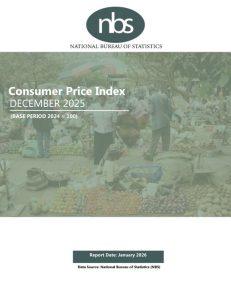
The National Bureau of Statistics (NBS) says Nigeria’s headline inflation rate stood at 15.15 per cent in December 2025, reflecting a moderation in price pressures driven largely by a decline in food prices.

The NBS made this known via its X handle @NBS_Nigeria, which showed the December 2025 CPI Report

CPI_December_2025_Report

The CPI report was released by the Statistician-General of the Federation, Prince Adeyemi Adeniran.

The Consumer Price Index (CPI) rose to 131.2 in December, a 0.7-point increase from November, following the recent rebasing of the CPI to a 2024 base year with 2023 as the weight reference period.

On a month-on-month basis, headline inflation slowed to 0.54 per cent, down sharply from 1.22 per cent recorded in November.

Food inflation eased to 10.84 per cent year-on-year, while prices declined by 0.36 per cent month-on-month, compared with a 1.13 per cent increase in November.

The bureau attributed the drop to lower average prices of staples such as tomatoes, garri, eggs, potatoes, millet, vegetables, beans, wheat grain and onions.

Core inflation, which excludes volatile agricultural produce and energy, remained elevated at 18.63 per cent year-on-year. However, it also slowed on a monthly basis to 0.58 per cent from 1.28 per cent in November.

Food and non-alcoholic beverages remained the largest contributor to headline inflation at 6.06 per cent, followed by restaurants and accommodation services (1.96 per cent) and transport (1.62 per cent.

The least contributors were recreation, sport and culture, alcoholic beverages and tobacco, and insurance and financial services.

Among newly introduced sub-indices, energy inflation rose sharply by 2.74 per cent in December, while farm produce declined by 0.41 per cent. Services and goods recorded modest increases of 0.15 per cent and 0.64 per cent respectively.

Urban inflation stood at 14.85 per cent year-on-year, with a month-on-month increase of 0.99 per cent. In contrast, rural inflation was 14.56 per cent year-on-year and declined by 0.55 per cent month-on-month, reflecting easing price pressures in rural areas.

At the state level, Abia (19.03 per cent), Ogun (18.80 per cent) and Katsina (18.66 per cent) recorded the highest year-on-year headline inflation, while Sokoto (8.61 per cent), Plateau (9.05 per cent) and Kaduna (10.38 per cent) posted the lowest. Month-on-month, Cross River, Abia and Delta saw the steepest increases, while Ondo, Gombe and Jigawa recorded declines.

For food inflation, Yobe, Ogun and Abuja recorded the highest year-on-year increases, while Akwa Ibom, Sokoto and Plateau recorded the slowest growth. On a monthly basis, food prices rose most in Imo, Nasarawa and Yobe, but declined in Plateau, Rivers and Zamfara.


Shiktra Shalangwa


Sokoto Governor Debunks False Claims

0

The Sokoto State Governor, Ahmed Aliyu has debunked a video clip circulating on social media alleging that residents of Tidibali village in Isah Local Government Area were chased out of their homes by bandits.

Governor Aliyu spoke while responding to questions from journalists during the 2025 Armed Forces and Remembrance Day ceremony held in Sokoto, where he paid tribute to fallen heroes who sacrificed their lives in defence of the nation.

Governor Aliyu described the video as false, misleading, and deliberately fabricated by individuals who derive pleasure from politicising security challenges in the state.

He stressed that at no time were the people of Tidibali forcefully displaced by bandits.

According to Governor Aliyu, the temporary evacuation of the villagers was a proactive decision taken by local government authorities after receiving credible intelligence that bandits were planning to attack the community.

He explained that the move was purely a precautionary measure aimed at safeguarding lives and property.

He further disclosed that security presence in the area had since been significantly reinforced, leading to the restoration of calm in the community.

As a result, the evacuated residents have safely returned to their homes and are going about their normal activities,” he said.

He reassured the people of Sokoto State of his administration’s unwavering commitment to ensuring the safety and security of lives and property across all parts of the state.

The Governor warned against the spread of unverified information, noting that such reports could cause unnecessary panic and undermine ongoing security efforts.

Also speaking, the General Officer Commanding (GOC) 8 Division and Commander Sector 2 Joint Task Force North West Operation FANSAN YAMMA, Major General Ibikunle Ajose, said army remain poised to continue to safeguard the lives and properties of people in the state.

He called on communities to continue to supply security operatives with timely intelligence reports to enable army take proactive measure for sustainable peace and security.

According to him, the nationwide commemorations and celebration was dedicated to honouring the bravery, sacrifice and enduring service of Nigerian military personnel who paid the supreme price in the defence of the nation.

Heroes sacrifices

He noted that the event reaffirmed the nation’s collective resolve to remember heroes sacrifices and underscored the Armed forces’ unwavering commitment to safeguarding Nigeria’s peace, unity and security.

General Ajose urged troops deployed at various operations to continue to remain committed towards restoring peace and security for sustainable socioeconomic development of the country.

Lateefah Ibrahim

United Capital Infrastructure Fund Repositions For Sustainable Growth

United Capital PLC has appointed four infrastructure investment experts as independent members of the investment Committee of the United Capital Infrastructure Fund (UCIF).

The appointments have been confirmed following the ratification and clearance by the Securities and Exchange Commission.

According to the company’s board of Directors, the appointment is targeted at repositioning for infrastructure opportunities in Nigeria and across Africa.

With investments in power, industrial recycling and renewable energy, UCIF continues to deliver superior results, achieving a year-to-date gross return of 24.62%.

The Group Chief Executive Officer of United Capital PLc, Mr Peter Ashade,said: “These appointments were made to further deepen the Fund’s governance and ensure that UCIF continues to drive sustainable impact through its investments. I welcome the newly appointed members of the Investment Committee and charge them to ensure sustainable growth and impact, while delivering consistent value to our investors.”

The appointees bring fresh perspectives, multinational exposure, and decades of multi-sector experience across infrastructure and investments.

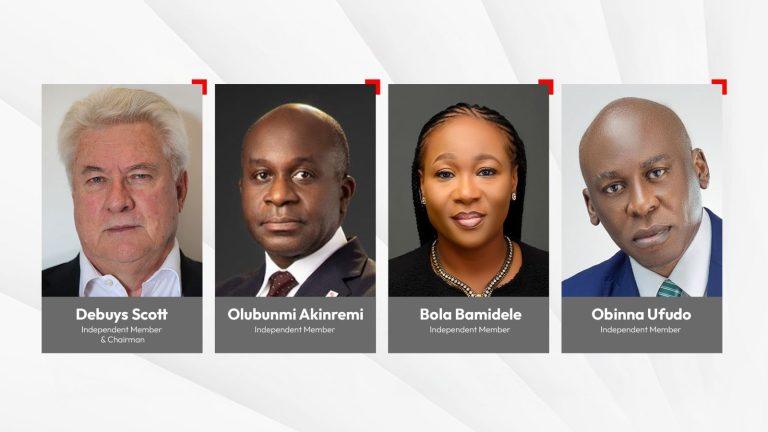
The appointees are De Buys Scott appointed as Chairman while independent members are Olubunmi Akinremi, Bola Bamidele and Obinna Ufudo.

They join other members of the Investment Committee who are Odiri Oginni, UcheNna Mkparu and Adeyinka Jafojo.

Also commenting on the announcement, UcheNna Mkparu, Chief Investment Officer and Fund Manager at UCIF, said: “We are delighted to welcome the new members to the Investment Committee and would be counting on their track record, wealth of experience across multiple jurisdictions and impeccable professional reputations to steer UCIF’s strategic direction as we scale investments that deliver competitive returns across Nigeria and Africa.”

New Investment Committee Member Profiles

De Buys Scott – Independent Member & Chairman

De Buys is the Managing Partner at Cornerstone Infrastructure Advisors and former Senior Partner, Infrastructure at KPMG (South Africa). He is a qualified Chartered Accountant with vast African and International experience specializing in PublicPrivate-Partnerships (PPP); Corporate & Project Finance; Capital-raising in various sectors including transportation, passenger rail, healthcare, and mixed-use real estate.

Olubunmi Akinremi – Independent Member

Bunmi is the CEO of Tocam Capital, a Project Development firm focussed on natural resources and associated infrastructure. He has over 30 years’ experience in investment banking and corporate finance across Nigeria, USA, and the UK and has raised over $5 billion for the Nigerian market. He served as Senior Special Adviser to two past Nigerian Presidents on economic policy and has held NonExecutive Director and Audit Committee roles for companies in the financial services and real estate sectors. He holds a B.A. in Economics from the University of Essex, an MBA from Cranfield University and is an Associate member of the Institute of Chartered Accountants in England and Wales.

Bola Bamidele – Independent Member

Bola, until her retirement from the World Bank Group after nearly 25 years, was the Sub-Saharan Africa Regional Lead, Transaction Advisory & Equity Mobilization at the International Finance Corporation (IFC). Bola is experienced in originating and structuring impact investments and has working experience in Sub-Sahara Africa, Latin America, Asia and Europe. She is also skilled in International Business, M&A Advisory, Infrastructure, Structured & Project Finance.

Obinna Ufudo – Independent Member

Obinna is a seasoned board director and executive with over 30 years’ experience spanning banking, investment, infrastructure, energy and social impact. He is Chairman of Loanbook Limited and Atiat Limited, and a Non-Executive Director of Abbey Mortgage Bank. He previously served as President/Group CEO of
Transnational Corporation of Nigeria Plc (Transcorp), leading a successful turnaround that delivered over US$1 billion in shareholder value within three years.
He is the Founder & Chairman of Sir Pius Ufudo Foundation, a Fellow of the CIBN, a British Chevening Scholar, an alumnus of Wharton AMP and IESE Executive MBA.

United Capital Infrastructure Fund (UCIF)

The United Capital Infrastructure Fund (UCIF) is a SEC-licensed, ₦150 billion closed-ended fund designed to finance and support infrastructure and related projects in Sub-Saharan Africa.

The fund targets key sectors, including agribusiness, industrial recycling, renewable energy, gas infrastructure, healthcare and manufacturing.

Atiku’s Son Defects to APC, Backs President Tinubu

0

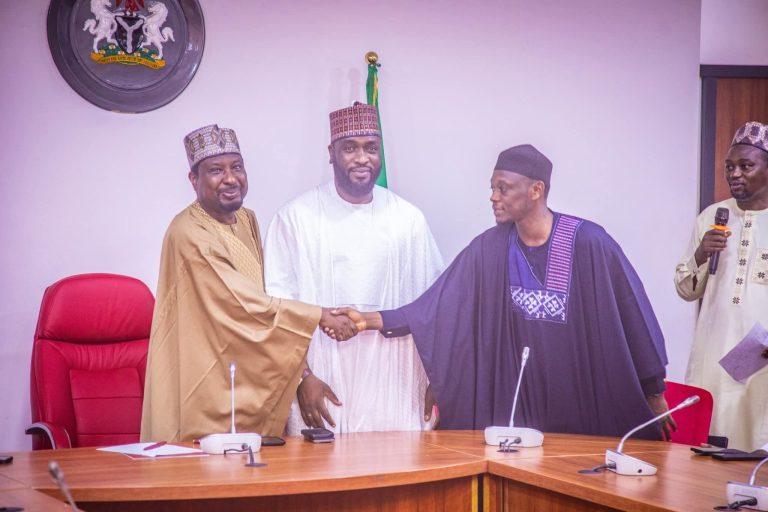
Abubakar Atiku Abubakar, son of former Vice President Atiku Abubakar, has defected from the Peoples Democratic Party (PDP) to the ruling All Progressives Congress (APC) and declared support for President Bola Tinubu’s second-term bid.

Mr. Abubakar was received into the APC on Thursday at the National Assembly by the Deputy Senate President, Barau Jibrin, alongside other party leaders from the North-east geopolitical zone.

Introducing himself during the event, he said: “My name is Abubakar Atiku Abubakar, but everyone calls me Abba. I am here today to formally announce my exit from my former party, where we worked in 2023, and my decision to join the APC.”

He explained that his decision to join the ruling party was due to the outstanding leadership of the deputy senate president.

“Today, I am joining the APC following the outstanding leadership style and quality of His Excellency, the Deputy President of the Senate, Senator Barau I. Jibrin.”

Mr. Abubakar announced his support for President Tinubu’s re-election in 2027 and directed all coordinators and members of the political organisation he founded in 2022, formerly known as the Haske Atiku Organisation, to immediately align with the APC and support the President’s Renewed Hope Agenda.

“With this development, I will work with Senator Barau to actualise the second term bid of President Bola Ahmed Tinubu come to 2027. To this effect, I’m directing all coordinators of my association to join APC and work for President Tinubu.”

His father, Atiku Abubakar, was the People’s Democratic Party (PDP) presidential candidate in the 2023 election, where he came second. He left the PDP and joined the African Democratic Congress (ADC), alongside other opposition leaders, formed to challenge President Tinubu in 2027.

His son’s public endorsement of President Tinubu, widely perceived as his father’s political rival, would generate mixed reactions. The development could complicate Atiku’s political calculations should he emerge as the ADC’s presidential candidate.

Welcoming Mr. Abubakar into the party, the APC National Vice Chairman (North-east), Mustapha Salihu, praised his decision, describing it as a sign of political maturity.

“Today is one of my happiest days. We are looking beyond old social and political cleavages. This young man has seen the policies and programmes of the Tinubu administration and decided to align with them,” he said.

He assured Mr. Abubakar of equal rights and privileges within the party.

The deputy senate president also commended Mr. Abubakar for his decision to join the ruling party, describing his defection as ideologically driven.

“You have made a decision based on ideology. You didn’t come here because of your father. You came because you believe in President Bola Ahmed Tinubu, his ideology and the Renewed Hope Agenda.

He is young, focused and determined to contribute to shaping the future of our country. This is the kind of youth Nigeria needs,” Mr. Jibrin said.

NP

House Minority Commends Military on Insecurity

0

The Minority Caucus in the House of Representatives has commended the sacrifices of Nigerian gallant soldiers who paid the ultimate prize; at various epoch for the sovereignty, and defence of the country.

The caucus in a statement issued in Abuja at the occasion of the 2026 Armed Forces Remembrance Day urges the federal government to improve the welfare of military personnel and assured them of legislative actions against insecurity.

“We also note that today, January 15th; which is marked yearly, to remember the exploits and contributions of past and present military officers and men to national security, gives every citizen the opportunity to have an introspection and canvass for harmonious relationships, peaceful coexistence, and national cohesion of all, amid the growing security challenges.

“Given the rising trend of insecurity across the country, and cognisant of the courageous efforts of the armed forces in tackling, and addressing the menace, the caucus wishes to admonish our officers and men not to rest on their oars.
We like to reiterate that, they are assured of the prayers and good wishes of all Nigerians at all times, and in all situations.

“Conscious of the effects of insecurity on economic growth and national development, the caucus urges the Federal Government to evolve necessary measures towards improving the welfare schemes of the armed forces, and the provision of enhanced security equipment, arms and ammunition that will enable the military to effectively and efficiently curtail, and possibly wipe out the purveyors of varied insecurity in the country,” the statement said.

The leadership of the caucus led by Mr Kingsley Chinda also said that as a responsible and responsive group of lawmakers, the Caucus Pledges to pursue legislative actions; where and when necessary.

This will ensure that the armed forces have all what is needed to guarantee the safety of lives and properties of Nigerians.

Kwankwaso Signals Openness to Join APC

0

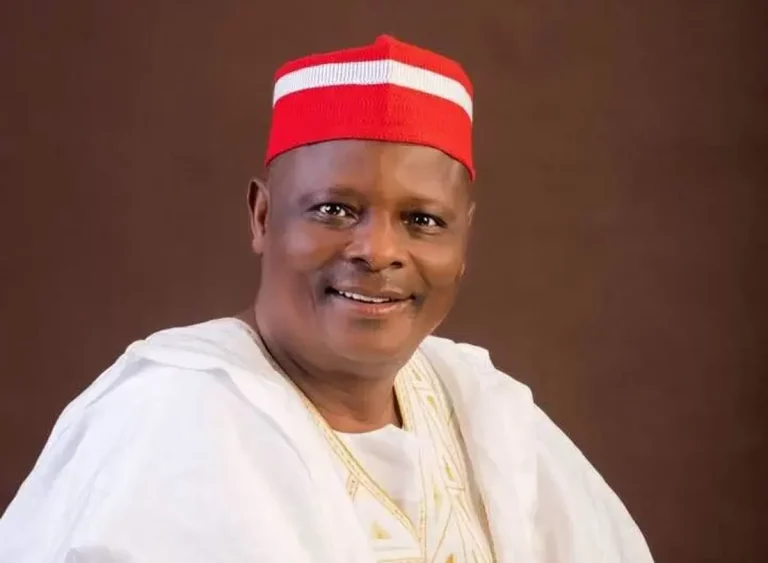
The national leader of the New Nigeria People’s Party (NNPP), Senator Rabiu Musa Kwankwaso, has signalled his willingness to join the All Progressives Congress (APC), saying such a move would depend on clear and firm assurances from the ruling party.

Speaking on Thursday while receiving NNPP supporters from Rano and Dawakin Tofa local government areas at his residence in Kano, the former governor explained that he has not ruled out joining the APC but is proceeding with caution due to past political experiences.

Kwankwaso said his approach is aimed at protecting his supporters and strengthening his negotiating position with President Bola Tinubu and the APC leadership.

He also clarified that his comments regarding the possible defection of Kano State Governor, Abba Kabir Yusuf, had been misunderstood.

“I never said I would not join the APC,” he said. “But before taking that step, we must be clearly assured of the future of the Kano State government.”

He raised concerns about the fate of NNPP lawmakers and loyal supporters, stressing that he would not defect without clarity on their political future.

“I will not go to the APC blindly. I must know my role, the direction of the journey, and what will happen to our plans for serving the common people,” Kwankwaso stated.

Reflecting on past political alliances, he recalled that his political camp played a key role in bringing about the Muhammadu Buhari-led government but was later sidelined.

He said this experience has informed his insistence on firm guarantees before any new alignment.

According to Kwankwaso, no concrete or written assurances have so far been offered to protect the interests of the Kwankwasiyya movement or ensure fair treatment for its members within any new political arrangement.

“Without clear and written guarantees, leaving the NNPP would be both premature and risky,” he added.