Home Blog Page 383

Canada Announces New Rules to Lower Oil and Gas Emissions

0

Canada has announced long-promised rules aimed at dramatically reducing methane emissions from the country’s oil and gas sector.

The new rules, which will take effect in 2028, prohibit venting with several exceptions and establish an inspection schedule for companies to find equipment leaks and repair them.

The regulations lay out a path for Canada,  the world’s fourth-largest oil producer — to cut its overall emissions of the potent greenhouse gas by 75% over 2014 levels by 2035.

They fulfill a promise by Prime Minister Mark Carney to strengthen Canada’s existing methane rules, but allow for a slightly longer target time frame than the previous draft rules announced under Carney’s predecessor Justin Trudeau.

Trudeau’s never-implemented rules called for a 75% reduction in methane emissions by 2030 and faced criticism from the oil and gas industry for being too difficult to achieve.

While methane does not last as long in the atmosphere as carbon dioxide, it can have 80 times the climate-warming impact of CO2 over a 20-year period.

READ ALSO:US calls off trade talks with Canada

Oil and gas facilities are responsible for about half of Canada’s total methane emissions, according to the government.

Methane — the main component of natural gas — is released directly into the atmosphere during oil and gas production through practices such as venting and flaring, and can also escape through leaks in wells and other infrastructure.

Operators will have the option to design their own approaches to controlling methane as long as they meet required methane intensity thresholds.

Total greenhouse gas emissions from Canada’s oil and gas sector continue to grow as production increases, and Canada is not expected to reach its target of cutting greenhouse gas output by 40% to 45% below 2005 levels by 2030.

The Canadian government said; “the new rules will reduce emissions by 304 million tonnes of carbon dioxide equivalent while reducing oil and gas production by just 0.2% between 2025 and 2035.”


Reuters/Wumi

Kwara Unveils 2026 Action Plan to Boost Economic Growth

0

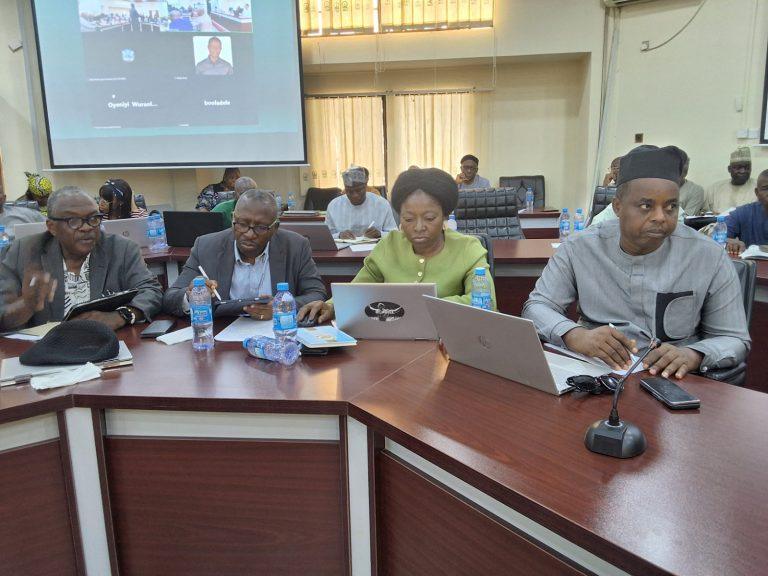
The Kwara State Government has unveiled a comprehensive 2026 Action Plan aimed at accelerating economic growth, improving service delivery, and enhancing the welfare of residents across the state.

The plan focuses on key reform pillars, including modernisation of land administration, agricultural investments to strengthen food security, expanded public-private partnerships and export promotion, accelerated infrastructure development, and expedited justice delivery, all supported by clear and measurable timelines.

Speaking at a stakeholders’ meeting on Ease of Doing Business, the Commissioner for Finance and Chairman of the Kwara State Ease of Doing Business Council, Dr. Hauwa Nuru, reaffirmed the administration’s commitment to transparent governance, accountability, and inclusive stakeholder engagement.

She outlined strategic focus areas for 2026, including land administration reforms, agricultural investment promotion, expansion of public-private partnerships, infrastructure delivery, and improved efficiency in the justice sector, all with time-bound targets to ensure measurable outcomes.

According to her, “government policies must continue to positively shape the business environment by improving regulatory clarity and service efficiency, particularly through the State Action on Business Enabling Reforms (SABER) programme.”

The goal of Ease of Doing Business is to ensure that government and stakeholders work together to create a truly conducive business environment, one that drives innovation, investment, and sustainable economic growth under Governor AbdulRahman AbdulRazaq’s leadership,” she said.

In his remarks, the Commissioner for Works, AbdulQuawiy Olododo, reiterated the government’s commitment to scaling up infrastructure development across the state, with sustained investments in roads, bridges, electricity, water supply, healthcare, and education to attract private capital and stimulate growth.

Also speaking, the Commissioner for Business, Innovation and Technology, Damilola Yusuf Adelodun, said; “the state now operates a transparent and predictable investment promotion framework designed to support companies, cooperatives, and local investors through accessible processes and competitive incentives.”

Stakeholders at the meeting expressed strong support for the initiative. The Chairman of the Nigeria Association of Small Scale Industrialists (NASSI), Olawoyin Solomon, commended the state government for policies that continue to improve the business climate.

Similarly, the Vice Chairman of the National Association of Small and Medium Enterprises (NASME), Kwara State Chapter, Babatunde Aremu, applauded the council’s efforts to sustain a conducive operating environment for MSMEs across the state.

Minister Extols Lai Mohammed’s Contributions to Nigerian Media

0

Nigeria’s Minister of Information and National Orientation, Mohammed Idris has described Alhaji Lai Mohammed, as a resilient communicator whose contributions to Nigeria’s media and governance landscape remains significant to nation building and development.

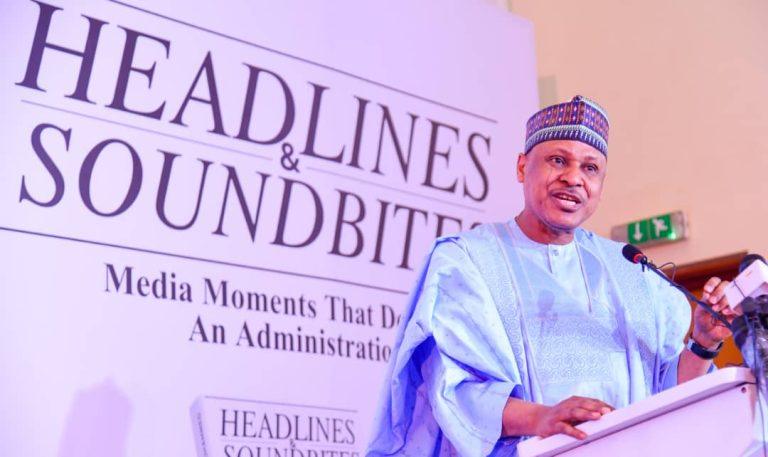
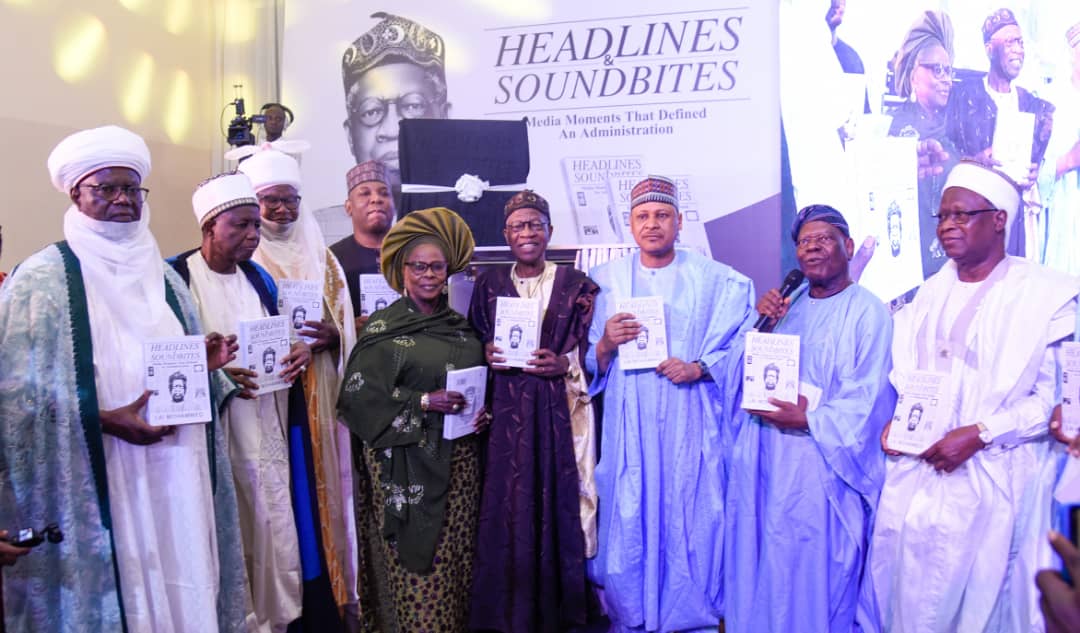
The Information Minister, stated this at the book launch titled: “Headlines and Soundbites: Media Moments that Defined an Administration”, authored by former Minister of Information and Culture Alhaji Lai Mohammed.

The book provides an insider’s account of government communication during the Muhammadu Buhari administration, reflecting on how media narratives shape a nation’s legacy.

Idris stressed that accepting to serve as Lai Mohammed’s successor, means accepting responsibility as a call to service, describing the position of government spokesperson as one of the most demanding roles in public service.

According to Idris, Alhaji “Lai Mohammed was one of the most criticised members of the cabinet during his tenure, because of his role of defending government policies.”

He however noted that criticism comes with the territory of public communication.

The Minister said; “Speaking on behalf of the government is a very difficult role. Lai Mohammed is the most criticised member of that cabinet. Navigating through some thorny issues requires some skills. He has played his own role towards the development of our country and I have learnt a few things from him. And I will continue to do my job the best way I can.”

Reflecting on comparisons between his communication style and that of his predecessor, he said “he adopted a different approach, rooted in his belief as a professional communicator.”

He recalled how public commentators initially accused him of being a continuation of his predecessor, but stressed that while his style differs, he remains committed to effectively communicating government policies.
“Some people accused me of not doing it the way Alhaji Lai was doing it. I am still doing those things but in a way that is a bit different. What I try to do is to avoid some of the potholes to the extent that some people say this man is not talking like Lai Mohammed, they said Lai Mohammed has gone with the microphone,” he noted.

Idris further commended Lai Mohammed’s consistency, dedication and passion for public communication that has remained evident even after leaving office.
“There are two things that Alhaji Lai Mohammed did that stood him out; He brought the International Press Institute to Nigeria for the first time ever.”

“His tenure also witnessed the beginning of the bid to host the UNESCO category 2 media and information literacy institute, a process that was completed under the current administration. Whatever you say about him, he has contributed to the leadership, growth and development of this country,” Idris said, urging critics to also contribute constructively to national discourse.

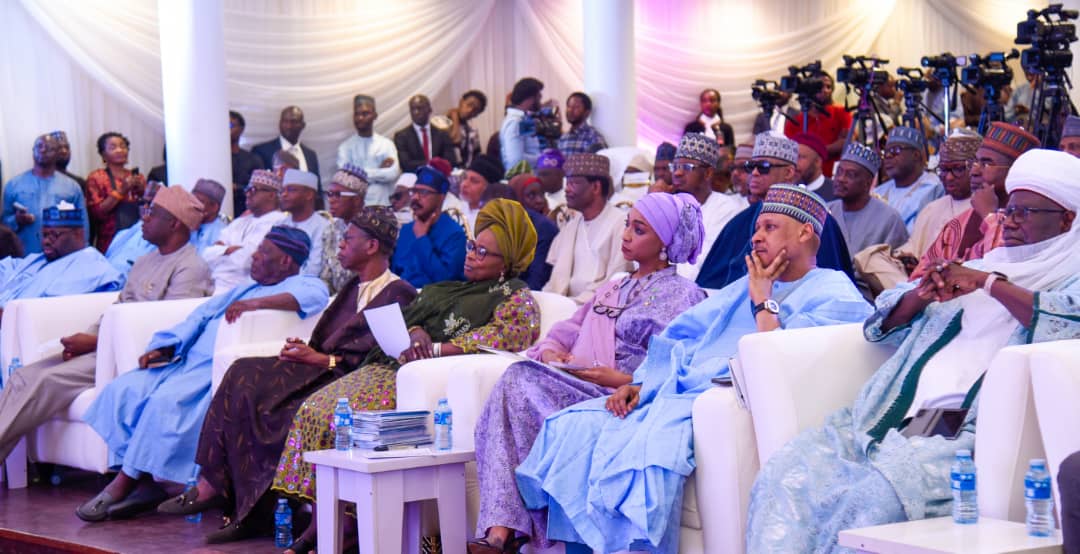
Also speaking, Nigeria’s former Minister of Information and Culture, Alhaji Lai Mohammed, who is the Author of the book, “Headlines and Soundbites: Media Moments That Defined an Administration,” described it as a personal effort to document his nearly eight-year tenure as Nigeria’s longest-serving Minister of Information and Culture, covering information, culture, tourism, and national orientation.

“For almost eight years, I was at the centre of government communication, crisis management and national orientation. I saw firsthand how decisions were made, how narratives were shaped and how misinformation often overshadowed facts,” he said.

Alhaji Mohammed explained that he did not write the book to defend the legacy of President Buhari, noting that “the truth needs no defence.”
According to him, Africans must tell their own stories to avoid distortion, saying if one does not tell their stories, someone else will, and they will tell it to suit their purpose.

“My uncommon access to government decision-making over a long stretch of time places a responsibility on me to preserve an accurate record, correct long-standing misconceptions and provide clarity where necessary. It is my hope that this book will serve as a resource for researchers, media professionals and students of politics, communications and public relations, among others,” he said.

Alhaji Mohammed, said that the book highlighted government projects and provided communication materials for the 2023 electioneering campaigns to counter the opposition’s claim that the APC had nothing to campaign with.

“How we restored the long-lost glory of the National Theatre, our contribution to stopping P&ID from defrauding Nigeria of $9.6 billion, how Nigeria achieved the largest repatriation of stolen artefacts in the world, what we did to counter the opposition’s false narrative on the recovery of territories from Boko Haram shortly after we assumed office and how we engaged the Bring Back Our Girls Movement, whose members travelled with us to Yola and flew search sorties on Nigerian Air Force planes”, he added.

For his part, the Sultan of Sokoto, Muhammadu Sa’ad Abubakar III, represented by the Emir of Argungu, Alhaji Samaila Muhammadu Mera, said the book is the most fitting tribute to late President Muhammau Buhari, saying it documents and honours his legacy of integrity, discipline, and devoted service.

“The launch is profoundly significant, held on the first of the most famous birthdays of President Mohammadu Buhari this year. It is a most fitting tribute, honouring his legacy of integrity, discipline, and devoted service by documenting the very era we shaped. Your work provides an invaluable written chronicle, ensuring Nigerians and future generations have a definitive record of the policies, narratives, and pivotal moments that transformed an administration. This book is a vital contribution to our historical archives and public understanding”, he said.

The book launch, which brought together traditional rulers, both Serving and past Ministers, and Public Officers, emphasised that, how an administration communicates can be as influential as its policies.



Kano Govenror Begins Final Gratuity, Allowance Payments to Ex-Councillors

0

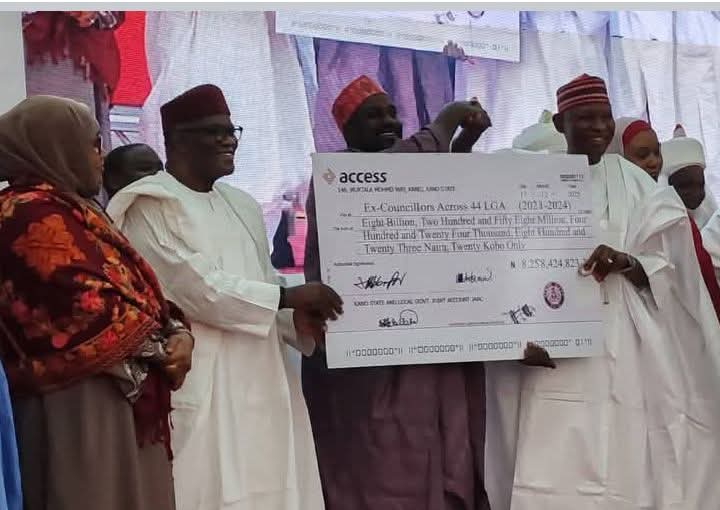
The Kano State Governor, Abba Kabir Yusuf has flagged off the final tranche of payment of severance gratuities, accommodation and leave allowances to 1,371 former local government councillors who served between 2021 and 2024.

The process ended all outstanding financial obligations owed to them by the State government.

The flag-off ceremony took place at the Coronation Hall of the Government House, Kano, and was attended by top government officials, senior civil servants and representatives of the beneficiaries.

Speaking at the event, Governor Yusuf recalled that during the earlier phase of the gratuity disbursement, he had promised that the final tranche would be paid before the end of 2025.

He said; “When we commenced this exercise, I assured you that no former councillor would be left unpaid and that the final tranche would be settled before the end of 2025. Today, by the grace of Almighty Allah, we have fulfilled that promise.”.

The Governor expressed gratitude to God for granting his administration the opportunity to complete the exercise, describing it as a major milestone in the government’s commitment to accountability and good governance.

“With the release of this final tranche, all financial obligations owed to former local government councillors have now been fully settled,” Governor Yusuf said.

He disclosed that over ₦8 billion was released in the final tranche, bringing the total amount paid to former councillors to more than ₦15 billion.

This exercise is a clear demonstration of our commitment to social justice, fairness and the welfare of our people, irrespective of political affiliation,” he noted.

Governor Yusuf emphasised that his administration remains focused on people-oriented policies aimed at ensuring that the dividends of democracy reach the grassroots.

According to him, “the payment of gratuities and allowances is a way of honouring public service and motivating those currently serving the state.”

When public servants are assured that their sacrifices will be recognised and rewarded, it boosts morale and encourages dedication to duty,” he said.

Governor Yusuf commended the former councillors for their contributions to grassroots governance during their tenure and thanked them for their patience while awaiting the settlement of their entitlements.

He also appreciated public servants and officials involved in the process for their cooperation and commitment to the successful completion of the exercise.

In her remarks, the Chairperson of the Association of Local Governments of Nigeria (ALGON) in Kano State, Hajiya Sa’adatu Yusha’u, described the payment as a clear indication of the administration’s resolve to fulfil its campaign promises.

This settlement clearly shows that the Abba Kabir Yusuf-led administration is committed to keeping its word and prioritising the welfare of those who have served the state,” she said.

Representatives of the beneficiaries commended the Governor for fulfilling his pledge, describing the gesture as timely and reassuring, while reaffirming their support for the administration’s people-focused agenda.

World Bank Approves More Funding for Nigeria’s Education Skills Project

0

Nigeria’s quest to close critical manpower gaps in procurement, environmental and social standards has received a major boost as the World Bank has given a strong nod to the Sustainable Procurement, Environmental and Social Standards Enhancement (SPESSE) project.

The bank rated the Country’s performance satisfactory and approving additional financing to sustain its momentum.

Backed by the Nigerian Government, the World Bank and the National Universities Commission (NUC), SPESSE was designed to tackle a long-standing problem in both the public and private sectors: the shortage of skilled professionals and the absence of structured academic pathways in procurement, environmental safeguards and social standards.

A statement by the NUC noted that through coordinated training programmes anchored by six Centres of Excellence spread across Nigeria’s geopolitical zones, the project has steadily bridged that gap, producing a new generation of professionals equipped to meet global best practices.

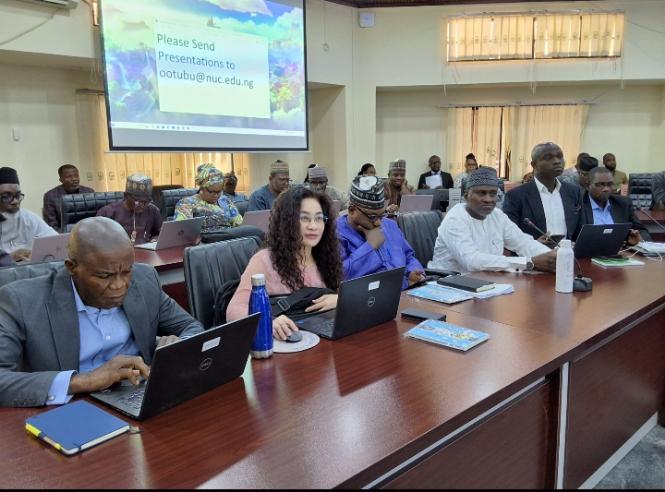
The World Bank recently reinforced its confidence in the initiative during an Implementation Support Mission (ISM) held to assess progress, review ongoing activities under the original financing, and agree on next steps under the Additional Financing (AF).

The mission was led by the World Bank Task Team Leader, Ishtiak Siddique, alongside the National Project Coordinator, Dr Joshua Atah of the NUC.

According to the mission’s Aide Memoire, SPESSE has recorded “significant progress” since the last review. All four Project Development Objective (PDO) indicators have been fully achieved, while the overall Project Implementation Progress (IP) has been rated satisfactory following verification for the January 1–June 30, 2025 period. Independent verification also confirmed that 12 out of 18 Performance-Based Conditions (PBCs) have already been met or exceeded.”

Five additional PBCs are scheduled for completion by June 30, 2026, with remaining targets aligned with the project’s closing timeline.

During the mission, the World Bank team engaged with key national and state-level stakeholders, including the SPESSE National Facilitation Implementation Unit (NFIU) at the NUC, the Bureau of Public Procurement (BPP), the Federal Ministry of Women Affairs, the Federal Ministry of Environment, and the Federal Ministry of Finance.

The team also reviewed activities at the six Centres of Excellence hosted by Ahmadu Bello University, Zaria; Abubakar Tafawa Balewa University, Bauchi; Federal University of Agriculture, Makurdi; Federal University of Technology, Owerri; University of Benin; and the University of Lagos.

Presentations from the centres highlighted milestones achieved, progress toward PDO targets, international accreditations, disbursement-linked indicators and student exchange programmes. Tracer studies further underscored the far-reaching impact of SPESSE since its inception.

One of the project’s most notable achievements is the launch of professional certification examinations in procurement, environmental safeguards and social safeguards.

Conducted through online portals between April and June 2025, the examinations have already produced 3,429 successful candidates. Of this number, 2,121 passed procurement certification, 855 qualified in social safeguards, and 453 in environmental safeguards.

These certifications represent only a fraction of the project’s reach. More than 85,000 participants have benefited from SPESSE training programmes across the six Centres of Excellence, cutting across Tracks A to E. Even the disruption caused by the COVID-19 pandemic in the early stages of implementation failed to slow the project’s steady progress.

The strong performance has earned SPESSE a reputation as one of Nigeria’s standout development projects. An overall satisfactory rating at this stage of implementation is rare among donor-funded programmes, a fact confirmed by the Director of the International Economic Relations Department at the Federal Ministry of Finance, Mr Stanley Nyeso George.

He, alongside other stakeholders, commended the NUC under both its current and former leadership, as well as Dr Atah, for driving the project’s success. Centre Leaders and their teams were also praised for their dedication and results.

In recognition of these gains, the World Bank approved Additional Financing to extend the project’s lifespan until June 2026. The decision, the Bank said, reflects SPESSE’s improved outcomes and alignment with its development objectives.

With renewed funding, the project is expected to deepen procurement reforms, expand online training platforms and strengthen institutional capacity, ensuring long-term benefits for Nigeria’s public sector, private businesses and local communities.

Stakeholders insist the focus remains on translating training and certification gains into tangible improvements in transparency, efficiency and inclusiveness within Nigeria’s procurement system.

In a move to institutionalise these standards, the Bureau of Public Procurement has initiated steps to make SPESSE courses mandatory for the professional certification of all procurement officers. Director-General of the BPP, Dr Adebowale Adedokun, disclosed this at a high-level review meeting with the World Bank during the 2025 SPESSE ISM in Abuja.

Dr Adedokun said; “the proposal, which has received preliminary approval from the Head of Service, will be incorporated into the revised circular governing the procurement cadre.”

He reaffirmed the Bureau’s commitment to implementing all project objectives, including the transition to e-procurement.

The Bureau and the World Bank jointly reiterated their resolve to ensure the continued success of SPESSE, a project many now see as a cornerstone of Nigeria’s drive toward sustainable procurement and responsible governance.

PTML Customs Records N424.58bn Revenue, Surpasses 2024 Figure

0

The Ports Terminal Multi-services Limited (PTML) Command of the Nigeria Customs Service (NCS) has recorded a total revenue collection of N424.58 billion as of December 12, 2025, surpassing its 2024 performance by a wide margin.

The Customs Area Controller of the Command, Comptroller Joe Anani disclosed this at the 2025 end-of-year celebration organised by the Customs Officers Wives Association (COWA), PTML Chapter, in Lagos.

According to Anani, “the 2025 revenue figure of ₦424,584,608,992.26 exceeds the Command’s ₦362.5 billion total collection in 2024 by over ₦62 billion, even with several weeks left in the year. He attributed the strong performance to operational efficiency and the growing impact of the Unified Customs Management System (UCMS), also known as B’Odogwu, noting that full implementation of the platform would further enhance revenue generation and trade facilitation.”

Describing 2025 as an eventful year marked by notable achievements, the Area Controller said; “the Command is positioning itself to achieve a one-hour clearance timeline for compliant Roll-On Roll-Off (RoRo) cargoes by 2026, in line with the reform agenda of the Comptroller-General of Customs, Bashir Adewale Adeniyi.

On enforcement, Anani said “the PTML Command recorded significant anti-smuggling successes during the year, preventing illicit and expired drugs, arms and ammunition, and other prohibited items from entering the country.”

He highlighted “the seizure of cocaine valued at ₦29.4 billion, which was handed over to the National Drug Law Enforcement Agency (NDLEA), as one of the Command’s major breakthroughs.”

The Comptroller credited the Command’s achievements to sustained collaboration with key stakeholders, including the Nigeria Police Force, Department of State Services (DSS), Standards Organisation of Nigeria (SON), National Agency for Food and Drug Administration and Control (NAFDAC), and other sister agencies.

Also speaking, the Chairperson of COWA, PTML Chapter, Caroline Anani, said the end-of-year gathering reflected the Command’s culture of unity and mutual support.

She noted that COWA played a critical role in supporting the Command’s productivity in 2025, stressing that workforce performance is closely linked to stability on the home front.

Anani said; ”the association carried out several welfare and health-focused initiatives during the year, including mental health awareness programmes, blood pressure and blood sugar screenings, eye screening and treatment, and the donation of medicated glasses.”

She added that COWA also organised seminars on home management, food and nutrition, and family care, alongside the distribution of souvenirs to spouses of officers serving in the Command.

The highlight of the event was the donation of food items to women and children by the COWA PTML Chapter, as part of its humanitarian outreach in the spirit of the Christmas season.

NSCDC Recommits to Effective Service Delivery

0

The Commandant General of the Nigeria Security and Civil Defence Corps, Professor Ahmed Abubakar Audi has expressed his administration’s commitment to revamping and repositioning the Corps for more effective service delivery.

Professor Audi restated the commitment while addressing personnel of the Service in Abuja.

He vowed that with the Security mechanism put in place, security challenges would be adequately tackled in the country.

Professor Audi gave kudos to President Bola Tinubu and the Minister of Interior, Dr.Olubunmi Tunji-Ojo for adequate support to the Corps on its zeal to deliver on its mandate.

In an official statement signed by the Corps’ Public Relations Officer, Afolabi Babawale, Professor Audi emphasised that he would also ensure thorough training and re-training of it’s operatives, adequate welfare of personnel and providing reward mechanism to boost the morale of the officers who have performed excellently in discharging the Corps’ Statutory duties and responsibility.

He noted that the “NSCDC gives credence to exceptionally outstanding officers who have distinguished themselves in various operations with good conduct, loyalty and service to the nation.”

However, Professor Audi reiterated that his administration would not tolerate truancy, indiscipline and violation of the extant laws, ethics and values as well as the Code of conduct guiding the activities and dispositions of it’s operatives.

He affirmed that the NSCDC under his leadership has made visible, proven and landmark achievements most especially by clearing the backlog of promotion arrears and introduction of career progression courses, life insurance compensation scheme to soothe the pain of families of bereaved personnel, compliance with federal character in appointments and promotion as at when due and Gender Inclusiveness amongst others.

“Within the year 2025 cases of officers with charges of various offences were attended to and 76 personnel involving Senior and Junior Staff had various disciplinary measures meted on them to serve as deterrent to others,”Professor Audi noted.

“As directed by the Civil Defence Correctional Fire and Immigration Service Board; CDCFIB, Disciplinary action have been meted on some Senior officers as recommended by the NSCDC Senior Staff Disciplinary Committee; about 38 Senior officers including Assistant Commandant General (ACG) have been dismissed on account of Gross Misconduct, Insubordination and acts unbecoming of a superior officer according to the Public Service Rules (PSR),” he said.

In addition, Professor Audi said two Senior officers were demoted by 2 Ranks, another officer was demoted by 1 Rank losing seniority while 5 officers were issued Warning Letters.

The NSCDC Boss further disclosed that the Junior Staff Disciplinary Committee of the Corps also sat on 30 cases involving Job Racketeering, Extortion, aiding and abetting illegal dealings in Petroleum Products, fraudulent practices,gun runing, AWOL and acts unbecoming of a personnel according to NSCDC Standard operating procedures, Code of conduct and the Public Service Rules.

“After the sittings of the Junior Staff Disciplinary Committee on about 30 cases involving various degree of gross misconduct; 20 personnel have been dismissed from the Service, 3 personnel were demoted by 1 Rank while 7 personnel were issued Warning Letters as recommended by the NSCDC Junior Staff Disciplinary Committee (JSDC),” he informed.

The Commandant General charged all officers and men to remain focused on discharging the Corps’ Statutory mandate most especially with the enormous task given to the Corps by the Nigerian Government.

He said to whom much is given, much is expected therefore, Professionalism, Loyalty and Regimental Discipline must be the watchword.

In the light of the above, the NSCDC boss also expressed the Corps’ readiness to undertake the VIP Protection Duty assigned via the Presidential Order, noting that though the current manpower is low, compared to the task ahead, the serving operatives are fully ready and “good to go.”


NEC Moves to Accelerate Livestock Development in Nigeria

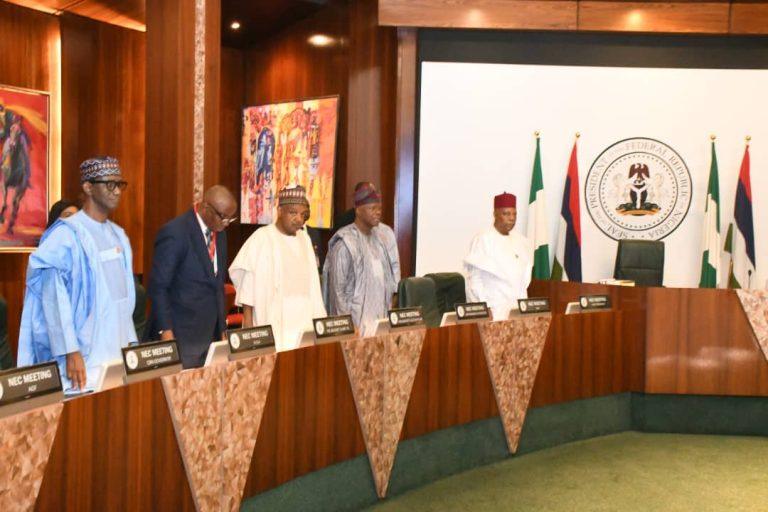
The National Economic Council (NEC) has constituted a committee on livestock development to expedite the implementation of livestock production in Nigeria.

This is as Chairman of the Council, Vice President Kashim Shettima, says a practical, enduring, and nationally accepted solution to the farmer-herder crisis will guarantee food security in the country.

The NEC committee on Livestock Development, which was constituted on Wednesday during the 155th meeting of NEC held virtually, is to work in collaboration with other stakeholders.

The committee has one member each representing the six geo-political zones, comprising Bauchi for the North-East, Niger for the North-Central, Ondo for South-West, Imo for the South-East, Cross River State for the South-South region, and Kebbi for the North-West.

Other members of the committee include the Ministers of Livestock Development, Agriculture and Food Security, Budget and Economic Planning, and the Senior Special Assistant to the President on Agribusiness.

The Council directed the committee to, among other things, review the recommendations of the Presidential Livestock Reform Committee and the proposal of Ministry of Livestock Development as well as identify interested states for the implementation of the programme.

President Tinubu had at the Federal Executive Council meeting held on 10th December 2025, directed NEC to work in collaboration with the Ministry of Livestock Development, to come up with a roadmap for the transformation of Nigeria`s livestock industry.

The Ministry worked on the proposal which was presented at the meeting for Council’s endorsement, all in the bid to transform Nigeria’s livestock sector into a modern, peaceful, and profitable engine of national development.

Earlier in his opening address, Chairman of NEC, Vice President Shettima, noted that “while food security is moral obligation to the citizens, it can only be guaranteed by practical, enduring, and nationally accepted solutions to the farmer-herder crisis.”

“We must acknowledge with absolute regret the deep distrust created by this violence, born out of a trade and an ancestral practice that ought to have remained a central pillar of our food security and rural economy. The loss of lives, the destruction of homes, and the devastation of farmlands must end.

“We cannot perform a task as fundamental as feeding ourselves unless we find an enduring, practical, and nationally accepted solution to the farmer herder crisis. Food security is a moral obligation to our people,” he stated.

VP Shettima identified mismanagement of long-standing tensions between farmers and herders as the cause of “the conflicts that have strained the ancestral bonds of communities across Nigeria.”

He regretted that what started “as a challenge of coexistence gradually hardened into cycles of violence that were allowed to persist for far too long without a durable solution.

“Today, that violence respects no geography. It has become a shared nightmare that has scarred every region, disrupted livelihoods, and eroded trust between neighbours who once relied on one another for survival,” the VP said.

READ ALSO: NiMet Launches Livestock Weather Bulletin to Boost Productivity

He commended President Tinubu’s bold initiative to transform livestock production in Nigeria, especially integrating the sector as a key component of the national economy.

The Vice President urged State Governors to take seriously, the presentations on livestock development by the Ministry of Livestock Development and the Presidential Livestock Reform Committee (PLRC), particularly leveraging opportunities in the sector for economic transformation, conflict resolution and restoration of peace in parts of the country.

He noted that “it was in acknowledgement of the huge potentials and opportunities in the sector that President Tinubu created a separate ministry for livestock development in Nigeria.”

The Vice President assured Nigerians that the recommendations of the PLRC and the Ministry of Livestock Development, would be given priority attention by the Tinubu administration, even as he sought the support of sub-nationals to fully harness the vast opportunities in the sector.

“The presentations before us today offer critical insight into responses designed to confront these realities. They speak directly to the challenge of stabilising our food systems, restoring confidence in rural economies, and reducing the security pressures that flow from competition over land, water, and livelihoods.

“At their core, these presentations seek to dispel the false choice between agriculture and security by demonstrating that both are inseparable pillars of national stability,” the VP stated.

President Tinubu Approves ₦750bn to Clear Pension Liabilities

0

The Director-General of the National Pension Commission (PenCom), Omolola Oloworaran has commended President Bola Ahmed Tinubu for approving over ₦750 billion to settle outstanding pension liabilities.

Ms Oloworaran described the move as proof that the government keeps its promises to workers and retirees.

She disclosed this in Abuja at the Pension Revolution Summit: A 365 Days Scorecard and Media Conference.

Ms Oloworaran said; “the Pension Revolution Summit marks a turning point for Nigeria’s pension system, driven by accountability, delivery and a clear vision for the future.”

She noted that the launch of Pension Revolution 2.0 represents the most far-reaching reform of the sector since 2004, introducing stronger regulation, improved governance and full digital transformation.

According to her, “enhanced pension benefits and expanded coverage under the Personal Pension Plan are already restoring dignity and financial security to Nigerians, particularly retirees and workers in the informal sector.”

The Director-General stressed that compliance, innovation and service excellence are non-negotiable as the commission advances reforms to secure the future of retirement in Nigeria.

Ms Oloworaran described the intervention approved by President Bola Ahmed Tinubu as a historic milestone in the government’s commitment to workers and retirees.

This payment sends a clear signal that pension obligations will be honoured,” Ms Oloworaran said.

The DG explained that the disbursement was a key outcome of Pension Reform Agenda 2.0, which she described as the most comprehensive overhaul of the pension industry in over a decade.

According to her, the reforms are aimed at expanding coverage, strengthening governance, deepening transparency and repositioning the pension system as a pillar of national stability and economic development.

Oloworaran revealed that PenCom also rolled out Pension Boost 1.0, which has increased monthly pension payments by ₦2.68 billion for retirees under the Contributory Pension Scheme in several states.

“These are not just figures. They mean better livelihoods, dignity and peace of mind for retirees,” she said.

Ms Oloworaran said that the commission had fully automated critical pension processes, including pension certificates, benefits processing and contribution returns, to reduce delays and eliminate human interference.

To address healthcare concerns, Oloworaran said PenCom inaugurated the Board of Trustees of the Pension Healthcare Initiative to provide affordable and accessible healthcare for low-income pensioners.

She also announced the establishment of the Pension Industry Leadership Council to drive innovation, promote accountability and encourage collective responsibility among industry operators.

On coverage expansion, the DG said;” the Micro Pension Plan had been rebranded as the Personal Pension Plan, with simplified enrolment requirements to attract informal sector workers, artisans and creatives.”

Ms Oloworaran said the introduction of accredited pension agents would deepen pension penetration while creating employment opportunities for young Nigerians.

On governance reforms, she disclosed that PenCom raised capital requirements for pension operators and tightened corporate governance rules to eliminate weak oversight and improve professionalism.

Ms Oloworaran revealed that a compliance circular issued by the commission led to the recovery of ₦4.04 billion between January and November, representing a 180 per cent increase compared to the total recovery figure for 2024.

Of the amount, she said ₦2.06 billion was recovered in the third quarter alone.

The evidence is clear: when compliance is tied to real consequences, behaviour changes,” she said.

Ms Oloworaran noted that the next phase of reforms would focus on expanding coverage, improving investment outcomes, strengthening supervision and protecting retirees and contributors.

Also speaking, the Commissioner for Inspectorate at PenCom, Mr Samuel Chigozie Uwandu, said the pension system was previously plagued by corruption, weak administration and inadequate funding.

Over the years, we have recorded significant structural improvements,” he said.

Uwandu acknowledged that challenges such as compliance gaps, arrears and economic pressures remained but expressed confidence that ongoing reforms would address longstanding concerns.

He confirmed that pension benefits would be amended from 2025 and converted to cash, adding that transferred pension balances had already been credited to the appropriate pension funds.

The Commissioner commended President Tinubu for approving the ₦758 billion intervention, describing it as a decisive step towards restoring trust in the pension system.

SMEDAN Unveils 2026 Roadmap for MSME Growth

0

The Small and Medium Enterprises Development Agency of Nigeria (SMEDAN) has unveiled its 2026 road map, which includes the formalisation of small businesses, unlocking billions of naira in low-cost financing, and the rollout of a new national MSME policy.

The policy aimed at accelerating inclusive economic growth.

The Director-General of SMEDAN, Charles Odii revealed during a media parley in Abuja that the agency plans to hand over 250,000 newly registered businesses in 2026.

In 2026, we will hand over 250,000 new registered businesses and we’re pushing to the presidency for another 1 million,” he said.

Odii said ; “Nigeria’s MSME population is expected to grow further as ongoing formalisation efforts take root nationwide. But we are very certain that even though it’s an interesting time for small businesses, that number will go up because of the formalization process that is happening around and will be unveiled in 2026.”

He also announced that a revised National MSME Policy would be unveiled in 2026, following the expiration of the current five-year policy framework.

The second most important thing that will happen in 2026 is that we’re going to unveil the national MSME policy,” he said.

Odii noted that the review process is already ongoing, stressing that “the new policy would be shaped by direct input from small business owners across the country.”

On financing, Odii revealed that SMEDAN is brokering ₦12 billion in low-interest funding to boost MSME access to capital.

He said; “We are in the process of brokering 12 billion Naira, cheap funding for our small businesses..The number of beneficiaries would rise sharply from the current level of about 500,000.

Odii further disclosed plans to massively expand capacity-building programmes in 2026 to help MSMEs unlock access to finance.

In the year 2026, we’re going to double that or quadruple that. We’re going to train a lot of small businesses to be able to unlock access,” he said.

Highlighting the link between economic empowerment and security, the SMEDAN boss said expanding business infrastructure nationwide would help reduce unemployment and insecurity.

Odii added that the agency is seeking regulatory approvals to establish microfinance banks and a specialised tertiary institution focused on entrepreneurship education in 2026, as part of efforts to deepen business development support for MSMEs across Nigeria.