Home Blog Page 392

President Tinubu Vows to Deploy All Security Assets Against Threats

President Bola Tinubu has restated his administration’s firm resolve to mobilise all military and law enforcement assets to crush security threats and protect the lives all citizens of Nigeria.

Accordingly, he announced the procurement of mine-resistant ambush-protected vehicles and a new armoured fleet for the military, as well as the refurbishment of over 100 Armoured Fighting Vehicles for return to active service.

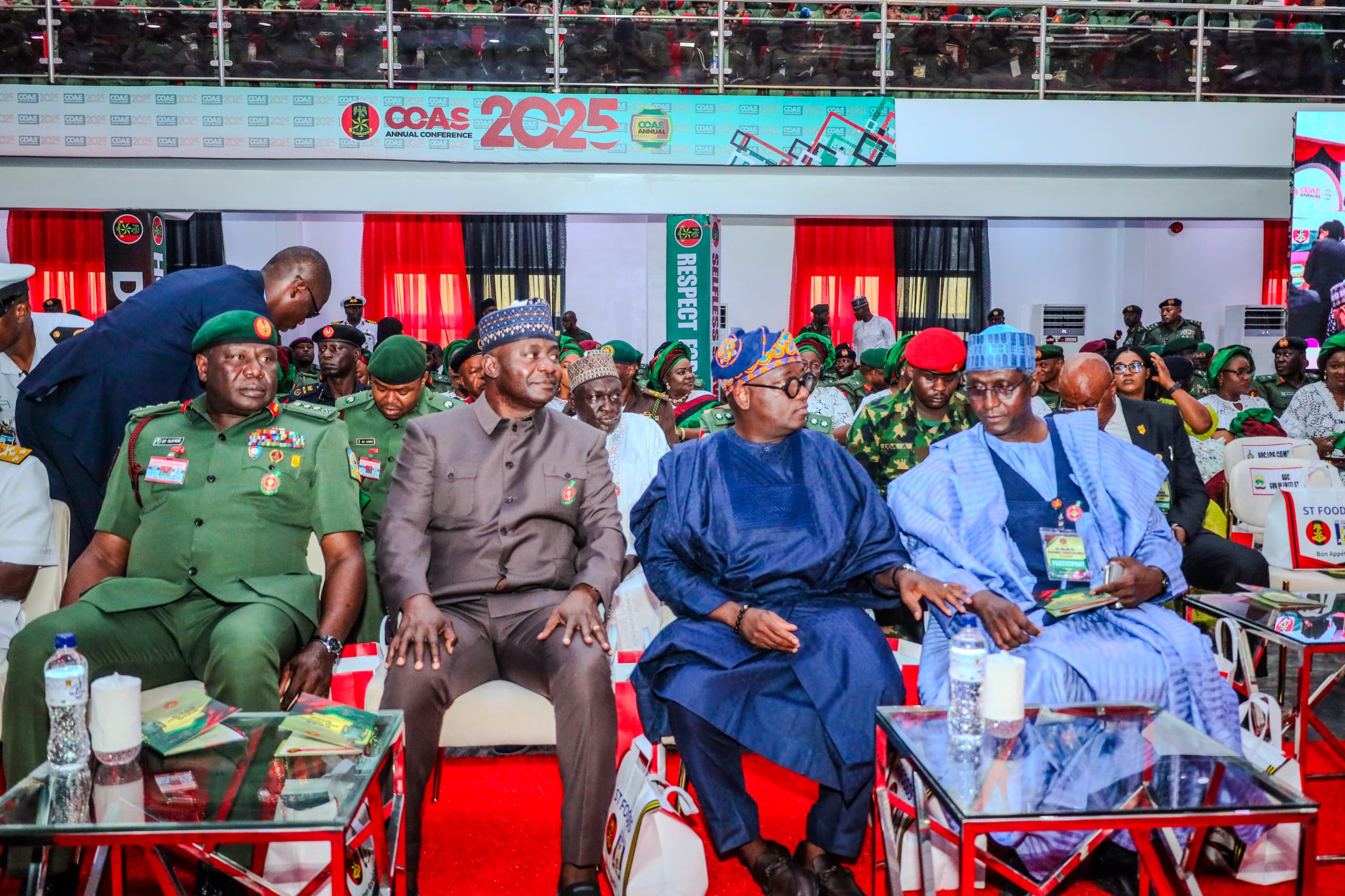
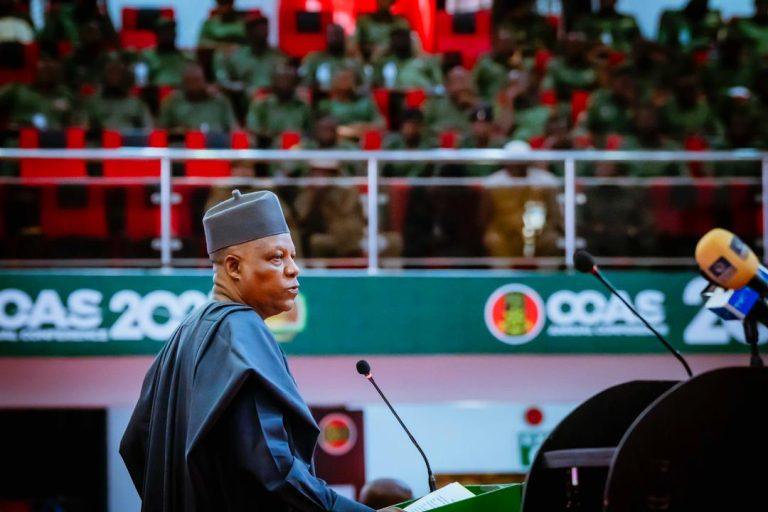
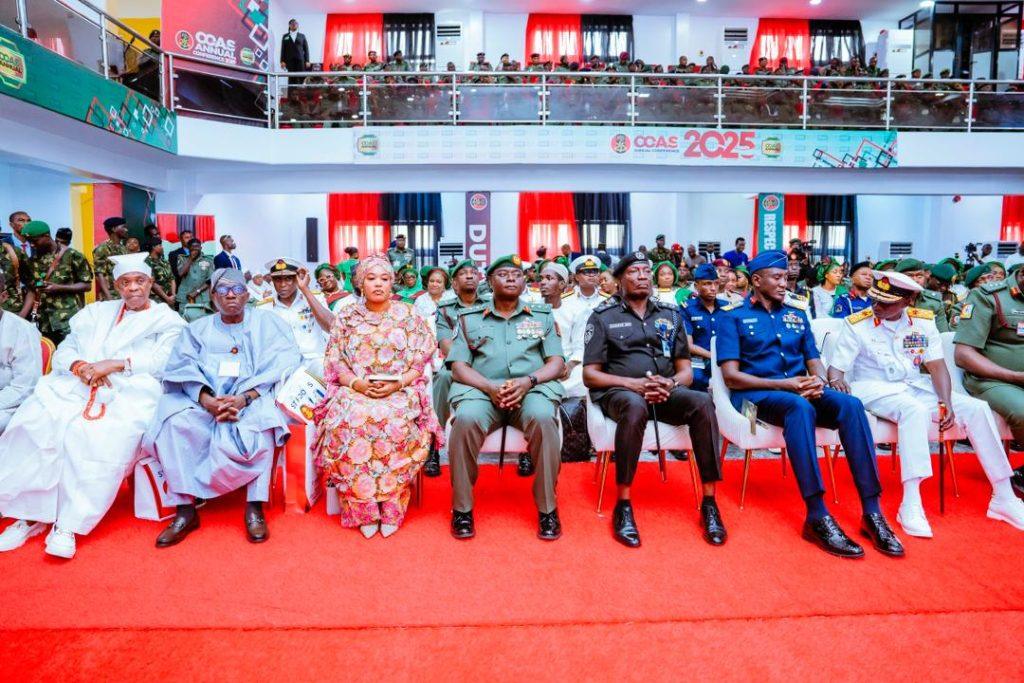
President Tinubu disclosed this in Ojuelegba, Lagos State, on Monday when he declared open the Chief of Army Staff Annual Conference 2025.
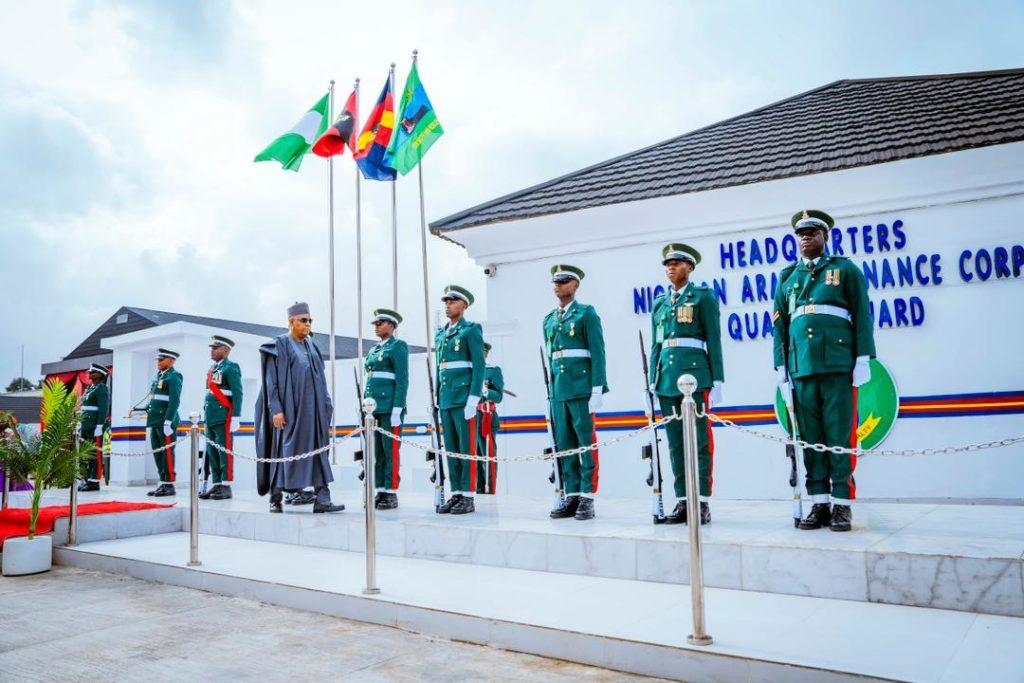
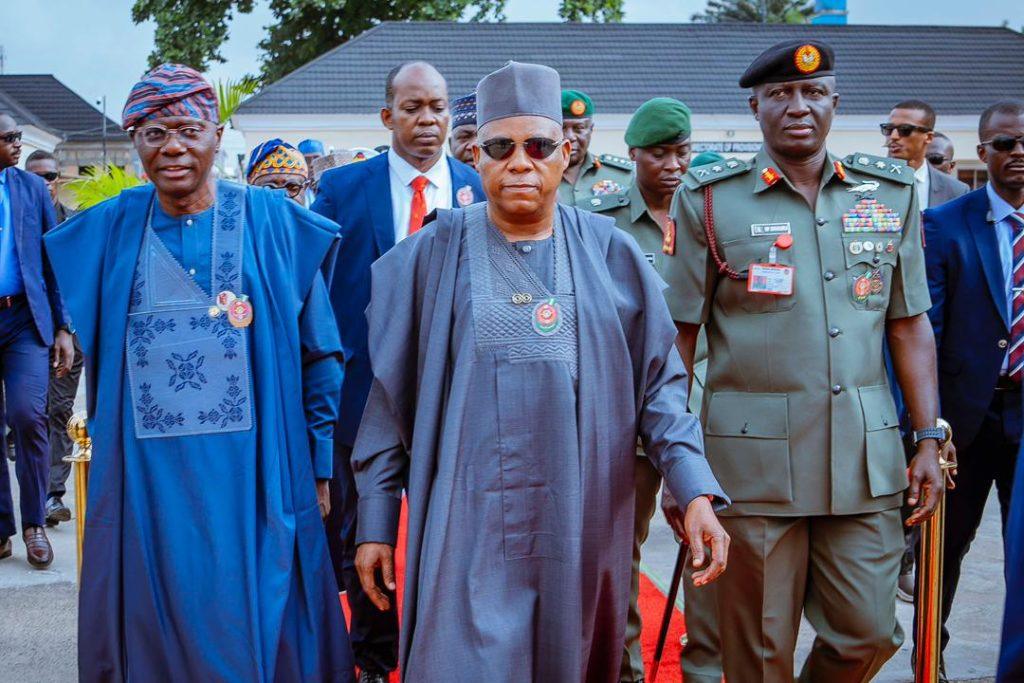
The President, who was represented by Vice President Kashim Shettima, reaffirmed that security remains a central pillar of his administration’s Renewed Hope Agenda.

There is no nation that can achieve greatness without security. This government remains resolute in mobilising all military and law enforcement assets to eliminate security threats and protect the lives and property of all Nigerians,” he said.


The Nigerian leader noted that his administration is firmly committed to the modernisation of the Armed Forces through improved training, modern equipment and enhanced operational capacity.

He said; “beyond the recent induction of helicopters into Nigerian Army Aviation and the training of pilots, the government has advanced the procurement of additional Mine Resistant Ambush Protected Vehicles, Armoured Vehicles and Patrol Vehicles to boost troop protection and battlefield effectiveness.”
His words: “Following the induction of helicopters into Nigerian Army Aviation and the training of pilots, we have advanced the procurement of additional Mine Resistant Ambush Protected Vehicles, Armoured Vehicles, and Patrol Vehicles.

“We have also refurbished over one hundred Armoured Fighting Vehicles, now returned to active service. These efforts reflect our clear commitment to strengthening the Nigerian Army’s operational readiness.”

President Tinubu explained that the Nigerian government is deepening partnerships with friendly nations to promote research, innovation and indigenous defence production, with the long-term goal of achieving self-reliance in defence and security.
Commendation

Commending the Nigerian Army for what he described as impressive gains in the fight against terrorism and other security challenges, President Tinubu said; “reports from various theatres of operation point to improved outcomes driven by professionalism, courage and effective joint operations with sister services and security agencies.”

The positive reports emerging from the various theatres of operation are encouraging and stand as testimony to your resilience and professionalism,” he said.

The President assured the military of the government’s unwavering support in fulfilling its constitutional mandate of safeguarding Nigeria’s territorial integrity, noting that security is one of the eight priority areas of his administration.

He also stressed the importance of discipline, professionalism and adherence to constitutional order, describing the apolitical posture of the Armed Forces as critical to sustaining public trust.
President Tinubu further praised the Nigerian Army’s civil-military cooperation initiatives across the country, noting that security efforts must also focus on winning hearts, restoring dignity and supporting development at the grassroots.

Paying tribute to fallen soldiers, the President said; “their sacrifices remain permanently etched in Nigeria’s national memory, assuring that the government will continue to support their families and improve the welfare of serving personnel in recognition of their service to the nation.”

Lagos State Governor, Babajide Sanwo-Olu, commended the Nigerian Army for its efforts in strengthening civil–military relations in the state.
He reaffirmed the commitment of the Lagos State Government to supporting the Army in the discharge of its constitutional responsibilities within the state and beyond.

The Minister of Defence, General Christopher Musa (rtd), confirmed the commitment of the Tinubu administration, through the Ministry of Defence, to providing continuous policy direction for the Nigerian Army.

He called on officers and commanders to remain loyal and united, stressing the need for collective support to enable the Army effectively address the country’s security challenges.

The Defence Minister also praised the officers and men currently deployed in various operations, even as he thanked Nigerians for their confidence in the Armed Forces, assuring that government would act with renewed vigour and decisiveness in tackling prevailing security threats.
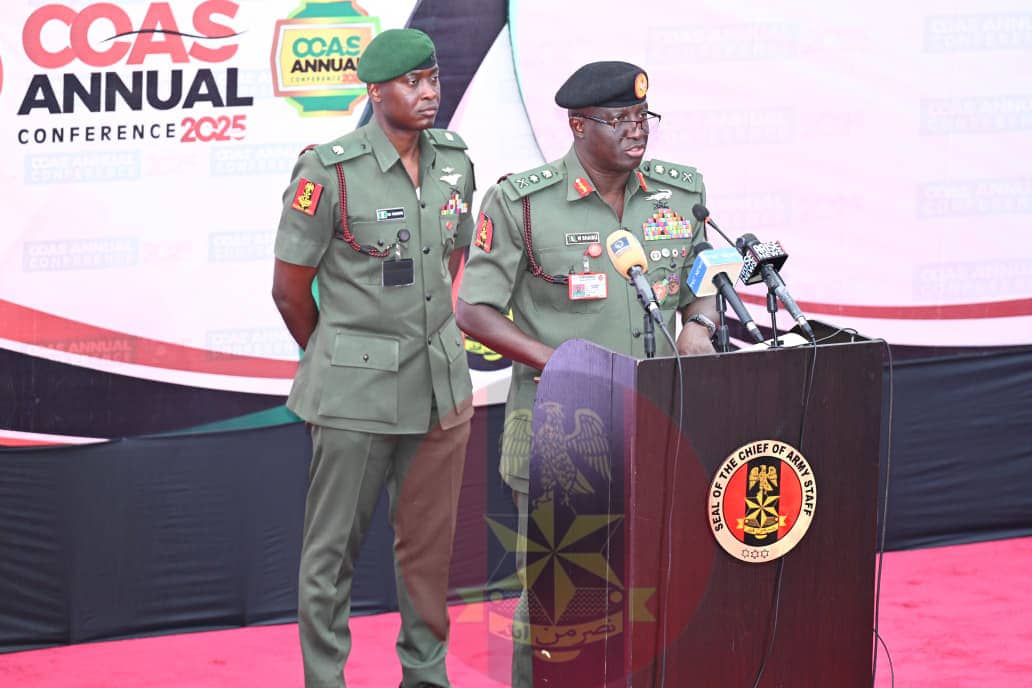
In his address of welcome, the Chief of Army Staff, Lieutenant General Waidi Shaibu, unveiled a range of welfare packages designed to enhance the wellbeing of officers and men of the Nigerian Army.

He explained that the welfare packages are part of deliberate efforts to boost morale and improve operational effectiveness across the Army.

The Chief of Army Staff also disclosed that President Tinubu has consistently provided the operational needs of the Nigerian Army since assuming office.

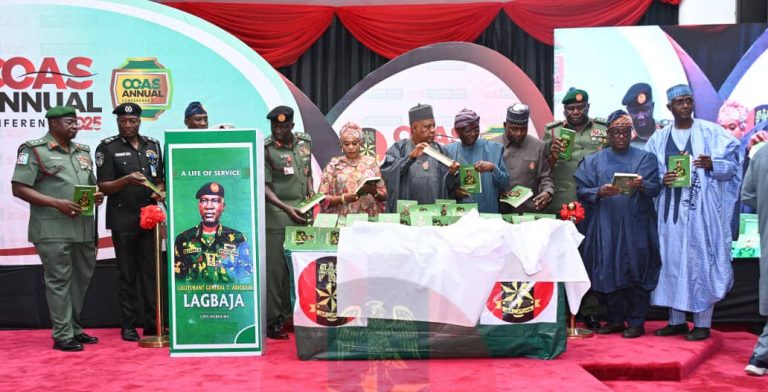
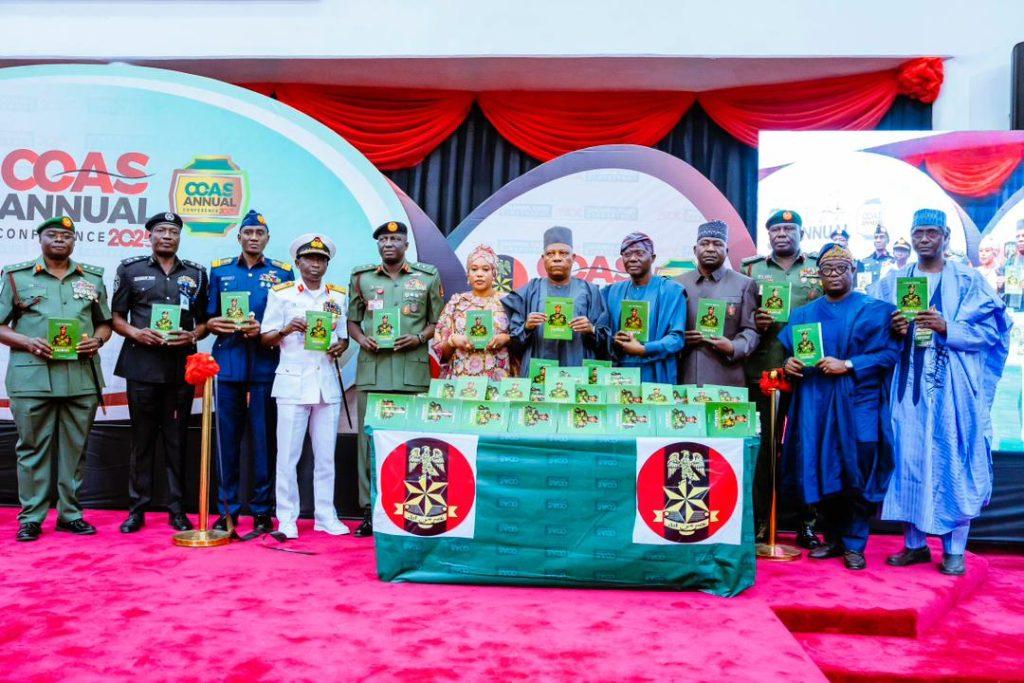
High point of the event was the unveiling of a biography of the late former Chief of Army Staff, Lieutenant General Taoreed Lagbaja, by Vice President Shettima, alongside senior military officers and other dignitaries.
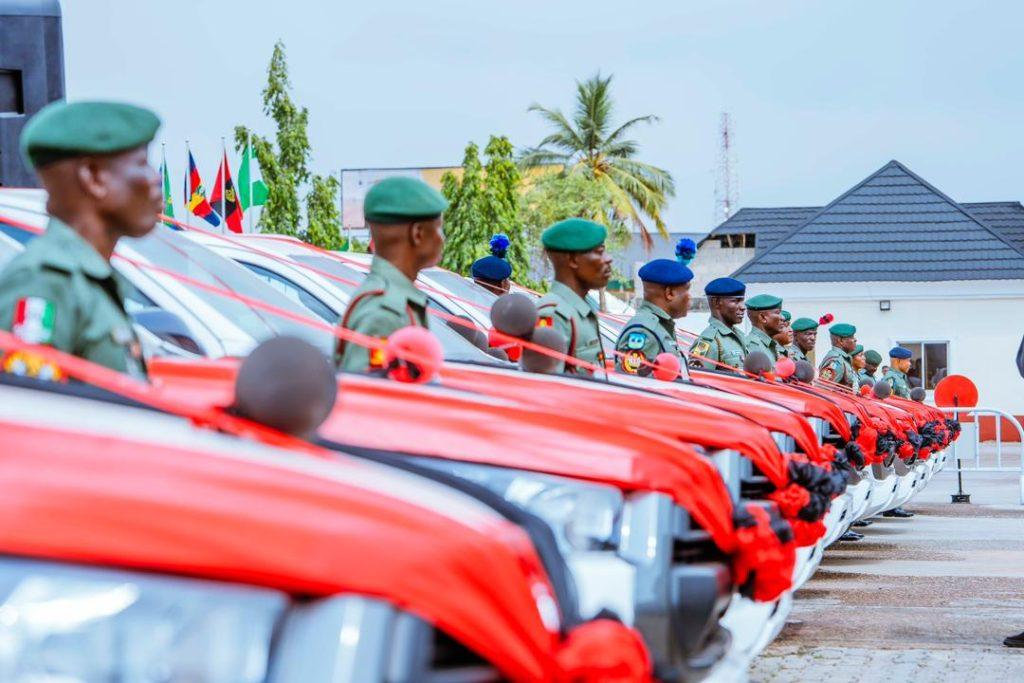
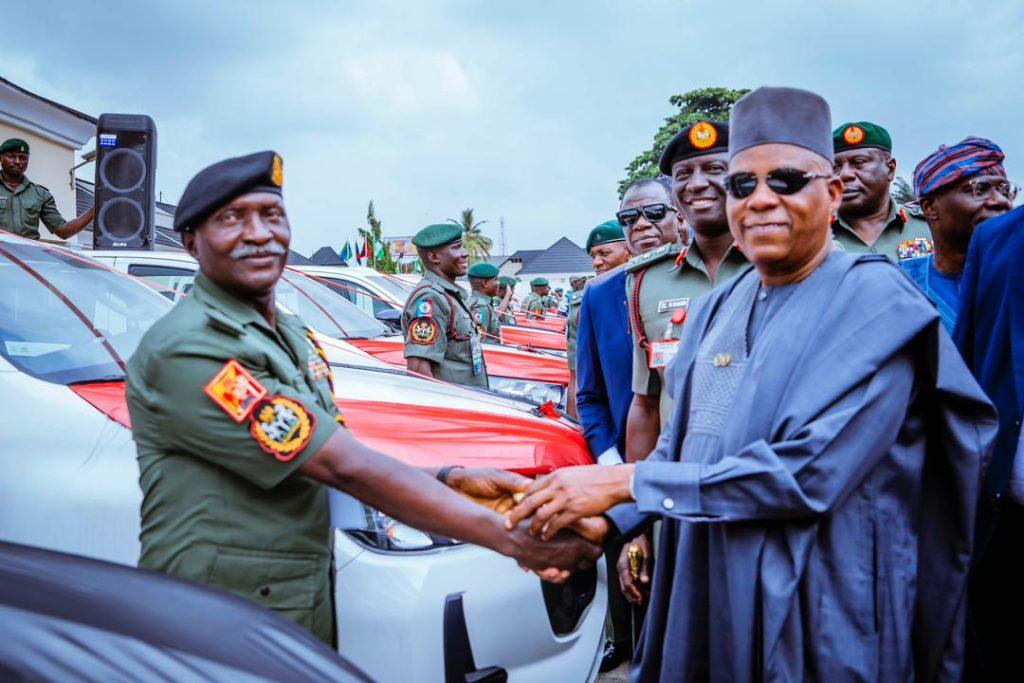
The Vice President presented 15 Toyota Hilux vehicles to deserving warrant officers as part of efforts to motivate personnel and encourage excellence in service.

He also witnessed the presentation of cheques under the Nigerian Army Personnel Insurance Scheme to the families of five fallen soldiers.
China Urges Gulf Nations to Seal Free Trade Agreement

0

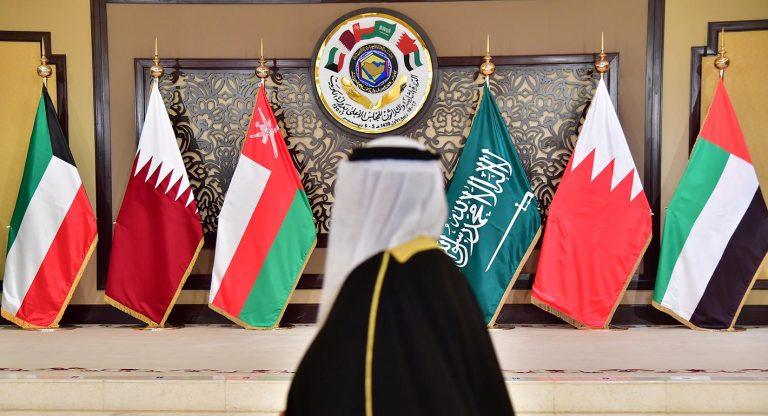
China’s Foreign Minister, Wang Yi has urged the Gulf Cooperation Council to conclude long-running talks on a free trade agreement with China, attributing the urgency to rising protectionism and unilateralism as free trade comes under attack.

Minister Wang Yi is on a three-nation tour in the Middle East that began in the United Arab Emirates and is expected to end in Jordan.

He met GCC Secretary-General Jasem Mohamed Albudaiwi in Riyadh on Sunday and also met top Saudi officials separately.

“The talks have lasted for more than 20 years, and conditions for all aspects are basically mature, it is time to make a final decision,” he said during a meeting with Albudaiwi.

A successful FTA will send a strong signal to the world about defending multilateralism,” Wang said, stressing that China was supportive of the bloc strengthening its strategic autonomy and coordination, and advancing its integration process.

READ ALSO:Nigeria Receives Commendation from China at G20 Summit

China has interests in deepening cooperation in economy, trade, investment and other fields with the GCC as well, Wang revealed.

However, China and Saudi Arabia have agreed to closer communication and coordination on regional and international issues, with Beijing lauding Riyadh’s role in Middle East diplomacy and security, other statements following a meeting between the nations’ foreign ministers showed.

Wang told his Saudi counterpart that China regarded Saudi Arabia as a priority for Middle East diplomacy and an important partner in global diplomacy,” a Chinese foreign ministry statement on Monday said.

He also encouraged more cooperation in energy and investments, as well as in the fields of new energy and green transformation.

In a separate meeting with Saudi Crown Prince Mohammed bin Salman, Wang underscored China’s readiness to play a part as the most reliable partner in the Middle Eastern country’s revitalisation, as well as inject more stabilising factors to realise peace and security in the region, another foreign ministry statement showed.

The countries have agreed to mutually exempt visas for diplomatic and special passport holders from both sides, according to the joint statement.


Reuters/Wumi

Senate Finance Committee Engages MDAs on 2026–2028 MTEF, FSP

0

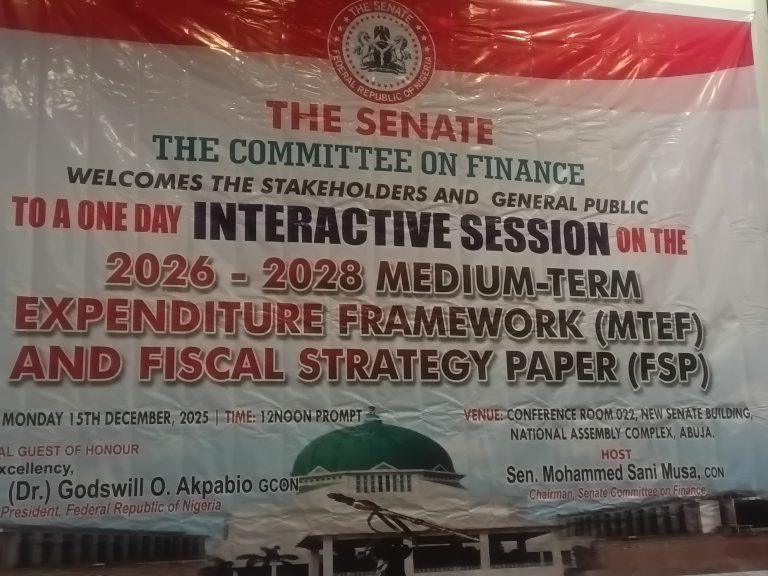
The Nigerian Senate Committee on Finance has held an interactive session with key Ministries, Departments, and Agencies (MDAs) of the Nigerian government to deliberate on the 2026–2028 Medium-Term Expenditure Framework (MTEF) and Fiscal Strategy Paper (FSP).

The three-year fiscal document, which serves as the foundational blueprint for Nigeria’s annual budgets, is fully aligned with the provisions of the Fiscal Responsibility Act.

During the session, the Minister of Finance and Coordinating Minister of the Economy, Mr. Wale Edun assured lawmakers that full funding has been secured and released for the capital component of the 2024 budget.

Mr. Edu further stated that “approximately 30 percent of the 2025 budget’s capital allocation is also readily available for implementation.”

He informed the committee that the Nigerian government has issued circulars to all MDAs outlining a comprehensive revenue optimisation programme for 2026.

The initiative places strong emphasis on automation and technology, with a directive mandating that all payments be processed exclusively through digital platforms to enhance efficiency, transparency, and revenue collection.

President Bola Tinubu had last week forwarded the 2026-2028 MTEF-FSP to the National Assembly for approval, a foundational step in the 2026 budget process.

President Tinubu explained that “the MTEF and FSP were approved by the Federal Executive Council on 3 December, 2025 and urged lawmakers to expedite legislative action as the 2026 budget will be prepared on their basis.”

The MTEF/FSP is a three-year planning tool that defines in broad strokes how the federal government intends to raise revenue, allocate expenditure, and deploy resources across ministries and sectors over a medium-term horizon.

It is required under the Fiscal Responsibility Act, 2007.

The document presents assumptions behind revenue projections (such as oil price, production, exchange rate), outlines strategic expenditure priorities, and forecasts overall fiscal stance, including debt servicing, transfers, recurrent and capital spending.


Lateefah Ibrahim

Korea Zinc Unveils $7.4bn Smelter Project Backed by US

0

Korea Zinc has announced a $7.4 billion smelter project that will be backed by the U.S. government, as Washington seeks to reduce its reliance on China for critical minerals including rare earths.

As part of the plan, the World’s largest zinc smelting company will sell new shares worth $1.9 billion to a joint venture controlled by the U.S. government and unnamed U.S.-based strategic investors, which would then control around 10% of the South Korean firm.

The U.S. Department of War will hold a 40% stake in the venture, while Korea Zinc’s stake will be less than 10%, the company said.

Following the announcement, Korea Zinc’s shares rose by up to 26% on Monday. It later pared gains to end up 4.9%.

It will secure the remaining $5.5 billion for the plant through $4.7 billion in loans from the U.S. government and financial institutions, as well as $210 million in subsidies from the U.S. Commerce Department under the CHIPS and Science Act.

The deal to build the first U.S.-based zinc smelter and critical minerals processing facility since the 1970s comes as the the US President Trump administration ramps up efforts to secure U.S. supply chains for critical minerals to reduce its reliance on China.

READ ALSO:South Korea, US Seal New Agreements on Trade and Defence

The new smelter, to be built in Tennessee, would produce major non-ferrous metals such as zinc, lead and copper, precious metals such as gold and silver, and strategic minerals such as antimony, germanium, and gallium, Korea Zinc said.

It will start commercial operations in phases from 2029.

Korea Zinc said; “the plant will respond to the expansion of global supply chain risks and the increasing demand for non-ferrous metals and strategic minerals in the United States.”

China dominates the world’s supply of critical minerals such as antimony and germanium, which are used in telecommunications equipment, semiconductors and military technology.

Beijing banned exports of these minerals to the U.S. on December 3, 2024, following Washington’s crackdown on China’s chip sector. The ban has been suspended since November.


Reuters/Wumi

Nigeria Approves $46.6m for Vaccines

0

Nigeria has taken a fresh step toward strengthening its immunisation programme with the release of $46.6 million for vaccine procurement, amid renewed calls for sustainable domestic financing to protect children and national health security.

The Chief Executive Officer of the Vaccine Network for Disease Control (VNDC), Mrs Chika Offor made this known during the 2025 Association of Nigeria Health Journalist conference, (ANHJ), in Abuja.

She described childhood vaccination as an imperative for national security and the building of a resilient human capital base.

Mrs Offor said; ” Nigeria records an annual birth cohort of between seven and nine million children, stressing that timely access to vaccines remains critical to reducing preventable deaths.

According to her, “about 2.3 million Nigerian children are currently classified as zero-dose,having missed out on routine immunisation.”

Mrs Offor noted that health security extends beyond military defence, explaining that a healthy population underpins economic growth and social stability.

Mrs Offor said that Nigeria’s health indicators reveal deep challenges, with about 40 percent of children affected by malnutrition, a situation she said weakens the country’s future workforce.

Mrs Offor called on the government to prioritise vaccine funding as a first-line charge, warning that delays in budget releases have previously resulted in vaccine stock-outs across health facilities.

She also commended recent interventions that reportedly reached over 17 million children within 10 weeks, describing the outcome as proof that effective delivery is achievable with political will and adequate funding.

Mrs Offor urged legislators to strengthen oversight of health budgets, security agencies to support access to hard-to-reach-communities, civil society organisations and the media to track accountability.

She called on government and partners to leave no child behind, eliminate zero-dose children, make no compromise on national health security, and fully fund immunisation.


President Tinubu Renews Strategic Support for Nigerian Army

President Bola Ahmed Tinubu has renewed his administration’s strategic commitment to the Nigerian Army, placing renewed emphasis on welfare, professionalism and operational effectiveness, as the Chief of Army Staff Annual Conference 2025 opened in Lagos.

The conference, a key annual forum for senior military leadership, brings together serving and retired commanders to review operational realities, interrogate strategy and reposition the Nigerian Army to confront evolving national, regional and global security threats.

Beyond ceremony, the gathering signals a moment of institutional reflection, drawing on experience, continuity and command memory to strengthen the Army’s role in safeguarding Nigeria’s sovereignty and internal stability.

According to a statement signed by the Acting Director, Army Public Relations, Colonel Appolonia Anele, the President described the convergence of elder statesmen, former Service Chiefs and senior officers as a living testament to the Nigerian Army’s enduring heritage, discipline and fighting spirit.

“The presence of our senior military leaders, past and present, reflects the depth of institutional memory that continues to guide the Nigerian Army in service of our nation,” the President who was represented by President Kashim Shettima said.

President Tinubu paid tribute to serving and retired officers whose sacrifices and leadership have shaped the Army across generations, commending troops who consistently place national duty above personal comfort in defence of Nigeria’s unity and territorial integrity.

He noted that the  Army Chief Annual Conference remains a critical platform for honest reflection, strategic evaluation and continuous improvement in training, administration and operations, particularly as security threats grow more complex and adaptive.

Also speaking at the opening ceremony, the Minister of Defence, retired General Christopher Musa, described the conference as a vital strategic forum for reviewing operational posture, assessing readiness and aligning the Nigerian Army’s future direction with national security priorities.

“This conference must translate into concrete operational actions and measurable results on the battlefield,” the Defence Minister said, stressing the importance of joint operations, inter-agency cooperation and a whole-of-society approach to addressing Nigeria’s security challenges.

In his welcome address, the Chief of Army Staff, Lieutenant General Waidi Shaibu, expressed appreciation to the President for sustained political will and strategic support, particularly in personnel welfare, equipment modernisation, training and institutional reforms.

He also acknowledged the legislative and budgetary backing of the National Assembly, noting that such support has significantly enhanced the Army’s operational readiness across all theatres of operation.

Reaffirming the Army’s mission focus, Lieutenant General Shaibu said; “the Nigerian Army remains at the forefront of national efforts against terrorism, insurgency, banditry and other forms of criminality, adding that the force is deliberately transforming into a more professional, adaptive and technology-driven institution capable of confronting both conventional and asymmetric threats.”

Participants were urged to approach deliberations with patriotism, professionalism and a shared commitment to national peace and stability.

The Lagos State Governor, Babajide Sanwo-Olu, described security as a fundamental prerequisite for development, commending the Nigerian Army for its role in preserving national unity and democratic governance.

He specifically lauded Headquarters 81 Division, Nigerian Army, for its contribution to peace and stability in Lagos State and pledged continued state support.

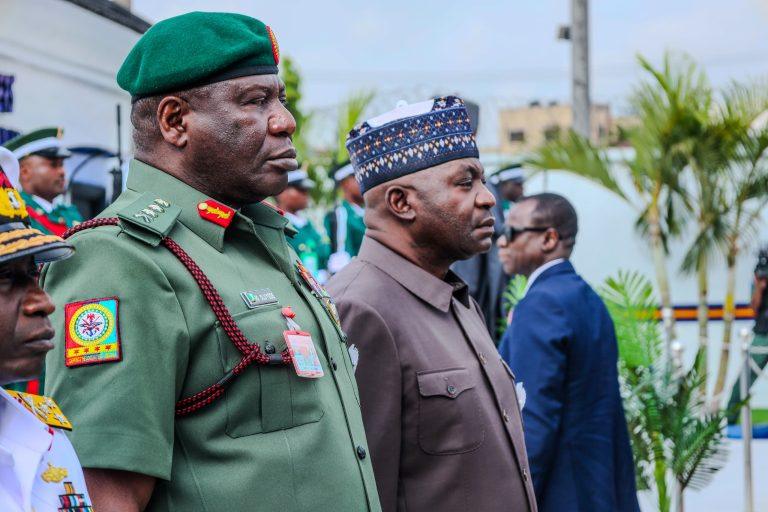
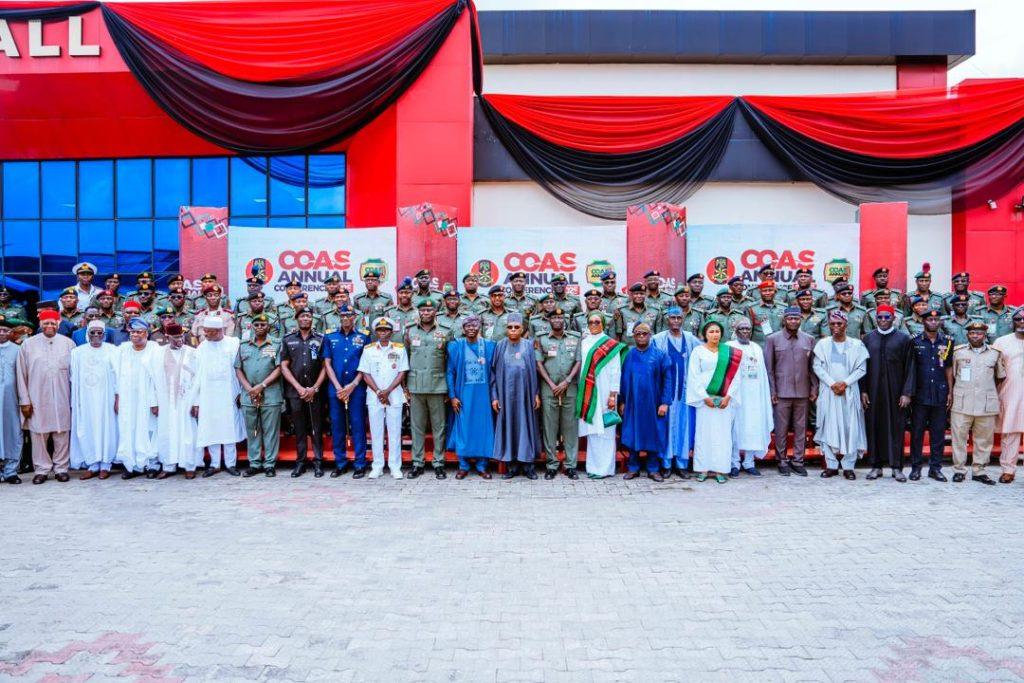
The opening ceremony attracted senior government officials, Service Chiefs, former Chiefs of Defence Staff and Chiefs of Army Staff, senior military officers serving and retired, heads of security agencies, diplomats and other distinguished guests.

The Army Chief Annual Conference 2025 is expected to deliberate on key operational, administrative and strategic issues aimed at further strengthening the Nigerian Army’s capacity to effectively discharge its constitutional responsibilities.


Defence Minister Tasks Nigerian Army on Joint Operations

0

The Minister of Defence, General Christopher Gwabin Musa (Retired), has urged the Nigerian Army to strengthen joint operations and enhance professionalism.

General Musa also urged the Army to ensure that strategic deliberations translate into concrete actions to address the country’s evolving security challenges.

He gave the advice while delivering the opening address at the Chief of Army Staff Annual Conference 2025 which took place in Lagos.

He described the annual forum as “a vital opportunity for reviewing the Army’s operational posture, assessing readiness and aligning its future direction with national security priorities.”

“This annual engagement remains a vital strategic forum for the Nigerian Army to review its operational posture, assess its readiness and professionalism, and align its future direction with national security priorities,” the Defence Minister said.

General Musa also said that the conference provides senior commanders and key stakeholders with a platform to reflect on lessons learned from ongoing operations, examine emerging threats and develop practical responses aimed at strengthening the Army’s capacity to discharge its constitutional responsibilities effectively.

He stressed that the importance of the conference cannot be overstated, especially in view of Nigeria’s complex and dynamic security environment, which remains characterised by terrorism, banditry, criminality and other asymmetric threats.

“Nigeria continues to face… asymmetric threats that require sustained focus, strategic clarity and adaptive leadership,” General Musa noted.

He expressed confidence that the deliberations at the conference would generate actionable recommendations and innovative approaches capable of enhancing operational effectiveness in 2026 and beyond, while reinforcing the Nigerian Army’s role as a central pillar of national stability.

He commended officers and soldiers of the Nigerian Army for their resilience, professionalism and unwavering commitment to defending Nigeria’s sovereignty and territorial integrity.

While acknowledging that security challenges persist, the Defence Minister said the operational capacity of terrorist groups, bandits and other criminal elements has been significantly degraded across multiple theatres, attributing the gains to troops’ courage, improved planning and execution, and coordinated operations conducted within a joint and multi-agency framework.

“It is evident that the operational capacity of terrorist groups, bandits and other criminal elements has been significantly degraded across multiple theatres,” he said.

General Musa emphasised that success in today’s security environment can only be sustained through unity of effort, adding that inter-service cooperation and joint operations are no longer optional but fundamental requirements for effective national defence.

The Defence Minister also highlighted the human dimension of service, paying tribute to fallen personnel who paid the supreme sacrifice in defence of the nation, while recognising wounded soldiers and the families who bear the enduring cost of service.

He said; “We honour the memory of our gallant personnel who paid the supreme sacrifice in the defence of our nation,”Musa said, adding that their welfare and long-term support “remain a sacred obligation that must be upheld without compromise.”

General Musa reaffirmed that security remains a central pillar of President Bola Ahmed Tinubu’s Renewed Hope Agenda, pledging that the Ministry of Defence will continue to provide strategic direction, policy support and capability development to ensure the Armed Forces remain professional, responsive and future-ready.


Ebonyi Labour Party Inaugurates Interim Executive

The national leadership of the Labour Party has inaugurated a 24-member interim executive committee for Ebonyi State in a move aimed at restoring stability and repositioning the party for future political activities.

The inauguration was carried out under the authority of the party’s National Chairman, Senator Nenadi Usman, and National Secretary, Senator Darlington Nwokocha. Veteran politician, Chief Henry Udeh, popularly known as Ajim Best who was appointed Chairman of the interim committee, representing Ebonyi South.

Comrade Innocent Igiri from Ebonyi Central was named Secretary, while Mr Joshua Igwebuike from Ebonyi North was appointed Organising Secretary.

Hajia Rabiu Abubakar from Ebonyi North was also appointed State Woman Leader to enhance gender inclusion within the party.

According to the party, “Hajia Abubakar will work closely with zonal women leaders, including Chief Mrs. Ngozi Nwaleke (Ebonyi North), Mrs. Ngozi Ekuma (Ebonyi South), and Blessing Okoroafor (Ebonyi Central), to boost women’s participation across the party’s structures.”

To further strengthen its institutional framework in the state, the Labour Party also appointed  Ikey Nwobo as State Legal Adviser and Comrade Louis Nwebonyi as Publicity Secretary.

The inauguration is expected to bring an end to months of leadership uncertainty and internal challenges that had affected the party’s operations in Ebonyi State.

Reacting to the development, the party’s leader and 2023 governorship candidate in the state, Comrade Splendour Eze Oko, expressed confidence in the interim leadership.

Oko said stakeholders and grassroots members were ready to work together to rebuild unity and consolidate the party’s influence.

Similarly, the Labour Party’s 2023 House of Representatives candidate for Abakaliki/Izzi Federal Constituency, Mr. Ezeh Emmanuel Ezeh, described the inauguration as timely.

He reaffirmed the party’s position as a credible and resilient opposition force in Ebonyi State.

OGFZA Warns New Tax Law Threatens Investments

0

The Oil and Gas Free Zones Authority (OGFZA) has renewed calls for a 10-year tax relief for operators in Nigeria’s oil and gas free zones, warning that the immediate implementation of the new tax law could unsettle long-term investments across the sector.

The Managing Director and Chief Executive Officer of OGFZA, Mr Bamanga Jada, made the call in Onne, Rivers State, at a town hall meeting with the Federal Inland Revenue Service (FIRS) and OGFZA licensees.

Jada said the proposed relief would provide operators with the much-needed “adaptation space” to adjust their operations and ensure compliance with evolving tax requirements.

“Accordingly, OGFZA supports the call for a ten-year extension of existing tax incentives, coupled with a phased implementation to mitigate potential disruptions. Many of our licensees, including prominent foreign investors, formulate strategies spanning 10, 15 or even 25 years, based on prevailing incentives,” he said.

He noted that such a transitional window would strengthen policy consistency, which he described as critical to sustaining investor confidence and advancing President Bola Ahmed Tinubu’s Renewed Hope Agenda.

The OGFZA chief disclosed that Nigeria’s oil and gas free zones have attracted over $24 billion in investments, host more than 200 enterprises, and have created hundreds of thousands of direct and indirect jobs nationwide.

“Energy-oriented free zones have been pivotal in driving development in several countries, as seen in the Jebel Ali Free Zone in Dubai and the Sohar Free Zone in Oman. These initiatives have attracted billions of dollars in investments, created massive employment opportunities and positioned their economies as global leaders,” Jada said.

Similarly, OGFZA-regulated free zones in Nigeria have secured more than $24 billion in investments, host over 200 enterprises, and have generated hundreds of thousands of direct and indirect jobs. This highlights the value of strong incentives and effective regulation in accelerating industrialisation,” he added.

Jada further revealed that exports from Nigeria’s oil and gas free zones have surged under the current administration, reaching 496,537,804 metric tonnes, with products supplied to markets in Brazil, the United States, France, India, the United Kingdom and the Republic of Korea.

“Our operators now supply markets in Brazil, the United States, France, India, the United Kingdom, the Republic of Korea and beyond, in line with the President’s Renewed Hope Agenda,” he said.

He commended President Tinubu for his commitment to tax reforms and economic transformation, while also acknowledging the Minister of Industry, Trade and Investment, Dr Jumoke Oduwole, for her guidance and advocacy in support of the sector.

Reaffirming OGFZA’s commitment to collaboration, Jada said the Authority would continue to work closely with FIRS, in line with their memorandum of understanding, to ensure tax reforms are implemented efficiently and fairly.

In his remarks, the Executive Chairman of FIRS, Dr Zacch Adedeji, described the 2025 tax reforms as a significant step towards modernising Nigeria’s fiscal framework. Represented by his Special Adviser on Tax Incentives, Dr Cletus Adie, Adedeji stressed that compliance and transparency remain central to the reforms.

“For export processing and free trade zones, the focus is not on taxing income or profits, but on promoting transparency, accountability and proper reporting,” he said.

He explained that the introduction of a tax clearance certificate as a mandatory requirement for licence renewal was aimed at strengthening oversight, citing what he described as “continuous recalcitrant behaviour by some enterprises”, which had made a structured administrative approach necessary, in line with Section 72(4)(f) of the Nigerian Tax Administration Act.

Stakeholders at the meeting unanimously urged the Federal Government to exempt operators in special economic and free zones from the new tax law provisions for a transitional period to enable a smooth adjustment to the reforms.

Nigeria Red Cross Partners WFP, Receives Emergency Equipments

0

The Nigerian Red Cross Society, NRCS, has received emergency safety equipment worth two hundred and fifty thousand dollars in aid from the World Food Programme, WFP.

Secretary General of the NRCS, Dr Abubakar Kende, received the equipment on behalf of the Society in Abuja shortly after signing an MoU with WFP to strengthen humanitarian response across Nigeria.

While commending the World Food Programme for the support, Dr Kende described the gesture as the localisation of the agenda.

He pledged that the NRCS would utilise the equipment judiciously for the benefit of humanity.

“The backbone of every humanitarian agency today has to do with logistics, storage and procurement systems, and WFP is all out to support this Society, strengthen its capacity not only at the Headquarters in Abuja, but also along our peripheries, the States where we operate”.

He commended the International Federation of the Red Cross for being instrumental in the partnership.

Read Also: Nigeria Red Cross Calls for Free Blood Donations

“What WFP is trying to do is to make sure that we meet up with the demands of time.”

The Deputy Country Director of the World Food Programme, Guy Adoua, described the NRCS as the pillar of humanitarian response in Nigeria, with a deep connection to the communities it serves.

According to him, the move was conceived with the idea to provide technical support, strengthen the systems, and enhance the ability to respond swiftly and effectively to emergencies.

He said the WFP had also conducted a comprehensive organisational capacity assessment across key operational and technical areas of the NRCS.

“Since then, WFP has trained 45 Red Cross staff on cash-based transfer programming and trained 86 staff on warehouse management and operations in Kano and Port Harcourt, including hands-on exposure visits to WFP’s own warehouse facilities.”

These investments, he noted, were designed not only to build knowledge but to strengthen the systems that support effective humanitarian action.

Today, we are proud to take another step forward by handing over warehouse equipment to the Nigerian Red Cross Society. This equipment will enable your teams to put into practice the skills gained during the training, improve storage inventory management, and enhance prompt response when communities need it.

The World Food Programme said the gesture was the outcome of the Nigerian Red Cross Society’s unwavering dedication to serving vulnerable people across the country.