Osun State Governor Ademola Adeleke has clinched the Accord Party’s governorship ticket for next year’s governorship poll in the state.
Adeleke won the ticket in a primary election conducted on Wednesday in Osogbo, the state capital.
The governor, who was the sole candidate in the election, won 145 votes out of 150 delegates accredited for the exercise.
Adeleke, in his acceptance speech, thanked the delegates and leadership of the party for counting him worthy to fly the party’s flag, saying he would do his best to justify his nomination.
“It is with a deep sense of appreciation to delegates and almighty God that I accept my nomination and election as the governorship candidate of the Accord for the 2026 governorship elections.
“I convey my heartfelt appreciation to the leadership of our great party and delegates from across the 332 wards of Osun state. The confidence you repose in me is hugely appreciated. I assure you that I will not take it for granted.”
Adeleke vowed to continue to prioritise Osun people over politics, stressing that good governance and overall development of the state would always be his most important duty.
He said, “We are today launching the battle for continuity of progress, good governance and democratic dividends.
“My candidacy signals the sustenance of the golden movement when the light of development continues to shine across our state. We vow never to relent in the rewarding service to our people.”
The National Chairman of the party, Barrister Maxwell Ngbudem, in his remarks, urged the delegates, party members and all supporters of Governor Adeleke to work for his victory in the August 8, 2026, governorship election.
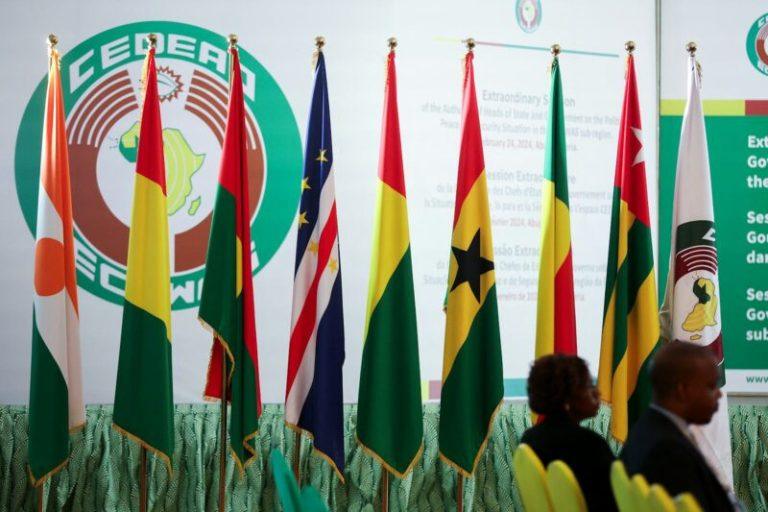
The ECOWAS Council of Ministers has called for renewed commitment to democratic governance, economic integration, and collective security across West Africa.
Declaring the session open, the Nigerian Minister of State for Foreign Affairs, Ambassador Bianca Odumegwu-Ojukwu, welcomed delegates to Abuja for the 95th Ordinary Session of the ECOWAS Council of Ministers, conveying President Bola Ahmed Tinubu’s appreciation for their commitment to regional cooperation and the ECOWAS vision of peace, security, and shared prosperity.
Ambassador Odumegwu-Ojukwu noted that 2025 marked ECOWAS’ 50th anniversary, celebrated across Member States, offering a moment to reflect on major achievements in free movement, economic integration, peacekeeping, and collaboration in critical sectors.
She stated that: “The successes affirm the founders’ vision of unity and solidarity, while inspiring renewed ambition for a peaceful and prosperous region.”
She highlighted the current challenges, saying: “The current challenges, including political instability, unconstitutional changes of government, prolonged transitions, and governance deficits in some Member States.”
The Nigerian Minister stressed that these developments undermined democracy and threatened development gains, calling for collective resolve to defend constitutional order, promote inclusive dialogue, and support credible transitions.
She emphasised that: “Economic integration remains central to ECOWAS,” urging deeper trade, stronger value chains, and increased opportunities for the region’s young population.
Ambassador Odumegwu-Ojukwu noted that the Ministers’ deliberations would cover governance, integration, humanitarian issues, peace and security, agriculture, and institutional reforms, guiding recommendations to the heads of state.
Expressing confidence in the Council’s wisdom and cooperation, the minister called for actionable, forward-looking outcomes that reinforce citizens’ confidence in ECOWAS. She concluded by urging renewed commitment to shared values and welcomed participants to Abuja, wishing them fruitful deliberations.
The President of the ECOWAS Commission, Dr Omar Alieu Touray, acknowledged Nigeria’s hospitality at the recent meeting, where the Council would address key topics such as the annual work programme, budget, financial status of ECOWAS institutions, community levies, and quality assurance reports.
He highlighted ongoing efforts to boost regional resilience and resource mobilisation for counterterrorism. Dr Touray urged support for restoring financial stability in the West African Power Pool, stressing the need for collective responsibility to sustain regional energy cooperation amidst challenges from national electricity company debts.
In his remarks, the Chairman of the Council of Ministers and Sierra Leone’s Minister of Foreign Affairs, Musa Kabba, underscored Sierra Leone’s commitment to regional collaboration with ECOWAS as part of the integration vision established in the 1975 Treaty of Lagos.
He highlighted pressing challenges such as unconstitutional government changes, terrorism, and organised crime, particularly noting recent coups in Guinea-Bissau.
Mr Kabba praised ECOWAS’s unified response to these challenges and stressed the need for sustained pressure on transition authorities to restore constitutional order.
He called for increased investment in regional security initiatives and highlighted the importance of improving intra-ECOWAS trade by leveraging existing trade agreements and frameworks. As the 95th Ordinary Session commenced, he urged delegates to engage in constructive dialogue, reaffirming ECOWAS’s commitment to democratic governance, regional stability, and economic transformation in West Africa.
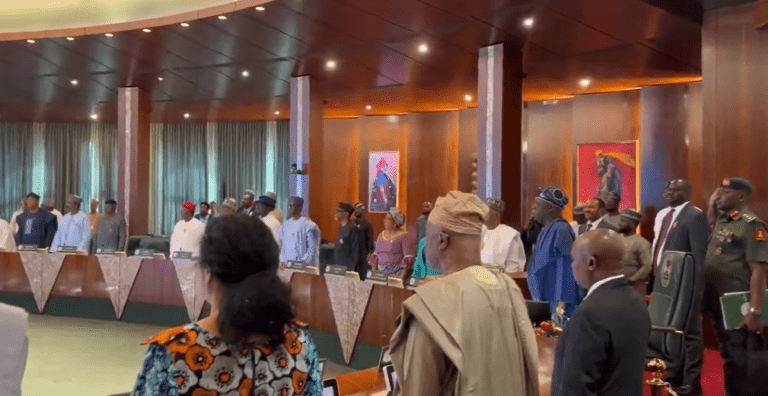
The Federal Executive Council (FEC) has approved the procurement of 200 electric buses for the National Automotive Design and Development Council (NADDC) at a cost of N58 billion, signalling a renewed push to modernise Nigeria’s transportation system and strengthen its automotive industrial ecosystem.
Briefing State House correspondents after the meeting presided over by President Bola Ahmed Tinubu, the Minister of State for Industry, Trade and Investment, John Enoh, said the approval aligns with NADDC’s mandate and the administration’s vision to expand clean mobility and strengthen the local automotive value chain.
He added that the Council also approved the new Nigerian Industrial Policy 2025, a comprehensive framework to guide industrial growth, investment promotion, innovation, and competitiveness.
“The first memo that was considered and approved was the award of a contract for the supply of 200 units of electric buses at the cost of N58bn for the National Automotive Design and Development Council.”
The Minister highlighted that Nigeria’s new industrial policy framework is anchored on five strategic pillars designed to revitalise the country’s manufacturing base, enhance competitiveness and accelerate sustainable economic growth.
Enoh listed the pillars as industrial infrastructure development and competitiveness; sectoral diversification and value-chain development; investment promotion and business-environment reforms; innovation, technology and digital industrialisation; and sustainability, green growth and climate resilience.
According to him, the policy aims to position Nigeria as a competitive industrial hub by boosting productivity, expanding value chains, accelerating job creation and driving climate-smart, technology-enabled industrial transformation.
The minister added that the policy outlines targeted interventions, including the strengthening of industrial clusters and special economic zones, to support manufacturers, stimulate investment and unlock new opportunities across priority sectors.
“The third is investment promotion and business environment reforms.
“The fourth is innovation, technology and digital industrialisation. And finally, sustainability, green growth and climate resilience.
“So the policy seeks to position Nigeria as a competitive manufacturer, industrial hub, of course, by increasing industrial productivity and all the associated elements, enhancing job creation, promoting climate, smart and digital industrial transformation with all of that.
“So the targeted interventions that the policy has to do with strengthening industrial clusters and special economic zones.”
Other approvals for the ministry include the design and construction of the Bank of Industry headquarters in Eko Atlantic City, internal roads for the Lekki Medical Tourism Park, and Nigeria’s official selection to host the next Intra-African Trade Fair in Lagos.
“There is this memo that also relates to industry, and FEC gave approval for the award of contract for the design and Bill of project Atlantic eco, Atlantic City, Lagos.
“Also, the last of the memos, you know, was actually a note to the council to report Nigeria’s official selection to host the intra-African trade fair.” He added.
Nigeria’s Minister of Aviation and Aerospace Development, Festus Keyamo, has declared that the Federal Government has no legal powers to regulate or fix airfares in the country, emphasising that the country’s aviation industry has operated under a fully deregulated framework for several decades.
Addressing State House correspondents after the Federal Executive Council meeting in Abuja, Keyamo explained that the deregulation of the aviation industry dates back to the Ibrahim Babangida administration, when private airlines were granted the freedom to operate and determine their own fare regimes.
He noted that although the Senate had invited him to discuss the recent surge in airfares, he was unable to appear due to his commitments at the Council meeting.
The Minister disclosed that he instructed the Nigerian Civil Aviation Authority (NCAA) and domestic airlines to appear before the Senate Committee in his absence.
Keyamo stressed that while the government cannot dictate prices in a free market, it remains actively engaged with airlines to address the underlying factors driving high fares.
“Government has absolutely no powers to fix prices for private enterprises. That is what deregulation means. But that does not mean we are leaving the airlines without engagement,” he said.
The Minister emphasised that operators have repeatedly raised concerns about access to aircraft, unfavourable lease terms, the absence of local maintenance facilities, and the pressure to source large amounts of foreign exchange to conduct mandatory C-checks abroad, factors that all feed into ticket pricing.
He disclosed that a significant milestone was achieved under the Tinubu administration when, for the first time in nearly twenty years, a major international aircraft lessor returned to the Nigerian market and granted a dry-lease arrangement to a domestic airline at a cost less than one-third of earlier industry rates.
Keyamo attributed the development to reforms introduced by the Federal Government, including new practice directions on the Cape Town Convention, which protect the rights of international lessors and boost confidence in Nigeria’s aviation environment.
“With cheaper dry leases coming in, more airlines will have access to aircraft. More aircraft automatically means stronger competition. And competition is what brings prices down in any free economy,” he said.
The Minister projected that over the next few months to a year, Nigerians should begin to feel the impact of increased aircraft availability, improved competition, and lower operating costs.
On the issue of multiple taxes and charges on airlines, an issue that has drawn the attention of ECOWAS, the Minister of Aviation and Aerospace Development confirmed that Nigeria had received a regional advisory urging relief for operators.
He clarified that ECOWAS lacks the authority to compel member states on taxation matters, adding that aviation taxes fall under the jurisdiction of federal revenue and financial authorities, not his ministry.
“I cannot wake up one morning and abolish taxes. These revenues go into the Federation Account. The Finance Minister, the tax authorities, and other stakeholders must all be at the table,” the Minister said.
Keyamo disclosed that he had already escalated airlines’ tax concerns to the relevant bodies, adding that both the Minister of Finance and other economic authorities were working collaboratively to review the issues.
He maintained that while the government must support operators, it must also sustain the revenue necessary to maintain critical aviation infrastructure nationwide.
The ECOWAS Commission has presented the annual work programme and
budget of the Community institutions, the financial situation of the Community, the status of implementation of the Community levy protocol, as well as reports of the Auditor General of ECOWAS Institutions and the Audit Committee.
The President of the Commission, Dr Omar Alieu Tourey, presented the annual work programme at the 95th Ordinary Session of the ECOWAS Council of Ministers meeting in Abuja, Nigeria’s capital.
Dr Tourey said the ‘Commission will be presenting memoranda on regional resilience, monetary integration, resource mobilisation for the activation of the regional force for countering terrorism, as well as the resolution of the Board of the ECOWAS Bank for Investment and Development.
“We will be presenting information memoranda on the status of implementation of the ECOWAS Trade Liberalisation Scheme, including the work of the Task Force on the ETLS, as well as the Memorandum on the ECOWAS single currency programme. He emphasised.
The Commission’s President also said that the Council will be briefed
on the financial situation of the West African Power Pool, our flagship regional electricity market platform, which is currently facing challenges on account of debts owed by national electricity companies.
Dr Tourey believed that moving forward with the operationalisation of the ECOWAS Business Council, ‘we have identified Alhaji Aliko Dangote to be the pioneer Chairperson of the Council in view of his vast experience doing business within the region and across Africa.
According to him, through the Council, the ECOWAS Commission hopes to bring the private sector actors around the table as the Commission discusses economic integration and development of the ECOWAS region.
In this regard, the Business Council will facilitate dialogue and partnership between the private sector, governments, and ECOWAS institutions.
He reiterated that the idea of promoting intra-regional investment is gaining attraction in the Member States.
This year alone, the commission has seen several economic investment fora, such as the Forum Senegal Invest, the West African Economic Summit in Nigeria, the Invest in District Savanes forum in Cote d’Ivoire, among others.
We have also received a proposal from the Republic of Sierra Leone for the organisation of a West African Economic Investment Summit.
This appetite for intra-regional investment underscores the need to mobilise capital within our region to build our community rather than wait for precarious foreign investments.
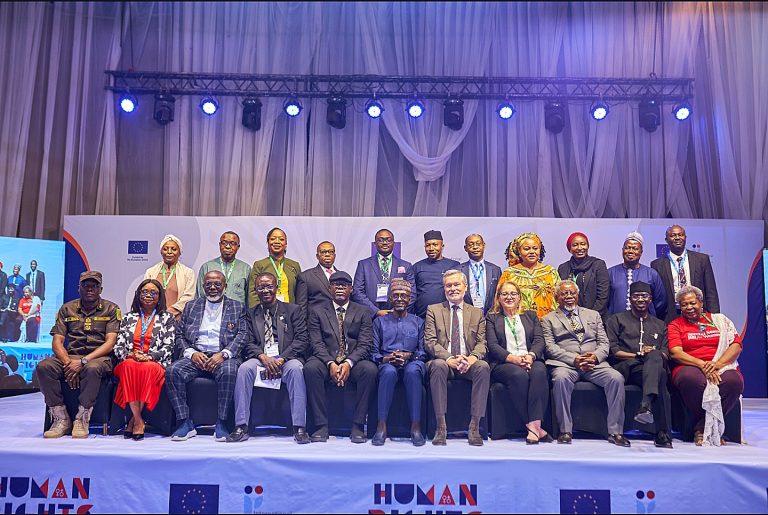
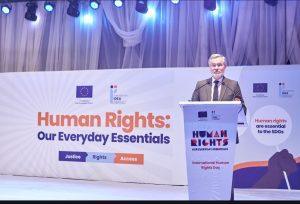
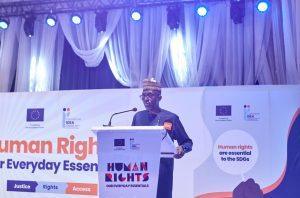
The Attorney-General of the Federation and Minister of Justice, Lateef Fagbemi, says the Constitution of the Federal Republic of Nigeria guarantees the right to receive and impart information.
Delivering the keynote address on Wednesday at a high-level national conference commemorating the 2025 International Human Rights Day in Abuja, he stressed that freedom of expression is the “lifeblood of democracy,” warning that “in a democracy, silence is not golden; it is dangerous.”
Represented by Garba Godwin, the head of the freedom of information unit in the ministry, he noted that “this year’s theme, Our Everyday Essentials, reminds us that these two rights are not abstract ideals but practical necessities that empower citizens, strengthen institutions, and uphold the very fabric of democratic governance.”
Fagbemi added that while the government is committed to safeguarding free expression, “this freedom must be exercised with responsibility” in view of the rise of misinformation and hate speech.
On access to information, he described it as “the oxygen of transparency,” reaffirming the Federal Government’s commitment to fully implementing the Freedom of Information Act.
“We are working to strengthen institutional frameworks… and foster a culture of openness and accountability,” he said.
The EU Ambassador to Nigeria and ECOWAS, Gautier Mignot
The EU Ambassador to Nigeria and ECOWAS, Gautier Mignot, in a goodwill message, linked the event to the end of the 16 Days of Activism and the 77th anniversary of the Universal Declaration of Human Rights.
He noted that freedom of expression and access to information “underpin democracy, accountability, and social progress,” stating that they are “not a privilege granted by the state – but an inherent right essential for every person to live freely and safely.”
Mignot said acts of threats against journalists are “a clear assault on freedom of expression and on democracy.”
He urged the government to strengthen the legal system for prosecuting crimes against journalists.
Danladi Plang, Head of Programmes, International Institute for Democracy and Electoral Assistance (IIDEA)
Earlier in his welcome remarks, Mr Danladi Plang, Head of Programmes, International Institute for Democracy and Electoral Assistance (IIDEA), said the organisation adapted the 2025 theme to “Our Everyday Essentials: Freedom Of Expression And Of Information”, emphasising how free expression and access to information enable other rights.
Citing UNESCO data, he noted that countries with higher levels of free expression enjoy “a significantly higher level of protection of civil, political, economic and social rights.”
“While the digital age should make easy access to information, it comes with its many challenges, including the misuse of digital platforms and the restrictive laws enacted by governments to curb such abuses,” he added.
Speaking on “A Decade of Access to Information,” Dr Emmanuel Uche, Project Manager, Anti-Corruption, Rule of Law and Anti-Corruption Programme (RoLAC), said the FOI Act is “the oxygen of democracy,” adding that despite progress, “too many institutions still resist openness” and “too many FOI requests go unanswered.”
He urged stronger enforcement, digitalisation of public records, and broader public awareness.
“The right to information is the right that protects all other rights,” Uche concluded. “Let us defend it… Let the work begin.”
The National Conference, organised by the International Institute for Democracy and Electoral Assistance with support from the European Union, provided a platform for national dialogue on free expression, information, and access to law, identifying challenges, fostering collaboration, and producing actionable strategies for future reform.
President Bola Ahmed Tinubu has constituted a high-level Ministerial Committee to resolve the long-standing issue of unpaid payments for projects executed for more than 2,000 federal contractors.
The Committee comprises the Minister of Finance, Minister of Budget and Economic Planning, Director-General of the Budget Office; Minister of Works, Minister of Education, Minister of Housing and Urban Development, and the Chairman of the Federal Inland Revenue Service.
Special Adviser to the President on Information and Strategy, Bayo Onanuga, disclosed this on Wednesday while briefing State House Correspondents, following what he described as “a very productive discussion” with Ministers after receiving an updated briefing on the scale and implications of the outstanding payments.
To tackle the challenge, Mr Onanuga said “the President has approved a coordinated mechanism to verify claims, reconcile records, and propose sustainable financing options.”
According to him, the ministers and senior officials are expected to “sit together, harmonise data, and develop a comprehensive solution that will determine how and when the outstanding payments will be settled.”
He said; “the situation has created bottlenecks and undermined service delivery in critical sectors where contractors had executed government-approved projects.”
“The committee has the President’s full backing to resolve this matter decisively,” Onanuga assured.
He stressed that President Tinubu remained committed to restoring transparency and order to the contractor-payment process, ensuring that genuine contractors are paid promptly while blocking abuses and irregularities.
Contractors had protested delays of project funds, saying it has led to loan defaults, loss of property, deteriorating health conditions, and, in some cases, deaths among affected members.
The Minister of Finance, Wale Edun, had outlined a structured pathway for sorting the debts, following directives from President Tinubu to commence payments.
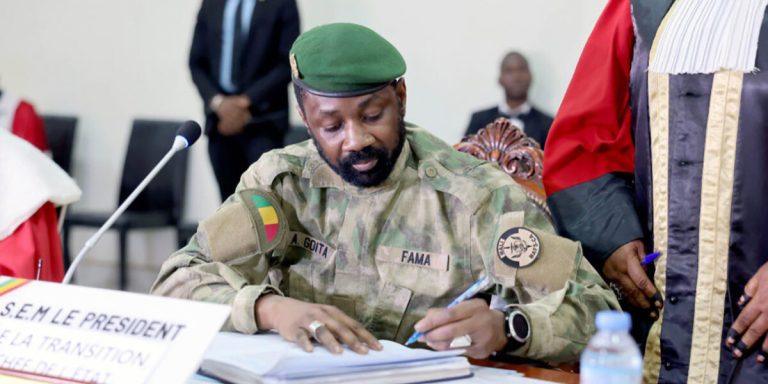
Mali’s Prime Minister has met with the United States Ambassador, Rachna Korhonen, in Bamako, as part of ongoing diplomatic engagements between both countries.
For several years, Mali has been listed at the highest alert level in U.S. travel advisories, with recommendations against travel due to security concerns, including attacks, kidnappings, and instability in parts of the country.
In 2025, the advisory was updated, with U.S. authorities urging citizens “to avoid travel and, for some categories, to leave when possible, citing repeated attacks by armed groups in several regions.”
Bilateral relations were further tested in October 2025 following changes to U.S. visa regulations.
The U.S. government introduced a “visa bond,”programme requiring certain non-immigrant visa applicants from countries with high overstay rates to pay a security deposit of up to $10,000.
Mali responded by announcing a reciprocal deposit requirement for American applicants seeking Malian visas.
These developments occurred against a backdrop of broader sanctions and restrictions imposed by some Western partners since Mali’s political transitions in 2020. During this period, Malian authorities have also expanded cooperation with other international actors across the security and economic sectors.
Despite the challenges, both countries have continued to maintain channels of communication.
Throughout 2025, Ambassador Korhonen reiterated “the United States’ commitment to working with the Malian people, particularly in development, governance and support for vulnerable groups. Malian and American officials also held discussions on economic and security-related issues in Bamako and abroad.”
According to a statement from the Malian Prime Minister’s office, “the meeting on December 8 included a message from the U.S. administration expressing interest in cooperation opportunities, including partnerships between Malian and American business stakeholders.”
The statement did not reference the visa and travel advisory issues but placed the discussion within the context of strengthening economic ties.
The meeting also reflects continued collaboration between both countries in areas such as countering armed groups in the Sahel, facilitating regional movement of goods and people, and addressing humanitarian needs in affected communities. U.S. assistance programmes, both humanitarian and technical, have remained active, though adjusted to political and security developments.
The latest engagement therefore comes at a time when relations between Mali and the United States continue to alternate between policy-related restrictions and efforts to sustain cooperation in key development and economic areas.
The Securities and Exchange Commission (SEC) has approached the Investments and Securities Tribunal (IST) to freeze all bank accounts belonging to Crypto Bridge Exchange (CBEX) and other defendants with commercial banks or other financial institutions in Nigeria.
The Investments and Securities Tribunal (IST) on Tuesday commenced proceedings in the landmark case of SEC & Anor v. Crypto Bridge Exchange (CBEX) & 25 Others, marking the first matter before the 6th Tribunal under its new Chairman, Hon. Aminu Jinaidu.
In the case of IST/OA/02/2025 Securities and Exchange Commission & Anor v Crypto Bridge Exchange (CBEX) and 25 others, the Commission is also requesting the Tribunal to confiscate the houses and other assets of the defendants acquired from the proceeds of the monies invested by the general public in the CBEX scheme acting as digital assets, platforms/capital market operators.
Available records indicate that the case is the first brought before the 6th Tribunal presided over by Hon. Aminu Jinaidu, as the new Chairman of IST.
Importantly, the SEC maintained in its plea that CBEX is an unregistered platform promising its users 100 per cent return on investments within 30 days, which is unlawful and contrary to section 3 (b) of the Investments and Securities Act 2025.
The Commission also disclosed that the Securities and Futures Commission of Hong Kong had, on April 23rd, 2024, issued an advisory note against CBEX, indicating that it is a suspicious virtual asset company and adopted a name that was similar to that of a property rights trading organisation based in China, when in fact they are not associated in any way.
Meanwhile, in order to further proceed with the case, the IST has ordered that a hearing notice be served on CBEX through national newspapers because, as the defendants in the case, they have not put up any appearance nor were represented in court.
Launched in Nigeria around July 2024, CBEX has been operating through a website and mobile app, claiming to use advanced Artificial Intelligence (AI) to generate significant profits from crypto trading.
Additionally, the platform promises returns of up to 100 per cent on investment within a 40- to 45-day lock-in period.
CBEX, which is the acronym for Crypto Bridge Exchange, was exposed as a Ponzi scheme, leading to an estimated loss of over N1.3 trillion (approximately $800 million) for investors.
Recalled that the SEC had, in April 2025, issued a statement denying CBEX’s registration as a government-recognised entity and further pledged that “Pursuant to the provisions of Section 196 of the Investments and Securities Act 2025, the Commission would collaborate with relevant law enforcement agencies to take appropriate enforcement action against the CBEX, its affiliates and promoters.”
In a related development, other cases presided over by the IST Chairman include Benue Investments Property Co. Ltd & Anor v Securities and Exchange Commission & 6 others and Maven Asset Management Ltd v Securities and Exchange Commission.
Also listed for adjudication are John Makinde Onade & Anor v First Registrars & Investors Services Ltd & Anor; and Securities and Exchange Commission and Anor v Tourist Company of Nigeria PLC and 6 Others.
All the cases were adjourned to January 27, 2026, for further mention and hearing by the Tribunal.
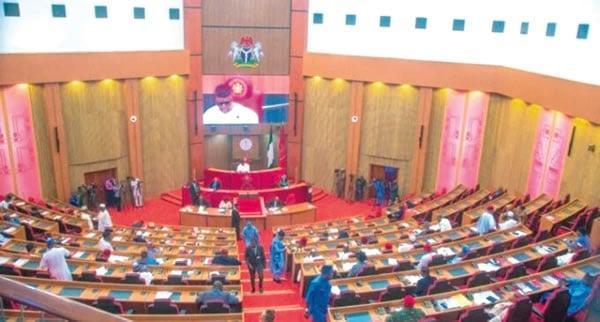
The Nigerian Senate has directed its Committee on Police Affairs to investigate the alleged selective implementation of President Bola Ahmed Tinubu’s order withdrawing police escorts from VIPs.
The decision followed complaints that lawmakers were being singled out while other influential individuals continued to enjoy full security cover.
The resolution was reached after Senator Abdul Ningi (Bauchi Central) raised a point of order under Order 9 during plenary, expressing outrage that his only police orderly had been withdrawn despite the continued protection of ministers, business executives, political families, and celebrities.
Senator Ningi warned that the uneven enforcement of the President’s directive could expose lawmakers to security threats and undermine the intent behind the order, issued in November as part of a broader national security strategy to improve police efficiency and public safety.
“It should be done across the board. I have seen ministers with heavy security, business concerns with their orderlies, children of political office holders with orderlies, and even singers enjoying full protection. But a Senator of the Federal Republic cannot have even one orderly? This is unheard of in any democracy,” he stated.
He stressed that he had no objection to complying with the President’s policy, provided it was implemented fairly.
“Let me not see governors, ministers, and business concerns being covered by the security establishment while the National Assembly is made a scapegoat. This is not right, and it should be taken seriously,” he said.
Responding, the Deputy Senate President, Senator Barau Jibrin, confirmed that the leadership had already discussed the matter and taken steps to address the concerns raised.
He acknowledged that the President’s directive appeared to be selectively enforced.
“We expect a reaction regarding the police orderlies withdrawn from senators. Why is the directive of the President being flouted, underpinned that the President issued the order in good faith to strengthen the police and tackle internal security issues,” he said.
Senator Jibrin assured lawmakers that efforts were underway to resolve the situation.
“The issue raised to protect you is being taken seriously. The leadership agreed yesterday that action should be taken to restore your police orderlies. We have a listening President, and I am sure he will act,” he added.
He further noted that while the Senate fully supported the President’s reforms, any breach of the directive should be investigated. He, therefore, instructed the Committee on Police Affairs to conduct a proper investigation into why some individuals continued to retain police escorts despite the presidential order.
The committee is expected to report back within four weeks.