Home Blog Page 56

UN Allocates $48m For Air Service In Nigeria, Others

0

The Emergency Relief Coordinator, Tom Fletcher, has allocated 48 million dollars from the UN Central Emergency Response Fund for urgent support to the UN Humanitarian Air Service (UNHAS).

The new funding will keep the UN Humanitarian Air Service operating in eight countries: Nigeria, Chad, the Democratic Republic of the Congo, Haiti, Kenya, South Sudan, Sudan and Syria.

This will allow thousands of humanitarian workers, from the UN, NGOs and civil society, to continue their work.

The UN spokesperson, Stephane Dujarric told journalists at the UN headquarters in New York on Thursday that UNHAS was a lifeline, helping aid workers and critical supplies reach people in need, according to World Food Programme (WFP).

He, however, said that with humanitarian funding shrinking, UNHAS could be forced to suspend flights.

UN spokesperson said allocation was made possible by the recent U.S contribution of $2 billion to UN-managed humanitarian funds.

The UN had in September, 2025, halted its fixed-wing operations in Nigeria after running out of funds, cutting off a critical lifeline for aid workers in the country’s conflict-hit northeast.

The suspension comes amid a worsening funding crisis that has already forced WFP to warn of possible cuts to emergency food and nutrition aid for 1.3 million people in Northeast Nigeria.

In 2024, the UN service transported over 9,000 passengers and in 2025, over 4,500 humanitarian staff depended on the flights to reach communities cut off by conflict in northeast Nigeria.

NAN

Gombe Governor Approves Redeployment of Permanent Secretaries Across MDAs

0

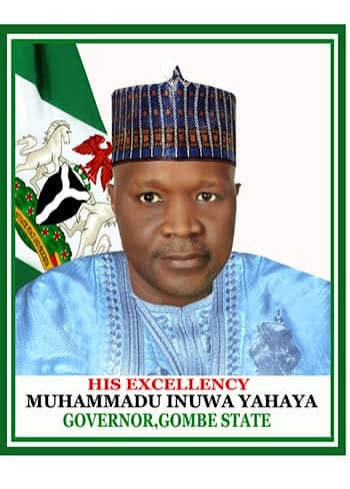
The Governor of Gombe State, Muhammadu  Yahaya, has approved the redeployment of Permanent Secretaries across key Ministries, Departments, and Agencies, MDAs.

The Gombe State Head of Service, Professor Muazu Shehu, who announced the Governor’s approval, stated that the move aligns with the current administration’s commitment to effective public service management, continuity in governance, and the embedding of professionalism within the civil service.

He explained that the postings were designed to enhance institutional performance, improve policy coordination, and further align the machinery of government with Governor Yahaya’s vision of a responsive, results-driven, and people-focused public service.

According to the Head of Service, the postings, which take effect immediately, are as follows:

Alhaji Jalo Ibrahim Ali moves to the Ministry of Finance and will also oversee the Ministry of Budget and Economic Planning.

Idris Yambiu Buba, assigned to the Ministry of Health, nd will oversee the Ministry of Higher Education.

READ ALSO:Gombe Governor Dissolves Cabinet, Sets Resignation Deadline

Mohammed Mohammed Galadima takes charge of the Ministry of Information while continuing oversight of Science, Technology, and Innovation.

Danladi Adamu remains at the Ministry of Works, Housing, and Transport.

Larai Maigari posted to the Establishment and Service Matters Department, Office of the Head of Service.

Suleiman Musa Kwami moves to the Ministry of Energy and Mineral Resources and will oversee the Civil Service Commission.

Abubakar Hassawas was posted to the Ministry of Education while retaining oversight of the Bureau of Public Service Reforms.

Salisu Adamu Sambo continues in Special Services and Political Affairs, overseeing Cabinet and General Duties.

Shuaibu Ibrahiwas was posted to the Ministry of Local Government while continuing oversight of the Teachers Service Commission.

Adamu Moh’d Kala moves to the Ministry of Trade, Industry, and Tourism.

Sa’adatu Bome Ishaya, posted to the Deputy Governor’s Office while continuing oversight of SIEC.

Abubakar Babayo Hassawas was posted to the Local Government Service Commission.

Moh’d Ismail Hinna remains at the Ministry of Justice.

Muhammad Bello Abubakar Kumo continues at the Ministry of Water Resources, Environment, Energy, and Forestry.

Alhassan Ibrahim remains at Government House.

Ahmed Sa’eed Guli, posted to the Ministry of Agriculture and Animal Husbandry and will oversee the Ministry of Internal Security and Ethical Orientation.

Dr. Lawan Bala, posted to the Ministry of Youth and Sports Development and will oversee the Ministry of Women and Social Development.

According to the Gombe State Head of Service, the postings take effect immediately.

NYSC Crucial to Nigeria’s Youth Development – UN

0

The Assistant Secretary-General for Youth Affairs and Head of the United Nations Youth Office, Felipe Paullier, has described the National Youth Service Corps (NYSC) as a critical agent of Nigeria’s youth development.

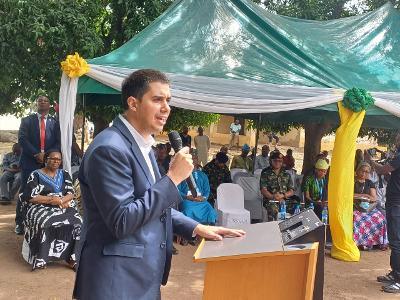
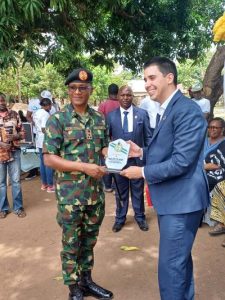
The Head of UN Youth Affairs stated this at the flag-off of the NYSC’s Health Initiative for Rural Dwellers (HIRD), held in Kabusa community of the Federal Capital Territory, Abuja.

Dr Paullier, who is on an official visit to the country, said his visit centres on meaningful discussions with key youth organisations and youth representatives, particularly the NYSC, as well as other stakeholders, to advance the youth agenda by strengthening the role of young people as partners in development, peace and human rights.

“I have interacted with many young and old Nigerians who are proud of their NYSC experiences,” he said.

READ ALSO: VON, NYSC Deepen Collaboration on Youth Development

Commending the scheme’s consistent free medical interventions for rural dwellers, Dr Paullier said the free medicare was contributing to building a better world.

Earlier in his address, the Director-General of the NYSC, Brigadier-General Olakunle Nafiu, told the UN Assistant Secretary-General that since the inception of the NYSC Health Initiative for Rural Dwellers (HIRD) in 2014, more than five million Nigerians have benefited from the free medical outreach.

He noted that the scheme projects to reach about 45,000 people across rural communities nationwide this year, taking advantage of two brand-new mobile clinics donated by the First Lady of Nigeria, Senator Oluremi Tinubu, to extend its reach and expand its operations.

The DG thanked the First Lady for her visionary and generous donation to the NYSC.

Brigadier-General Nafiu also told the UN senior official that through the HIRD window, the scheme plans to begin carrying out free minor surgeries for rural dwellers.

“The NYSC’s free healthcare initiative contributes to Sustainable Development Goal 3 of the United Nations, which focuses on good health and well-being by improving access to healthcare and promoting healthier lifestyles.

“The HIRD programme also supports Sustainable Development Goal 1, which aims to end poverty, as the free medical services reduce the financial burden on vulnerable households and further encourage informed health decisions, strengthening overall community wellbeing,” the DG emphasised.

While thanking partners and donors for sustaining the initiative over the past 12 years, the NYSC boss also appreciated corps medical personnel for their selfless service to rural communities.

“I am proud of you and your valuable contributions to our nation’s development. Your selfless service will always be remembered,” he said.

In his vote of thanks, the traditional leader and Dakachi of Kabusa village, Chief Samuel Kpowu, expressed gratitude to the NYSC for bringing free medicare to the doorstep of his people, describing it as the first of its kind.

In her remarks, the Acting Director of Community Development Service and Special Projects (CDS & SP), Mrs Funmilayo Ajayi, stated that the range of services provided during the two-day medical outreach included health sensitisation and education on wellbeing and disease prevention, medical consultations, treatment, diagnosis, laboratory tests, scanning, eye care services, free medications, and referrals where necessary.

A key highlight of the programme was the launch and inspection of the two brand-new mobile clinics by the UN Assistant Secretary-General, led by the NYSC DG.

Other highlights included a health talk by a corps medical doctor, Else Ibrahim, who also interpreted key messages into Gbagyi, the local language of the community.

The medical outreach was supported by two partner organisations, Genlab/Doc.roa, led by Chief Executive Officer and Founder, Mr Ebozoje Deogratias Segun, and the Rabiu Olowo Foundation, led by its General Manager, Dr Ayomide Adebayo.


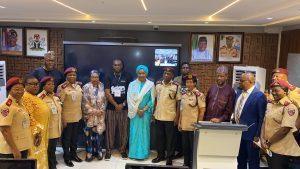
Senator Kingibe Advocates More Women in Emergency Safety

0

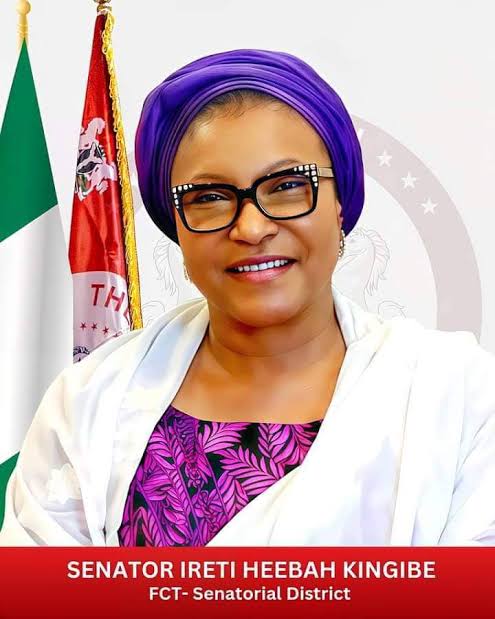
The Chairman Senate Committee on Women Affairs, Senator Ireti Kingibe, has called for more women inclusion in the emergency rescue and safety space.

She made the call in her keynote address, 9th Road Safely and Emergency Response Stakeholders Meeting with the theme: Women in Emergency Services in Nigeria , ROSERS 9.0, Positives, Barriers, and the Way Forward, held in Abuja.

She said that at the heart of national development is security and human dignity.

She noted that it is not only important to recognize the role of women in emergency services but to interrogate the systems that shape their participation and to chart a realistic path forward for a safer and more inclusive
Nigeria.

” We Must Acknowledge across Nigeria, women are serving bravely in emergency and safety sectors, as paramedics, firefighters, police officers, military personnel, road safety officers, and disaster response professionals.”

According to recent estimates from agencies such as the Nigerian Police Force and Federal Fire Service, women constitute less than 15–20% of personnel in most emergency services, with even lower representation in leadership roles.

” Yet, despite their relatively small numbers, their impact is profound. Women are often the first point of trust in crisis situations, particularly in cases involving children, survivors of sexual violence, and displaced populations. In humanitarian settings across the North-East, for instance, female responders have played critical roles in addressing gender-based violence and providing psychosocial support to victims .” Senator Kingibe said.

She, however, lamented that women’s participation continues to be constrained by deeply rooted structural and socio-cultural barriers.

” Nigeria’s largely patriarchal system still frames certain professions as unsuitable for women, especially those perceived as physically demanding or dangerous.

The Case for Women in Emergency Services The inclusion of women in emergency services is not simply a matter of fairness, it’s is a matter of effectiveness.” She said.

The lawmaker noted that the strengthing of gender-sensitive policies within all emergency service institutions and ensure they are not only adopted but implemented and monitored.

Investment in infrastructure and equipment. Facilities, uniforms, and operational tools must reflect the needs of a diverse workforce.

Zero tolerance for harassment and
discrimination, clear reporting mechanisms, protection for whistleblowers, and accountability frameworks must be established and enforced. Fourth, mentorship and leadership pathways.

We must intentionally create opportunities for women to rise
into leadership positions within emergency services.

Public Reorientation
Changing societal attitudes is critical. We must normalize women in all professions through education, media, and community engagement.

Conclusion: A Call to Action
As we reflect today, we must understand that building a safer Nigeria is a shared responsibility.

The government must create enabling policies. Institutions must reform their systems.

Youth Empowerment: UNESCO Calls for Skills Development

The United Nations Educational, Scientific and Cultural Organisation (UNESCO) has urged stakeholders in Nigeria’s education sector to move beyond discussions and translate policies into actionable results.

The UNESCO particularly called for prioritising youth skills development to address unemployment in the agro-processing sector.

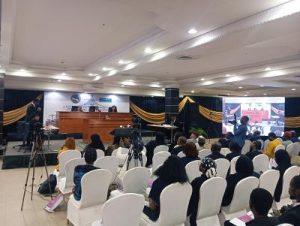
The Head of Office and Representative of the UNESCO Office in Abuja, Jean-Paul Abiaga, made the call in Abuja at the closing of a labour market workshop focused on skills gap analysis in the agro-processing sector under the BEAR III project in Nigeria.

Dr Abiaga, who was represented by the National Programme Officer on Culture at UNESCO, Dr Ifeanyi Ajaegbo, stressed that for sustainable results to be achieved, there must be a collaborative spirit.

“We are united by a shared goal of strengthening Nigeria’s agro-processing skills ecosystem, and that is why we are here today. Your presence reflects the collaborative spirit that is essential to achieving this meaningful and sustainable outcome, especially through skills that are the bridge between potential and opportunity. It is only relevant, market-oriented skills that will enable people to thrive in today’s fast-changing world, a world ruled by AI, technology, digital interventions,” he said.

READ ALSO: UNESCO Urges Skills Training to Improve Agro Sector

According to the UNESCO Head of Office, there are a lot of gaps in the labour market; hence, identifying these gaps and finding lasting solutions is crucial.

“By identifying where these gaps exist, we can prepare in more effective ways, design responsive training programmes and strengthen the link between education and employment. This is critical for Nigeria, where there is a huge gap between what we are taught in classrooms and what is needed in the field out there, particularly in the labour market,” he added.

Also speaking, the Executive Secretary of the National Board for Technical Education (NBTE), Mr Idris Muhammed Bugaje, who was represented by Bashir Datty, highlighted the critical role of work-based learning in bridging skill gaps and its commitment to strengthening the national skills qualification network.

For his part, the representative of the Korean Research Institute, Dr Cho Sunglk, emphasised the need for work-based learning in strengthening the link between training and employment, particularly across various sectors in agriculture.

According to the Director of Technology and Science Education at the Federal Ministry of Education, Mrs Patricia Ogungbemi, represented by Mrs Christiana Obaje, a Deputy Director in the ministry, there is a need for adequate investment in technical skills teaching and learning to achieve set targets.

“Our mission is to move beyond theoretical science and transition into applied industrial competence. We cannot train in a vacuum. We must ensure skills cultivated in TVET institutions are the exact skills required by the factory floors and processing plants of today and tomorrow. Our collective focus should be more on creating a sector that is not just a pillar of Nigeria’s economy, but the very backbone of its food security and industrial growth, particularly agro-processing,” she stressed.

The consultation workshop centred on shaping policy, legislation, and implementation in agro-processing, ensuring TVET programmes are responsive, future-ready, and aligned with industry needs.

Participants are optimistic that the workshop will build a robust, practical, and world-class work-based learning framework that will make the agro-processing sector the envy of the continent.

President Tinubu Inaugurates 60MW Bayelsa Gas Power Plant

President Bola Ahmed Tinubu has inaugurated a 60-megawatt gas-fired Independent Power Plant (IPP) at Elebele in Ogbia Local Government Area of Bayelsa State.

The project, which enhances energy security for the state, represents a major boost to electricity supply and industrial growth in the Niger Delta region of Nigeria.

The facility, executed under the administration of Bayelsa State Governor Douye Diri, is a core component of the state’s independent power initiative aimed at reducing reliance on the national grid and ensuring stable electricity for homes and businesses.

READ ALSO: President Tinubu Approves ₦3.3tn Power Sector Debt Settlement Plan

The Elebele power plant, powered by gas turbines, is designed to supply electricity to Yenagoa and surrounding communities, with expectations that it will stimulate investment, support small and medium-scale enterprises, and drive economic diversification in the oil-rich state.

Following the inauguration, President Tinubu also embarked on a facility tour of the plant, inspecting installed infrastructure including turbines, transformers and distribution systems, as part of an assessment of the project’s operational readiness.

The 60MW IPP is regarded as a strategic intervention to address longstanding electricity deficits in Bayelsa, where erratic power supply has historically constrained economic activities and increased reliance on costly diesel and petrol generators.

Earlier on Friday, Bayelsa State Governor Douye Diri said that the project is in line with the “Renewed Hope Agenda” and represents a major push for industrial development in Bayelsa State.

Nigeria Reaffirms Commitment to Strengthening Rule of Law

0

The Nigerian Government has reaffirmed its commitment to strengthening the rule of law and advancing justice reforms.

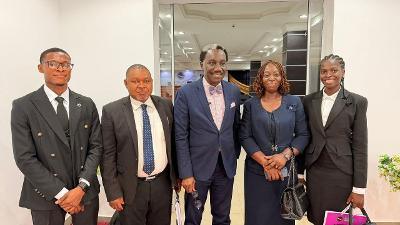
The Minister of Justice and Attorney General of the Federation, Lateef Fagbemi, made this known during the grand finale of a national moot court competition organised by the Juritrust Centre for Socio-Legal Research and Documentation.

According to him, the Federal Government remains resolute in “upholding the rule of law, strengthening human security and advancing justice reform.”

READ ALSO: Nigeria’s Chief Justice Restates Commitment to Rule of Law

Represented by the State Counsel in the Administration of Criminal Justice Department, Ministry of Justice, Hauwa Dimka, the Attorney General described the initiative, which was supported by the MacArthur Foundation, as critical to bridging the divide between legal theory and courtroom practice.

“Programmes such as this play a vital role in bridging the gap between legal theory and practical courtroom advocacy,” he said, noting that they prepare “the next generation of legal practitioners to effectively navigate the complexities of our criminal justice system.”

At the heart of Nigeria’s reform agenda is the Administration of Criminal Justice Act 2015, which Fagbemi described as “a landmark reform in Nigeria’s justice sector.”

“Its effective implementation requires not only strong institutions but also well-trained and forward-thinking legal professionals,” he stressed.

The competition, which brought together leading universities across Nigeria, underscored the growing importance of legal education in addressing global challenges such as access to justice, institutional accountability, and sustainable development.

Director of the Juritrust Centre, Adedeji Adekunke, highlighted the organisation’s role in advancing socio-legal research and called for stronger mentorship frameworks to equip young lawyers with practical skills.

Mushalesa Udopa of the United Nations Office on Drugs and Crime described the event as more than an academic exercise.

“This competition represents not only an academic exercise but also a vital platform for nurturing the next generation of justice sector leaders,” she said, linking effective justice systems to the achievement of global Sustainable Development Goals.

Legal practitioner Angela Ugochukwu also emphasised the importance of mentorship and innovation, noting that young entrants into the legal profession must adapt to evolving demands.

The moot court finale featured participants from multiple Nigerian universities, with the University of Calabar and Ebonyi State University competing in the final round.

The panel of judges was chaired by retired Justice Joe Acha, alongside Justices Nkemdilim Izuako and Celetine Odo.

Nigeria To Hold First Abuja Dialogue On Youth Leadership

0

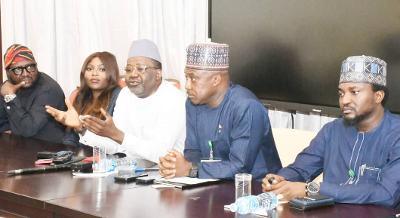
The Nigerian government, in collaboration with the Lagos State government, is set to convene the first-ever Abuja Dialogue, aimed at placing youth leadership at the centre of national discourse.

The Dialogue, scheduled to hold on Monday, 13 April 2026, in Abuja, under the theme “Scaling Excellence: Youth Leadership as Strategic Infrastructure for National Transformation,” is a precursor to the Lagos Leadership Summit.

The Deputy Chief of Staff to the President, Ibrahim Hassan-Hadejia, who disclosed this during a news conference, noted that the Dialogue’s emphasis is on young Nigerians, “not as a matter of rhetoric or aspiration, but as a strategic priority.”

He said: “Central element of this initiative is the recognition that youth leadership and development must move beyond the language of inclusion and toward a more structured understanding of responsibility.

“While inclusion provides access, responsibility requires preparation, and it is this preparation that ultimately determines whether young people are able to contribute meaningfully within systems that demand competence, discipline, and accountability.

“The Abuja Dialogue will therefore focus on identifying the mechanisms through which this preparation can be achieved, including the role of structured training, institutional exposure, mentorship, and performance evaluation in building leadership capacity over time.”

READ ALSO: Nigeria to Host 2025 Youth Creative Conference in Abuja

Hassan-Hadejia said the Office of the Vice President recognises that while building youth leadership at scale cannot be achieved through isolated efforts, it requires deliberate collaboration with institutions committed to leadership development at various levels.

“This partnership reflects a shared commitment to grooming young leaders through structured programmes that drive leadership exposure, thereby ensuring that change-driven individuals are equipped not only with knowledge, but with the capacity to apply that knowledge within real-world contexts,” the Deputy Chief of Staff to the President noted.

The Executive Secretary of the Lateef Jakande Leadership Academy (LJLA), Ayisat Agbaje-Okunade, thanked the Office of the Vice President and the Lagos State Government, describing them as like-minded institutions engaged in ongoing discussions that would chart a new course for the youth population.

She explained that while the LJLA was established to mainstream human capital development and empower Nigerian youths, the Abuja Dialogue will attract key stakeholders to brainstorm on how to scale youth initiatives “from being palliative to being systematic.”

Agbaje-Okunade added that although the Academy was created and endorsed by the Lagos State Government under the leadership of Governor Babajide Olusola Sanwo-Olu, its founding vision for youth development has expanded and is now set to spread across the nation.

She noted that the Dialogue is focused on attracting relevant stakeholders and authorities to create a system that enables young people to thrive through the provision of an enabling environment.

The Special Adviser to the Governor of Lagos State on Media and Publicity, Gboyega Akosile, stressed that the Governor, like his principal, President Bola Ahmed Tinubu, is renowned for prioritising youth empowerment.

He disclosed that the Dialogue has received strong endorsement from the Lagos State governor and Vice President Kashim Shettima.

Akosile added that the nation must begin to see youth development and innovation as a national priority, one that requires sustained media coverage and consistent spotlighting.

Nigerian President Inaugurates 36 Schools in Lagos

0

Nigeria’s President, Bola Ahmed Tinubu has inaugurated the remodelled Tolu Schools Complex in Ajegunle, Lagos, which comprises about 36 public schools.

The school complex was commissioned along with 19 mini-football pitches built side by side close to the complex.

At the event, the President also reaffirmed his administration’s commitment to expanding access to quality education and equipping young Nigerians with practical skills needed to thrive in a rapidly evolving global economy.

READ ALSO: NCAOOSCE Targets 6m of Out-of-School Children Enrolment

He maintained that the project reflects the core objectives of his administration’s Renewed Hope Agenda, which prioritises human capital development as a pathway to national growth and prosperity.

Represented by Senate President Godswill Akpabio, the President noted that the large-scale educational facility is designed to ensure that every child, regardless of background, has access to quality learning in a conducive environment.

According to him, the complex, which accommodates over 20,000 students, demonstrates a strategic effort to prepare young people for a modern economy by integrating academic learning with practical and vocational skills.

President Tinubu said the scale of regeneration of the Tolu Schools Complex by the Sanwo-Olu government was “exceptional and remarkable”, stressing that the intervention reflected the vision, planning, and commitment of the Governor to improve the lives of young citizens.

“The remarkable scale and significance of Tolu Schools Complex regeneration is truly exceptional. The successful upgrade of such a large and complex educational facility is highly commendable.

“This reflects the vision, planning and very clear commitment to improving the lives of our young citizens. Sanwo-Olu and his team deserve commendation for delivering a project of this magnitude and for demonstrating what is possible when leadership is bold and focused.

“We must continue to invest in education, not just as a social service but as a driver of economic growth and national development. When we equip our children with knowledge and skills, we prepare them to contribute meaningfully to society and compete in a changing world.

“This is an investment in the strength and progress of not just our state but the country. No nation can rise above the quality of its human capital. When we give our young people access to quality education, the right skills and supportive environment, we are preparing them not just for today, but for the future we all desire.” He said.

Renewed Hope Agenda

Through his administration’s Renewed Hope Agenda, the Nigerian Leader said he has designed programmes that will ensure every child has access to quality care, learning, and practical skills to compete and thrive in the emerging modern economy.

By strengthening human capital development, the President said a society would build a workforce capable of driving innovation, creating jobs, and sustaining national growth.

“Projects like these show what is possible when leadership is focused and deliberate. This is how we turn opportunities into progress, potential into prosperity for all Nigerians. Lagos is leading in this direction,President Tinubu stated.

Tolu’s Story

In his address, Lagos State Governor, Mr Babajide Sanwo-Olu, said the story of Tolu Schools Complex started in 1981 during the Mass Education Policy of the late Lateef Jakande administration, aimed at providing accessible education in Ajegunle.

He said the government reclaimed land from the Lagos Lagoon to build the complex, which started with two pioneer schools, Unity and Olodi Apapa Secondary Schools.

The complex, according to him, was later expanded by successive military administrations, after which a major milestone was recorded during the administration of then-Governor Bola Ahmed Tinubu, who added Bola Ige Millennium Secondary School.

The Governor said the complex’s condition deteriorated due to a growing pupil population. Classrooms originally designed for 35 students were crammed with over 100 pupils, and the perimeter fencing was damaged by floodwater.

According to him: “We took a clear and deliberate decision to regenerate this historic complex completely and courageously……., We have transformed the Tolu Schools Complex into the largest integrated educational community in West Africa,” Governor Sanwo-Olu explained.

Committed Leadership

The Minister of Education, Mr Tunji Alausa, said the massive regeneration of Tolu Schools Complex stands as a powerful testament to the vision of committed leadership in Lagos, noting that the accomplishment reflects what is possible when leadership is purposeful, intentional, and people-centric.

The achievement, he said, is in furtherance of President Tinubu’s visionary leadership and his commitment to quality education through the Renewed Hope Agenda.

It was a moment of unrestrained excitement for pupils of the 36 schools in the complex, who trooped out to welcome Sanwo-Olu and Akpabio, clad in their respective uniforms.




West Africa Deepens Coordination on Border Management

0

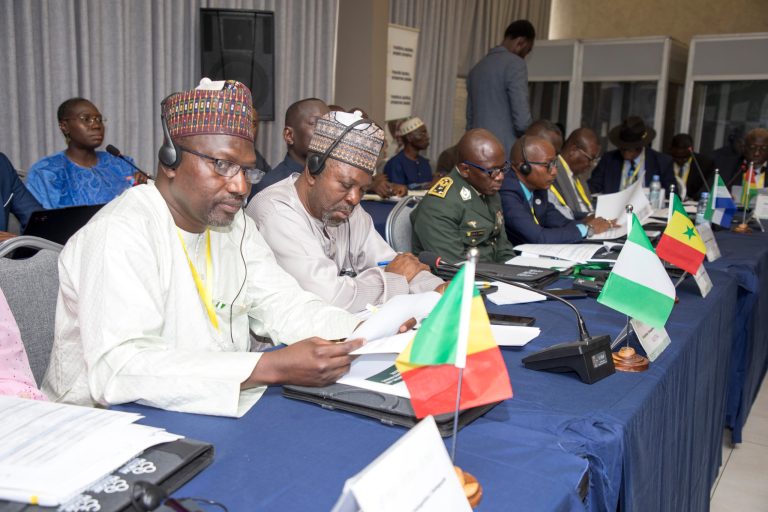
Heads of national boundary commissions from across West Africa converged in Abidjan from April 7 to 10, 2026, to strengthen cooperation on the management of border areas across the region.

The meeting, held under the Platform for the Exchange and Coordination of Border Area Management in West Africa (PECOBOM), brought together key regional and international stakeholders to address emerging border governance challenges.

Participants included the African Union Commission, GIZ supporting the African Union Border Programme, ECOWAS member states and AES, as well as the International Organisation for Migration and the International Centre for Migration Policy Development.

In a statement, the Head of Information, Press and Public Relations of the National Boundary Commission, Chinwe Udouwem, said the Director-General of the commission, Adamu Adaji, actively participated in discussions on critical regional boundary issues.

Declaring the meeting open, Adama Dosso highlighted the historical complexities of African borders and stressed the importance of PECOBOM in addressing evolving security challenges.

During the technical sessions, participants deliberated on key frameworks, including a Regional Cooperation Charter on Border Governance and an Administrative Procedures Manual.

A three-year regional action plan was also adopted to align border governance initiatives with regional priorities on peace, security, and enhanced cross-border cooperation.

Nigeria’s contributions to the formulation of the regional action plan were guided by its national priorities in border management, security, and community resilience.

Adaji also participated in a panel discussion on experience sharing and good practices in cross-border cooperation, where he highlighted Nigeria’s more than four decades of experience and leadership in the field.

Nigeria’s experience was widely acknowledged and commended by participants.

The meeting also provided an opportunity for Nigeria to deepen engagement with regional stakeholders and partner institutions working towards improved cross-border governance and stability in West Africa.