Home Blog Page 748

Nigeria Judo Federation Re-elects Oshodi As President

0

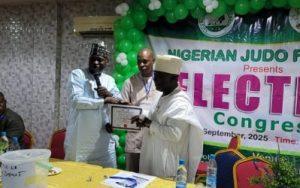
The Nigeria Judo Federation has re-elected Musa Oshodi as president for a second term.

Oshodi was returned unopposed on Thursday at the federation’s 2025 Elective Congress in Abuja after securing the 31 votes up for grabs.

READ ALSO: National Open Championship: Nigeria Judo Federation announces Date, Venue

He told newsmen after his election that his new administration would concentrate more on organising constant grassroots competitions.
He said, “We need to elevate, build, and nurture our young upcoming athletes for future international encounters.

In my last administration, we organised junior and cadet competitions; we will organise more competitions to discover raw, talented athletes.”

The re-elected president said his target would be to significantly improve the individual ranking of our athletes and expose a greater number of them to international competitions.

According to him, the federation is committed to working more closely with the National Sports Commission and the Nigeria Olympic Committee (NOC) as the parent body of all sports in Nigeria.

We need the support of the media to help publicise and advertise our events; we want to make judo more marketable so that it will attract more investors, which will help develop the game in the country.

“We need to make a strategic partnership with corporate sports, and we must go back to the grassroots so that we can build athletes who can represent the country and give us good results at international competitions.

“We need support from the federal government and private organisations to organise continental championships,” he said.

The president added that he had personally sponsored some of the athletes to five different international championships.

Salisu Muhammed emerged as the 1st Vice-President, unopposed, while Lawrence Ezeudu was elected as the 2nd Vice-President.

Jude Atoe was elected unopposed as the General-Secretary with 34 votes, while Amos Aliya clinched the Technical Director position unopposed with 26 votes.

Franca Audu was elected unopposed as the Athletes’ Representative with 26 votes.

In the zonal representative election, Salisu Mohammed was elected unopposed as the zonal representative of North West, and Ado Gambon took charge of the North East, while Daniel Suleiman was elected for the North Central.

South West has Musa Oshodi as its elected zonal representative, while Lawrence Ezeudu was elected to represent the South East, and Joy Franck for the South South, after defeating her opponent Jude Atoe with just one vote.

29 states out of 36 states, including FCT, participated in the elective congress held at the Pope John Paul II Catholic Pastoral Centre in Wuse 2, Abuja.

The states on the board include Kano, Nasarawa, Kogi, Edo, Anambra, Osun, Ekiti, Ondo, Lagos, Ogun, Kwara, Oyo, Sokoto, Ebonyi, Katsina, Adamawa, Kebbi, Gombe, and the host FCT, among others.

NITDA Announces Public Review of Digital Infrastructure Standards

0

The National Information Technology Development Agency (NITDA) has announced a public review session for the Draft Digital Public Infrastructure (DPI) Live Event and the Draft Technical Standard for the Nigerian Data Exchange (NGDX).

This was disclosed in a statement issued by Mrs Hadiza Umar, NITDA’s Director of Corporate Communications and Media Relations.

The session, which is scheduled to take place on Thursday, 18th September 2025, in Abuja, Nigeria’s capital, forms part of NITDA’s Rule-Making Process (RMP) aimed at co-creating regulatory instruments that are trusted, inclusive, and sustainable, while aligning Nigeria’s digital transformation with global best practices.

Speaking ahead of the review, the Director-General of NITDA, Kashifu Inuwa Abdullahi, emphasised the importance of inclusive stakeholder participation, stressing that Nigeria’s digital public infrastructure must be co-created with all stakeholders to ensure it embodies resilience, fosters innovation, and builds trust.

He reiterated that the success of these initiatives depends on the active involvement of stakeholders in providing valuable insights that will guide implementation and ensure sustainability.

The Draft DPI and NGDX are integral to the Federal Government’s broader agenda of building a robust digital economy under the Renewed Hope vision of President Bola Ahmed Tinubu.

With support from international partners, particularly through the European Union’s Global Gateway initiative, and technical collaboration with leading digital nations including Finland, Estonia, Germany, and France, Nigeria is positioning itself to harness the transformative power of digital public infrastructure for inclusive national development.

The Draft DPI Live Event has been developed to support the seamless deployment of national digital public infrastructure, strengthen e-government service delivery, and create a framework that fosters collaboration across the private sector.

Alongside this, the Draft Technical Standard for the Nigerian Data Exchange (NGDX) seeks to provide a unified and secure framework for data sharing across government institutions and private sector entities, streamline service delivery, reduce inefficiencies, and drive innovation across key sectors, including finance, healthcare, education, and agriculture.

The public review will provide stakeholders from government, industry, academia, and civil society with the opportunity to examine the draft documents, share feedback, and make recommendations that will shape the effective adoption and implementation of the initiatives.

Nigeria Urges Civil Society To Improve Public Services

0

The Nigerian Government has urged Civil Society Organisations (CSOs) to provide suggestions and feedback that can help improve public services across the country.

This call was made by the Minister of Budget and Economic Planning, Senator Abubakar Bagudu, during the Citizens and Stakeholders Engagement Forum in Abuja.

He encouraged civil society groups to use data from the National Bureau of Statistics (NBS) when assessing government policies and programmes.

According to him, active citizen participation is essential for ensuring better service delivery, especially at the local ward level.

The Director-General of the Budget Office of the Federation, Dr. Taminu Yakubu, explained that the Nigerian Constitution gives citizens ownership of public resources, which means they have a right to influence how budgets are prepared and implemented.

He urged Nigerians to take an active interest in the budget process and not just remain passive observers.

Yakubu also clarified that the 2024 and 2025 budgets are being implemented at the same time, with the capital component of the 2024 budget extended to run concurrently with the 2025 budget.

Prince Adeyemi Adeniran, Statistician General of the Federation and CEO of NBS, advised civil society groups to rely on official NBS data when making decisions or offering input, noting that the data are publicly available.

The Acting Permanent Secretary, Dr. Sampson Ebimaro, highlighted that the engagement demonstrates the government’s recognition of the value and experience civil society brings to policymaking.

He stressed that the insights and recommendations from CSOs are crucial for shaping the country’s development, promoting transparency, participatory planning, and accountable management of resources, which are fundamental rights for every Nigerian.

Anambra Police Decorates 89 Newly Promoted Officers

0

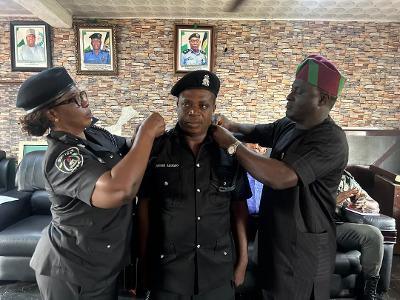
The Anambra State Police Command has decorated 89 newly promoted Inspectors with the rank of Assistant Superintendent of Police (ASP), signifying their elevation into the officer cadre of the Nigeria Police Force.

Speaking at the ceremony, the Commissioner of Police, CP Ikioye Orutugu, underscored that leadership in the Nigeria Police is not merely about wearing higher ranks, but about embodying professionalism, discipline, and an unwavering commitment to the protection of lives and property.

He reminded the newly promoted officers that their new responsibilities demand integrity, accountability, and a higher sense of duty, stressing that effective policing depends on leaders who can inspire trust and deliver justice without compromise.

Alongside their promotion, the officers were formally inducted into the Police Officers’ Mess, a symbolic rite of passage into their new responsibilities.

In a statement issued on Thursday, the Command’s Public Relations Officer, SP Tochukwu Ikenga, said the Commissioner of Police, CP Ikioye Orutugu, was represented by the Deputy Commissioner of Police in charge of the Criminal Investigation Department, DCP Mantu Chong at the Command Headquarters in Awka, the state capital in Southeast Nigeria.

CP Orutugu congratulated the newly promoted officers, describing their elevation as both a reward for diligence and a call to higher responsibility.

“This promotion is a recognition of your dedication, approved by the Inspector-General of Police, IGP Kayode Egbetokun, in appreciation of your service and sacrifices.” he said.

CP Orutugu urged the officers to uphold integrity, fairness, and accountability while serving as role models to their subordinates.

He further encouraged them to deepen community engagement as part of ongoing efforts to combat crime and sustain peace in Anambra State.

“We are grateful to the Police Service Commission and the Force Headquarters for approving these promotions

“The Command pledges that the officers will justify this elevation through enhanced commitment and performance.” the Commissioner added.

PIAK

Nigeria Seeks Stronger ECOWAS Health Pact on Lassa Fever

0

Nigeria’s Centre for Disease Control and Prevention (NCDC) has called for a stronger ECOWAS health pact to address Lassa fever and other emerging infectious diseases threatening the region.

Director-General of the NCDC, Dr Jide Idris, made the call on Thursday in Abidjan at a high-level panel on community involvement during the 2nd Lassa Fever International Conference, convened by the West African Health Organisation (WAHO).

The conference has the theme “Beyond Borders: Strengthening Regional Cooperation to Combat Lassa Fever and Emerging Infectious Diseases”.

It seeks to reaffirm regional commitment, mobilise political will, and drive collective action against viral haemorrhagic fevers (VHFs).

Read Also: Expert Advocates Concrete Action Against Lassa Fever in West Africa

Idris said that cross-border surveillance and coordinated response mechanisms were essential to tackle Lassa fever, which is endemic in several West African countries.

“Viruses do not respect borders. Our surveillance and our responses must, therefore, transcend borders.

“We need an ECOWAS health pact that guarantees data sharing, joint preparedness, and pooled resources to fight these threats,” he said.

Idris emphasised that community engagement remained the backbone of epidemic preparedness, stressing that “outbreaks often escalate into crises not because of the pathogen alone but due to human factors such as trust, culture, and behaviour.”

He highlighted lessons from Nigeria’s experience with Ebola, COVID-19, and Lassa fever outbreaks, stating that communities were not the “last mile” but the first line of defence in epidemic response.

According to him, “early detection, risk communication, and culturally sensitive interventions are critical to reducing mortality and preventing large-scale transmission.”

He also urged member states to support research and development for vaccines and diagnostics, invest in One Health approaches linking human, animal, and environmental health, and provide dedicated funding for community-led preparedness initiatives.

WAHO said the Abidjan gathering would provide a platform for health ministers, scientists, and development partners to chart new strategies to address Lassa fever, which continues to cause thousands of deaths across the region annually.


NAN

Nigeria Intensifies Fight Against Malaria, Declares Zero Tolerance

0

The Nigerian Government has declared zero tolerance for malaria and reaffirmed its commitment to partnering with critical stakeholders to combat the disease.

The announcement was made during the mid-term review of the Impact Project and the roadmap toward malaria elimination in Lagos State.

Speaking at the event, Minister of Health, Professor Muhammad Ali Pate, commended the Lagos State Government for its leadership in the fight against malaria and appreciated national and international partners for their collaboration.

“I commend the Lagos State Government for pioneering this initiative and for its unwavering dedication to malaria control. This effort shows that with determination and innovation, we can overcome even the toughest challenges,” the Minister said.

Professor Pate highlighted key achievements from the collaboration, including the onboarding of Patent and Proprietary Medicine Vendors (PPMVs) and community pharmacies into a structured, regulated, and digitised malaria service delivery system.

He noted that integrating digital technology has improved data collection, analysis, and reporting, enabling better tracking of progress and data-driven decision-making.

In his keynote address, the Lagos State Governor, Babajide Sanwo-Olu reaffirmed the state’s commitment to transitioning from a high malaria burden to a pre-elimination stage, aiming for a malaria-free Lagos.

Governor Sanwo-Olu emphasised the importance of evidence, technology, and collaboration in driving progress.

“This review is focused on accountability, scale, quality, and community ownership. We cannot tackle malaria just by focusing on clinics. Households and communities must step up by eliminating breeding sites, getting tested promptly, and trusting the health system. We must embed the message of prevention and testing into every aspect of life in Lagos,” he stated.

Governor Sanwo-Olu stressed that malaria control requires more than clinical interventions, calling on households and communities to play an active role in prevention.

The Lagos State Commissioner for Health, Prof. Akin Abayomi, shared that Lagos is now in the pre-elimination phase, with malaria prevalence around one per cent.

“This new reality meant that most fevers in Lagos were now ‘malaria-negative fevers,’ requiring accurate diagnosis and alternative treatments and adherence to the ‘test-before-treatment’ protocol was essential to prevent misdiagnosis, drug misuse, and delayed recovery among patients.

The next phase would demand a higher level of sophistication, surveillance, and behavioural change to move from pre-elimination to full elimination,” he noted.

The Commissioner said Lagos is adopting policies to expand diagnostic capacity, strengthen environmental health interventions, and intensify public awareness campaigns to sustain progress toward malaria elimination.

Accurate Climate Information Key to Investment Decisions- NiMet DG

0

The Director-General and CEO of the Nigerian Meteorological Agency (NiMet), Professor Charles Anosike says accurate weather and climate information is critical for credible sustainability financial reporting and informed investment decisions.

Anosike, who also serves as Nigeria’s Permanent Representative to the World Meteorological Organization (WMO), made the remarks during a strategic meeting with the International Sustainability Standards Board (ISSB) at the Securities and Exchange Commission (SEC) headquarters in Lagos.

The high-level session explored how climate data can be embedded into corporate sustainability and financial disclosures across Nigeria to align with global standards.

“NiMet’s data is essential for evaluating the financial impact of emission factors and guiding economic and investment outcomes. Our goal is to ensure businesses and regulators have the evidence base they need for sound, climate-aligned decisions.” Professor Anosike said.

During the meeting, NiMet presented a paper titled ‘Socio-Economic Benefits of Agricultural Meteorology in an Emerging Economy: Risks and Opportunities. The presentation highlighted how timely weather forecasts help farmers cut post-harvest losses, improve yields, and enhance food security, while outlining adaptation strategies and funding opportunities to strengthen agricultural resilience.

Welcoming the initiative, Head of the SEC Lagos Office, John Briggs stressed the importance of linking climate science with Nigeria’s capital markets.

“Integrating NiMet’s climate data into the commodity value chain at the Nigerian Exchange will strengthen transparency and boost investor confidence,” he said.

Dr. Ndidi Nnoli Edozien of the IFRS Foundation also underscored the value of credible science-backed information.

“Robust, evidence-based data underpins investor confidence and ensures alignment with global sustainability standards.” Dr. Edozien said.

Participants at the meeting agreed that while climate finance provides capital, meteorology supplies the science and data needed to direct investments effectively.

Other attendees included Professor Richard Barker, ISSB Board Member; Dr. Neil Stewart; senior SEC officials; and NiMet representatives.

The meeting reinforced meteorology’s strategic role in advancing sustainability reporting, promoting transparency, and enhancing Nigeria’s global competitiveness as the country deepens its integration into international financial and climate governance systems.

PIAK

President Tinubu’s Economic Reforms to Drive Growth- SEC DG

0

The Director General (DG) of the Securities and Exchange Commission(SEC), Dr. Emomotimi Agama says the economic reforms introduced by President Bola Tinubu will significantly stabilise and develop the Nigerian economy. 

Dr Agama disclosed this in Kaduna at the Nigerian Defence Academy (NDA) 23rd Convocation Lecture titled “Pathway to Economic Prosperity for a Public Servant in a Deregulated Economy”.

The lecture was part of activities lined up for graduating Cadets of the 72 Regular Course and Postgraduate Students of the military academy.

Dr Agama said President Tinubu has initiated bold and transformative reforms across key sectors to lay a solid foundation for inclusive growth and long-term sustainable development for the country. 

He said; “The government has undertaken several significant macro-fiscal reforms, including the removal of fuel subsidies, the unification of exchange rates, and the tightening of monetary policy.”

According to him, through these measures, the country has made notable progress in deregulating key sectors of the economy. 

The bold decision to eliminate Nigeria’s long-standing fuel subsidy programme on May 29, 2023, was more than a fiscal adjustment, it marked a pivotal shift towards a deregulated economy, aimed at reducing fiscal burdens and redirecting public funds to more productive sectors.”

“The move signalled the Tinubu administration’s commitment to market liberalisation, allowing fuel prices to be determined by supply and demand rather than government control,” he explained.

Dr Agama also said; “the government has begun scaling back electricity subsidies by adjusting tariffs, a strategy designed to enhance efficiency and attract private investment into Nigeria’s power sector. “

The SEC Director General said to address rising inflation and support the naira, the Central Bank of Nigeria (CBN) has adopted a tighter monetary policy stance, notably through interest rate hikes

“These measures are part of a broader strategy to stabilise prices, restore investor confidence, and lay the foundation for a more market-oriented and resilient Nigerian economy.

“Another significant step taken by the CBN was the unification of the country’s multiple exchange rate systems, aimed at simplifying foreign exchange transactions and enhancing transparency in the currency market,” he further said.

Dr Agama also spoke on the investment opportunities in the capital market and the need for the cadets to invest to secure their future. 

He appreciated the Commandant of NDA, Major General Abdul Ibrahim for inviting him to deliver the convocation lecture, saying “it was a great opportunity to make the cadets financially literate and the value of investment to secure one’s future.”

The SEC Director General advised that while officers and men of the military battle to make the nation secure, it is important that they have a scheme behind them to sustain their families.

The Commandant NDA, Major General Abdul Ibrahim appreciated the SEC official for the incisive lecture. 

Ibrahim said the NDA has been providing primary officer training for the Nigerian Armed Forces since 1964, with a focus on producing well-rounded commissioned officers.

According to him, “the academy has adopted the National Universities Commission (NUC) Core Curriculum and Minimum Academic Standard (CCMAS) requirements to ensure quality and competitiveness in its programmes.”

He stressed that NDA provides intensive professional training, including physical fitness, weapons handling, and tactical manoeuvres, to prepare cadets for the national defence and security challenges.

Ibrahim said “the postgraduate students undergo programmes in military science, defence and strategic studies, psychology, technology, and national development, aiming to develop students’ critical thinking and research skills.”

He said the NDA has bilateral partnerships with foreign military academies, providing opportunities for cadets to complete the final year of their training abroad and enhancing regional defence cooperation.

VP Shettima Directs Speedy Disbursement Of Government’s N250bn Loan

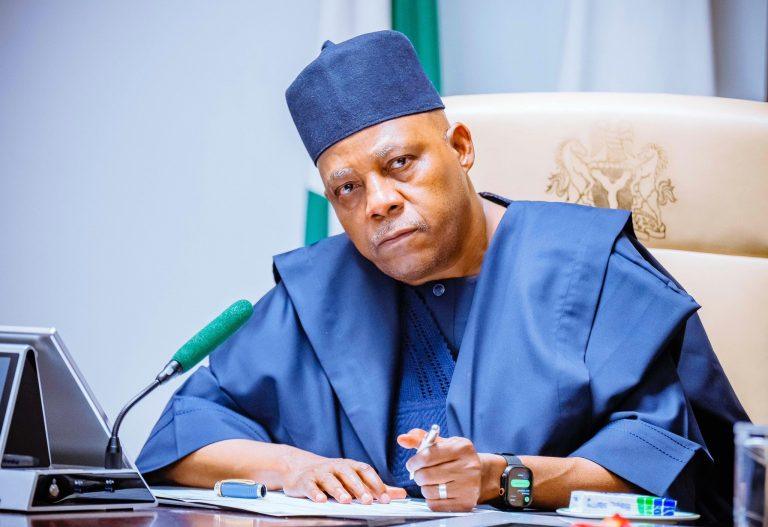
Vice President Kashim Shettima has directed the Presidential Food Systems Coordinating Unit (PFSCU) to accelerate the disbursement of the Nigerian Government’s ₦250 billion credit support for smallholder farmers at a single-digit interest rate.

He gave the directive on Thursday during the 6th meeting of the PFSCU Steering Committee, held at the Presidential Villa, Abuja.

He instructed the PFSCU to develop an implementation roadmap for the disbursement, emphasizing the need to avoid delays and reach the intended beneficiaries.

“On the Bank of Agriculture ₦250 billion facility, we need to sit down with all stakeholders and come up with a robust roadmap that ensures these funds reach the intended farmers and translate into real productivity gains,” the Vice President said.

VP Shettima also commended President Bola Tinubu for providing the PFSCU with political backing to act on priority reforms, including fertiliser raw material liberalisation and the Presidential Seed Fund.

“I want to place on record, our deep appreciation for Mr. President’s leadership and guidance. His clear directives on fertiliser liberalisation and the seed fund have empowered the PFSCU to fast-track delivery in ways that directly support farmers and strengthen our food systems,” he stated.

He further praised the PFSCU for its achievements so far, noting that “when Federal Ministries, Departments and Agencies, the private sector and development partners align, we can move swiftly from intent to delivery.”

VP Shettima also encouraged improved collaboration among stakeholders to revitalise the seed sector and expand the strategic grain reserve.

Supporting the initiative, Ekiti State Governor, Biodun Oyebanji, highlighted the need to establish a structure ensuring the N250 billion credit reaches smallholder farmers and pledged monthly financial support to PFSCU.

Jigawa State Governor, Malam Umar Namadi, commended the Bank of Agriculture’s efforts but urged subsidies for local farmers, while Cross River State Governor, Senator Bassey Otu, also recommended incentives for local farmers.

PFSCU Coordinator,  Marion Moon, stressed the urgency of protecting Nigeria’s fragile food security gains, noting that 30.8 million Nigerians remain food insecure.

She highlighted significant progress since the last Steering Committee meeting, including:
• 250,000 farmers insured under the National Agribusiness Policy Mechanism (NAPM)
• Launch of Phase I of the Harvesting Hope Caravan across eight states
• Approval of the ₦50 billion Seed Fund
• Progress on the World Bank–supported $500 million AGROW program

Members praised the Harvesting Hope Caravan, which engages communities alongside subnational governments, reinforcing that agriculture requires alignment across federal, state, local governments, the private sector, and farmers.

The meeting was attended by the Deputy Governors of Niger and Ebonyi States, the Ministers of Finance and Agriculture, Ministers of State for Finance and Agriculture, ALGON President, and representatives of the private sector and development partners.

Nigeria Strengthens Military Capacity as AFIT Graduates 302

0

The Air Force Institute of Technology (AFIT) in Kaduna, Northwest Nigeria, has graduated 302 officers, airmen, and airwomen from various military courses during a ceremony held in the state.

Speaking as Special Guest of Honour, the Nigerian Chief of the Air Staff (CAS), Air Marshal Hasan Abubakar, commended the institute for upholding the values of discipline, academic integrity, and technological progress. 

He said that “AFIT’s reputation is anchored on excellence, strict discipline, zero tolerance for industrial strikes, and adherence to federal character principles, making it one of the most sought-after institutions of higher learning in Nigeria.”

Air Marshal Abubakar further emphasised that these values have positioned AFIT as a rallying point for technological innovation and a cornerstone of Nigeria’s defence architecture. 

He lauded the graduates for their dedication to service and urged them to apply the knowledge and skills acquired to enhance the operational effectiveness of the Nigerian Air Force and contribute meaningfully to national development.

Air Marshal Abubakar highlighted AFIT’s growing role in national development, citing the establishment of the NASENI North-West Technology Innovation Hub on its premises as a bold step toward advancing Nigeria’s technological sovereignty. 

He also noted AFIT’s recent tuition-free training of personnel from the Nigerian Army Corps of Supply and Transport for the Army Aviation Wing, describing it as evidence of inter-service cooperation and AFIT’s expanding influence across the Armed Forces. 

Addressing the graduands, the CAS charged them to take ownership of Nigeria’s new-generation aircraft. 

“You are now the custodians of these platforms, entrusted with their safety, airworthiness, and mission readiness. The Service looks to you to apply your skills with precision, innovation, and dedication, ensuring that our assets remain combat-ready at all times,” he stated.

He further urged the graduands to remain disciplined, embrace continuous learning, and uphold the NAF’s core values of integrity, service before self, and excellence. 

“By living up to these ideals, you will not only help defeat terrorism and insurgency but also make our beloved country a bastion of peace, progress, and sustainable development,” he said.

 The CAS expressed gratitude to President Bola Ahmed Tinubu for his “visionary and outstanding leadership” and unwavering support of the Armed Forces of Nigeria. 

He also commended the National Assembly, Ministry of Defence, AFIT Governing Council, and other stakeholders for their consistent oversight and contributions to the Institute’s success.

Earlier in his welcome address, the Commandant of AFIT, Air Vice Marshal Sani Labaran Rabe, expressed profound appreciation to the Chief of the Air Staff for his unwavering support of the Institute. 

He noted that under the current leadership, AFIT has witnessed remarkable growth in infrastructure, training programmes, and research initiatives, all of which continue to elevate its status as a centre of excellence. 

He assured that the Institute remains committed to producing disciplined, highly skilled professionals and driving innovations that would further enhance the operational effectiveness of the Nigerian Air Force and contribute to national development.

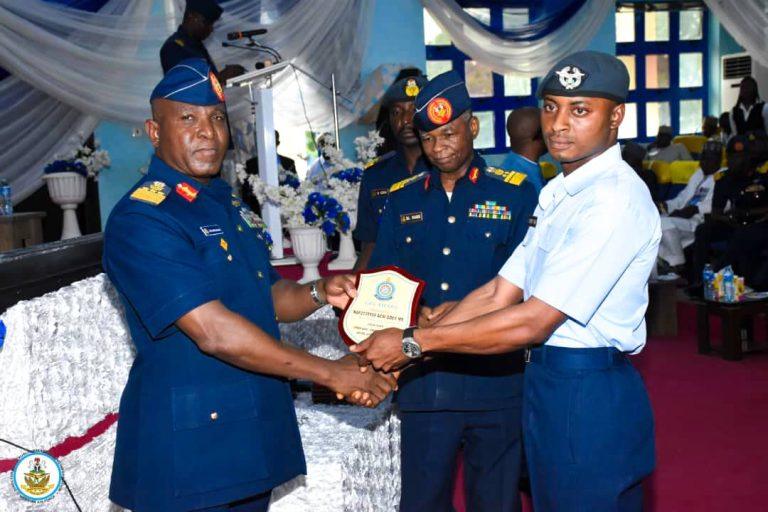
Highlights of the event included the presentation of gifts to outstanding awardees who distinguished themselves during the course. 

In a symbolic gesture, the Chief of the Air Staff personally presented gifts to the awardees, recalling his own days as a student of AFIT, where he emerged as the best graduating student in the Officer Engineering Course of 1992 and the best graduating student in the Aeromechanical Department. 

The ceremony, attended by dignitaries, partners, and families of the graduands, reaffirmed AFIT’s status as a centre of excellence dedicated to building the technical capacity required for national defence and regional security.

For nearly five decades, the Air Force Institute of Technology (AFIT) has provided technical manpower for the Nigerian Air Force (NAF) and expanded into a multidisciplinary centre for research and academic training.

Its work includes producing skilled professionals, conducting research, and developing solutions that support aircraft maintenance, operational readiness, and Nigeria’s efforts toward self-reliance in airpower.