Home Blog Page 864

CHAN 2024: Sudan Eliminates Nigeria After 4-0 Spanking

0

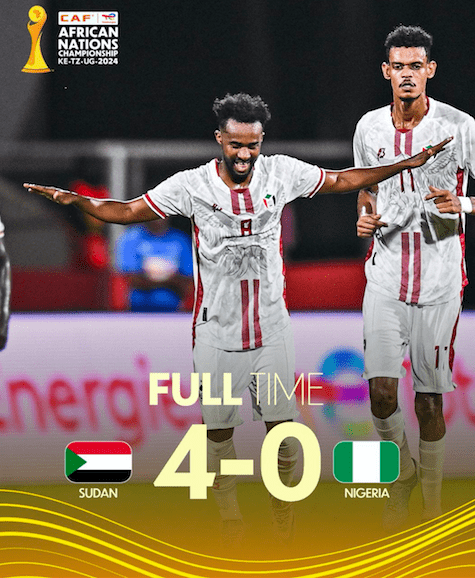
Sudan produced the shock of African Nations Championship (CHAN) so far, thrashing Nigeria 4–0 in Zanzibar to go top of Group D and in the process, knocking the Home Eagles out of the tournament with a game to spare, at the Amaan Stadium in Zanzibar.

In the 22nd minute, Anthony Ijoma thought he had put Nigeria ahead after scoring a lovely goal, only for VAR to rule the effort out for offside. Three minutes later Sudan responded with a freakish opener.

Yagoub’s shot cannoned off the post and ricocheted in off the unfortunate Leonard Ngenge (25’).

A blow became a body-shot just before the break when Ngenge’s miserable few minutes continued — a handball in the box (43’).

Sudan Captain Walieldin Khdir stepped up and slotted home the penalty into the top-right corner (44’) to stun the Nigerians.

Sudan Captain Walieldin Khdir scores penalty against Nigeria.

Nigeria still had a sniff before half-time when Sikiru Alimi went close twice, glancing wide from a cross (39’) and prodding past the post in stoppage time (45+4’). However, the scores remained 2-0 to Sudan.

Eric Chelle rolled the dice at the interval with a triple change — Steven Manyo, Jabbar Malik and Vincent Temitope on — in search of a response.

Instead, Sudan tightened their grip. Tochukwu’s free-kick flew over (52’) and, almost immediately, the Falcons of Jediane pounced again.

Musa Hussien’s persistence created chaos and Yagoub, outstanding all evening between the lines, arrived to steer a left-footed finish into the bottom-right corner (55’). Seven minutes later he iced the contest, sweeping in a fourth from the centre of the area to the top-left (62’) after Sudan pinched possession and broke with clarity and conviction.

From there, Appiah’s side managed the game with a cool head. Sudan’s midfield trio snapped into duels and recycled the ball smartly, while full-backs Ahmed Tabanja and Mazin Simbo picked their moments to progress or, more often, to stay compact.

The result arrives on a day when title holders Senegal were held 1–1 by Congo, leaving the standings finely poised for the final round: Sudan and Senegal on four points apiece, Congo on two, and Nigeria out of contention.
With only four teams in Group D, the Home Eagles can now reach a maximum of three points — not enough to finish in the top two.

For Nigeria, the statistics and the storyline are stark. Two matches, no goals, five conceded. The disallowed goal at 22 minutes changed nothing about a defensive display that never recovered from Ngenge’s double calamity before half-time.

Chelle’s side created half-chances, but lacked precision in crossing and composure in front of goal; when the press was bypassed, they were repeatedly exposed down the flanks.

Bookings for Ahmed Tabanja (50’) and Shola Adelani (81’) reflected a contest growing increasingly stretched — but only one team looked likely to score again.

Wildfires Contained in Turkey After Mass Evacuations

0

Firefighters in Turkey brought several wildfires under control on Tuesday, including a large blaze in the northwestern province of Canakkale that had forced hundreds of residents to flee.

The fires, which erupted on Monday, prompted the temporary closure of Canakkale Airport and the Dardanelles Strait — a key waterway linking the Aegean Sea to the Sea of Marmara.

Agriculture and Forestry Minister Ibrahim Yumakli said in a post on X that blazes in Canakkale province, along the southern Dardanelles Strait, and in the western province of Izmir had been fully contained.

Among those affected was Tugbagul Altan Gulgun, 40, who said she and her family escaped within minutes, grabbing only a few belongings. She had attempted to protect her home by removing flammable materials and watering trees and surfaces nearby, but the flames still reached the property.

“Our house was burnt on one side. It looks like you can go inside, but many of our belongings, as well as the rooms and doors, are charred,” she said.

reuters/s.s

Nigeria to Launch Industrial Manpower Development Policy

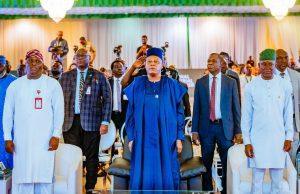
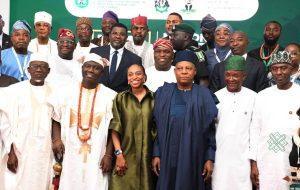
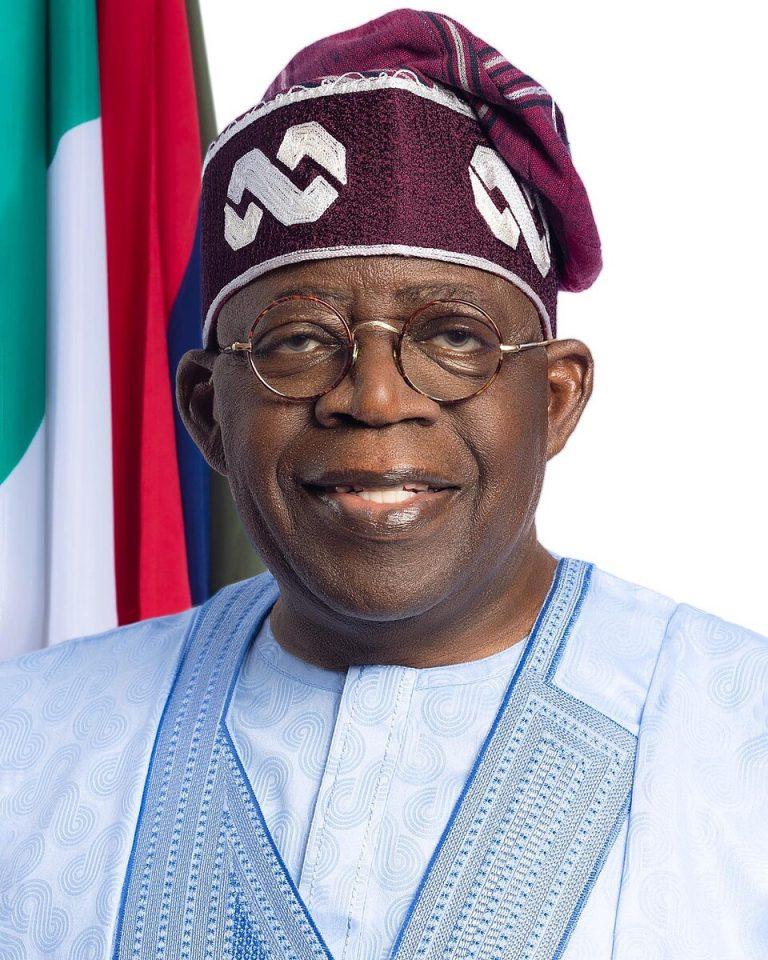
President Bola Tinubu on Tuesday announced plans for Nigeria’s first-ever National Industrial Manpower Development Policy, stressing that the country’s greatest asset lies in its people rather than its natural resources.

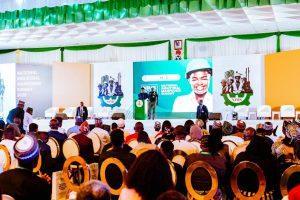
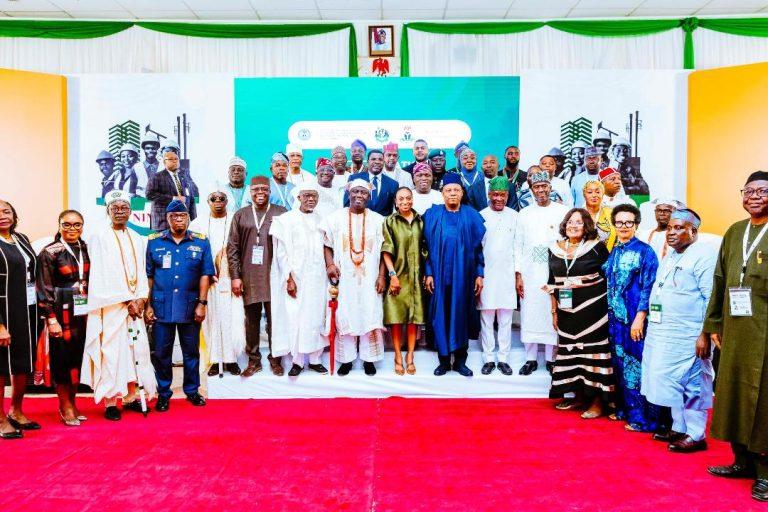
He made the declaration in his keynote address at the opening of the National Industrial Manpower Summit (NIMS) 2025, held at the State House Conference Centre, Abuja.

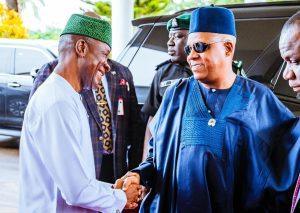
Represented by Vice President Kashim Shettima, the President said Nigeria must urgently invest in its citizens or face dire consequences.

He highlighted the pressing need to bridge the gap between educational output and industry requirements to unlock Nigeria’s economic potential.

The summit, themed “Manpower Development: The Bridge Between Potential and Productivity,” gathered government officials, industry leaders, academia, and international partners to develop actionable recommendations for workforce development.

“For a nation with a median age of about seventeen, Nigeria is an incredibly young country. This youthfulness is a gift, but it is also a responsibility. We must make our young people not just a demographic statistic but a central component of our policy-making process,” President Tinubu said.

He told participants: “An improvement in human capital, along with infrastructure and sound policy, is the bridge between development and setback in every nation. We cannot afford to divest from our people because the world will not pause to wait for us.”

Call for Action

The President described the summit not merely as a forum for discussion but as a call to produce actionable recommendations that will form the basis of Nigeria’s first National Industrial Manpower Development Policy.

“I assure you that this administration will review, adopt, and implement viable proposals with urgency,” he stated.

“Our mission is to align the education and training of our young people, and indeed the larger workforce, with the needs of industry. We must reverse the mismatch between what our institutions produce and what our economy requires. This cannot be realised unless we foster robust collaboration between the public and private sectors to prepare young Nigerians for the demands of today’s job market,” he added.

The President warned that disruptive technologies require a constantly evolving workforce and cautioned that Nigeria risks widening the skills gap if it fails to prepare adequately for the demands of the new technological order.

He called for an industrial skills database, sector-specific manpower roadmaps, and an elevated status for vocational and industrial training, insisting that welders, machinists, technicians, software engineers, and factory operators must be “treated with the dignity, respect, and opportunity they deserve.”

The Minister of State for Industry, John Enoh, described the summit as evidence of how President Tinubu’s leadership is hitting the right targets, noting the appointment of the first Senior Special Assistant on Industrial Training and Development as very intentional.

“So, at this gathering, I believe what we are doing is a celebration of that fact. What we are doing is a realisation of what the President’s imagination was. I mean there are moments in a nation’s journey when history itself seems to lean forward. When history does so, it is to watch and see whether we will be able to take advantage of the opportunities before us. So, for me today in this hall, we stand at such a moment,” Enoh said.

The Minister of Industry, Trade and Investment, Jumoke Oduwole, described national manpower as a key factor for attracting and retaining domestic investment to accelerate Nigeria’s industrialisation and economic development.

“Therefore, this gathering offers a timely opportunity to deepen our conversation and lay out a bold actionable strategy for a more resilient economy. Nigeria’s path to accelerating industrialisation, economic diversification and export-led growth is clear as a mandate of the Federal Ministry of Industry, Trade and Investment, firmly anchored in President Bola Ahmed Tinubu’s 8-point Renewed Hope Agenda which lays out a blueprint for building a stronger, more productive, competitive and inclusive economy,” she said.

The Minister of Labour and Employment, Mohammed Maigari Dingyadi, described the summit as a platform not only for dialogue but also to forge a unified direction on skills development, certification, and industrial manpower planning.

Similarly, the Senior Special Assistant to the President on Industrial Training and Development, Mr Adamson Ayinde Oluwatoyin, called the summit a turning point in the collective “quest to shape the future of Nigeria’s workforce under the vision of President Tinubu and in alignment with the Renewed Hope Agenda.”

The Director General of the Industrial Training Fund (ITF), Dr Afiz Ogun Oluwatoyin, said the summit provided an opportunity for policy dialogue, setting national targets in skills development, and discussing frameworks for mobilising national resources cohesively.

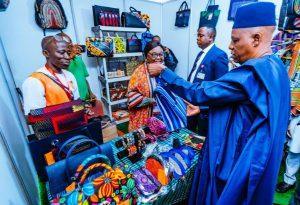
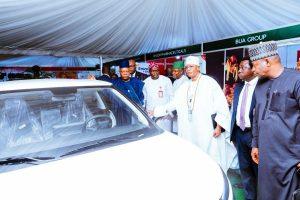
The summit also showcased some made-in-Nigeria goods and products.

PIAK

Anambra Governor Commences Key Road Project in Onitsha

0

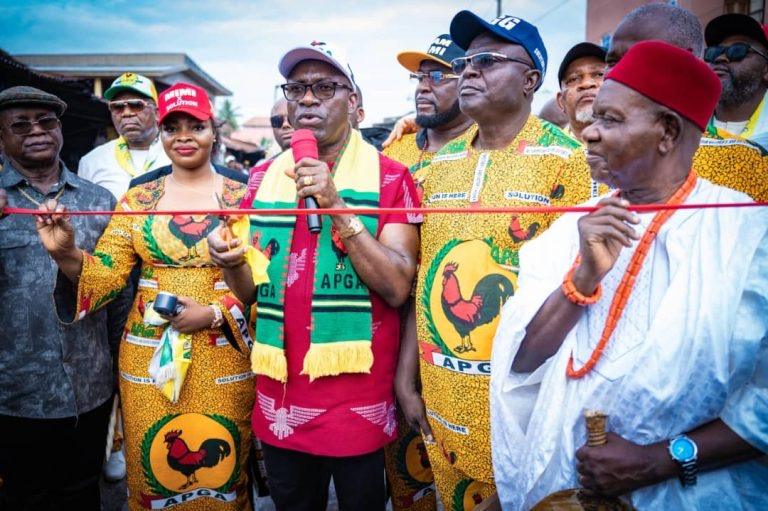
The Governor of Anambra State in southeast Nigeria, Professor Chukwuma Soludo, has officially flagged off the construction of the strategic St. Stephen’s Road network in Inland Town, Onitsha, the commercial hub of the state.

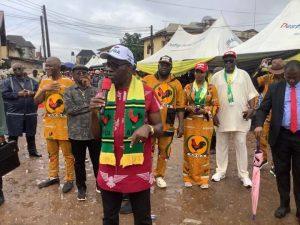
The ceremony, held at Emmanuel Junction on Monday, drew a large crowd of enthusiastic residents, traditional rulers, and party faithful who lauded the governor’s efforts in repositioning Onitsha, the state’s commercial capital and largest investment hub.

Describing Onitsha as central to the state’s economic viability, Governor Soludo emphasised the importance of sustained infrastructure development and environmental clean-up to prevent further urban decline and reverse years of neglect.

“To rescue Onitsha, we had to first rescue the environment. When I assumed office, Onitsha was facing environmental degradation, with refuse piles, blocked drainage, and deadly floods. People were relocating to neighbouring states. We had to act fast,” Soludo said.

“Since taking office, my administration has delivered 32.69 kilometres of new road infrastructure across the city, constructed drainage systems, upgraded major intersections like the Ochanja Roundabout, and commenced the transformation of the Okpoko slum, once among Nigeria’s largest, into a liveable urban zone.

“We began desilting drainages and discovered entire buildings obstructing water flow. In Ochanja, we cleared a refuse dump as tall as a building, and shockingly, found a corpse buried beneath it. Today, there’s a water fountain there,” he recalled.

The newly flagged-off road project connects St. Stephen Catholic Church, Isiokwe, Ogboli, Bishop Onyeabo, Opio, and surrounding areas. The governor said it will be executed by New Idea Construction Company, with a firm commitment to complete it within three months, well before Christmas.

“I came today to tell Ndi Onitsha that Oluatuegwu I of Anambra is here to fulfil our promise. I’ll be back to commission this road and flag off others. This is part of our vision to build a liveable and prosperous homeland.”

Soludo also reiterated his broader development goals, including his vision for a modern water supply system accessible to every household in Onitsha.

Beyond infrastructure, the governor used the occasion to rally support for the All Progressives Grand Alliance (APGA) candidate, Barr. Ifeoma Azikiwe, ahead of the Onitsha North 1 State Constituency by-election scheduled for Saturday, August 16. The seat became vacant following the tragic kidnap and murder of former Labour Party lawmaker, Justice Azuka.

The governor revealed that the late Azuka had been in talks to join APGA prior to his death, suggesting that his political alignment was already shifting before the tragedy occurred.

“He had seen that there’s no need to labour in vain in the other party. Unfortunately, death came too soon. But we will honour his legacy by continuing the work he believed in,” Soludo said.

A minute of silence was observed in Azuka’s memory, emphasising the solemnity of the moment before the ceremonial ribbon-cutting commenced.

Governor Soludo concluded by affirming his administration’s commitment to visible, measurable governance rather than politics of rhetoric.

“I don’t speak with four sides of the mouth. I’m not interested in abandoned projects. We applied for this job, and we’re here to deliver. Anambra is now among the top five most sustainable states in Nigeria, and we’re just getting started.”


Leadership: Anambra Governor Lauds President Tinubu

0

Anambra State Governor Charles Soludo has praised President Bola Tinubu for his decisive leadership in driving Nigeria’s economic and structural reforms, emphasising the need for the country to maintain its current trajectory.

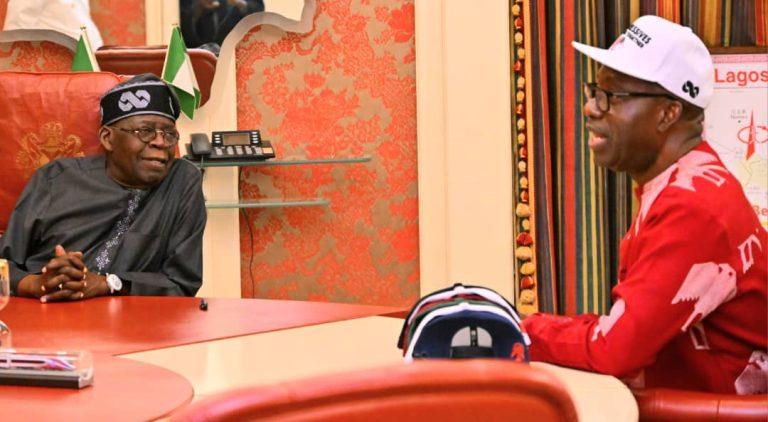
Soludo made the remarks on Tuesday after a meeting with the President at the Presidential Villa in Abuja, describing the encounter as “a pleasant meeting.”

“The President is in such a high spirit, hale and hearty, and it was such a pleasure to meet with him. It was quite a pleasant meeting,” Soludo told State House correspondents.

The governor also addressed questions about his public endorsement of President Tinubu despite belonging to a different political party, the All Progressives Grand Alliance (APGA).

On why he openly supports a President from another party, Soludo cited a long-standing personal relationship with Tinubu dating back 22 years.

“These caps were produced even from the time the President visited Anambra State and you saw all the billboards and all the stuff proclaiming that progressives are working together. Subsequently, it’s a fundamental idea that I believe very strongly — that all the political parties who profess progressivism should actually come out together in a massive coalition to deepen the process, not only of our democracy, but also of economic and social development of our country.”

He reiterated his unwavering support for Tinubu.

“When I say progressives working together, it’s a call for all those who talk about President Bola Ahmed Tinubu — I mean, I don’t have any apologies about it. President Tinubu is my friend, has been my friend 22 years now and counting, so you don’t deny your friend or begin to be quivering about who is he. He is my friend. I support him, and I’m impressed by the bold steps he has taken, particularly in the areas of the economy, the structural reforms, and I have said so severally — we’re taking the right steps and we need to stay the course.”

On Anambra’s security challenges, Soludo outlined a holistic approach his administration adopted following the passage of the state’s Homeland Security Law earlier this year.

“It’s trying to deal with insecurity from the foundations. All the deadly native doctors are on the run from the state because these are the guys giving false hope, deceiving our young ones and luring them into criminality,” he said.

The governor highlighted a combination of kinetic (armed operations) and non-kinetic (youth empowerment) strategies to combat insecurity.

“We have a unique programme — one year through skills — that is like no other, where we trained and empowered about 5,000 of them, and another 8,700 will be receiving some billions this month or next month, and we’re creating several thousands of youth millionaires right away within the first three years.”

He added that the initiative is rapidly expanding across the state with strong youth participation, alongside ongoing infrastructural improvements in schools and healthcare.

“We’re very intentional about economic and social empowerment of the youth. So we’re doing quite a whole lot the kinetic, the intelligence gathering and those who run foul of the law definitely will be decisively dealt with.”

PIAK

NSDC, Partners Seal Agreements, to Produce 400,000MT of Sugar Annually

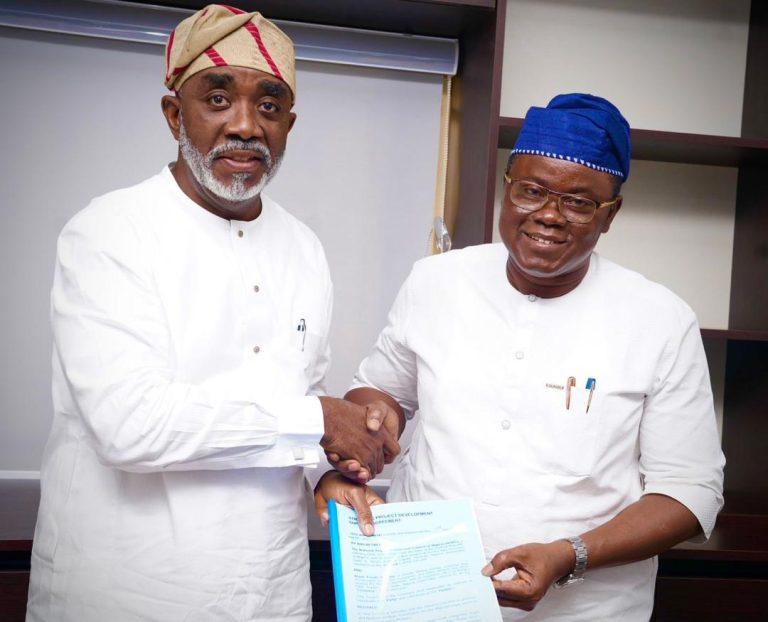
The National Sugar Development Council (NSDC) has concluded  and signed agreements with four operators to develop greenfield sugar projects that will collectively produce 400,000 tones annually.

The four operators will each  develop 100,000-tonne facilities across Nigeria’s agricultural belt: Brent Sugar in Oyo State, Niger Foods in Niger State, Legacy Sugar in Adamawa State, and UMZA in Bauchi State.

The agreements, signed at NSDC’s Abuja headquarters, represent a significant scaling of Nigeria’s sugar development ambitions.

Under the terms, the council will provide customized project development support and cover critical service costs to ensure the ventures achieve commercial viability.

Also, the NSDC recently signed a memorandum of understanding with a Chinese firm for engineering, procurement, construction and financing (EPC-F) services to construct up to five sugar estates, representing a collective investment of $1 billion.

This Chinese partnership underscores Nigeria’s willingness to leverage foreign expertise and capital to rapidly develop domestic capacity.

The Executive Secretary/CEO of the Council, Mr. Kamar Bakrin, has designated 2025 as a year of “accelerated development” for sugar projects, reflecting the government’s urgency in addressing food security concerns and reducing import dependence.

Mr. Bakrin argues that structural changes in global commodity markets have made local production more commercially attractive than at any point in the industry’s history, presenting a window of opportunity for rapid capacity expansion.

Based on the agreement, the four new projects promise benefits beyond production targets, each facility is expected to generate significant employment in predominantly rural areas, develop local infrastructure, and create upstream and downstream economic opportunities.

The geographic spread across Oyo, Niger, Adamawa and Bauchi states also reflects a deliberate strategy to distribute economic benefits and reduce regional inequalities.

The new capacity would represent a notable expansion of domestic production capabilities in a country of over 200 million people with growing consumption patterns.


Victoria Ibanga

Lawmaker Endorses President Tinubu for 2027 Re-election

0

Senator Aliyu Wadada, representing Nasarawa West Senatorial District under the Social Democratic Party (SDP), has declared that the 2027 presidential race is “already taken” by President Bola Ahmed Tinubu.

Wadada made the statement on Tuesday after meeting with the President at the Presidential Villa, Abuja, where he went to pay his “usual respect” and express gratitude for the public felicitation following his turbaning as Maga Jindengi of Lafia on August 2, 2025.

Addressing questions about his frequent visits to the Villa despite being an SDP member, Wadada said the Presidency is “the home of Nigerians,” recalling his political journey through various parties.

“My departure from APC to SDP wasn’t because APC had done anything wrong to me. It was just circumstantial, and I wouldn’t want to bore anybody with the circumstances. I went out there, saw, and did it. Today I am in the Senate on the SDP platform,” he said.

He hinted at a possible return to the All Progressives Congress (APC), adding: “SDP as a political party hasn’t offended me. I am still proud of SDP, but the happenings now may not warrant my continuous stay. I could even say that I am APC, though I have not officially moved.”

Wadada challenged opposition aspirants to present tangible plans rather than “baseless criticisms,” urging them to clarify their positions on subsidy removal, foreign exchange reforms, infrastructure, and economic development.

“We’re talking Nigeria, not sectional politics. President Tinubu is the President of Nigeria, not Lagos or the Southwest,” he added.

Citing the recently passed Tax Reform Bill, Wadada highlighted its impact, noting that it exempts anyone earning less than ₦800,000 annually from personal income tax and ensures that “no state in Nigeria today takes less than three times what it used to take” following subsidy removal.

He urged the public to hold state governments accountable for increased revenues.

Wadada also praised President Tinubu’s infrastructural projects, including the Sokoto–Badagry road, the Abuja–Kano highway, and ongoing transformation in the Federal Capital Territory led by Minister Nyesom Wike, attributing these developments to the President’s leadership.

When asked if his remarks amounted to an endorsement of Tinubu for 2027, Wadada said: “If you are fit to be endorsed, bring yourself to the front. Whoever truly cares for Nigeria knows that people resist change, but Asiwaju has come with unprecedented changes.”

He concluded emphatically, “The 2027 space is already taken, occupied by President Bola Ahmed Tinubu.”

PIAK

President Tinubu Appoints Board Members For NCC, USPF

President Bola Ahmed Tinubu has constituted the boards of the Nigerian Communications Commission (NCC) and the Universal Service Provision Fund (USPF), key agencies under the Ministry of Communications, Innovation, and Digital Economy.

A statement by the Presidential Spokesperson, Mr. Bayo Onanuga, revealed that Idris Olorunnimbe was appointed Chairman of the NCC, while Aminu Waida remains the Executive Vice Chairman and Chief Executive Officer of the commission.

Waida was appointed Executive Vice Chairman/CEO of the NCC in October 2023, with the Senate confirming the appointment in November 2023.

Mr. Olorunnimbe previously served on the Lagos State Employment Trust Fund (LSETF) Board, where he chaired the Stakeholder and Governance Committee, leading impactful youth employment and entrepreneurship programmes.

Other members of the NCC board include Abraham Oshidami (Executive Commissioner, Technical Services), Rimini Makama (Executive Commissioner, Stakeholder Management), Hajia Maryam Bayi (Former Director, Human Capital & Administration), Col. Abdulwahab Lawal (Rtd), and Senator Lekan Mustafa.

The President also appointed Chris Okorie as a board member, with Princess Oforitsenere Emiko serving as the Secretary of the Board.

Regarding the Universal Service Provision Fund, President Tinubu approved the board with Bosun Tijani, Minister of Communications, Innovation, and Digital Economy, as Chairman.

Other board members include Idris Olorunnimbe as Vice Chairman, Abraham Oshidami, Rimini Makama, Aliyu Edogi Aliyu (representing FMCIDE), Joseph Faluyi (representing the Federal Ministry of Finance), and Auwal Mohammed (representing FMBNP).

Uzoma Dozie, Peter Bankole, Abayomi Anthony Okanlawon, and Gafar Oluwasegun Quadri were appointed as the USPF Secretaries.

The Federal Government established the USPF to support the achievement of national policy goals for universal access and service to information and communication technologies (ICTs) in rural, unserved, and underserved areas across Nigeria.

PIAK

Youths Call for More Efforts to Achieve SDGs

0

Young Nigerian advocates have called for actions, accountable leadership, and youth-driven investment in agriculture as essential pathways to achieving the Sustainable Development Goals (SDGs).

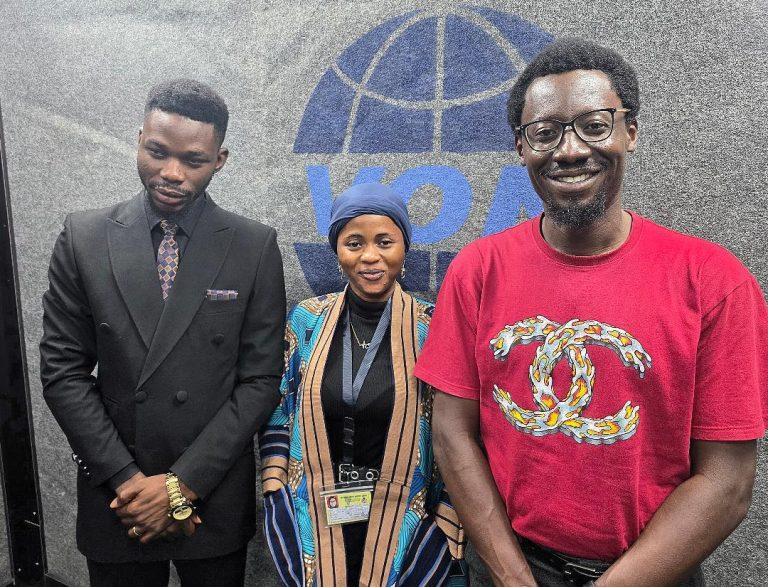
Speaking to Voice of Nigeria during the 2025 International Youth Day commemoration programme, Youth Forum themed “Attaining Local Youth Actions for SDGs and Beyond,” they stressed the need for partnerships to meet the 2030 SDG deadline.

Rahama Ibrahim, a strategic communication practitioner, emphasised that achieving the SDGs begins with individual commitments.

“We are doing it through every one of us, me and you, taking actions in achieving the goal, partnering to achieve the goal,” she said.

Ibrahim highlighted the crucial role of Nigerian youth, particularly young women, in embedding the SDGs into daily life.

“In attaining these goals, I will still focus on actions. Nigerian youths need to get into actions, putting all of these goals into their daily lives, what they do and everything about them,” she added.

On leadership, technology, and accountability, advocate Fred Ogbole described leadership as “the fulcrum at which every individual life exists,” emphasising that leadership starts at the family level with positive ripple effects on society.

“At the lowest level of leadership is the family, whereby leadership are provided. If leadership are not provided in family, you see how children go astray. We don’t have people who hold them accountable when they misbehave,” he noted.

Ogbole warned against a culture of selective accountability.

“If we adopt the formula of accountability across all phases of life; in business, in empowerment, in community, in government—we will achieve whatever we want,” he said.

He cited examples of Singapore and China’s intentional leadership as drivers of national transformation, contrasting with Nigeria’s ongoing politicisation of governance.

“Countries like Singapore achieved transformation because of intentional leadership. Lee Kuan Yew was called a dictator, some even said a soft dictator, but he lived that legacy of not controlling, but mitigating risk in terms of abusing leadership. China did that too—closed their borders for 10 years and figured their country out. Our country has not been figured out since independence because we keep politicising everything.”

Ogbole urged Nigerians to separate politics from governance.

“Politics comes before you enter into office. Governance comes when you enter into office. For us, politics continues when you enter into office, and we can never get it right when we continue politics while in governance,” he said.

He further stressed the need for governance focused on improving livelihoods rather than superficial empowerment programs.

“If livelihoods are improved, we don’t need to send empowerment out, we don’t need to send palliative, we don’t need to do any charade to make people feel that we are doing our work. We just need good electricity, good power supply, good systems that empower people. Through that, we can do anything that we want to achieve as a nation.”

Agribusiness advocate, Echefu Chidozie, urged Nigerian youth to embrace agriculture across its value chain beyond farming.

“As young youths, we must start practising agriculture, no matter how little. Agriculture cuts across various value chains and commodities. There’s the service-providing chain, where you come to teach, sell, or do your marketing; the production chain, where you do the actual farming, growing of plants, or rearing of birds or animals; and the processing chain.”

He spotlighted food processing as an overlooked but profitable area for youth investment.

“I’m advocating for youths to look at the area of food processing because we still consume a lot of things that come from different countries. It will wow you that we buy palm oil from the Indonesians and the Malaysians even though we claim that we produce a lot of oil. We don’t have enough oil. Why?” he queried.

Chidozie explained the broad uses of palm oil beyond cooking.

“So many Nigerian youths do not know that palm oil is needed for soap production, for production of cream, cosmetics, so many things—not just cooking your egusi soup or whatever,” he said.

He linked fighting hunger with boosting youth capacity and productivity.

“When you eat proper, you think proper. If you don’t eat proper, you won’t think proper. So please, young people, come into agriculture. Let’s do agribusiness,” he urged.

Together, the advocates underscored that youth-led action, transparent leadership, and strategic economic engagement—especially in leadership, technology, education, and agriculture—are critical for Nigeria to meet its SDG targets and sustain progress beyond 2030.

PIAK

Apple, Google App Stores Ruled Uncompetitive in Australia

An Australian court found the smartphone app stores of Apple and Google-owned Android were uncompetitive, local media reported, in a partial victory for Fortnite game developer Epic Games against the tech giants.

Amid a years-long legal dispute brought by Epic against the dominant smartphone makers in several jurisdictions around the world, Australia’s federal court found the phone makers’ app stores had no protections against anti-competitive behaviour, the reports said.

Epic Games had claimed Apple and Google’s fees for downloads of its games were too high, and that the phone makers made it impossible for users to download its alternative app store.

The Australian judgment, which ran to 2,000 pages, was not released by the court, but the media said a judge’s summary included the finding that the smartphone companies had not intentionally breached the law.

In a post on X, Epic said the Australian court “just found that Apple and Google abuse their control over app distribution and in-app payments to limit competition”.

Epic is a US-based games studio with backing from China’s Tencent

“The Epic Games Store and Fortnite will come to iOS in Australia!” the Epic post said. “This is a WIN for developers and consumers in Australia!”

Apple said in a statement it welcomed the court’s rejection of some of Epic’s claims, but strongly disagreed with its ruling on others.

“Apple faces fierce competition in every market where we operate,” the California-based tech giant said.

A Google statement said the company welcomed the court’s rejection of some Epic Games claims, but “we disagree with the court’s characterisation of our billing policies and practices, as well as its findings regarding some of our historical partnerships, which were all shaped in a fiercely competitive mobile landscape”.

“We will review the full decision when we receive it and assess our next steps.”


REUTERS/Christopher Ojilere