Home Blog Page 98

D’Tigress Defeat Philippines 101–84 At FIBA Qualifying Tournament

0

D’Tigress of Nigeria overturned a double-digit halftime deficit to defeat the Philippines 101–84, in their FIBA Women’s World Cup Qualifying Tournament in Villeurbanne, France on Saturday.

The Philippines led for more than 22 minutes and built a 10-point cushion in the first half. Nigeria responded strongly after the break, eventually pulling away in the final quarter.

Midway into the third quarter, Nigeria wiped out a five-point deficit with a 17–12 run. A turnaround jumper by Pallas Kunaiyi-Akpanah tied the score at 67–67.

D'Tigress Philippines

Guards Ifunanya Okoro and Elizabeth Balogun scored nine points in the run. Promise Amukamara also grabbed four rebounds and added two points to steady the team.

Three-pointers from Janine Pontejos and Louna Ozar briefly kept the Philippines competitive. However, Nigeria’s inside scoring helped them take a 70–67 lead into the fourth quarter.

Nigeria’s decisive moment came with a 9–0 run in the final quarter, stretching an 81–80 lead to 90–80 and effectively sealing the contest.

Balogun scored five points during the run with perfect shooting, while Nigeria’s defence limited the Philippines’ scoring options late in the game.

Nigeria’s biggest lead reached 17 points in the closing seconds at 101–84. The Philippines’ largest advantage was 10 points in the second quarter.

D'Tigress Philippines

The victory highlighted Nigeria’s resilience and depth, as strong rebounding and balanced scoring helped secure a convincing second-half comeback in the tournament.

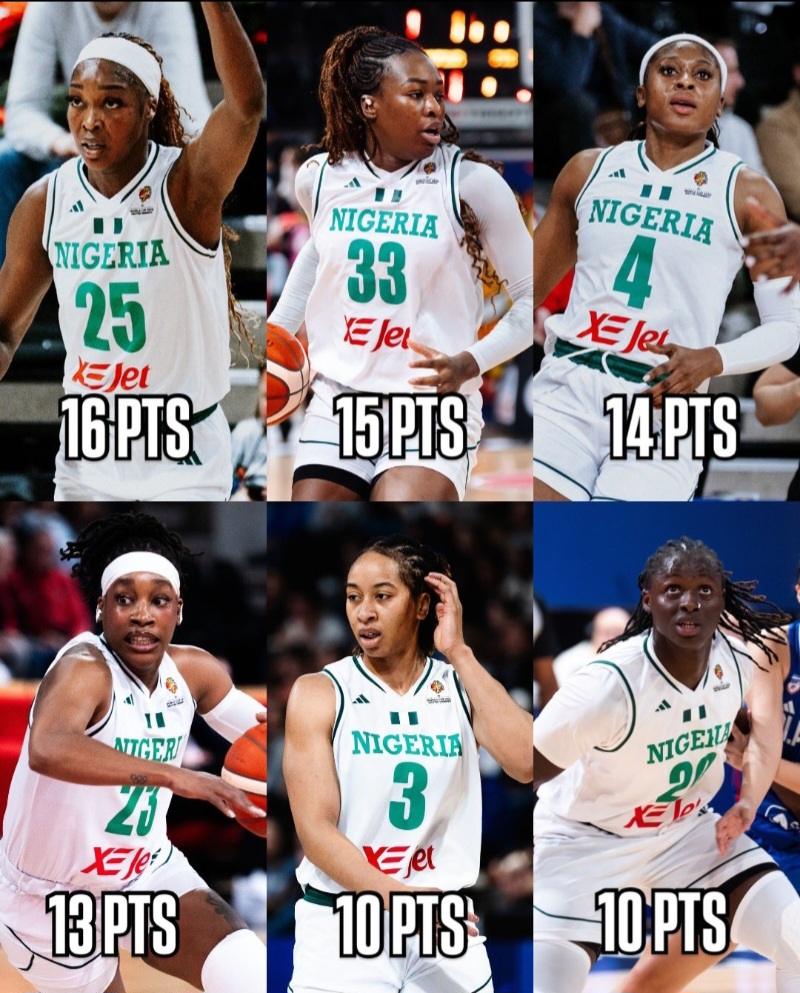
Center Victoria Macaulay powered Nigeria’s comeback with 16 points, six rebounds, five assists and two blocks in just over 21 minutes of play.

Murjanatu Musa contributed 10 points, 12 rebounds and eight assists, while Nicole Enabosi recorded 15 points and 12 rebounds after an early scoring burst.

Nigerian Agencies Partner to Drive Economic Diversification

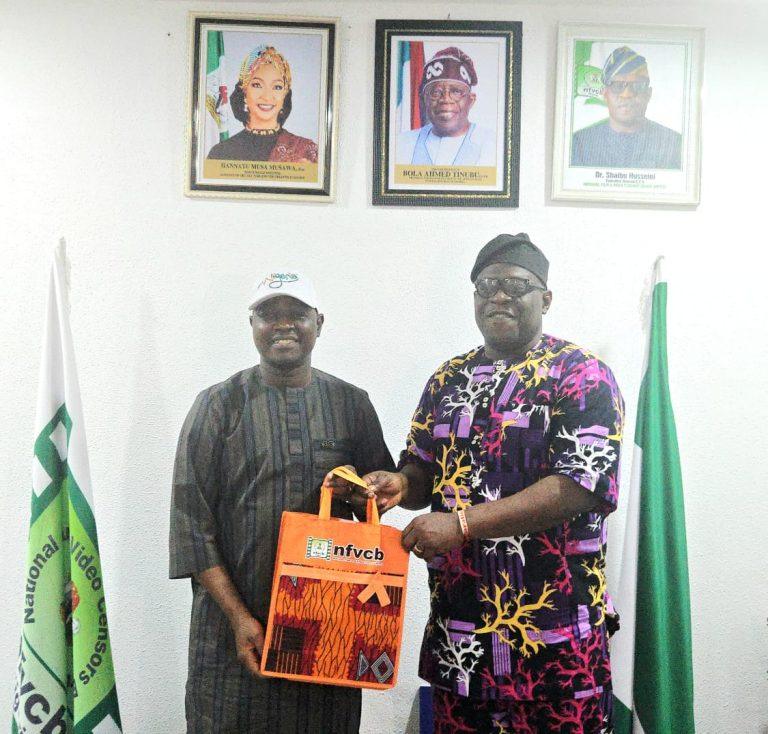
The Executive Director of the National Film and Video Censors Board (NFVCB), Dr. Shaibu Husseini, hosted the Director-General of the Nigerian Tourism Development Authority (NTDA), Dr. Ola Awakan, at the Board’s headquarters to align their visions for national growth.

In a strategic move to pivot Nigeria’s economy away from petroleum, the heads of the nation’s film and tourism agencies have pledged a new era of “screen tourism” collaboration.

The meeting centred on a singular goal: using the Nigerian film industry as a high-octane engine for tourism.

Both leaders resolved to encourage filmmakers to deliberately feature Nigeria’s iconic landmarks and hidden gems in their productions.

READ ALSO: Service Delivery: Minister Commends Agencies for Improved Performance

“Tourism potential in Nigeria is enormous, and film provides a powerful platform to open up the sector to the world,” Dr. Husseini said.

“We will continue to encourage our filmmakers to tell our stories using our tourism locations”, he added.

Dr. Awakan emphasised that integrating tourism with film is no longer just an option; it is the most viable path for Nigeria’s economic future.

“There is no better alternative to diversify the economy than through tourism embedded in film,” Awakan noted, praising Dr. Husseini’s transformative leadership at the NFVCB since taking office.

The collaboration aims to address existing challenges in the sector while creating new policies to strengthen “inward tourism,” by merging the visual storytelling of Nollywood with the NTDA’s destination management.

The partnership seeks to: “Boost Job Creation: Opening new roles in travel and production. Attract Investment: Drawing international interest to Nigerian sites. National Development: Building a sustainable, non-oil revenue stream.”

The meeting concluded with a mutual commitment to turning Nigeria’s creative assets into strategic pillars for national prosperity.


Lagos State Launches $25 Million Education Funds  

0

Lagos State Governor, Mr. Babajide Sanwo-Olu has launched a $25m education fund as part of renewed efforts to tackle the problem of out-of-school children in the state.

He also announced plans to issue an executive order prohibiting school-age children from roaming the streets during school hours.

The Governor, who was speaking during the launch of the Lagos Education Access Fund (LEAF) and the inauguration of the board of the Lagos State Universal Basic Education Board (LASUBEB) in Lagos, said that the proposed executive order would strengthen enforcement measures to ensure that children of school age remain in classrooms during official learning hours.

No child should be seen outside between 8:00 a.m. and 4:00 p.m. unless there is a very good reason, that child is not in school,” he said.

According to him, the directive would also increase accountability among parents, communities and institutions responsible for ensuring that children attend school regularly.

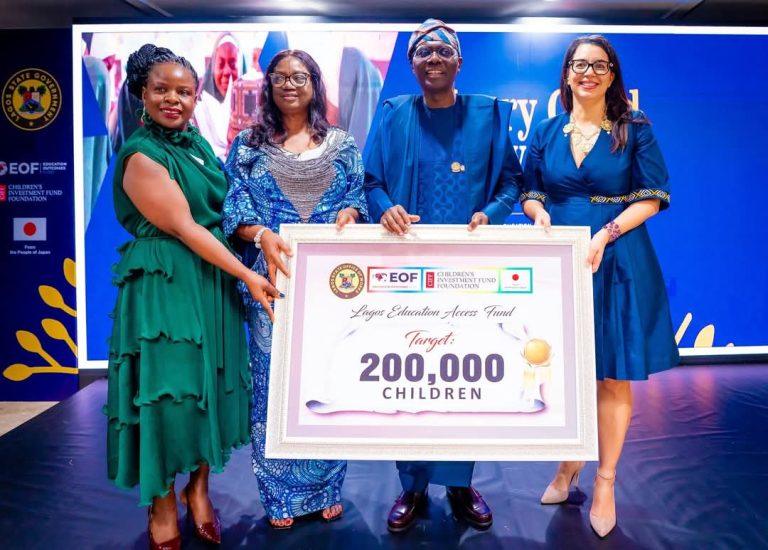
The Governor also announced the launch of the Lagos Education Access Fund, a $25 million outcomes-based financing initiative aimed at improving both access to education and learning results across the state.

He said the programme, implemented in partnership with the Education Outcome Fund (EOF) and other development partners, would support more than 200,000 children statewide.

Sanwo-Olu explained that the initiative would enrol over 50,000 out-of-school children aged six to 14 into the formal education system through targeted community outreach and interventions designed to remove barriers to school attendance.

In addition, about 150,000 pupils already in school will benefit from programmes aimed at strengthening literacy and numeracy outcomes to ensure that classroom attendance translates into meaningful learning.

This initiative is not just about funding education; it is about ensuring every investment translates into real learning, real opportunity and measurable outcomes for our children,” he said.

The Governor noted that LEAF builds on Project Zero, an intervention introduced in 2021 to address the challenge of out-of-school Children in Lagos.

According to him, the programme has already helped identify, track and enrol more than 36,000 children back into formal education across the state.

Sanwo-Olu added that beyond returning children to school, the state had also supported more than 360 parents and guardians with vocational training in areas such as fashion designing, soap making, catering and hairdressing to improve family livelihoods and sustain school attendance.

He further highlighted his administration’s investments in education infrastructure, stating that more schools and classrooms had been built in the last seven years than were delivered in the previous two decades.

In one school complex alone, we are handing over 35 schools with capacity for close to 20,000 students,” the Lagos Governor stated.

Sanwo-Olu emphasised that meaningful progress in education requires collaboration between government, communities and development partners.

He thanked the Children’s Investment Fund Foundation, the Federal Ministry of Education, the Ministry of Foreign Affairs of Japan and the EOF for supporting Lagos in advancing education reforms.

Earlier, the Chief Executive Officer of the Education Outcome Fund, Amel Karboul, described Lagos as a model of bold leadership for adopting an accountability-driven education financing system.

Karboul, a former Tunisian Minister, said governments often spend heavily on education inputs such as buildings and materials but fail to achieve real outcomes like improved learning and retention.

The most important infrastructure any nation can build is educated minds,” the Chief Executive Officer emphasised.

She explained that EOF was created to enable governments and partners to pay for measurable results rather than simply funding services or materials.

Karboul added that Lagos was not merely launching a programme but creating a blueprint that other states and countries could replicate in reforming education financing.

At the event, Sanwo-Olu also inaugurated the LASUBEB board, appointing Hakeem Shittu as chairman.

Other members of the board include Saheed Ibikunle, Sijuade Idowu-Tiamiyu, Sherifat Adedoyin, Owolabi Falana, Adewale Babatunde, Babatunde Williams and Hakeem Lamidi.

In his acceptance speech, Shittu pledged that the board would expand access to education, strengthen school governance and ensure that public spending delivers measurable learning outcomes.

It is not enough for children to sit in classrooms. They must learn. We will support LEAF implementation and ensure education investment produces measurable outcomes,” he said


Gowon Lauds President Tinubu’s Leadership

0

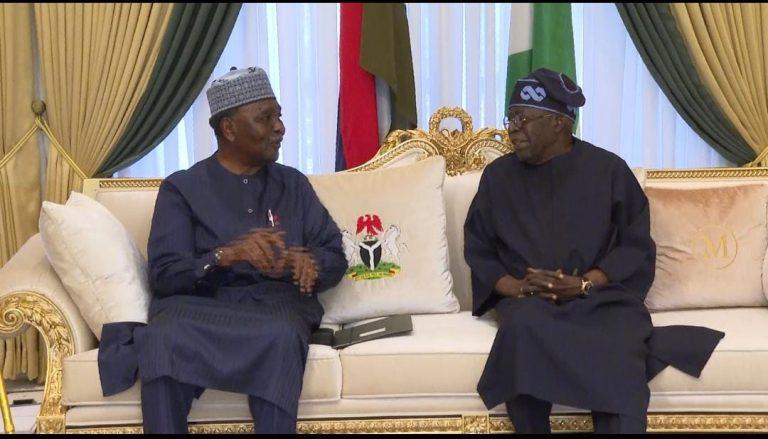
Nigeria’s former Head of State, Yakubu Gowon, has commended the leadership of Bola Ahmed Tinubu, noting that the President is making commendable efforts to advance reforms and drive progress across critical sectors of national governance.

The elder statesman and former Nigerian leader, Gowon, gave President Tinubu a pass mark for his performance in office while speaking with journalists after paying a courtesy visit to the President at the State House, Abuja

Gowon explained that his visit was primarily to express appreciation for the administration’s efforts and to encourage the President in his continued leadership of the country.

I came to see him and to thank him for all the good works that he’s doing for the country. We had to look at all the good work that the President is doing and the progress that Nigeria is making economically and otherwise”, the elder statesman explained.

Addressing questions on areas the administration could strengthen as it advances its agenda, the elder statesman declined to single out any specific sector, noting that President Tinubu appears to be tackling the nation’s challenges comprehensively across key areas of governance.

Isn’t he doing the best he can all round?” he asked rhetorically, adding, “so there is no particular place, every other area; political, economic, social, etc.”

He further observed that the country is making steady progress under the leadership of President Tinubu and expressed satisfaction with the overall direction of governance.

Gowon also acknowledged the complexity of Nigeria’s security challenges but maintained that the President is taking the necessary measures to address the situation in the interest of national stability and progress.

And, of course, the major problem that we have today, the security area, he’s doing everything to deal with those for the good of all Nigeria,” he said.

The elder statesman emphasised that leadership requires balancing multiple priorities simultaneously, and the President must continue to safeguard Nigeria’s interests across all sectors.

He’s got to look after the interests of Nigeria in all areas, and I’m happy about that,” Gowon added.

He noted that the responsibility for addressing current challenges confronting the country ultimately lies with the government.

The former Head of State expressed confidence that the administration of President Tinubu is doing its best to manage the situation.

If I say that the problem that is happening today, it is only the government today, that’s Mr. President, that can really deal with it, and he is dealing with it the best he can without creating any problem for Nigerians and for the country,” Gowon said.

He expressed optimism that the efforts of the government would eventually yield the peace and stability the nation seeks.

The government is handling it the best it can to ensure that Nigeria, in the end, achieves the peace that it deserves, that it requires and it deserves,” Gowon added.


Fasawe, NUJ President Seek Insurance Support for Journalists

0

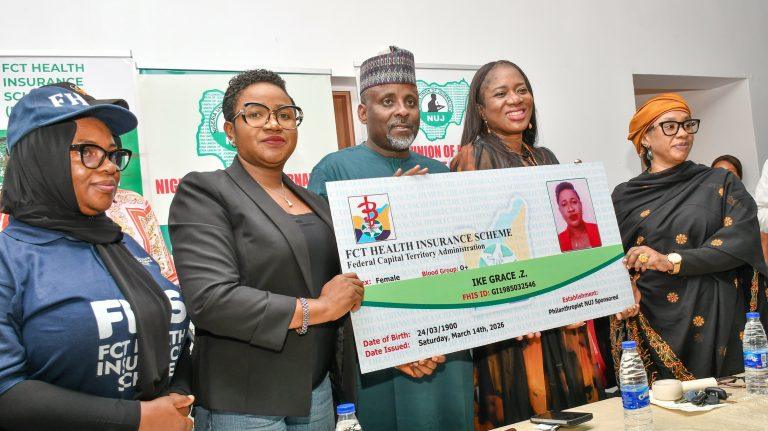
More than 150 journalists in the nation’s capital have been enrolled in the Federal Capital Territory Health Insurance Scheme (FHIS), marking a significant step towards improving healthcare access for media professionals in Abuja.

The development came as the Mandate Secretary of the FCT Health Services and Environment Secretariat, Dr Adedolapo Fasawe, urged philanthropists, political office holders, religious leaders and business leaders to support journalists by sponsoring health insurance coverage for them.


The initiative, championed by the Chairman of the Nigeria Union of Journalists (NUJ), FCT Council, Comrade Grace Ike, is part of efforts to fulfil her campaign promise to prioritise the welfare and wellbeing of journalists in the territory.

Speaking at the official launch of the scheme in Abuja, Ike described the initiative as a historic milestone for the NUJ FCT Council and a major step towards safeguarding journalists who dedicate their lives to informing society.

Today marks a historic moment for the Nigeria Union of Journalists, FCT Council,” she said. “For the first time in the history of our council, we are flagging off a health insurance initiative specifically designed to support the welfare and wellbeing of journalists in the Federal Capital Territory,”she said.

She noted that journalists often serve as first responders to national discourse by amplifying the voices of citizens and drawing attention to pressing societal issues, yet their welfare is frequently overlooked.

Ike expressed appreciation to the Chairman of the House of Representatives Committee on Information, Hon. Akin Rotimi Jr., for supporting the programme and helping to initiate the health insurance scheme.

Your belief that journalists deserve access to quality healthcare has translated into practical action, and we are deeply grateful for your support and advocacy,” she said.

She also commended the Mandate Secretary of the FCT Health Services and Environment Secretariat, Dr Fasawe, for providing 150 free health insurance slots for NUJ members, describing the gesture as a demonstration of compassion and commitment to improved healthcare access.

Our sincere gratitude also goes to the Permanent Secretary, Dr Babagana Adam, who personally pledged to sponsor 50 additional journalists in memory of his late brother, Mohammed Alkali. This touching gesture speaks volumes about your dedication to the welfare of the media community,” Ike added.

According to her, the combined contributions have enabled about 200 journalists in the FCT to benefit from health insurance coverage, a development she said would significantly reduce the financial burden of healthcare while encouraging journalists to prioritise their health.

As journalists, we understand the power of information. When we experience the benefits of initiatives like this firsthand, we become stronger advocates for the people we serve,” she said.

Speaking at the event, Dr Fasawe emphasised the importance of universal health coverage and pledged continued support for journalists in the territory.

She also announced an additional 50 health insurance slots for journalists, bringing the total number of beneficiaries to about 65 per cent of NUJ members in the FCT.
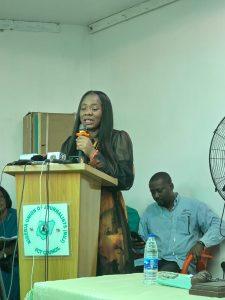
“Basic healthcare is not a luxury; it is a necessity,” she said. “Health is a collective responsibility, and it must be achievable, affordable and accessible to all.”

Fasawe further highlighted the commitment of the FCT Administration under the Minister of the Federal Capital Territory, Nyesom Wike, to tackling maternal and child mortality, stressing that the administration has adopted a zero-tolerance approach to maternal deaths.

In the FCT, our minister has declared absolutely zero tolerance for maternal mortality. There is no reason a woman should labour in vain. There is no reason that at the point of delivery either the mother or the child should suffer harm,” she said.

She disclosed that pregnant women, particularly vulnerable ones in the FCT, can access free antenatal care and delivery services, including caesarean sections, at primary healthcare centres across the territory.

My purpose of coming here today is to ask political office holders, religious leaders and individuals who want their voices to be heard to buy health insurance for a journalist,” she added.

“Buy health insurance for a member of the press today and you will be heard loud and clear, because you are supporting those who tell your stories to the public.”

Fasawe revealed that about 480 out of the estimated 800 journalists in the FCT have now been covered under the scheme and expressed optimism that the figure would soon reach full coverage.

Also speaking, the National President of the NUJ, Comrade Alhassan Yahya, commended the initiative, describing it as a critical intervention that would improve healthcare access for journalists.

He revealed that studies indicate that less than one per cent of Nigerian journalists currently have any form of health insurance, stressing that the scheme would help address the gap.

“Insurance is critical to our job. Through insurance, we can reduce maternal deaths, drastically cut out-of-pocket healthcare expenses, and move closer to achieving universal health coverage,” Yahya said.

He also applauded the leadership of the NUJ FCT Council under Grace Ike for what he described as a commendable initiative worthy of emulation.

In a goodwill message delivered on behalf of her husband, the immediate past Permanent Secretary of the FCT Health and Environment Secretariat, Mrs Babagana Adam assured the union of continued collaboration and called on public-spirited individuals to support journalists.

Some of the beneficiaries who spoke at the event expressed appreciation to the Grace Ike-led executive of the NUJ FCT Council and the FCT Health Secretariat for the opportunity to benefit from the scheme, describing it as a timely intervention that would ease the burden of healthcare costs.

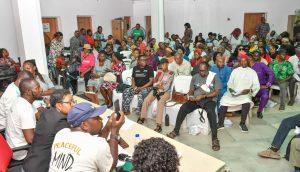
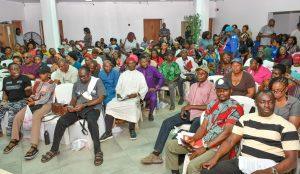
The event, which took place during the NUJ FCT Congress, had over 450 members in attendance. Also present was the Director of the FCT Health Insurance Scheme, Dr Salamatu Belgore, among other stakeholders.
The development is widely seen as a major step towards strengthening journalists’ welfare and advancing the broader goal of universal health coverage in the Federal Capital Territory.


Israel, Lebanon Prepare for Direct Negotiations 

0

Israel and Lebanon are expected ​to hold direct talks in the ‌coming days, their first since the start of the Iran war that has drawn Lebanon deeper ​into conflict.

U.S President Donald Trump’s son-in-law ​Jared Kushner will be involved in the ​talks that may be held in Paris or in Cyprus, with Israeli Prime Minister Benjamin Netanyahu’s confidant ​Ron Dermer, leading the Israeli delegation.

The negotiations were expected to focus on ending fighting ‌in ⁠Lebanon and disarming the Lebanese armed group Hezbollah.

Hezbollah opened fire on Israel on March 2 saying it was retaliating ​for the ​killing of ⁠Iran’s supreme leader at the start of the U.S-Israeli war on ​Iran.

READ ALSO: U.S., Israel Launch Joint Strikes on Iran as Tehran Retaliates 

Israel has since launched an extensive ​bombing ⁠campaign against the powerful Lebanese armed group, which has killed more than 770 people ⁠and ​displaced hundreds of thousands more, ​while Hezbollah has fired hundreds of rockets across the ​border.

The conflict between Israel and Lebanon is a long-standing dispute mainly linked to clashes between Israel and Hezbollah, a powerful armed group and political party based in Lebanon.

Tensions between the two sides date back decades. Lebanon and several Arab countries fought against Israel during the 1948 Arab-Israeli War, and although large-scale battles between the Lebanese army and Israel later became rare, southern Lebanon became a base for armed groups opposing Israel.

In recent years, tensions have continued along the Israel-Lebanon border. Fighting intensified again after the Israel-Hamas War (2023-present), as Hezbollah and Israeli forces exchanged cross-border fire. These clashes have displaced thousands of civilians on both sides.

Today, Israel and Lebanon do not have a formal peace agreement and remain technically in a state of conflict.

Occasional negotiations or proposed talks between the two countries are usually aimed at reducing border tensions and preventing a wider regional war.


Reuters

UN Launches $308 Million Appeal for War-Hit Lebanon

0

The United ​Nations has launched a $308 million flash appeal on Friday to help Lebanon cope with the ‌fallout of war that has forced more than a seventh of its population from their homes.

“Solidarity in words must be matched by solidarity in action,” U.N. Secretary-General Antonio Guterres said as he announced the campaign from Beirut.

Israel ​launched an offensive against Hezbollah last week after the Iran-backed Lebanese militant group opened fire ​on it on March 2, saying it was avenging the killing of Iran’s supreme ⁠leader.

Hezbollah has kept up daily rocket and drone attacks, while Israel has expanded its ground operations ​and air strikes, bombing the capital on Thursday, along with other parts of the country on Friday.

READ ALSO: United Nations advocates prevention of violence against Women

Nearly 700 ​people have been killed in the attacks and more than 800,000 displaced by Israel’s orders for people to leave ever larger swathes of Lebanon.

But aid organisations say funding constraints have already forced them to ration supplies and that substantial ​new contributions are essential.

“We’re only targeting those who are really on the verge of starvation or in ​starvation,” said Carl Skau, the World Food Programme’s deputy executive director.

“There isn’t any more margin, so with needs going ‌up, ⁠resources will have to come up and they can certainly not drop,” Skau said.

TIGHT FUNDING LANDSCAPE

Humanitarian organisations say global crises have restricted their response in Lebanon, a country already hit hard by a 2019 economic collapse, the 2020 Beirut port explosion and the 2024 war between Hezbollah and Israel.

Skau said ​the WFP fears donor ​governments will face new ⁠budget constraints following the spike in global energy prices triggered by the Iran war.

The U.N.’s refugee agency UNHCR last September said it had only received ​25% of the resources required for Lebanon in 2025, forcing it to ​slash cash assistance ⁠programmes.

“The current spike or the current escalation of hostilities compounds an already tight funding landscape,” said Kirollos Fares, Lebanon country director.


Reuters


President Tinubu Mourns Legendary Super Eagles Midfielder Henry Nwosu

0

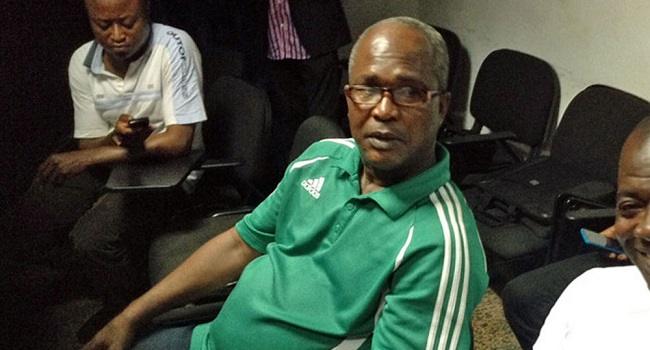
President Bola Ahmed Tinubu has extended condolences to the family of Henry Onyemanze Nwosu, the legendary Nigerian national football team midfielder who died on Saturday at the age of 62.

In a condolence message issued by Presidential Spokesperson, Mr Bayo Onanuga, President Tinubu joined the Nigerian football community in mourning the exceptionally gifted playmaker, whose skill, creativity and artistry on the pitch made him one of the most admired footballers of his generation.

The President recalled Nwosu’s remarkable rise in Nigerian football, noting that he announced himself to the nation as a teenager when he featured in the then Nigeria national football team squad that won the 1980 Africa Cup of Nations at just 17 years old.

President Tinubu also acknowledged the late midfielder’s more than a decade of service to the country, during which he represented Nigeria in several continental tournaments, including the 1982 Africa Cup of Nations, 1984 Africa Cup of Nations, and 1988 Africa Cup of Nations, while contributing to the development of football in the country after his playing career.

The President noted that Nigerians would always remember the late playmaker for the pride and joy he brought to the nation and for inspiring many young footballers to pursue excellence.

    President Tinubu prayed for the repose of Nwosu’s soul and asked God to grant comfort and strength to his family and the entire Nigerian football community.


South-West: Nigerian Government Distributes Tractors to Farmers

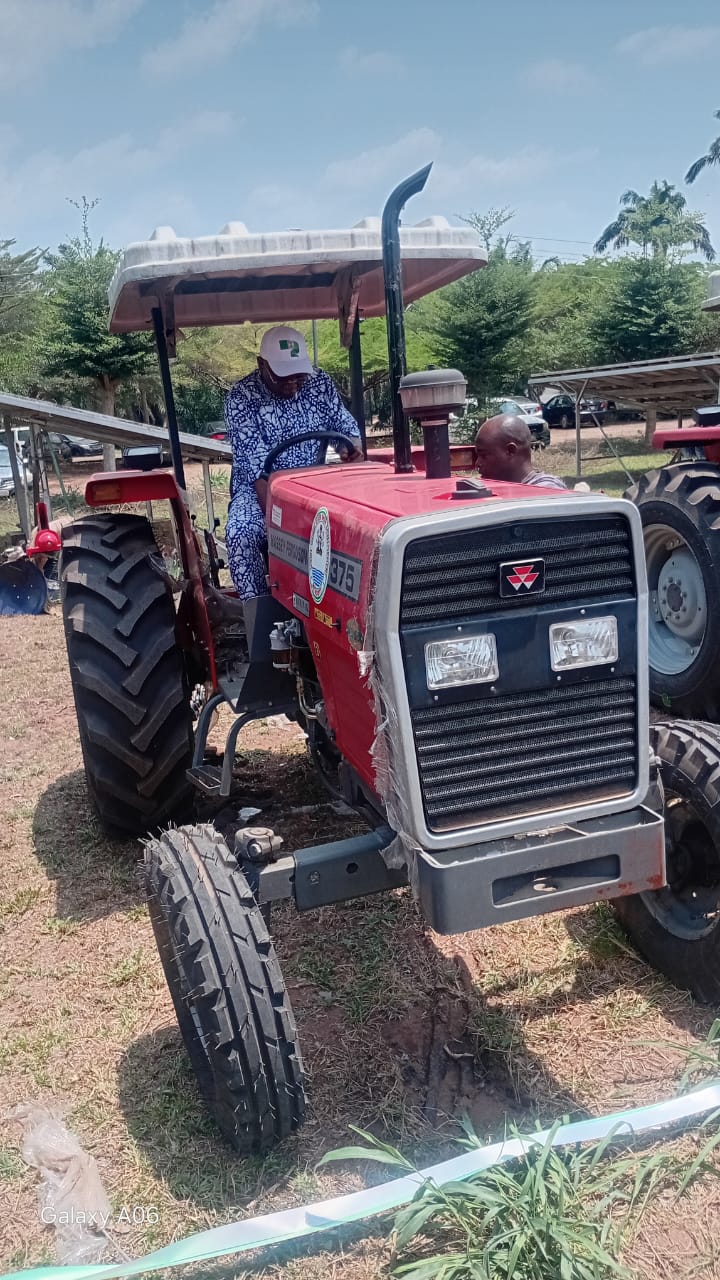
The Nigerian Government has begun distributing tractors and other farm implements to farmers in the South-West as part of efforts to curb rising food prices and boost domestic food production.

The equipment was handed over to farmers across eleven farm settlements under the supervision of the Ogun Osun River Basin Development Authority for the 2025–2026 dry-season farming programme.

Officials say the intervention is designed to expand irrigated agriculture and strengthen food security across the country.

Speaking at the handover ceremony, the Managing Director of the authority, Deji Ashiru, said the initiative aligns with the food security agenda of President Bola Ahmed Tinubu’s administration.

Ashiru said the federal government, through the Federal Ministry of Water Resources and Sanitation, had directed River Basin authorities to expand irrigation, intensify dry-season farming and provide farmers with mechanised support to increase productivity.

He noted that rising food prices have put significant pressure on households across Nigeria, saying the deployment of tractors intends to help farmers cultivate larger areas of land more efficiently with increased crop yields.

The Managing Director said technical personnel from the River Basin Authority will accompany the tractor teams to provide agronomic guidance, including land preparation, improved seed use, fertiliser application and pest management.

The benefiting farm settlements are located across several communities in Oyo and Osun states, including Sepeteri, Iseyin, Ofiki, Ogbomoso, and Iwo, as well as the Middle Ogun Irrigation Project.

Ashiru described irrigation-support dry-season farming as “a critical strategy for reducing seasonal food shortages and stabilising prices throughout the year”.

He added that “as climate change and population growth have placed increased pressure on food systems, expanding year-round agricultural production has become essential for Nigeria’s long-term food security”.


DEPOWA Seeks Mental Health Support for Police, Military Families

0

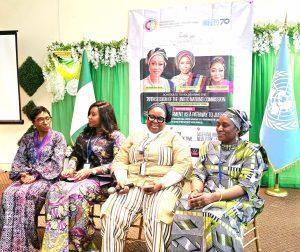
The National President of the Defence and Police Officers’ Wives Association (DEPOWA), Mrs Mernan Femi-Oluyede, has called for urgent global partnerships to address the psychological and economic toll of conflict on military and police families in Nigeria.

She made the appeal during a side event at the 70th Session of the UN Commission on the Status of Women (CSW70) at the United Nations, themed “Economic Empowerment as a Pathway to Justice: Advancing Women’s Financial Inclusion to Promote Legal Equity and Prevent Violence.”

Our husbands go to work. They come back home. We don’t resolve trauma. And there is a chronic shortage of mental health services

She described wives, widows and children of security personnel as “ground zero” of Nigeria’s insurgency since 2009.” Femi-Oluyede said.

“We have sisters whose husbands went to work and never came home, or came home without a limb, or in a coffin,” she said, warning that untreated trauma often manifests in “domestic, sexual, and gender-based violence, mental health challenges, and addiction.”

Renowned physician Philip Ozuah echoed the concern, noting the invisible scars carried by service members and their families. “This trauma, not silently, converts itself during military and law enforcement service,the scars of service come in many forms,” he said, pledging “financial, technical support.”

Nigeria’s Minister of Women Affairs and Social Development, Imaan Sulaiman-Ibrahim, aligned the initiative with government priorities. “As women in Nigeria, what we need is engagement… The more we understand, the more we can accelerate action,” she said, adding, “We are here to ensure that the people who serve Nigeria have peace of mind.”

Nigeria’s Chargé d’Affaires to the UN, Ambassador Syndoph Endoni, also pledged support: “Partnership is the key, we will continue to work with you to take the available resources from the UN system to support all that you are doing.”

At the grassroots level, Helpline Foundation’s Jumai Ahmadu warned that financial vulnerability exposes women to exploitation. “Most of these women are just surviving, these loan sharks latch onto the vulnerability and exploit them,” she said.

Representatives of service associations reinforced the call for empowerment. Ngozi Aneke of the Nigerian Air Force Officers’ Wives Association said programmes ranging from cancer screening to skills training aim to ensure women “don’t rely on their husbands and gain financial independence and voice.”

Police Officers’ Wives Association representative Oluwafunmilayo Disu stressed the importance of stability at home: “Keep the home front stable so they can deliver.”

Moderating the session, Inimfon Etuk concluded with a call for unity: “Collaboration is the currency for partnerships today.”