


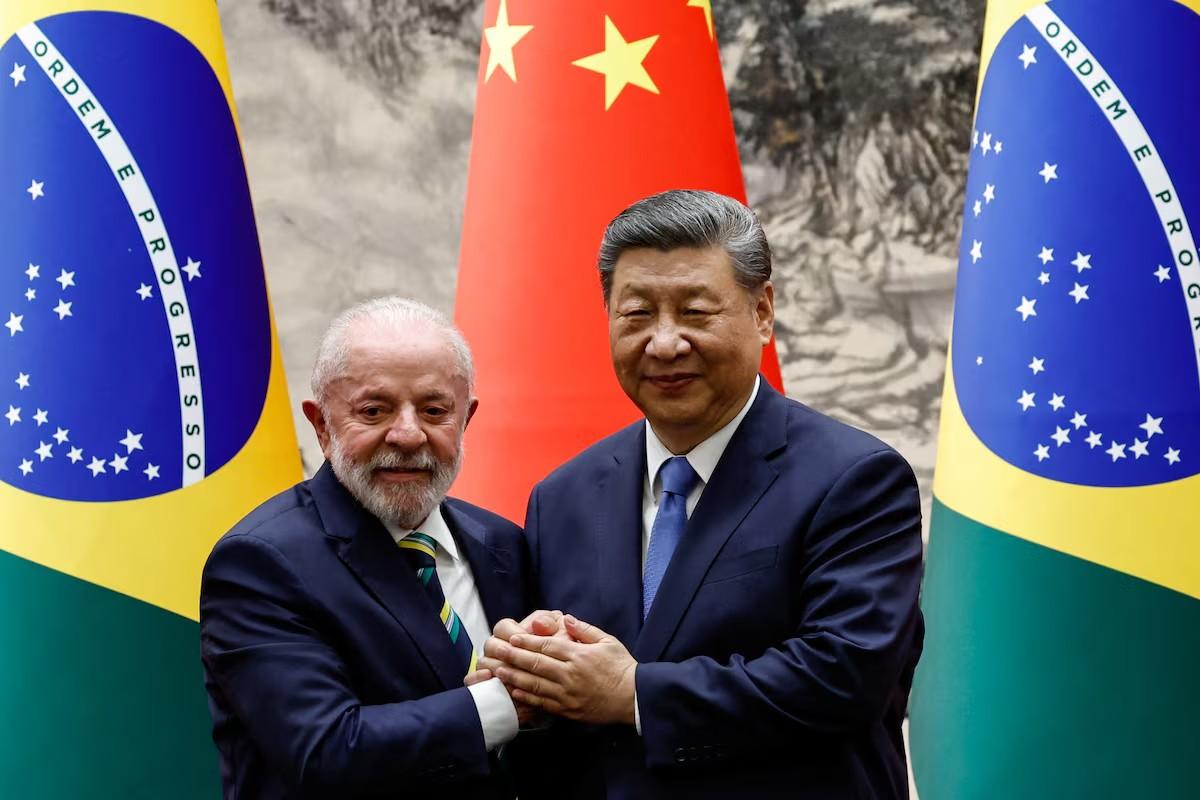
Brazil is considering pushing for a partial trade agreement between the Mercosur bloc and China for the first time, a senior Brazilian government officials disclosed, in what would be a major shift for Latin America’s largest economy.
Brazil has long vetoed formal negotiations with Beijing to protect domestic manufacturers from a surge in Chinese imports. But as Beijing has sought deeper commercial ties and Washington has imposed waves of tariffs, the government of President Luiz Inacio Lula da Silva is now reconsidering that stance.
A joint statement issued during Uruguayan President Yamandu Orsi’s visit to Beijing to meet with President Xi Jinping this week said they hoped free trade negotiations between China and Mercosur could begin “as soon as possible.”
Mercosur includes Brazil, Argentina, Paraguay and Uruguay, with Bolivia poised to become a full member.
While a formal, comprehensive trade pact remains distant, two Brazilian government officials said a partial Mercosur-China deal is now viewed as a plausible longer-term outcome, spurred by U.S. tariffs on goods from trading partners that have disrupted global commerce and reshaped trade alliances.
China’s foreign and commerce ministries did not immediately respond to a request for comment.
Brazil’s evolving stance reflects what one of the officials, who asked not to be identified due to the sensitivity of the talks, called a “new global scenario.”
“We have to diversify our partners,” the official said. “China has the advantage that we can work with a partial agreement, only in some tariff lines,” the official added.
Another Brazilian official directly involved in internal Mercosur negotiations said the bloc could advance on non-tariff barriers such as import quotas, customs procedures, health and safety regulations, which alone would create meaningful openings in the Chinese market.
The official said it was too early to specify which business sectors might be discussed, describing the issue as “highly complex.”
Brazil has previously been wary of a broader pact out of concern that China’s vast industrial output could overwhelm domestic manufacturers.
Chinese investment in production in Brazil has, however, grown in recent years – an expansion Brasilia is keen to maintain.
U.S. President Donald Trump’s economic policies, which have included pressuring Latin American governments to curb ties with China, are likely pushing Beijing to tie down new trade agreements in the region, said Ignacio Bartesaghi, a foreign policy expert at the Catholic University of Uruguay.
Reuters/Victoria Ibanga