Religious leaders have called on Christians, journalists and social media users to embrace prayer, truth and responsible communication in today’s rapidly evolving digital age.
The call was made during the 60th World Communications Day celebration, held alongside the Seventh Sunday of Easter at the Catholic Secretariat of Nigeria (CSN) in Abuja.
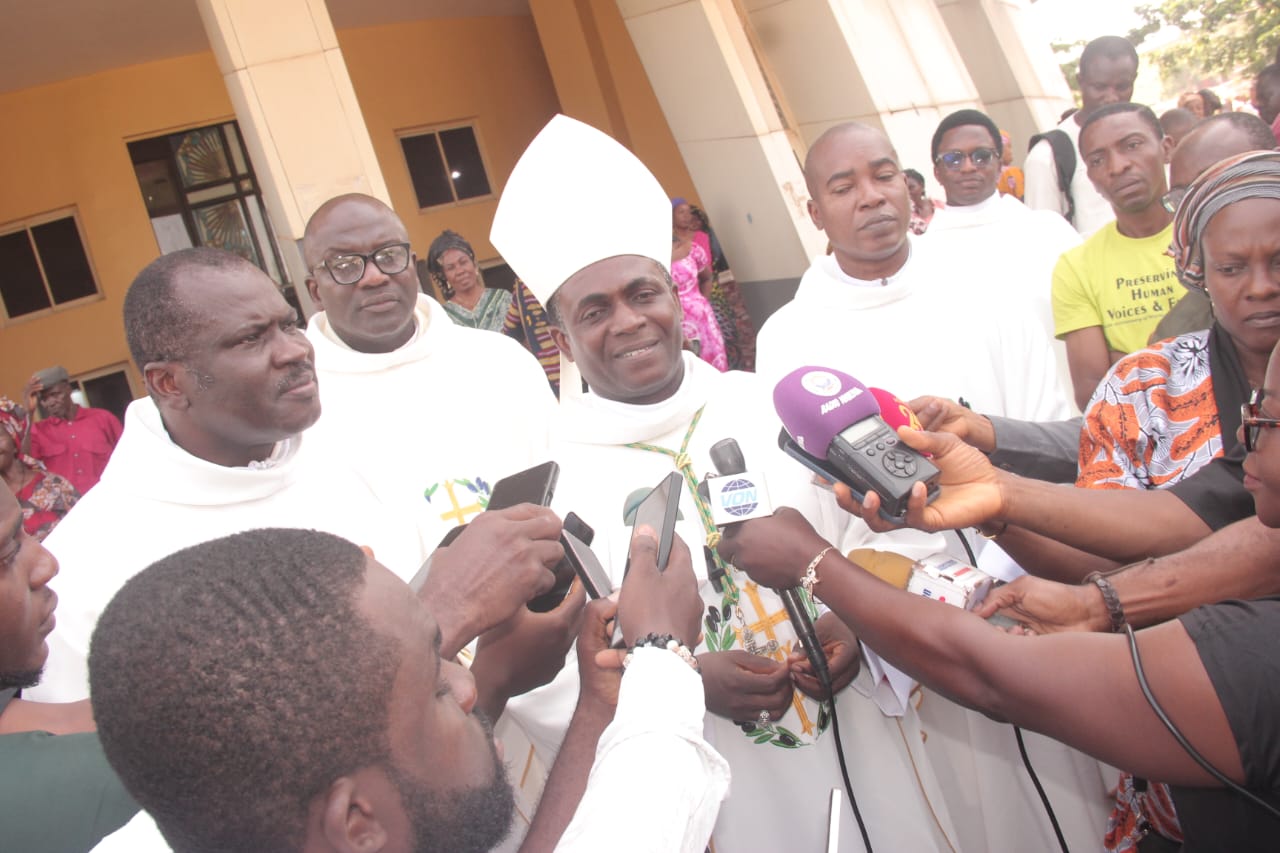
The new Bishop Chairman for Social Communications at the Catholic Secretariat of Nigeria and Bishop of the Catholic Diocese of Katsina, Gerald Musa, said communication should promote truth, unity and human dignity rather than deepen division and misinformation.
Delivering the homily, Bishop Musa reflected on the readings from the Acts of the Apostles, highlighting the importance of prayer as demonstrated by the disciples after the ascension of Jesus Christ.
He explained that despite fear and uncertainty, the Apostles remained united in prayer while awaiting the coming of the Holy Spirit.
According to him, the “upper room” symbolises communion with God, spiritual renewal and perseverance during difficult times.
He encouraged Christians to remain steadfast in prayer, describing it as a source of strength, comfort and endurance amid life’s challenges.
The cleric added that prayer may not remove suffering but equips believers with the courage and resilience to overcome adversity.
Speaking on the theme of this year’s celebration, “Preserving Human Voices and Faces”, Bishop Musa stressed that while the world is becoming increasingly digitally connected, many people are becoming socially and spiritually disconnected.
Drawing lessons from the COVID-19 pandemic, he noted that virtual communication, although useful, cannot fully replace physical interaction and human presence.
He also warned against the misuse of social media, fake identities and the spread of misinformation online, noting that truthful and responsible voices are often drowned out by harmful and misleading content.
Bishop Musa urged media practitioners and digital content creators to use communication platforms responsibly in ways that foster peace, truth and national unity.
Also speaking at the event, the National Director of Social Communications, CSN, Michael Umoh, reaffirmed the Catholic Church’s commitment to responsible communication, media literacy and national development.
He described the media as a vital partner in building a just, informed and morally responsible society.
Fr Umoh explained that the dual celebration marked both the global observance of the 60th World Communications Day and the conclusion of the fifth edition of Nigeria Catholic Communications Week (ComWEEK), a nationwide grassroots media literacy initiative conducted across Catholic parishes and chaplaincies.
He commended journalists for sustaining a longstanding partnership with the Church and for supporting advocacy efforts on issues affecting Nigerian society.
The cleric also paid tribute to the immediate past Bishop Chairman for Social Communications, David Ajang, for his contributions to reforms in Catholic communications over the past six years.
According to him, Bishop Ajang played a significant role in establishing the Nigerian Catholic Network and strengthening ComWEEK across the country.
Fr Umoh formally introduced Bishop Musa as the new Chairman for Social Communications, describing him as an accomplished communications scholar and experienced Church leader whose expertise would strengthen the Church’s media apostolate.
Reflecting on his six-year tenure as National Director, Fr Umoh disclosed that he would conclude his mandate in the coming months.
He expressed gratitude to the Catholic Bishops’ Conference of Nigeria, his Archbishop, Alfred Adewale Martins, and media professionals for their support throughout his service.
He highlighted achievements recorded during his tenure, including the expansion of the Church’s digital presence, the strengthening of ComWEEK and the restructuring of Catholic communication bodies for improved coordination.
Fr Umoh urged journalists and media stakeholders to continue supporting the Catholic Secretariat of Nigeria, stressing that both the Church and the media share the responsibility of promoting truth, accountability and social justice, particularly during periods of national socio-economic challenges.
The Secretary-General of the Catholic Secretariat of Nigeria, Michael Banjo, called on journalists, political actors and citizens to embrace truthful, humane and responsible communication ahead of future elections.
Church leaders at the event stressed the need to preserve human dignity in public discourse and media practice, warning against hate speech, fake news and dehumanising language.
They maintained that communication should never become “a weapon of injury” in a society already grappling with insecurity, economic hardship and social tension.
The Church urged Nigerians to verify information before sharing it and to recognise the humanity of victims affected by insecurity, poverty and displacement.
Addressing journalists and media professionals, Church officials described responsible journalism as increasingly essential in the digital era where virtually anyone with a mobile phone can publish information online.
“The answer to misinformation is responsible journalism; the answer to propaganda is truth,” the Church stated, while urging media practitioners to resist sensationalism and uphold ethical standards.
The Church also expressed concern over the conduct of future elections in Nigeria, warning against fake news, hate speech, vote-buying and electoral manipulation.
It called for transparent electoral processes and stressed the importance of safeguarding the electronic transmission of election results to reflect the true will of voters.
Church leaders further commended security agencies for ongoing efforts to combat terrorism and violent extremism, while noting that genuine security must be measured by the safety of citizens in their homes, schools, farms and places of worship.
They also praised ongoing infrastructure development, including new airport projects in Ogun and Ekiti states, describing them as signs of national progress driven by continuity and proper planning.
However, the Church stressed that infrastructure development must be matched with concrete efforts to tackle unemployment, insecurity, hunger and the rising cost of living affecting many Nigerians.
The event concluded with prayers for continued collaboration between the Church and the media, as well as renewed calls for ethical and responsible communication in Nigeria and beyond.