


The Nigerian government says a well-structured Technical and Vocational Skills Development Policy, along with decent Apprenticeship Systems, will provide the solutions needed to address unemployment challenges in the country.
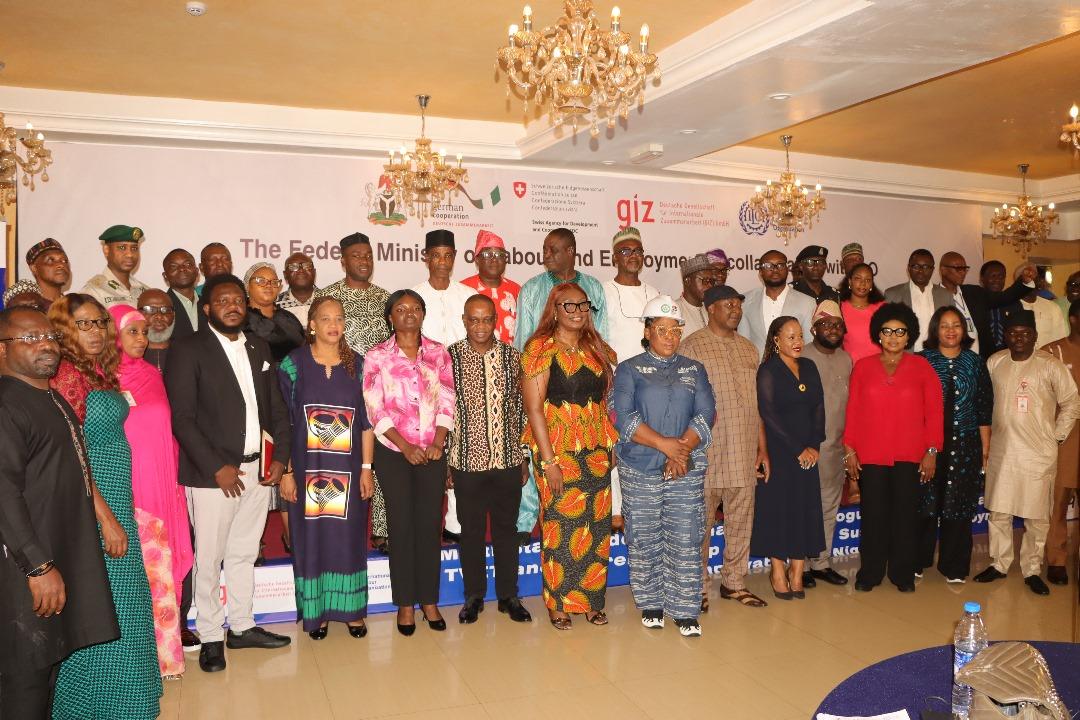
Minister of State for Labour and Employment, Dr Nkeiruka Onyejeocha, stated this on Tuesday in Abuja at a two-day National Public Dialogue on Institutionalising Technical and Vocational Education and Training (TVET) and Apprenticeship Systems for Sustainable Employment and Employability in Nigeria.
Nigeria, like many other nations of the world, she said, is working to overcome the dual challenge of high unemployment and skills mismatch, bridging the gap between what youths are taught and what the labour market requires.
She described the dialogue as another important milestone in the nation’s journey towards decent work and sustainable employment.
The Minister also urged all participants to contribute actively and constructively, saying that the outcomes of the deliberations will inform government policies and frameworks for skills development and labour market reforms.
“This gathering, therefore, offers us an invaluable opportunity to share perspectives, learn from global best practices and, most importantly, chart a collective pathway towards institutionalising sustainable frameworks that will enhance productivity, job creation, and inclusive economic growth to curb the menace of unemployment currently posing a challenge in our dear country.
“Furthermore, the Ministry has always worked closely with the International Labour Organisation (ILO) and other development partners to review existing apprenticeship models and design an institutional framework that integrates informal apprenticeship systems into the national education and employment architecture,” she said.

The minister believes that the success of any TVET and apprenticeship system depends on the effective collaboration of stakeholders, the government, employers, organised labour unions, training institutions, and development partners.
“This is why this dialogue is aptly titled ‘multi-stakeholder’. The future of decent work in Nigeria lies in our collective ability to harmonise efforts, aligning training curricula with industry needs, supporting enterprises that train apprentices, and ensuring Nigerians acquire not just paper certificates but competencies that meet the demands of a dynamic global labour market.”
Director, ILO Country Office for Nigeria, Ghana, Liberia, Sierra Leone, and Liaison Office for ECOWAS, Dr Vanessa Phala, said the national dialogue is being facilitated within the framework of the Strengthening Employment and Employability Systems in Nigeria (SEESIN) project, supported by the GIZ-SKYE II Programme.
Represented by ILO Senior Programme Officer, Mrs Chinyere Emeka-Anuna, Dr Phala added that the dialogue came at the right time as it offers an opportunity to examine how the TVET and apprenticeship systems can better serve the needs of a dynamic labour market.
“SEESIN is contributing to improving Nigeria’s labour market by strengthening the effectiveness of national employment governance frameworks, addressing skills mismatches, expanding access to quality services, and creating inclusive opportunities for youth, women, and other marginalised groups to thrive in a changing world of work.
“Today’s National Dialogue underscores the ILO’s unwavering commitment to advancing Technical and Vocational Education and Training (TVET) and apprenticeship systems as a driver of sustainable employment and inclusive growth.
“Guided by the ILO’s Quality Apprenticeships Recommendation, 2023 (No. 208), we are supporting Nigeria in building apprenticeship systems that are well-regulated, inclusive, and responsive to labour market needs.
“Through social dialogue and tripartite collaboration, we aim to enhance quality assurance, certification, gender equality and inclusion, and the recognition of informal apprenticeships, ensuring that all, especially young people, women, and persons with disabilities, gain the skills, opportunities, and protection needed to access decent work and contribute meaningfully to national development,” Phala stated.
Setting the stage, according to the ILO Director, Nigeria’s labour market continues to grapple with persistent skills mismatches, where job seekers hold qualifications that do not correspond to the requirements of employers.
She said many graduates possess theoretical knowledge but lack practical, industry-related competencies, resulting in overqualification, underqualification, and employment in unrelated fields.
“The country’s apprenticeship and vocational systems remain underdeveloped, contributing to shortages of technical skills in high-growth sectors while producing surpluses in low-demand fields.
“Despite recent improvements in the national unemployment rate, which was 4.3 per cent, down from 5.4 per cent in 2023, youth unemployment remains elevated at 6.5 per cent (men: 5.4 per cent, women: 7.8 per cent). Informal employment dominates at 93 per cent, and women, youth, and persons with disabilities are disproportionately excluded from decent work.”
Dr Phala emphasised that institutionalising Technical and Vocational Education and Training and Apprenticeship Systems is a strategic investment in Nigeria’s future.
Representative of the President of the Nigeria Labour Congress (NLC), Comrade Eustace James, in an interview, said that Nigeria has developed several documents to address the issue, but needs to harmonise them for effectiveness.
He said that if the goal of the dialogue is achieved, both the already employed and unemployed in Nigeria will benefit, as their employment will be properly aligned with their skills, “which naturally will contribute greatly to national development.”
The programme ends on Wednesday.