

The Economic Community of West African States, ECOWAS, has emphasised the need to accelerate the implementation of key regional initiatives, including the ECOWAS Single Currency, free movement protocols, and the Customs Union.
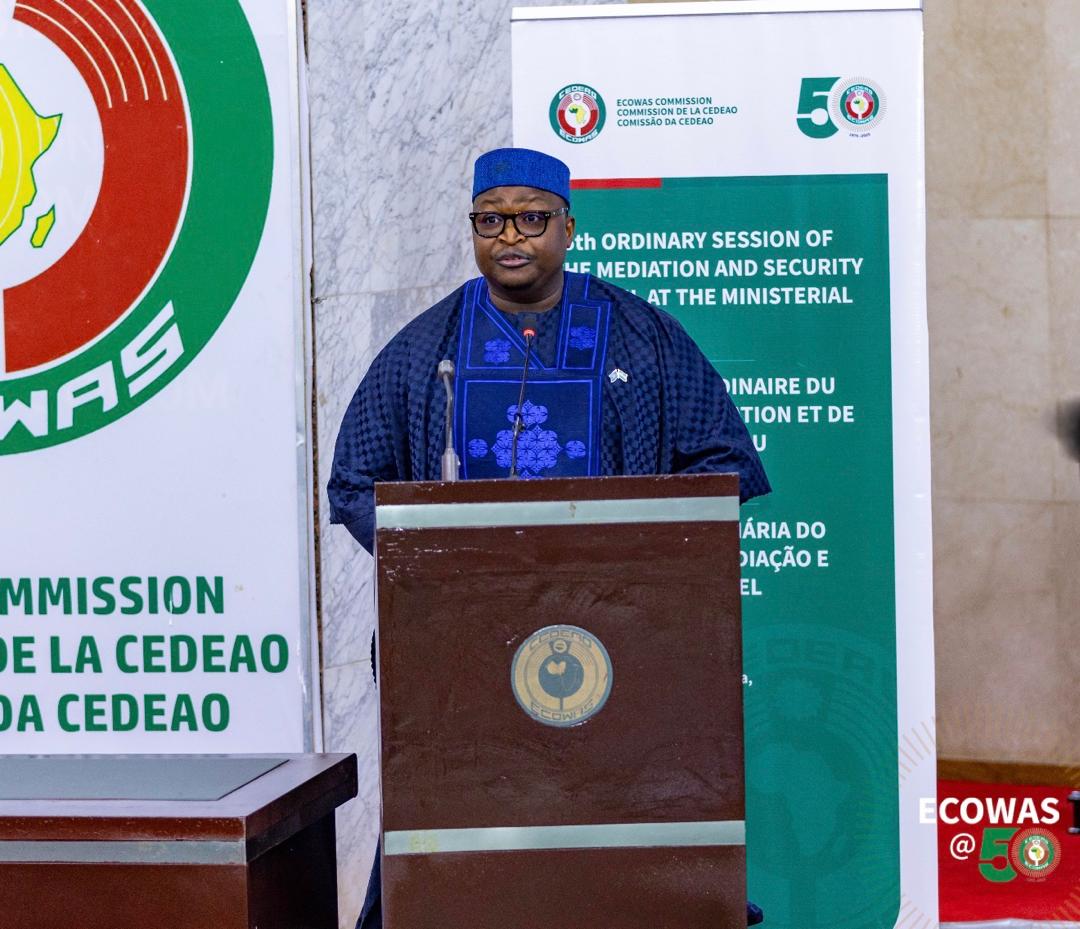
The Chairman of the ECOWAS Council of Ministers and Sierra Leone Minister of Foreign Affairs and International Cooperation, Mr. Musa Kabba stated this at the closing ceremony of the 95th Ordinary Session of the ECOWAS Council of Ministers in Abuja, Nigeria.
Mr. Kabba thanked member States for their strong commitment to our community, to maintain peace, deepen regional integration, and promote shared prosperity for our people.
“We examined the ongoing security threats that jeopardise stability in parts of our region, including violent extremism in the Sahel, the spread of small arms, transnational organized crime, maritime insecurity in the Gulf of Guinea, unconstitutional regime changes, economic integration, and climate change.” He added.
The Chairman Council of the ECOWAS Ministers believed that these threats, though challenging, are not impossible to overcome. “Our discussions confirmed that the strength of ECOWAS lies in our unity, solidarity, and the ability to use both diplomatic and operational measures to safeguard and advance our shared peace and security framework.”
He said Sierra Leone remains fully committed to ECOWAS’s goal of a region where democracy, constitutional order, and the rule of law are
non-negotiable principles.
“The ECOWAS discussions on economic integration were equally inspiring. We emphasized the need to accelerate the implementation of key regional initiatives, including the ECOWAS Single Currency, free movement protocols, and the Customs Union.” He reemphasized
Mr. Kabba believed that, in a global environment characterised by economic uncertainties, collective resilience relies on reducing structural vulnerabilities, increasing intra-regional trade, and promoting a competitive and integrated West African market.
According to him, the Council of Ministers’ discussions on humanitarian issues and climate-related vulnerabilities revealed an important truth.
“The challenges in our region are interconnected-whether addressing food insecurity, displacement, epidemics, or natural disasters, we need to keep adopting a coordinated and proactive approach. On this, I commend the collective effort we have put into strengthening early warning systems, regional preparedness, and resource mobilization to support at-risk communities.
He said as Ministers, “We hold the primary responsibility for turning our leaders’ vision into concrete actions. We have developed specific recommendations that will be shared with the ECOWAS Authority of Heads of State and Government. It is now our duty to maintain the momentum we have built here by implementing agreed-upon decisions, coordinating among our national and regional institutions, and keeping communication open as we face new challenges.”
The ECOWAS Council of Ministers thanked the ECOWAS Commission for its outstanding technical support and all briefers for their dedication, patience, and willingness to cooperate. The Commission’s contributions have greatly improved the quality of the Minister’s outcomes.