

Experts in firearms forensics are advocating for the institutionalisation of firearm intelligence and ballistic investigation across Nigeria’s security sector, aiming to bolster counterinsurgency operations and close critical evidence gaps that have historically weakened prosecution outcomes.
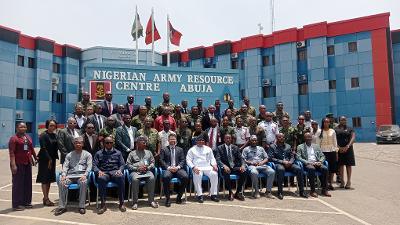
The call formed the central focus of a three-day workshop hosted by the Nigerian Army Resource Centre (NARC) in collaboration with Sentinel Forensics Limited, during which military and security personnel explored ways to align battlefield recoveries with prosecutable-evidence systems.
Addressing participants, the Director General of NARC, retired Major General James Myam, described the issue as a persistent operational weakness. He noted that weapons recovered during combat are “often not processed in ways that support successful prosecution,” adding that “the inability to properly handle and document captured arms continues to undermine efforts to build legally sustainable cases against detained insurgents.”
He emphasised that the workshop was designed to close that gap by strengthening evidence-gathering capacity within the force, adding that knowledge from the training must be expanded beyond participants to build a wider institutional base in forensic handling and battlefield documentation.
READ ALSO: Defence, Interior Ministers Meet To Strengthen Nigeria’s Security
Reinforcing this perspective, Mr Joseph Akon of Sentinel Forensics Limited positioned the training within the broader national security context, highlighting the destabilising impact of illicit small arms and light weapons.
“This programme builds on earlier engagements on DNA technologies and national security,” Akon explained.
“It extends our effort into firearm intelligence, focusing on technical systems, evidence integrity, and implementation capacity across agencies.”
Akon also noted that the initiative draws on international expertise, with resource persons from the United States and the United Kingdom supporting the programme. He described this approach as an emerging model where domestic security challenges are addressed through combined technical and institutional partnerships.
Both interventions underscored a shared conclusion: tactical success on the battlefield is no longer sufficient without the forensic systems needed to convert arrests and recoveries into convictions. The gap between combat operations and judicial outcomes is increasingly recognised as a national security vulnerability.
The workshop, themed ‘Building Effective Strategies for Combating Illicit Small Arms and Light Weapons: A Focus on Technical Solutions and Implementation’, reflects a shift towards integrating forensic science into Nigeria’s counterterrorism architecture, with the expectation that improved evidence systems will strengthen prosecutions, disrupt illicit arms networks, and reinforce long-term security outcomes.