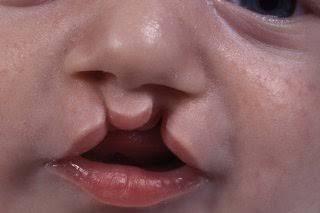
Maxillofacial surgeons say many of the challenges faced by patients with cleft lip and palate can be reduced through early intervention, proper care and risk-reduction strategies.
They emphasised that correcting a cleft lip or palate is not just about surgery, but also about restoring confidence, helping affected individuals communicate, and ensuring they can thrive and integrate socially.
The surgeons from the Department of Oral and Maxillofacial Surgery, College of Medicine, University of Lagos, stated this in a World Oral Health Day message.
The message was written by Dr Fatima Kyari, Dr Adekunle Adegbayi, Dr Adamson Olatunbosun, Ayelomi Oluwanifemi, Prof. James Olutayo, Prof. Wasiu Adeyemo and Prof. Mobolanle Ogunlewe.
World Oral Health Day, celebrated annually on March 20, seeks to unite people and help reduce the burden of oral diseases affecting individuals, health systems and economies.
They spoke on the “Challenges and Management of Children with Cleft Lip and Palate.”
Cleft lip and palate (CLP) are congenital birth defects that occur when facial tissues fail to fuse completely in the womb, resulting in openings in the upper lip or the roof of the mouth.
Data from the World Health Organisation (WHO) show that, globally, one in every 700 children is born with the condition.
The health agency said that “no fewer than 19,000 children with cleft conditions are born annually in Africa, of whom 12,000 are in West Africa and 6,000 in Nigeria.”
WHO included CLP in its list of global burden of disease initiatives in 2008.
The surgeons noted that children with cleft lip and palate face numerous challenges, including speech defects, psychosocial difficulties, and abnormalities in the size, shape and position of the teeth.
“More worrisome for parents of children with CLP is feeding difficulties with resultant malnutrition.
“This is due mainly to the anatomical defect in the palate with oronasal communication which prevents the development of the necessary seal and intraoral pressure for suckling, thereby predisposing them to frequent aspirations with subsequent recurrent respiratory tract infections.
“All these factors contribute to failure to thrive and poor nutrition.
“Feeding time is found to be significantly longer and fatigues both baby and mother; considerable stress on the mother ultimately affects the overall nutrition of the child,” they said.
NAN